



French Ornamental Shelf Clock
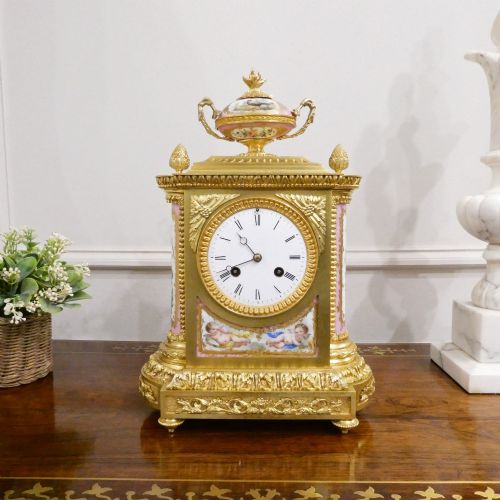
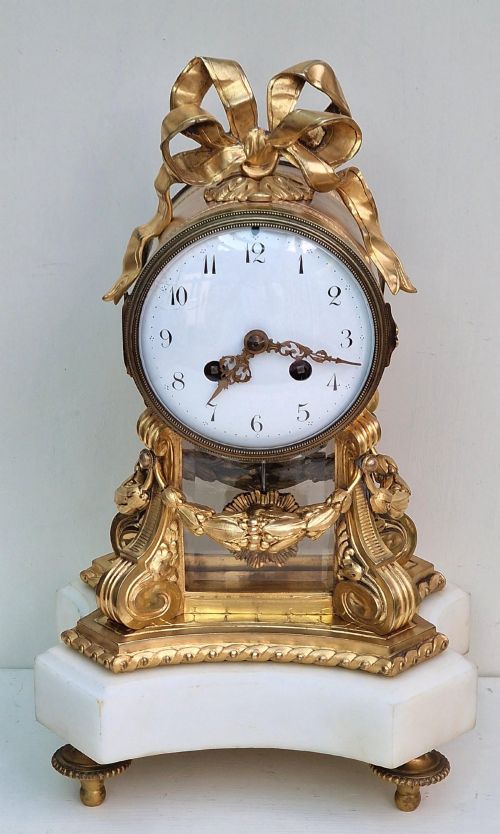
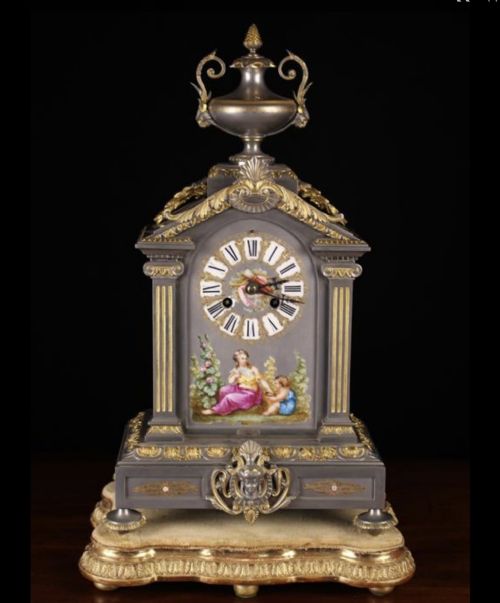
These French ornamental shelf clock examples combine gilt bronze, marble and porcelain to anchor a mantelpiece with heavy nineteenth-century presence.
French Ornamental Shelf Clock
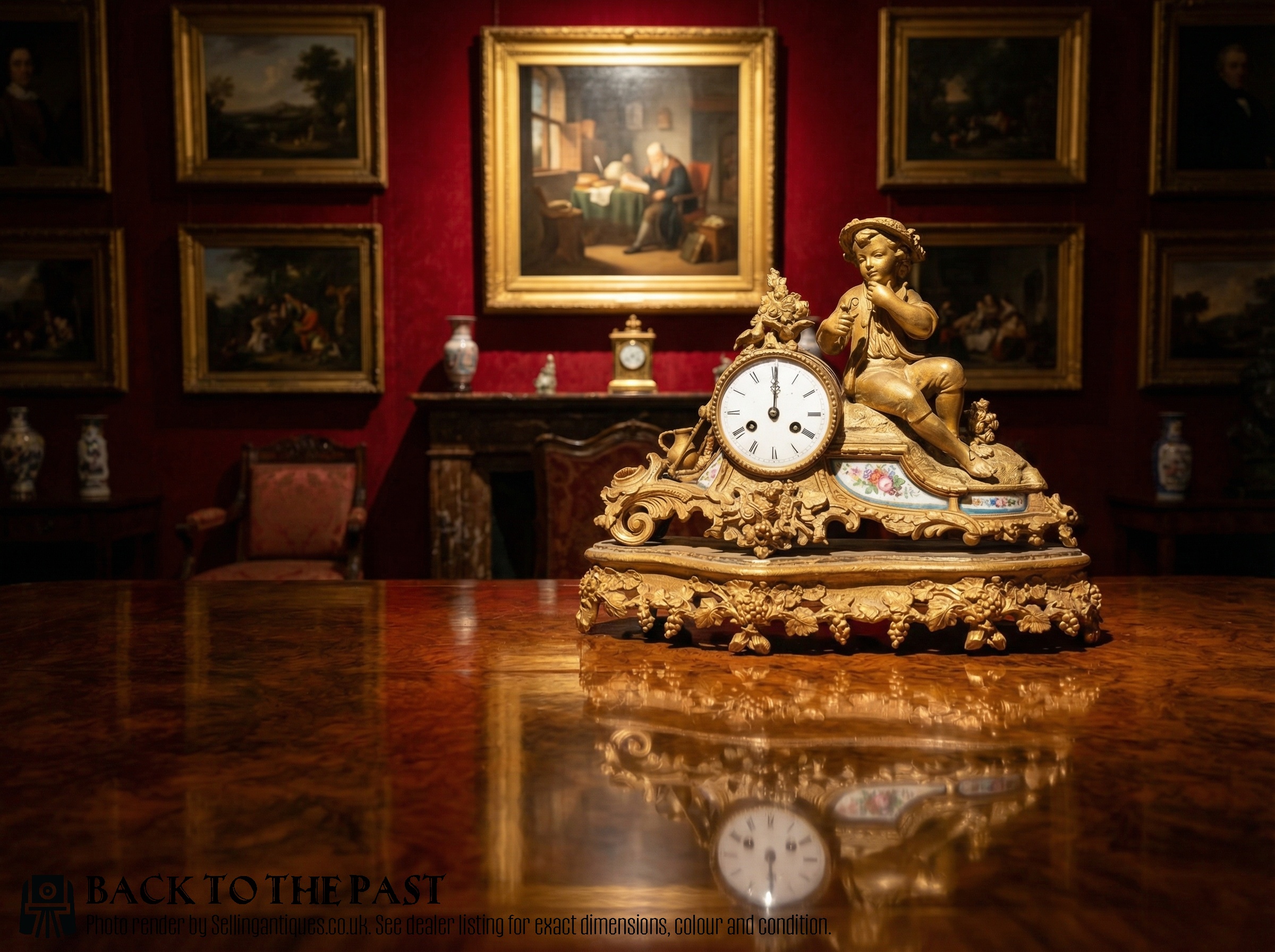
A French ornamental shelf clock sits on a mantelpiece or bracket shelf, combining timekeeping with decorative sculpture. When searching for a French ornamental shelf clock, you encounter mantel clocks and carriage clocks dating from the nineteenth century.
The pieces on this page span the Victorian era, specifically the decades from eighteen forty to nineteen ten, alongside broader nineteenth-century items. Common stylistic revivals include French Rococo, Louis XVI, and Neoclassical designs.
Forms range from pink porcelain bodies and white marble bases to glass-panelled carriage clocks. Most examples integrate painted porcelain panels or enamel dials alongside metallic mounts.
Materials and construction
Maker workshops built these timepieces using heavy cast metals finished with ormolu or gilt bronze. Gilt metal and brass also provide the structural chassis for many nineteenth-century variants.
Porcelain and enamel feature heavily in the construction, forming decorative dials, painted face plates, and entire body housings coloured in pink or white. Glass panels enclose delicate movements, while marble supplies dense, heavy support bases.
Listings span the nineteenth century, capturing Victorian aesthetics alongside Louis XVI and Rococo revival periods.
Judging quality in a French ornamental shelf clock
Quality rests in the crispness of the gilt bronze or ormolu casting, where finer pieces retain sharp, undercut foliage and crisp figural details. Lower tiers rely on simpler gilt metal that lacks the depth of hand-chased work.
The integration of the porcelain components separates standard production from finer examples. Hand-painted enamel dials and porcelain bodies with precise floral motifs indicate superior atelier output compared to plain or heavily worn finishes.
Jean-Baptiste Delettrez
The French Ornamental Shelf Clock Glossary
- Ormolu
- Gilded bronze produced by applying a mercury-gilding amalgam to cast bronze. This technique creates a deep, durable golden finish found on nineteenth-century French clock mounts.
- Mantel clock
- A clock designed to sit on the shelf above a fireplace. These domestic timepieces frequently incorporate decorative porcelain and marble elements.
- Rococo revival
- A nineteenth-century decorative movement embracing asymmetrical scrolls and organic plant motifs. This style dominates many nineteenth-century French clock cases.
- Enamel
- A glassy substance fused to metal dials through firing at high temperatures. It provides a smooth, white surface for painted clock numerals.
French Ornamental Shelf Clock: Frequently Asked Questions
How do I wind a French clock?
Most of these clocks utilise an eight-day movement requiring a key to tension the springs through the dial holes. Care must be taken not to over-wind the mechanism.
Keep the clock stationary on a level marble or wooden shelf to ensure the pendulum beats evenly without stopping.
Where should I place a mantel clock?
Position the clock on a stable mantelpiece or sideboard away from direct heat sources and strong draughts. The heavy marble and gilt metal bases require solid support.
Ensure the room humidity remains stable to protect the delicate enamel dials and gilt surfaces from environmental degradation.
What periods do these clocks cover?
The available selection primarily covers the nineteenth century, including specific dates from eighteen forty to nineteen ten. Victorian and Louis XVI style revivals dominate the manufacturing dates.
Cabinetmakers and bronze workers drew heavily on earlier royal French aesthetics while incorporating nineteenth-century clockmaking movements.
How do I identify Louis XVI style?
Louis XVI style pieces display straight structural lines, classical symmetry, and restrained architectural motifs rather than heavy asymmetric curves. Look for urns, ribbons, and beaded borders cast in gilt bronze.
This aesthetic contrasts sharply with the flowing, asymmetrical scrolls typical of earlier Rococo revival clock cases.