
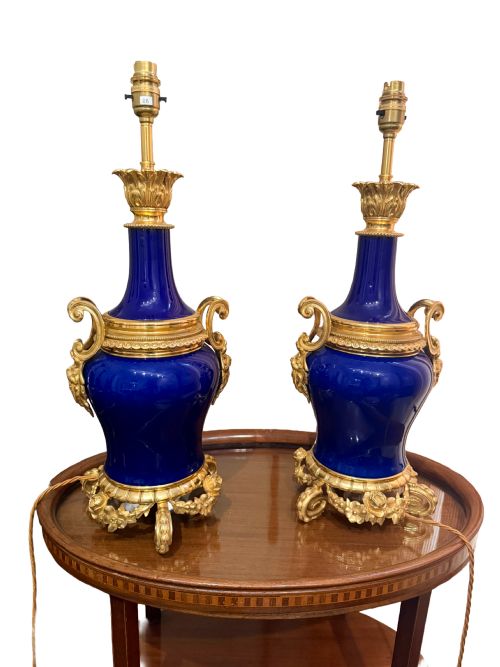


French Porcelain Desk Lamp
These french porcelain desk lamp examples combine glazed bodies with cast bronze mounts to bring nineteenth-century lighting onto a modern table.
French Porcelain Desk Lamp
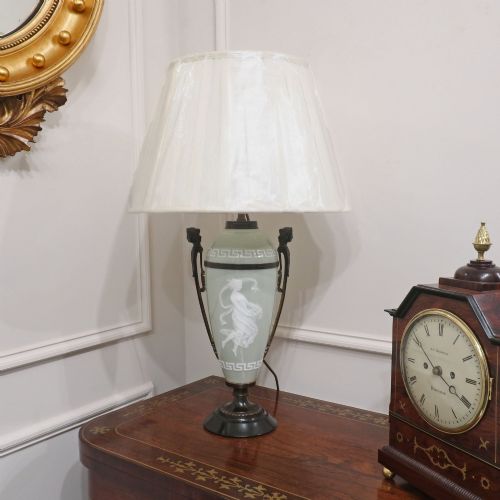
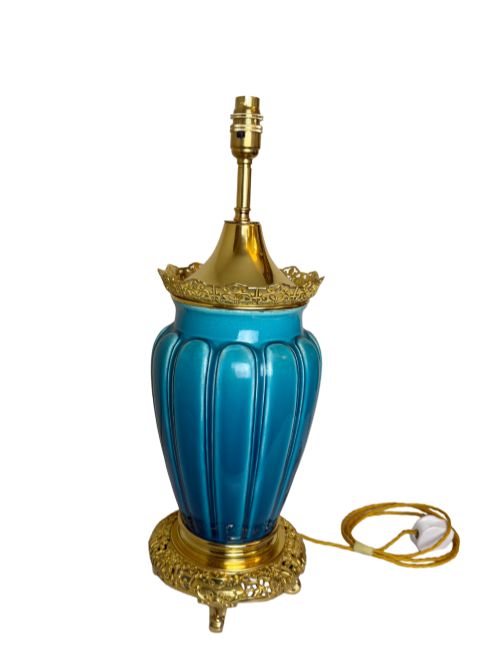
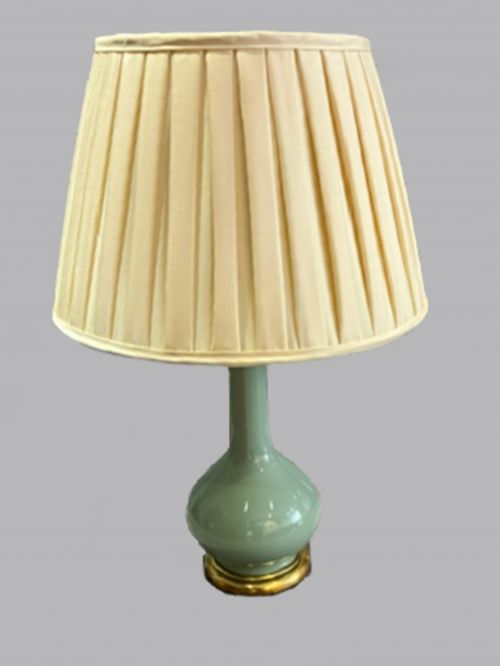
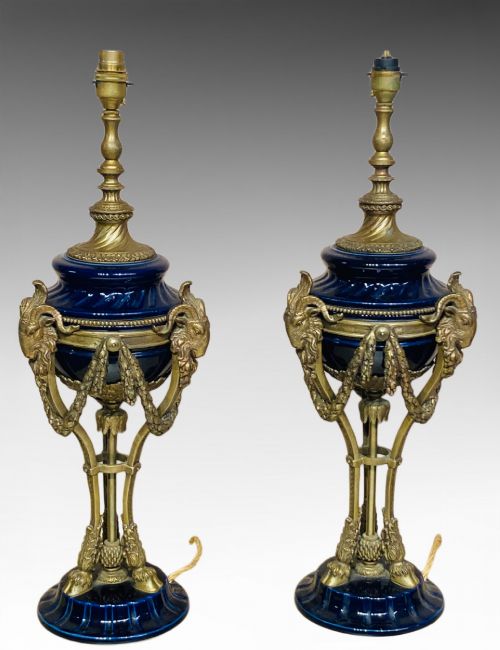
A french porcelain desk lamp brings nineteenth-century decorative arts to a modern workspace through converted vases and dedicated lamp bases. You will encounter glazed bodies in turquoise, celadon, and blue, alongside painted surfaces and biscuit porcelain.
Many examples utilise forms inspired by earlier periods, including French Neoclassical, Rococo Revival, and Chinoiserie styles. These pieces often originate from the nineteenth century, spanning decades from eighteen-eighty to nineteen-hundred, with occasional Edwardian and Victorian variations.
The most common formats on this page pair a ceramic or porcelain vessel with metal mounts, functioning primarily as table lamps or side lights. Makers frequently adapted existing vases or created specialised lamp bodies using Paris ware or Sevres style porcelain.
Materials and construction
The foundation of each french porcelain desk lamp relies on fired ceramic bodies, frequently glazed in solid colours like bleu celeste or decorated with hand-painted motifs. Workshops combined these fragile ceramic elements with robust metal components for structural stability.
Gilt bronze, ormolu, and brass provide the mounts, bases, and decorative trim that frame the porcelain body. Fabric elements such as silk complete the assembly on pieces that retain their shades.
Some nineteenth-century vases spent decades holding flowers before a clever electrician gave them a glowing second career.
Assessing quality
The refinement of the porcelain body and the crispness of the cast ormolu mounts dictate the overall quality of a french porcelain desk lamp. Finer pieces display detailed hand-painting and substantial gilt bronze mounts that integrate seamlessly with the ceramic form.
The relationship between the converted vase or lamp base and its metal hardware reveals the care taken in assembly. Superior examples feature heavy bronze or brass mounts designed specifically for the ceramic vessel rather than generic adaptations.
Sevres·Samson
The French Porcelain Desk Lamp Glossary
- Ormolu
- Gilded bronze mounts applied to furniture and decorative objects. This technique creates a rich gold-coloured finish that accentuates the porcelain body.
- Pate Sur Pate
- A method of porcelain decoration where wet white relief designs are painted onto a coloured clay body. This creates a cameo-like effect with translucent layers.
- Paris Ware
- Porcelain produced by various independent factories operating in Paris during the nineteenth century. These wares are known for diverse decorative styles and quality glazing.
- Bleu Celeste
- A bright turquoise or sky-blue ceramic glaze popular in nineteenth-century French porcelain production. It frequently appears on Sevres style decorative objects.
French Porcelain Desk Lamp: Frequently Asked Questions
Are these lamps converted vases?
Many examples begin life as decorative vases before conversion into lighting by adding electrical wiring and mounts.
Other pieces are manufactured specifically as lamp bases from their initial creation in the workshop.
How do I date a lamp?
Dating relies on stylistic markers, such as Neoclassical or Rococo Revival motifs, and the characteristics of the porcelain body.
Metal mounts and wiring methods also provide clues to the decade of production, spanning the nineteenth and early twentieth centuries.
Where do I place these lamps?
These pieces function effectively as desk lamps, side lights, or decorative accent lighting in traditional interiors.
Their substantial porcelain bodies require stable surfaces with adequate space to display the decorative mounts.
What styles are most common?
Nineteenth-century French designs dominate, particularly pieces showing Neoclassical Revival and Rococo influence.
Chinoiserie and Famille Rose styles also appear among the porcelain variations.