



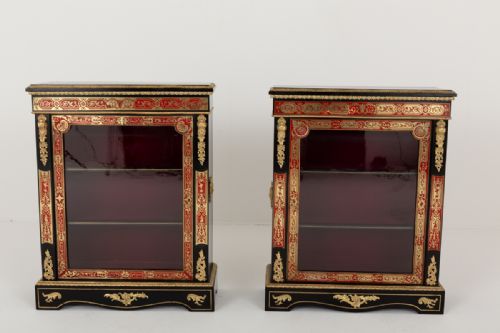


French Pier Cabinet Pair
A french pier cabinet pair brings symmetrical grandeur and fine timber to a drawing room, offering matched display space for treasured objects.
French Pier Cabinet Pair
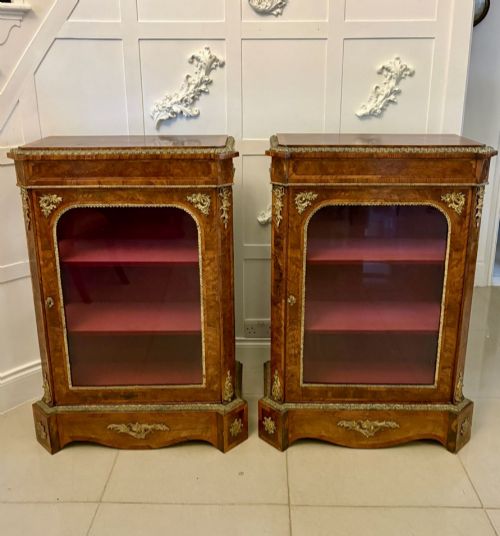
A french pier cabinet pair consists of two matched display pieces designed to stand against the narrow wall space between windows, known as the pier. These items often function as side cabinets, display cabinets, or bookcases depending on their interior configuration and glass doors.
Most examples encountered here date from the nineteenth century, spanning Victorian and Napoleon III periods alongside Louis XVI revival styles. Walnut, ebonised wood, and kingwood dominate the forms, frequently enriched with glazed panels or open shelving.
The pairing aspect remains central to their appeal, providing balanced decoration for formal reception rooms. Makers constructed these items to hold porcelain, books, or curiosities, combining utility with decorative presence.
How they were made
Cabinet makers built carcases from timbers such as burr walnut, rosewood, and ebonised wood, applying intricate marquetry, brass inlay, and tortoiseshell in the Boulle technique. Selected hardwoods provided stable foundations for elaborate surface decoration.
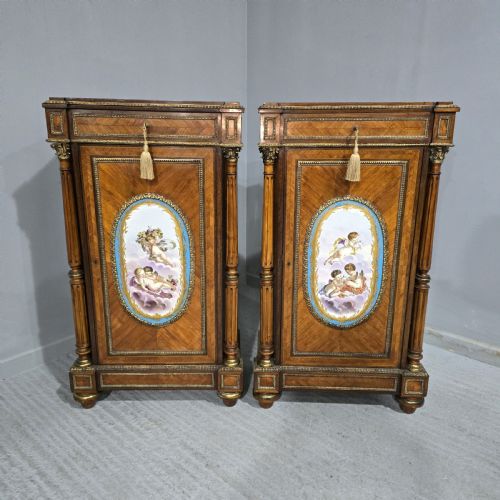
Ormolu mounts cast in bronze and gilt provide structural framing and decorative accents around doors, corners, and plinths. Marble tops frequently cap the structures, adding weight and a smooth horizontal surface.
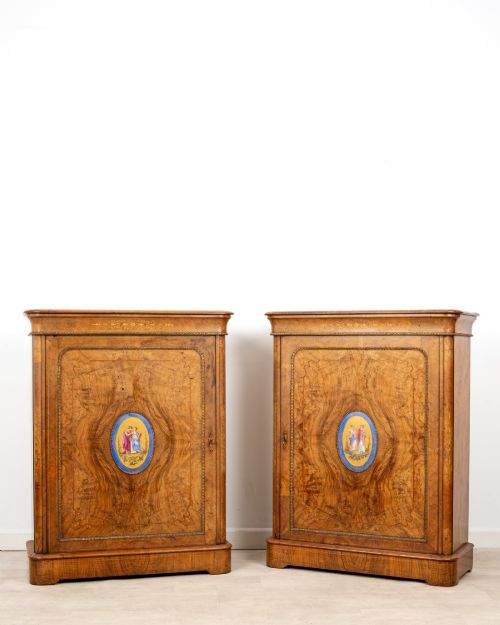
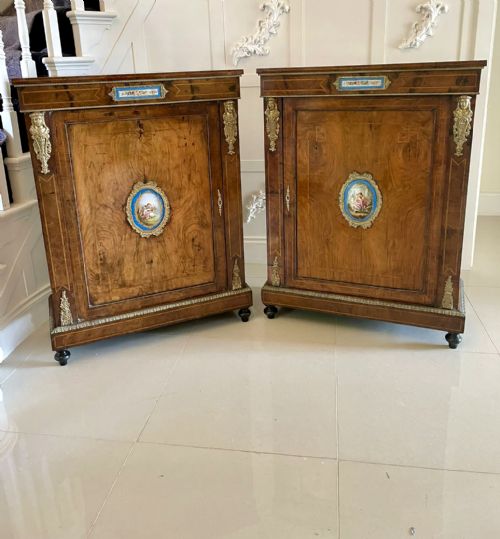
Porcelain plaques and pietra dura panels appear inset into timber doors, requiring precise joinery to integrate ceramic and stone directly into the wooden cabinetry.
Listings feature 19th-century periods alongside 18th-century examples, utilising materials such as ormolu, glass, brass, ebonised wood, tortoiseshell, burr walnut, kingwood, and marble.
What varies in quality
The precision of the marquetry and the crispness of the ormolu mounts dictate the upper tier of execution. Finer pieces demonstrate hand-chiselled detailing in the bronze work and tight, seamless alignment in tortoiseshell and brass inlay.
Selection of veneer defines the visual impact, with burr walnut and kingwood showing rich, deliberate grain patterns across both matched cabinets. Inferior examples rely on simpler timber cuts without the same depth of figure.
Integration of secondary elements such as painted finishes, porcelain plaques, and pietra dura work separates standard production from exceptional examples. The depth of the ebonisation and the polish of the marble surface contribute further distinction.
The French Pier Cabinet Pair Glossary
- Ormolu
- Gilded bronze mounts used for decoration and edge protection on furniture. This technique involves applying a gold amalgam to cast bronze.
- Boulle
- Marquetry technique utilising brass and tortoiseshell inlaid in intricate patterns. Named after the French cabinet maker André-Charles Boulle.
- Pietra dura
- Inlay work using cut and fitted polished coloured stones to create pictorial designs. Artisans embed these stone mosaics directly into marble or wood panels.
- Pier
- The section of wall situated between two windows or openings. Cabinets built specifically for these narrow spaces take their designation from this architectural feature.
- Kingwood
- A dense, heavily figured tropical timber prized for cabinet making. This material displays rich dark striping against lighter brown tones.
French Pier Cabinet Pair: Frequently Asked Questions
What is a pier cabinet?
A pier cabinet is a narrow piece of furniture designed to fit the wall space between windows. These cabinets typically feature glass doors or open shelving for displaying ornaments.
Pairs of these cabinets provide symmetrical balance when placed in the same room. They became particularly popular during the nineteenth century in formal reception rooms.
How do I style a pair in a room?
Placing the two cabinets against opposite walls or flanking a fireplace maintains visual balance. Their mirrored appearance works well in dining rooms or drawing rooms.
Lighting should highlight the glazed doors and ormolu mounts without exposing the timber to direct sunlight. Keeping interiors uncluttered allows the marquetry and porcelain plaques to stand out.
What distinguishes Napoleon III style?
Napoleon III style revival pieces often incorporate ebonised wood, Boulle marquetry, and lavish ormolu mounts. This aesthetic draws inspiration from earlier French royal courts.
These cabinets display dark polished surfaces contrasted with bright metal inlay. The overall effect emphasises ornate decoration and dramatic visual weight.
How do I care for marble tops?
Marble surfaces require gentle cleaning with a damp cloth and mild soap to avoid dulling the polish. Acidic liquids like wine or citrus juice can etch the stone.
Using coasters and mats prevents scratches and staining on the antique surface. Professional polishing restores the original shine if the stone becomes worn over time.