






Antique Boulle Pier Cabinet
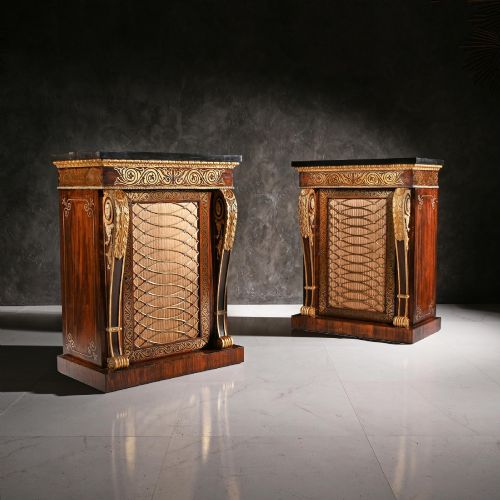
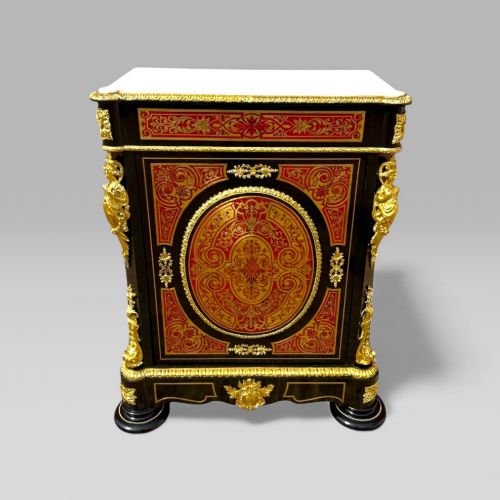
An antique boulle pier cabinet brings rich tortoiseshell, bright brass inlay, and polished marble together into a striking display piece for a formal room.
Antique Boulle Pier Cabinet
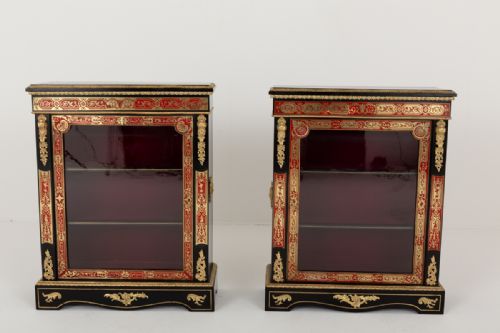
An antique boulle pier cabinet is a low or mid-height display furniture designed to sit against a wall pier between windows, combining display space with enclosed storage. These pieces emerge chiefly from the nineteenth century, including Victorian interpretations and French Napoleon III or Louis XVI style designs.
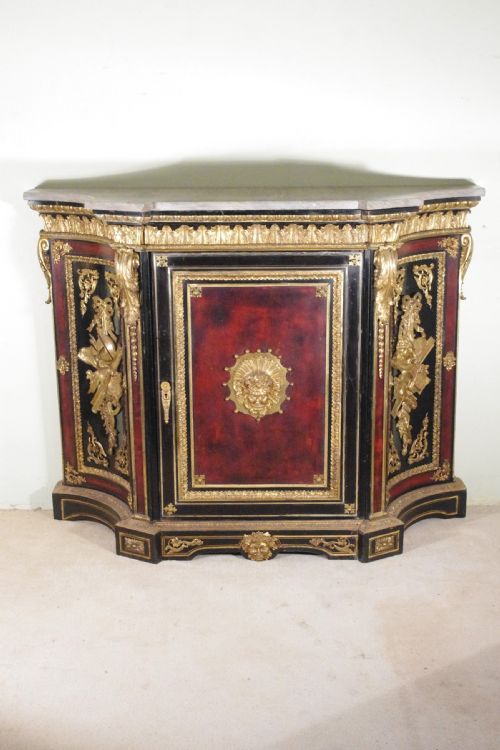
The most common formats on this page are single cabinets and matched pairs constructed in ebonized wood, carrying the signature marquetry of tortoiseshell and brass. They typically feature glazed doors, gilt metal mounts, and marble tops, drawing directly upon continental and British revival aesthetics.
Makers and workshops of the period utilised grand Regency forms alongside French models to create these elaborate furnishings. A buyer seeks them for their intricate metallic patterns and the dramatic contrast between dark timber and luminous inlay.
How they were made
Cabinet makers constructed these pieces using ebonized wood, rosewood, and giltwood as a dark foundation to set off the decorative surfaces. Over this timber core, they applied intricate brass and tortoiseshell marquetry, often referred to as boulle work, cutting the metal and shell together in precise interlocking patterns.
Gilt metal or ormolu mounts were cast and chased to edge the panels, frame the glass doors, and protect the corners. Marble slabs were then fitted to the top surfaces, providing a durable and cool finish that complemented the gleaming metalwork below.
Tortoiseshell used in nineteenth century boulle work often came from the hawksbill turtle, lending a warm, amber-flecked glow beneath the brass.
What varies in quality
The finesse of the brass and tortoiseshell marquetry dictates the upper tier of these pieces, separating simple geometric patterns from densely engraved, fluid scrollwork. Workshops that employed master cutters achieved tighter joints between the shell and metal elements, creating a seamless surface.
The choice of secondary materials also marks the division between standard production and finer commissions, seen in the selection of heavy marble tops, substantial ormolu mounts rather than light gilt metal, and carefully chosen timbers beneath the ebonized finish.
Louis Constantin Le Gaigneur
The Antique Boulle Pier Cabinet Glossary
- Boulle
- A form of marquetry using contrasting slices of brass and tortoiseshell, named after the famous cabinet maker to Louis XIV, André-Charles Boulle. It appears extensively on nineteenth century French and Victorian furniture.
- Ormolu
- Gilded bronze mounts and decorative trims applied to furniture. The technique involves creating a mercury and gold amalgam fired onto the bronze base to yield a rich golden sheen.
- Pier cabinet
- A narrow cabinet designed specifically to stand against the wall space between two windows. They frequently feature glass doors and marble tops.
- Ebonized wood
- Timber treated with a stain or polish to imitate the deep black colour of ebony. It served as a favoured dark background for bright brass inlay during the Victorian and Napoleon III periods.
- Marquetry
- Decorative patterns formed by fitting together thin veneers of wood, metal, shell, or ivory onto a structural carcass. In these cabinets, it defines the primary ornamental surfaces.
Antique Boulle Pier Cabinet: Frequently Asked Questions
What is an antique boulle pier cabinet?
An antique boulle pier cabinet is a nineteenth century display piece adorned with brass and tortoiseshell inlay, usually topped with marble and framed with gilt mounts.
Cabinet makers designed them to stand against narrow wall spaces in formal rooms, combining glazed doors for exhibition with enclosed shelving.
How do I identify Napoleon III style?
Napoleon III style pieces lean heavily into lavish ornamentation, featuring dense brass and tortoiseshell marquetry set into ebonized wood surfaces. They often incorporate serpentine fronts and heavy ormolu mounts.
This aesthetic revived earlier French court designs during the mid-nineteenth century, favouring dramatic visual contrast and meticulous craftsmanship.
Where should I place a pier cabinet?
These cabinets suit narrow wall spaces, hallways, or drawing rooms where their slim proportions and reflective brass inlay can catch the light. They function well as standalone statement pieces.
Keep them away from direct sunlight and sudden temperature changes to protect the delicate tortoiseshell and wood veneers from warping.
Are these cabinets French or English?
The evidence shows examples from both traditions, including French Napoleon III pieces alongside Victorian interpretations made in Britain. British makers frequently adopted French styles during the nineteenth century.
Both national origins utilise similar ebonized carcasses and boulle marquetry, though subtle differences in the internal construction often point to the workshop's regional origin.