


French Pendant Light Shade
A french pendant light shade brings diffused illumination and continental charm to a room, ranging from simple opaline glass to elaborate crystal formations.
French Pendant Light Shade
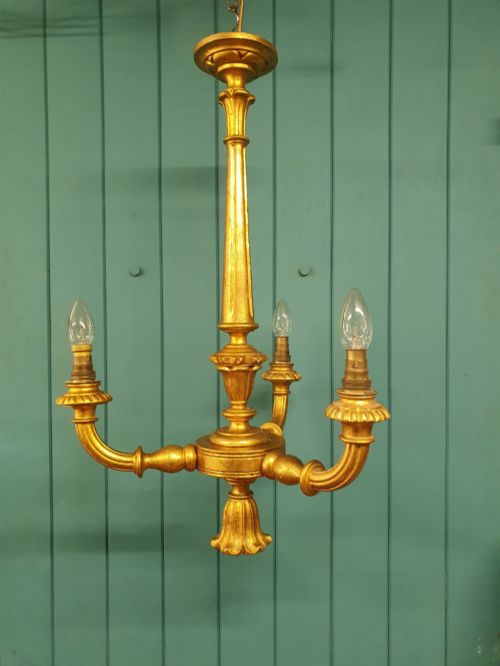
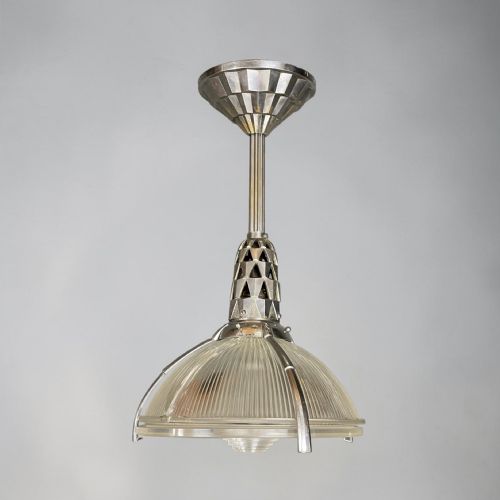
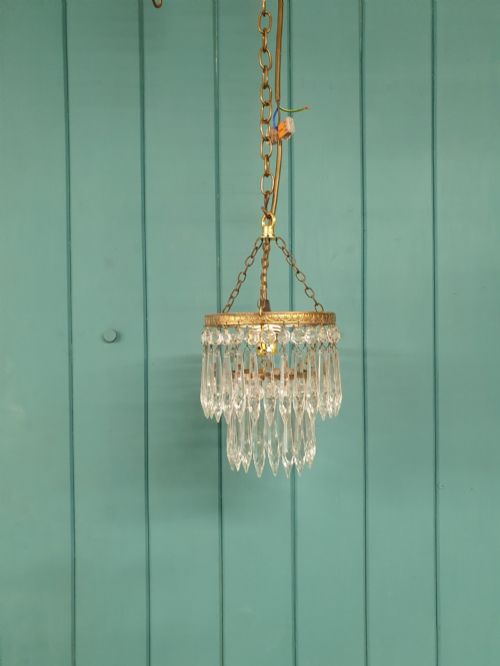
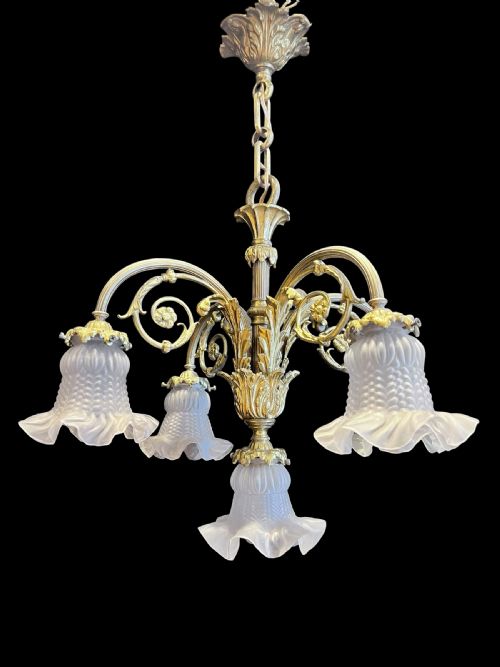
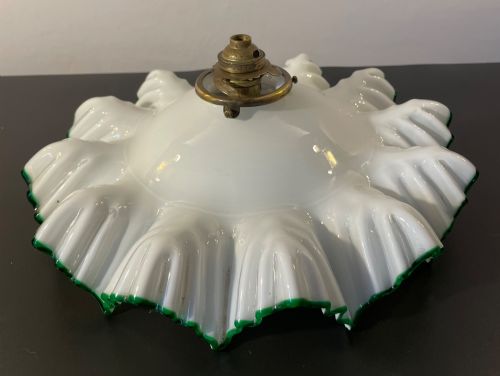
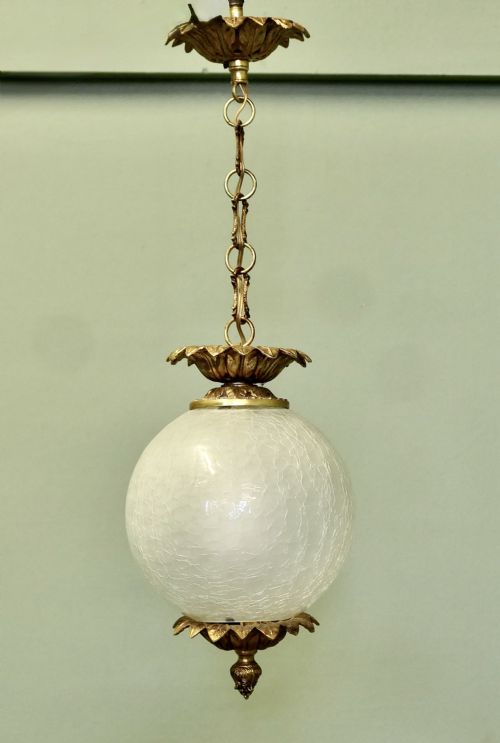
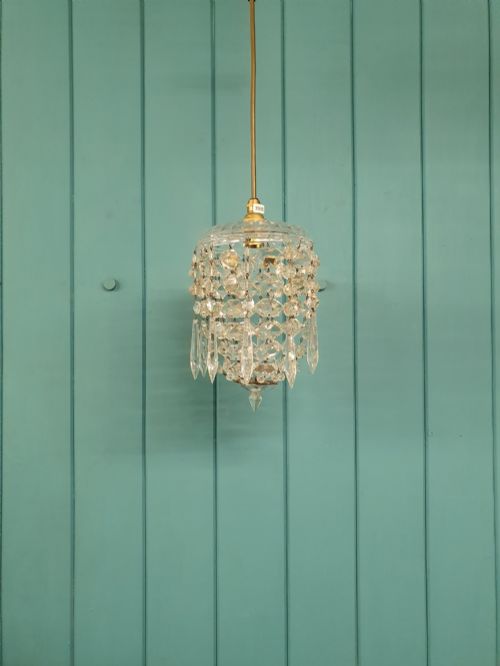
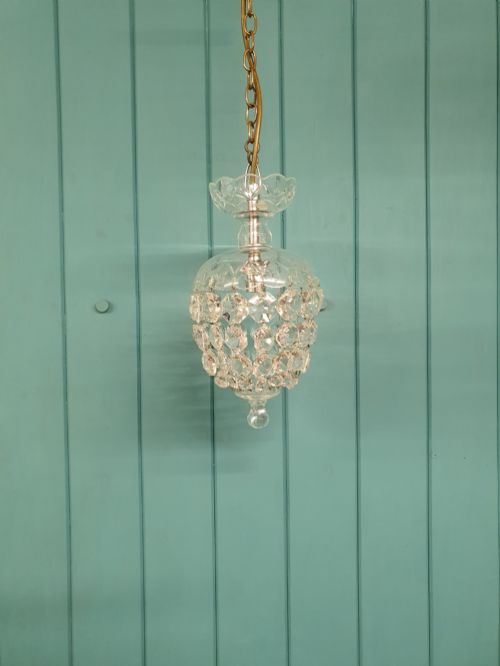
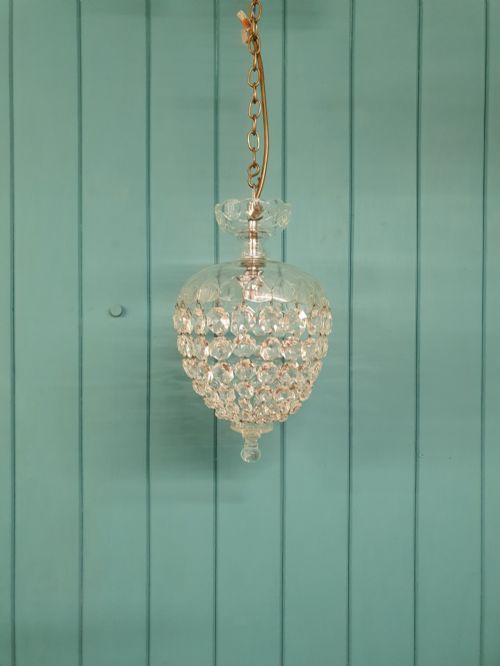
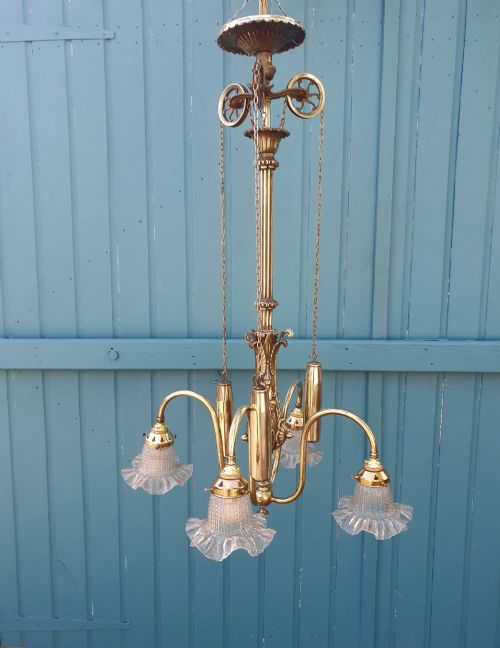
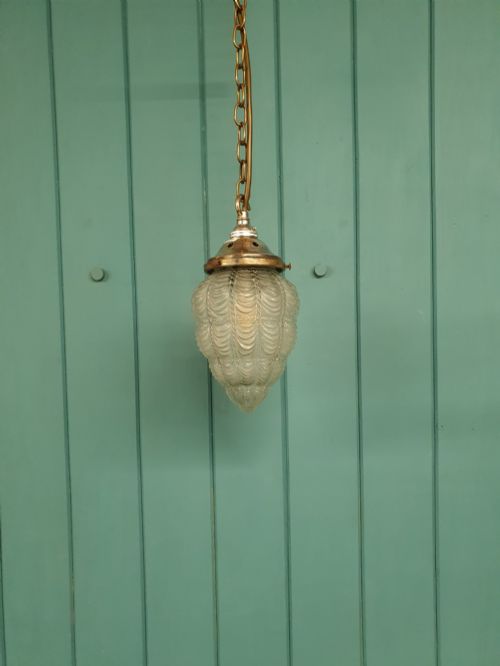
When you search for a french pendant light shade, you encounter a variety of ceiling hung fixtures spanning the late nineteenth century through to the art deco period. These pieces arrive in forms ranging from simple glass globes and frilly lampshades to multi tiered crystal chandeliers and moulded glass plafonniers.
The versions most frequently met on this page date from the nineteen twenties and nineteen thirties, alongside earlier Edwardian and Victorian examples. They combine functional illumination with decorative metalwork and shaped glass, originating from French workshops and continental makers.
How they were made
These fixtures rely on combinations of brass, bronze, copper, and wrought iron forming the skeletal framework and suspension hardware. Metal components are cast, carved, or forged to create arms, galleries, and decorative motifs.
Glass elements are moulded, pressed, cut, or blown into shapes such as domes, cones, globes, and frilled shades. Opaline glass, frosted glass, and clear crystal distribute the light while contributing distinct textural and tonal qualities.
Listings feature materials spanning brass, bronze, wrought iron, and copper alongside opaline, cut, and frosted glass.
What varies in quality
Quality in these fixtures rests on the weight and finish of the metalwork, alongside the clarity and complexity of the glass. Heavier cast brass frames and hand finished bronze elements demonstrate superior construction compared to lighter pressed alternatives.
The refinement of the glass distinguishes standard production from finer examples. Deeply moulded patterns, crisp cut crystal prisms, and evenly distributed opacities in opaline glass indicate skilled artisan execution.
Perry And Co·Verrerie Des Vosge·Jean Gauthier·Muller Freres
The French Pendant Light Shade Glossary
- Plafonnier
- A ceiling mounted glass bowl shade that sits flush or close to the ceiling. It typically diffuses light downward across a room.
- Opaline glass
- A milky, translucent glass developed in the nineteenth century. It softens light while maintaining a bright appearance.
- Holophane
- A brand of prismatic glass designed to direct and diffuse light efficiently. These shades feature characteristic ribs or prisms.
- Rise and fall
- A mechanical pulley system allowing the pendant height to be adjusted. It uses weights or counterweights concealed within the fitting.
French Pendant Light Shade: Frequently Asked Questions
How do I hang a heavy pendant light?
Heavy chandeliers and lanterns require secure anchoring into ceiling joists using suitable fixings and hooks. The weight of brass and crystal assemblies demands proper structural support rather than relying on standard plasterboard.
Electrical connection should be handled by a qualified professional to ensure the wiring safely supports the voltage and weight of the fitting.
What periods do these light shades cover?
The available pieces span from the late nineteenth century through the Edwardian era into the nineteen twenties and thirties. This encompasses Victorian, Art Nouveau, and Art Deco design movements.
Earlier pieces often feature heavy cast brass and cut crystal, while later examples embrace streamlined glass globes and geometric metalwork.
How do I clean glass and brass fittings?
Glass shades can be detached and washed gently in warm soapy water using a soft cloth. Avoid harsh abrasives that might scratch moulded or frosted surfaces.
Brass and bronze metalwork should be dusted with a dry cloth. Chemical polishes are generally discouraged to preserve any historic patination accumulated over the decades.
Are these lights compatible with modern wiring?
Many antique fixtures retain older wiring that requires updating to meet current electrical standards. Rewiring allows modern cables and lamp holders to be fitted safely.
Consulting an electrician ensures the internal components comply with local regulations while accommodating contemporary LED bulbs.