


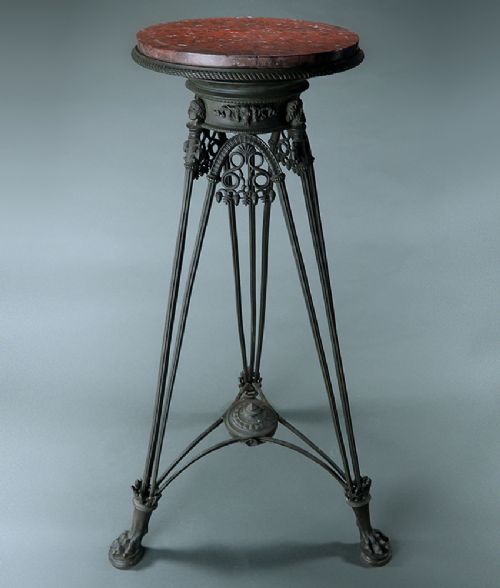
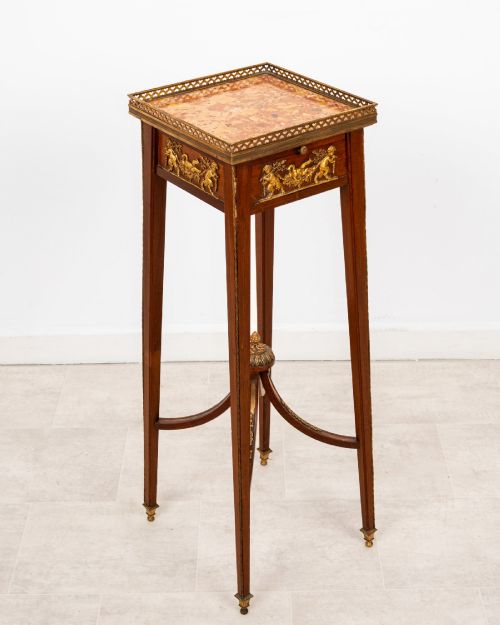
French Pedestal Side Table
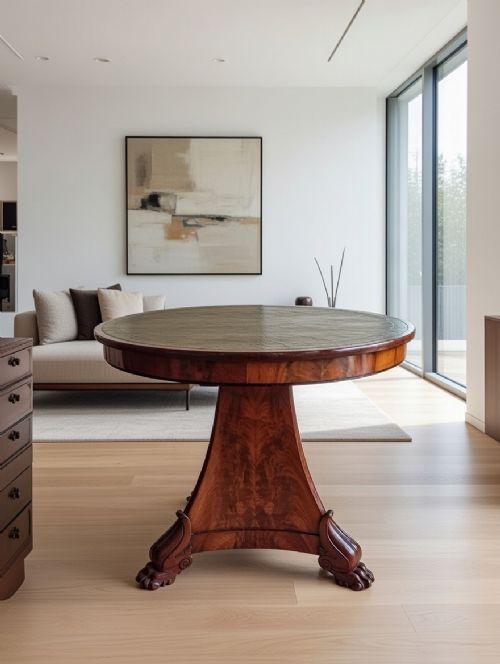
These pieces known as a french pedestal side table bring proportion and utility to a room through circular tops and single central supports.
French Pedestal Side Table
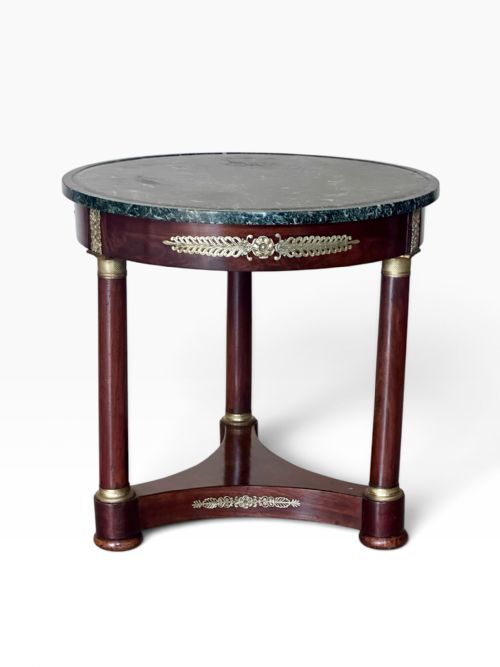
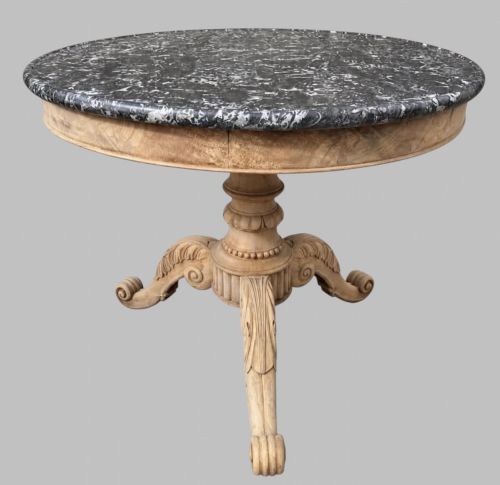
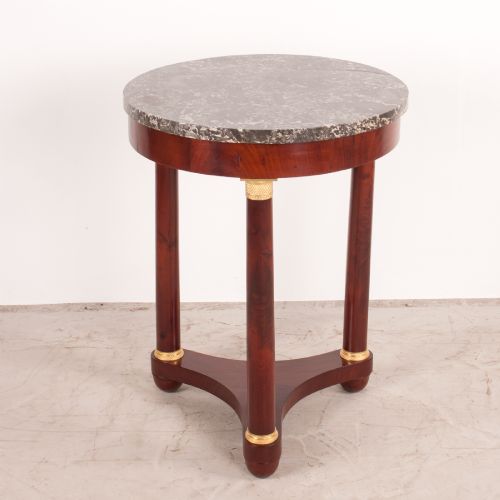
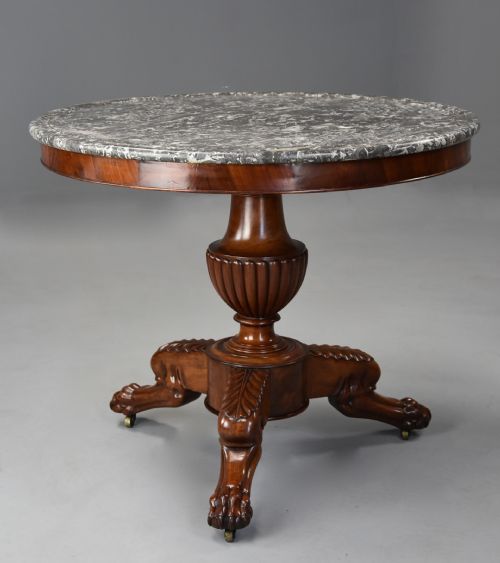
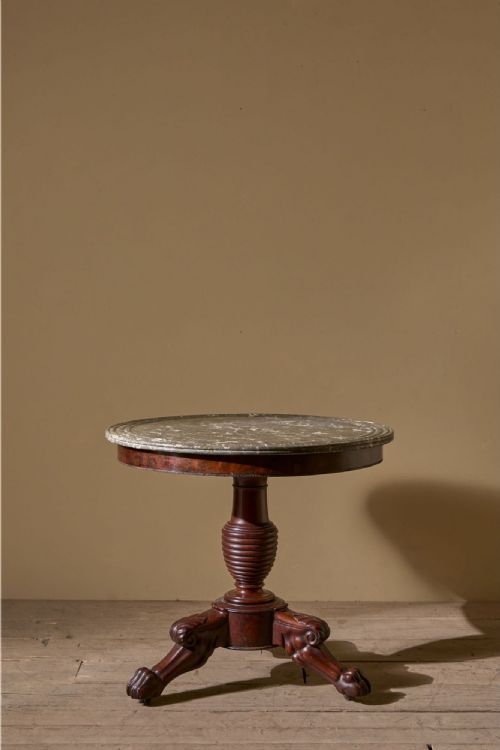
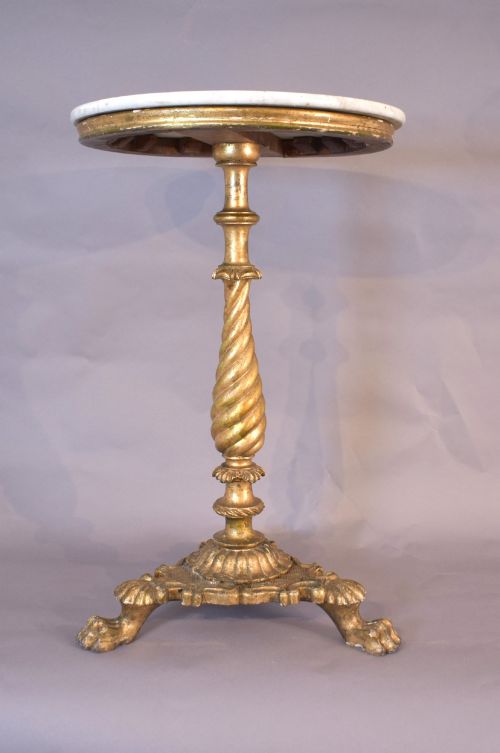
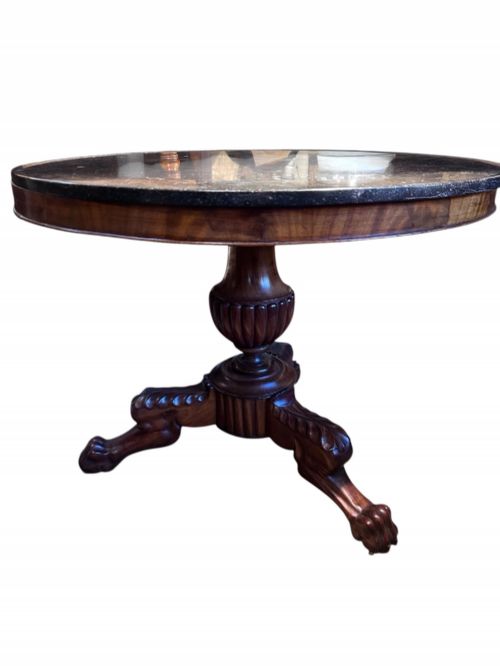
A french pedestal side table typically takes the form of a guéridon, occasional table, or centre table supported by a single central column or tripod base. These compact pieces serve beside seating or in the middle of a room, fulfilling diverse functional needs.
The selections span the nineteenth century into the twentieth century, encompassing French Empire, Louis Philippe, Rococo Revival, Neoclassical, and Art Deco stylistic influences. Walnut, mahogany, oak, and fruitwood form the primary wooden bodies found across the inventory.
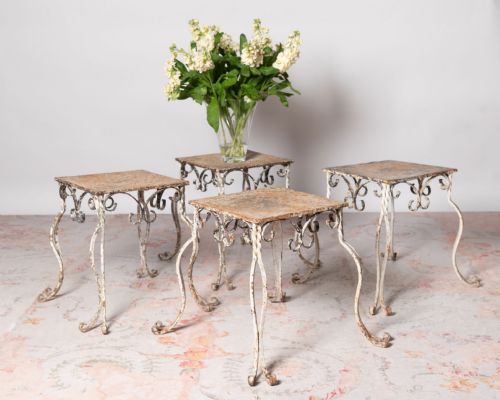
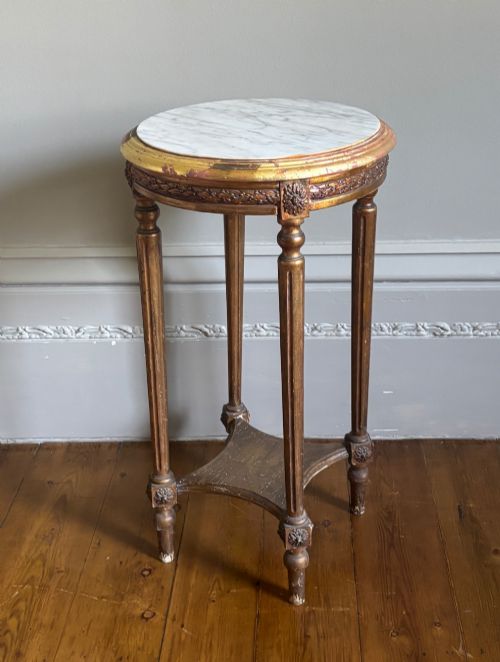
Surviving examples frequently feature stone or glass surfaces, including white, grey, and rouge marble variations alongside cast iron, brass, and occasional leather tops. Makers utilised various woods and metals to create functional furniture for domestic interiors.
Materials and Construction
Cabinet makers constructed the foundational carcases using solid timbers such as mahogany, oak, and walnut, frequently applying burr or fruitwood veneers to tabletops. Ormolu, gilt bronze, and brass mounts were cast and applied to accentuate structural contours.
Inlaid marquetry, parquetry, and carved wooden details feature prominently, reflecting traditional workshop techniques of the period. Heavy stone slabs, specifically veined marble and onyx, were fitted directly into wooden frames to form stable surfaces.
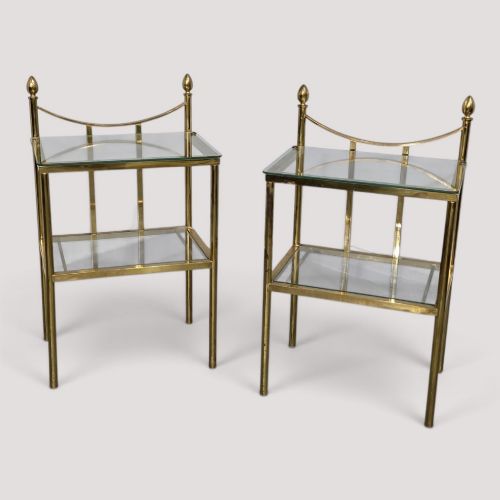
Metal components including cast iron, silvered bronze, and brass provide structural support and decorative contrast on bistro and lamp tables. Joinery relies on traditional turning and carving methods for the central pedestals and tripod legs.
Listings feature woods including mahogany, walnut, oak, burr elm, thuya, and kingwood alongside marble, onyx, brass, ormolu, and cast iron.
Evaluation of Quality
The standard of a french pedestal side table depends upon the selection of timber veneers and the precision of the parquetry or marquetry patterns. Finely figured burr walnut, kingwood, and mahogany indicate superior material choice by the maker.
Cast metal mounts executed in ormolu or chased brass demonstrate sharper detail and heavier metalwork on finer examples. The integration of original veined marble or onyx tops secured within the wooden frame distinguishes higher grade production.
Structural harmony between the central pedestal, the weight of the stone top, and the stability of the tripod base dictates the overall execution. Subtle carving on oak, mahogany, or giltwood surfaces reveals the hand of a skilled workshop.
François Linke·A Hugnet Paris
The French Pedestal Side Table Glossary
- Guéridon
- A small circular table supported on a central pillar or tripod base. This French form originated in the seventeenth century and remains a staple of interior decoration.
- Ormolu
- Gilded bronze used for decorative mounts and ornaments on furniture. Makers applied this technique extensively during the French Empire and nineteenth-century revival periods.
- Marquetry
- Decorative veneer work arranged in pictorial or geometric patterns across wooden surfaces. Craftsmen employed contrasting timbers to achieve visual depth.
- Parquetry
- Geometric wood inlay forming patterned surfaces such as cubes or chequers on tabletops. This technique showcases precise woodworking skill.
- Centre table
- A freestanding table designed to be viewed from all sides within a room. These pieces often feature circular tops and pedestal supports.
French Pedestal Side Table: Frequently Asked Questions
What is a guéridon table?
A guéridon is a traditional French round table supported by a single central pedestal or a tripod base. These pieces function as occasional tables, lamp stands, or centre tables in domestic spaces.
Originally designed for holding candlesticks or serving drinks, they offer a compact footprint that suits smaller spaces beside seating or in hallways.
Are marble tops original to these tables?
Many nineteenth-century occasional and centre tables were manufactured specifically to house inset marble, onyx, or glass slabs. Veined white, grey, and rouge marble variants appear frequently across the inventory.
Examining the rebate and the fit between the stone and the wooden rim helps determine whether the top aligns with the period of the base.
Where should I place a pedestal table?
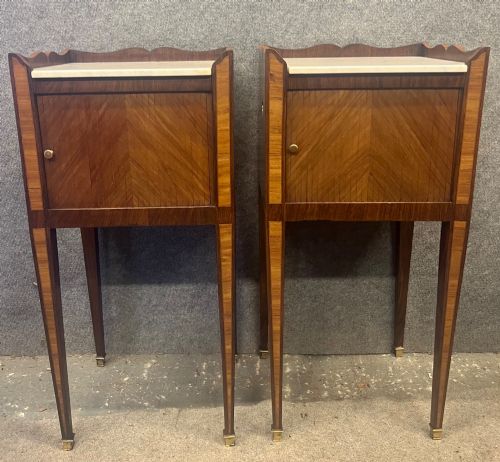
A pedestal table works well as a bedside cabinet, an occasional surface next to an armchair, or a central display piece in an entryway. Their circular shape allows for easy movement around them in confined areas.
Pairing a marble-topped version with a table lamp creates a functional focal point without cluttering the room's layout.