


French Patinated Bronze
French patinated bronze pieces bring rich dark metal surfaces and classic nineteenth-century foundry work into domestic spaces.
French Patinated Bronze
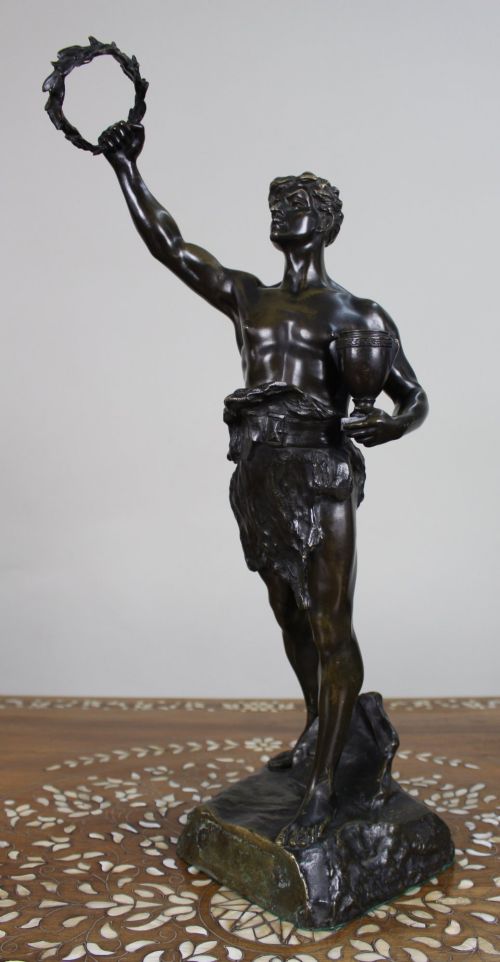
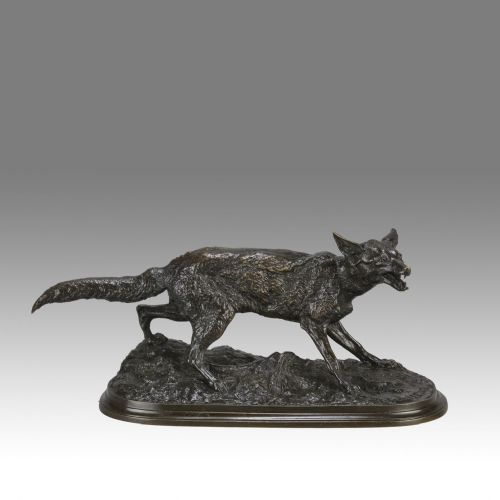
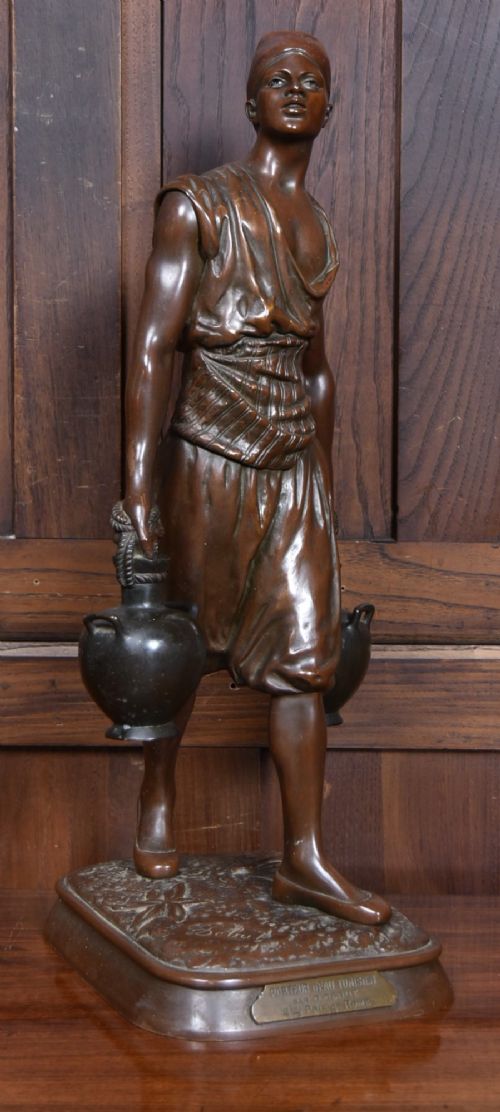
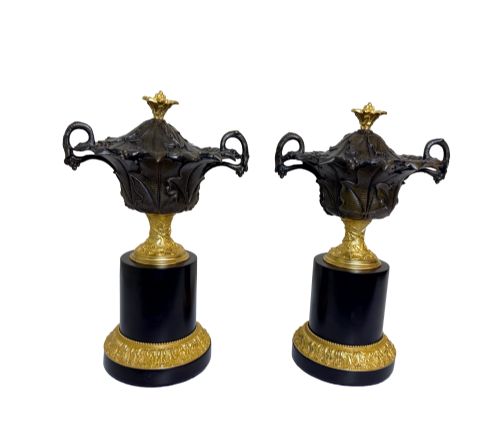
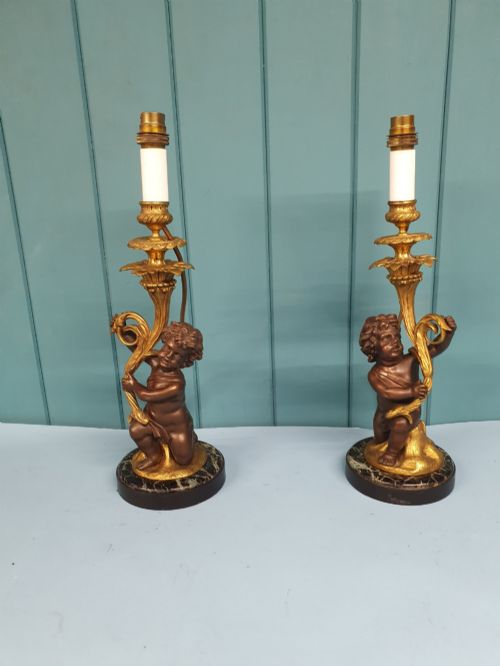
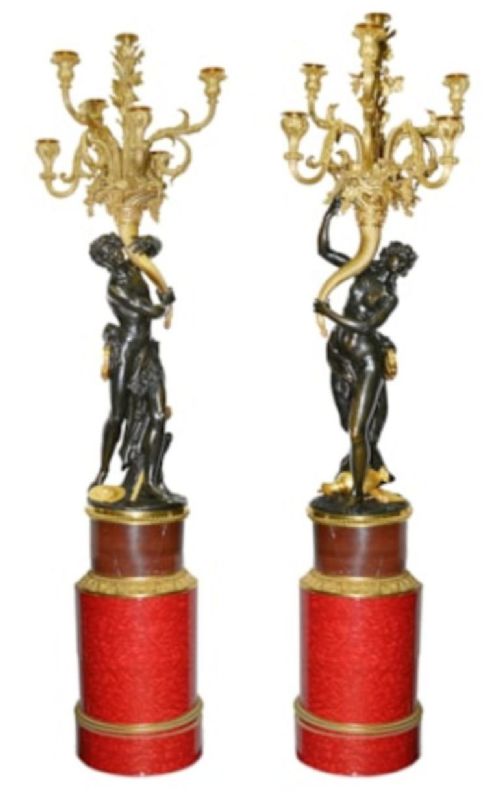
When searching for french patinated bronze, buyers encounter figures, animals, mantel clocks, and lighting supports spanning the nineteenth and early twentieth centuries. These works range from small tabletop subjects to large scale classical figures and candelabra.
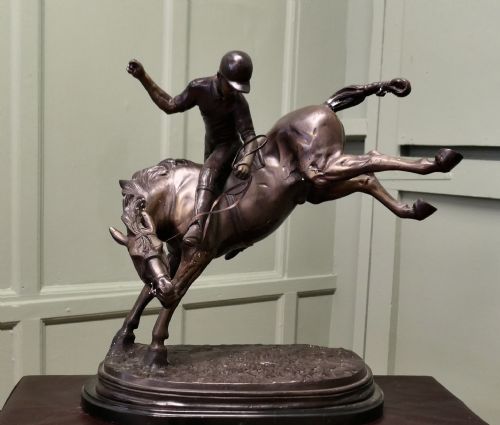
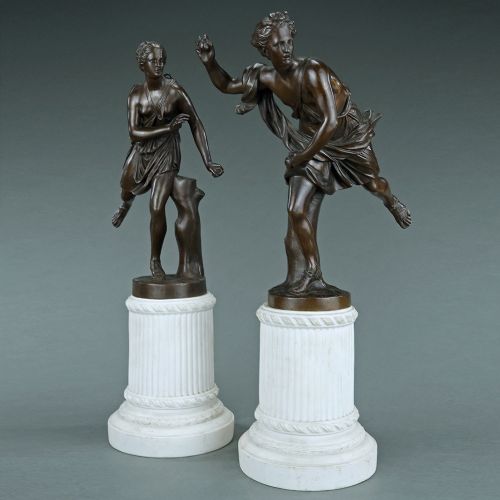
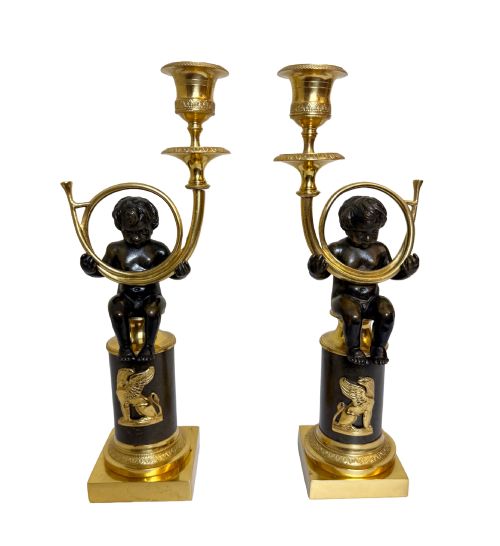
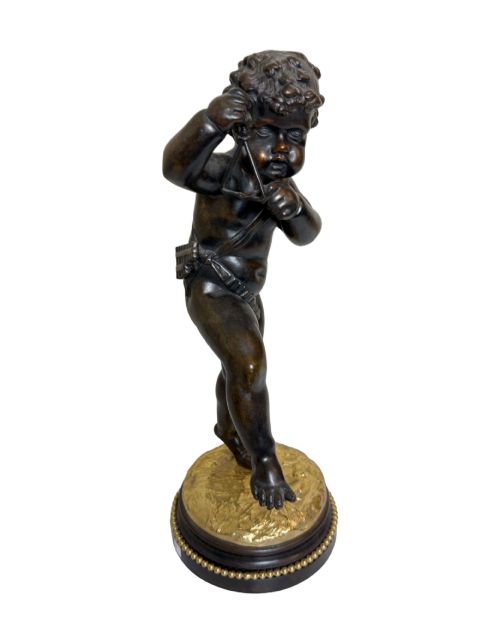
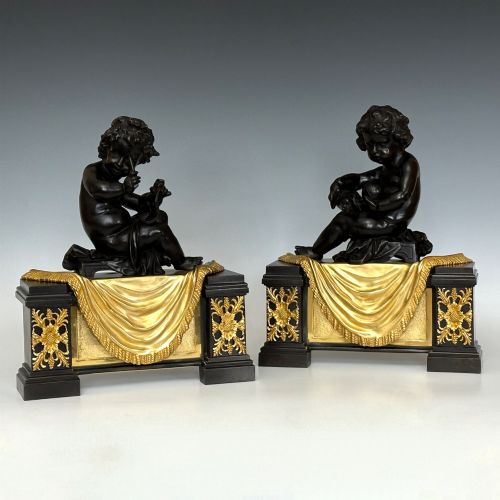
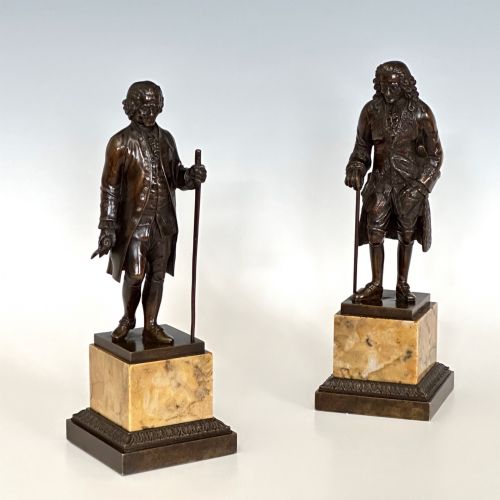
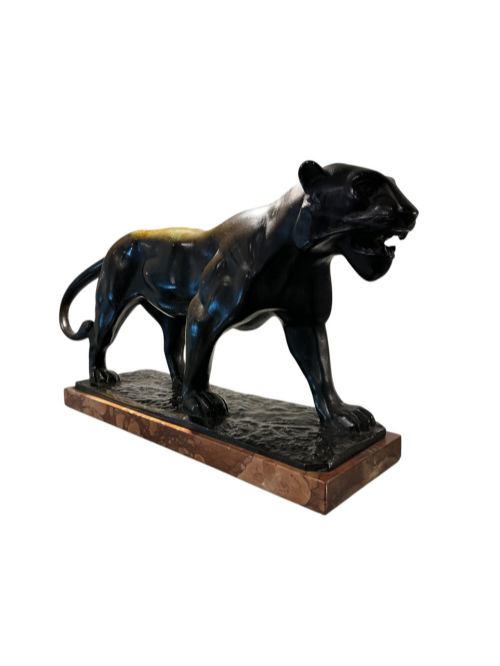
The objects commonly draw on French Empire, Neoclassical, and Animalier styles, frequently combining dark metal casting with contrasting marble or ormolu mounts. Figures of mythological subjects, putti, and naturalistic animals appear regularly across the selection.
Makers and sculptors of the period often utilised patinated bronze alongside gilt highlights to define drapery, musculature, and architectural details. Pieces frequently carry signatures or foundry stamps from established Parisian workshops.
Materials and casting methods
Foundries employed the lost wax method or sand casting to shape molten bronze into complex sculptural forms, ensuring sharp definition in hair, feathers, and facial expressions. Skilled chasers then worked the cooled metal surface with chisels and files to refine the details.
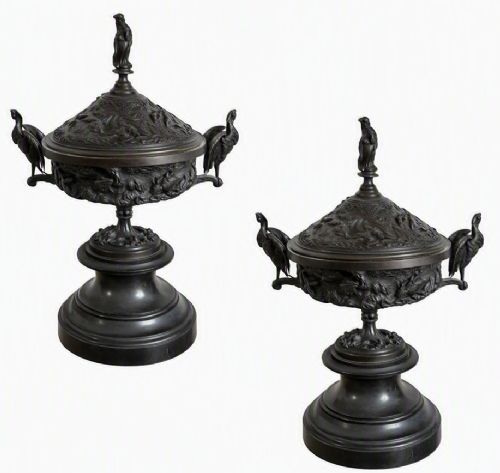
Chemical patination treatments were applied to the clean bronze surface using heat and acids to achieve deep brown, black, or greenish tones. Highlights were often polished bright or treated with gold leaf or ormolu to create contrast against the dark patinated ground.
Many sculptural groups and decorative objects incorporate carved marble bases, slate, or fluorspar pedestals, fixed with threaded bronze rods and nuts concealed beneath the assembly.
Listings feature works in French Empire, Art Nouveau, and Art Deco styles alongside nineteenth-century animalier subjects.
Distinctions in execution and finish
The standard of chasing separates average commercial castings from exceptional foundry productions. Superior pieces exhibit crisp undercutting in drapery and hair, whereas weaker examples show softened contours where surface filing was rushed.
Foundry signatures and cipher marks provide an indication of provenance, with works bearing foundry stamps like Barbedienne commanding greater attention than unsigned commercial editions.
The depth and durability of the chemical patina vary according to the chemical preparation and the purity of the alloy. Rich, stable surfaces that show subtle tonal variations indicate careful workshop control during the colouring process.
Barbedienne·P J Mêne·Vincenti·E Villanis·Émile Louis Picault
The French Patinated Bronze Glossary
- Patinated bronze
- Bronze that has been chemically treated to produce a darkened surface colour other than its natural metallic sheen.
- Ormolu
- Gilt bronze created by applying a mixture of mercury and gold to a bronze base and heating it to drive off the mercury.
- Animalier
- A nineteenth-century artistic style and movement focusing on realistic depictions of animals, particularly predators and horses.
- Chenet
- An ornamental metal fire dog placed on the hearth, often cast as a figural or architectural pair in bronze and ormolu.
- Spelter
- A zinc alloy frequently used as a less expensive substitute for bronze in decorative figures and lamps during the nineteenth century.
French Patinated Bronze: Frequently Asked Questions
Are these pieces solid bronze?
Many sculptures and decorative objects are cast as solid or hollow bronze, while others utilise related materials like patinated spelter for secondary elements.
Examining the underside, weight, and magnet response helps distinguish true copper-alloy bronze from zinc-based substitutes.
What is an animalier bronze?
Animalier bronzes depict animals in naturalistic poses, capturing predators, stags, and domestic species with anatomical precision.
These works gained popularity across Europe during the nineteenth century through specialised sculptors who studied live subjects in menageries.
How do I date a bronze clock?
Clock movements often bear stamped maker marks, serial numbers, and foundry stamps that correspond to operational dates recorded in maker registries.
Style indicators such as dial numerals, case architecture, and the presence of ormolu mounts further narrow down the decade of manufacture.