


French Pate De Verre
French pate de verre pieces are moulded glass vessels and ornaments offering rich colour and texture for any interior.
French Pate De Verre
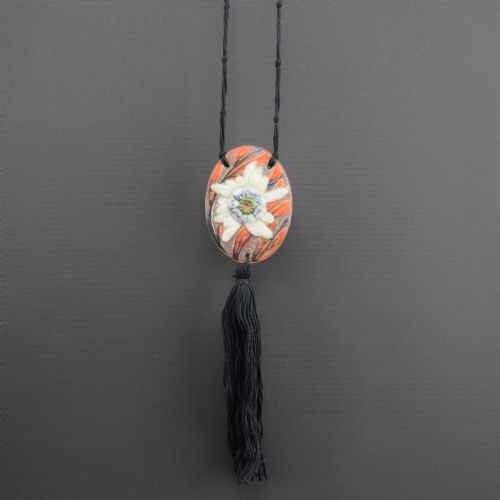
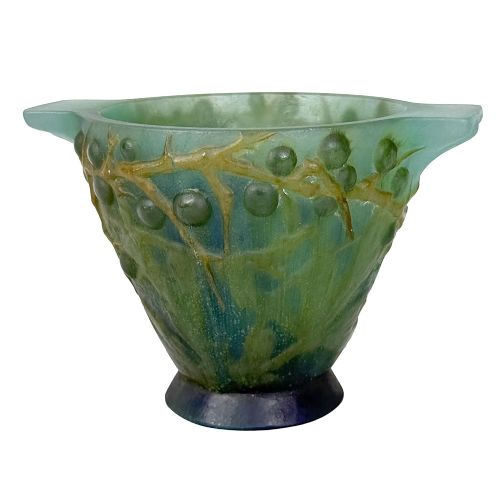
When you search for french pate de verre, you encounter decorative objects and wearable items from the late nineteenth and early twentieth centuries. These pieces reflect the prominent design movements of their time, spanning both organic Art Nouveau and geometric Art Deco aesthetics.
Vases, pendants, bowls, and lamps form the majority of the selection on this page. Makers utilised this kiln-formed glass technique to produce intricate reliefs and subtle colour gradients within each individual object.
How they were made
Craftsmen built these items using a kiln-casting method known as paste glass, packing crushed coloured glass into a mould and firing it until fused. This process often incorporated wrought iron mounts, textile cords, or brass fittings to complete the final design.
The technique allowed makers to achieve mottled colour effects and frosted textures that standard blown glass could not replicate. Every piece required careful cooling and finishing by hand after removal from the kiln.
Listings span three periods: nineteenth century, nineteen hundred, and nineteen twenty.
What varies in quality
Quality in these glass objects rests on the complexity of the colour blending and the crispness of the moulded relief. Finer examples display a deliberate gradation of tones that gives depth to floral or insect motifs.
The integration of secondary materials such as wrought iron or specialised lighting hardware also influences the overall standard. Pieces bearing clear signatures from recognised studios generally demonstrate superior execution in both the glass body and metalwork.
Argy Rousseau·Amalric Walter·Daum France·Degue·Muller Freres
The French Pate De Verre Glossary
- Pate de verre
- A French term meaning paste of glass, describing a kiln-cast glass technique where crushed glass is packed into a mould and fused by heat. This method produces a dense, sugar-like texture with variegated colours.
- Art Deco
- A design style from the nineteen-twenties and thirties characterised by geometric shapes, stylised motifs, and modern industrial lines. It succeeded the more fluid organic forms of the previous era.
- Art Nouveau
- A decorative arts movement from the turn of the twentieth century inspired by natural forms, plant stems, and insect wings. The style prioritises asymmetrical curves and flowing contours.
- Wrought iron
- Iron beaten and shaped by hand into structural mounts, chandelier frames, or lamp bases. It provides a dark, robust contrast to translucent coloured glass.
French Pate De Verre: Frequently Asked Questions
What is pate de verre?
Pate de verre is a French glass-making technique where crushed glass paste is packed into a mould and fired in a kiln.
This process creates objects with dense, frosted textures and mottled, multi-coloured effects.
How do I date these pieces?
Dating relies on stylistic markers and manufacturer signatures found on the glass surface or metal mounts.
Art Nouveau items feature organic floral motifs, while Art Deco pieces display geometric patterns typical of the nineteen-twenties.
Where were they made?
These decorative objects and lighting fixtures originated primarily in France during the late nineteenth and early twentieth centuries.
Prominent glasshouses and independent artists operated studios in Paris and Nancy.
How should I clean them?
Clean the glass gently using a soft, damp cloth without harsh chemical detergents or abrasive pads.
Take care with wrought iron or brass mounts to avoid moisture damage to original patinas.