


Blue Glass Jewellery
Blue glass jewellery brings a vibrant flash of colour to your collection, offering pieces from the Georgian era through to the mid-century.
Blue Glass Jewellery
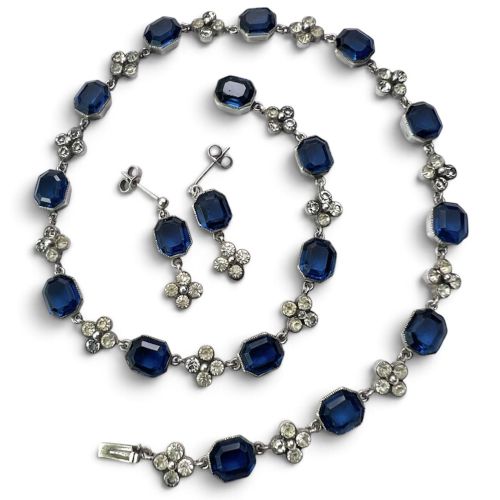
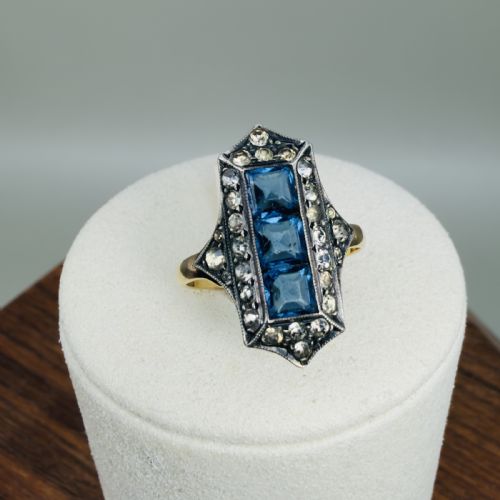
When you search for blue glass jewellery, you encounter everything from delicate dress rings to striking pendants and matching sets. The selections span the Georgian, Victorian, Edwardian, and Art Deco periods, alongside later mid-century examples.
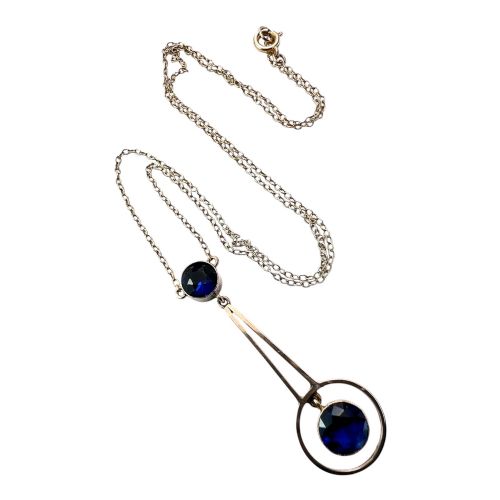
The objects include rings, necklaces, brooches, and drop pendants, reflecting diverse decorative tastes across the nineteenth and twentieth centuries.
What varies in quality
The depth and clarity of the blue glass or paste distinguish finer pieces, particularly where hand-cut facets catch the light cleanly. Superior metalwork shows crisp detailing in the silver or gold settings, whether cast, chased, or combined with enamel work.
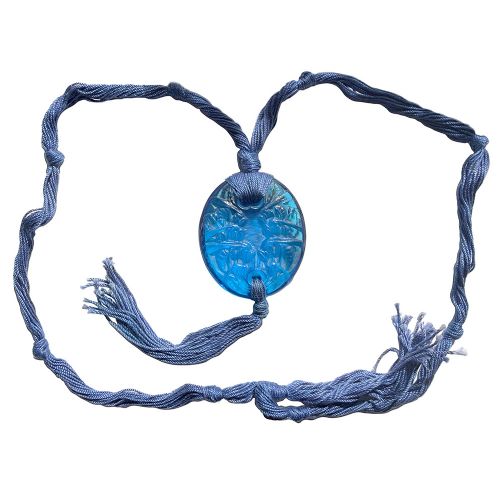
Maker attribution elevates certain works, such as signed Art Deco glass pendants, above unmarked commercial production. The overall harmony of design and the preservation of original mounts determine the standing of each piece.
Listings feature items spanning the Georgian, Victorian, Edwardian, and Art Deco eras, alongside mid-century examples.
R Lalique·Amalric Walter
The Blue Glass Jewellery Glossary
- Paste glass
- Hand-cut and polished glass used to imitate precious gemstones in antique jewellery. It allows for vibrant colour and complex faceting.
- Pate de verre
- A glass-working technique involving crushed glass packed into a mould and fused in a kiln. This method produces textured, translucent pieces with subtle gradations of colour.
- Bijouterie table
- A glass-topped display table designed to showcase small decorative items and jewellery. These pieces became popular for domestic interior display.
- Plique-a-jour
- An enamelling technique where enamel is applied to open cells without a backing, resembling miniature stained glass. It lets light pass directly through the coloured areas.
Blue Glass Jewellery: Frequently Asked Questions
How do I date blue glass jewellery?
Dating relies on the metal hallmarks, the style of the mount, and the cutting technique of the glass or paste stones. Georgian and Victorian pieces often feature closed-back settings or hair work, while Art Deco items display geometric lines.
Examining the overall construction and any accompanying boxes or original containers helps narrow down the period of manufacture.
What is paste glass in antique jewellery?
Paste glass is a heavy, high-lead glass that craftsmen cut and polished by hand to imitate diamonds and coloured gemstones. It was valued for its brilliance and ability to be shaped into intricate designs.
Collectors prize fine paste jewellery for its own artistic merits rather than simply as a substitute for precious stones.
How should I clean blue glass jewellery?
Cleaning requires gentle handling, using a soft cloth and mild soapy water to remove surface dust without disturbing delicate settings. Submersing items with foil backs or glued components should be avoided entirely.
Professional assessment is recommended for antique gold or silver pieces with fragile enamel or paste elements.
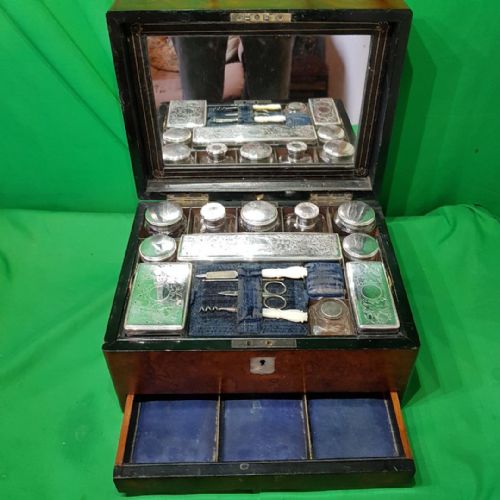
Are antique jewellery boxes considered jewellery?
Travelling sets, vanity boxes, and trinket boxes served as functional accessories to protect and transport precious items during the nineteenth century. They share materials like burr walnut and velvet with the jewellery they held.
These pieces form a natural part of a collection focused on personal adornment and storage.