
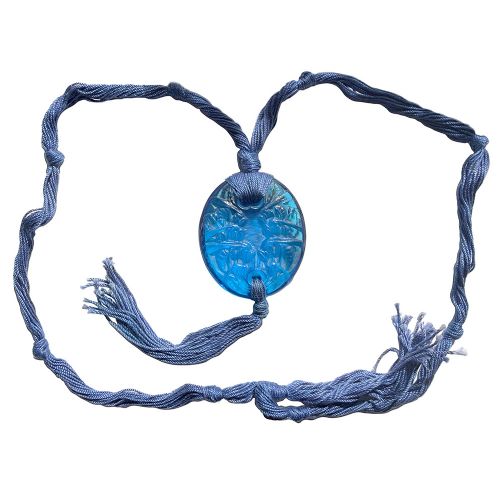


Art Deco Glass Necklace
An art deco glass necklace brings vibrant colour and geometric clarity from the interwar years straight to the collarbone.
Art Deco Glass Necklace
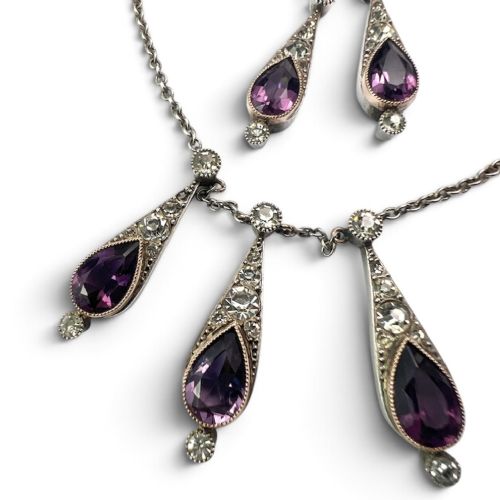
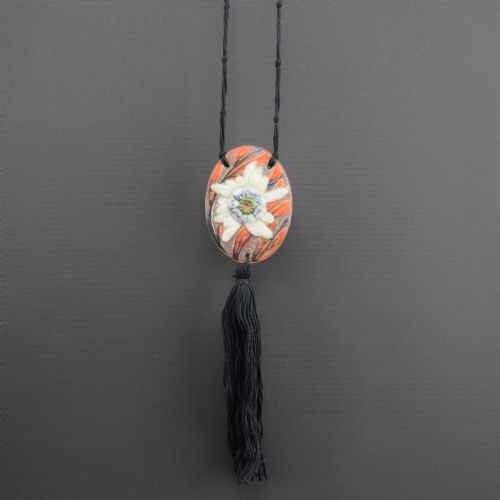
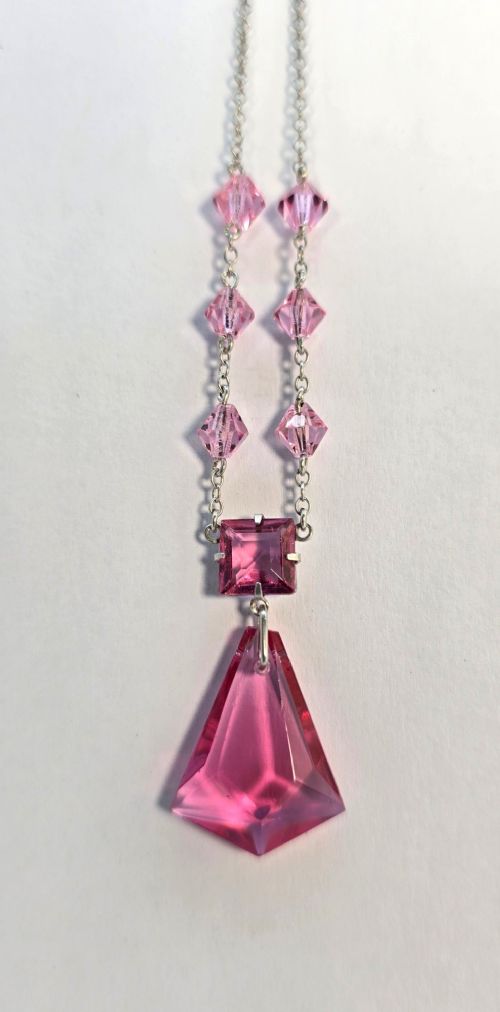
An art deco glass necklace represents the distinct geometry and bold palettes of the 1920 and 1930 decades. When you search for an art deco glass necklace, you encounter pieces that range from moulded floral motifs to sleek modernist lines.
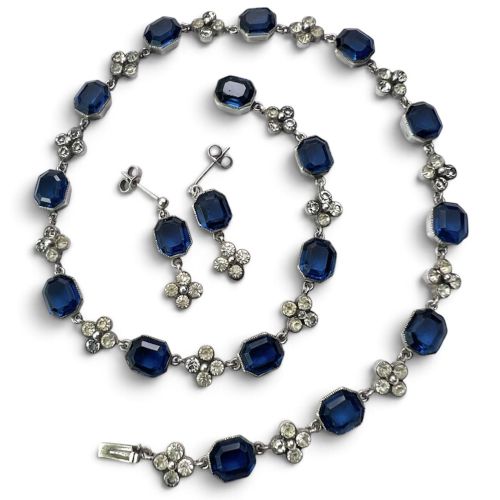
The evidence shows forms spanning simple pendants, complete jewellery sets, and bead strings paired with materials like galalith or chrome. Most examples on this page date to the 1920 period, featuring moulded or paste elements.
Makers such as René Lalique and Gabriel Argy-Rousseau appear alongside unsigned Czech Vauxhall pieces and silver-set designs. Each variant captures the shift from delicate Edwardian ornamentation to industrial-age modernity.
Materials and construction
Silver, platinum, gold, and chrome provide the metal structures, holding paste glass, hand-cut crystal, or moulded elements in secure settings. Cord and marcasite details complete the assemblies recorded in the inventory.
Wasps and cicadas share the jewellery box here alongside delicate doves and sea thistles.
Distinctions in quality
Quality rests in the precision of the glass moulding and the crispness of the surrounding metalwork, whether platinum, silver, or chrome. Signed pieces by established makers demonstrate superior depth in the pate de verre process.
The integrity of the suspension, from original cord to complex chain links, separates standard production items from masterworks. Gradations in stone cutting, especially hand-cut crystal and paste, define the upper tier of the range.
Argy Rousseau·Rene Lalique·Gabriel Argy-Rousseau·Amalric Walter
The Art Deco Glass Necklace Glossary
- Pate de verre
- A French term for glass paste, formed by packing finely crushed glass into a refractory mould and firing it until fused. This process creates pieces with a matte, sugary surface texture.
- Paste glass
- High-refractive-index glass cut and polished to imitate gemstones like sapphire or amethyst. It is securely set into silver or base metals.
- Galalith
- An early semi-synthetic plastic derived from casein and formaldehyde, widely utilised in jewellery for its rich colours and smooth finish. It appears alongside glass in modernist designs.
- Marcasite
- Small faceted pyrite stones set closely together into silver mounts to provide a sparkling, steel-like border. It frames intaglio drops and floral pendants.
Art Deco Glass Necklace: Frequently Asked Questions
How do I date an art deco glass necklace?
Dating relies on stylistic markers such as symmetry, the use of geometric cuts, and specific materials like galalith or chrome that emerged during the 1920 and 1930 periods.
Examining the metal mounts and maker signatures, where present, further narrows the timeframe of production.
What is pate de verre?
Pate de verre is a kiln-casting method where finely crushed coloured glass is fused inside a mould to produce rich, translucent sculptural pendants.
This technique creates the distinct textured surfaces seen on works by makers like Lalique and Argy-Rousseau.
How were these necklaces worn?
These pieces were designed to sit flat against the collarbone or hang lower as statement pendants, often complementing the dropped waistlines of interwar fashion.
Shorter choker styles accompanied evening wear while longer pendant drops suited daytime ensembles.
Are all glass necklaces signed?
Many fine pieces bear moulded or engraved signatures from major glasshouses, while a substantial number of quality items remain unsigned.
Unsigned examples frequently originate from workshops in places like Czechoslovakia, utilising moulded Vauxhall glass.