


French Parlour Chairs
French parlour chairs bring the decorative confidence of continental reception rooms into sitting spaces, offering carved frames and upholstered comfort.
French Parlour Chairs
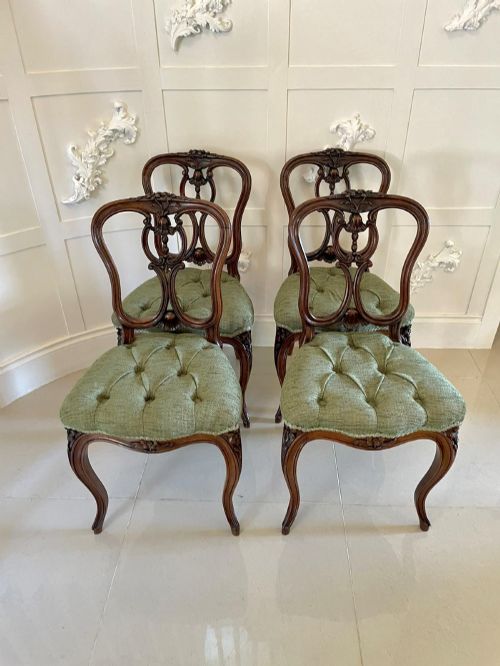
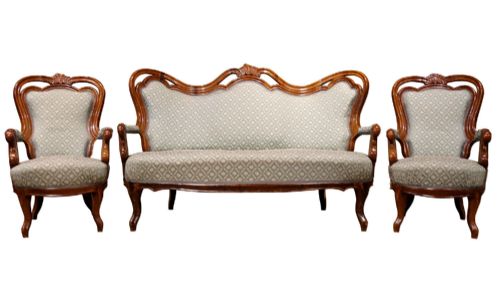
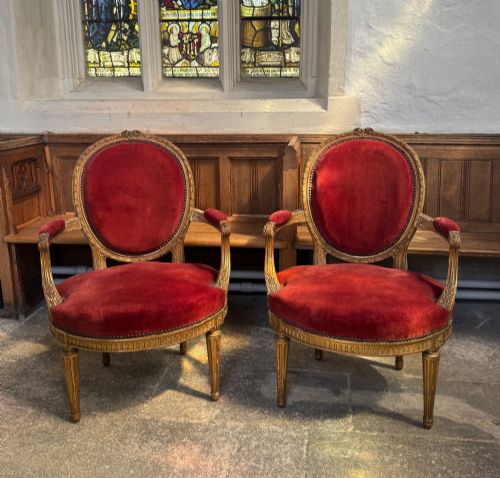
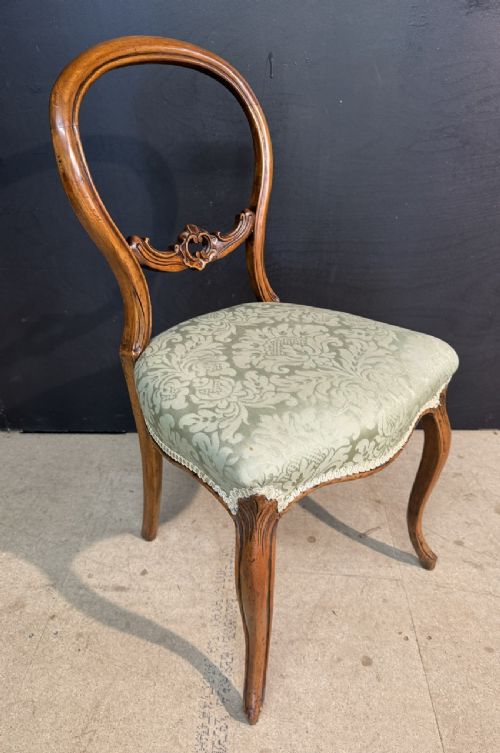
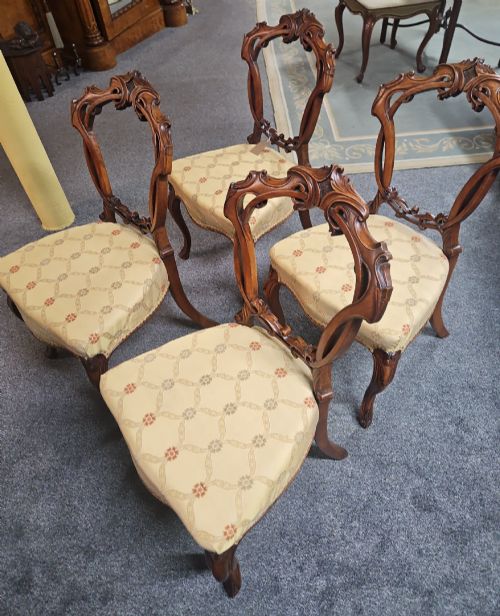
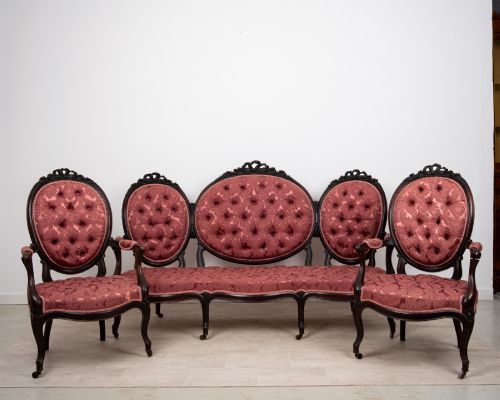
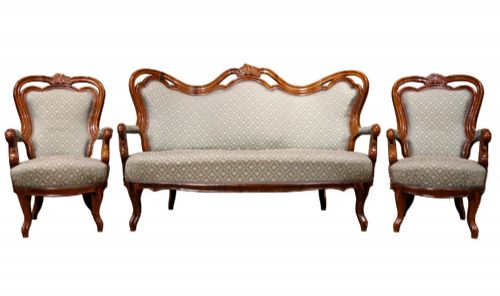
French parlour chairs encompass seating forms designed for reception spaces and formal sitting rooms, appearing in various configurations across this selection. Buyers find individual side chairs alongside pairs of armchairs and complete salon suites comprising settees and matching seats.
Walnut and giltwood dominate the construction of these pieces, alongside mahogany and oak frameworks. Upholstery fabrics range from damask to general textiles, often featuring deep buttoning that accentuates the formal character of the seating.
The selection reflects multiple revival styles spanning the nineteenth and early twentieth centuries, including Louis XV and Louis XVI revivals alongside Rococo and Empire influences. These pieces draw on historical French design vocabularies adapted by makers in Britain and on the continent.
Materials and construction
Carved wooden frames form the structural backbone of these seats, utilising dense hardwoods like walnut and mahogany shaped with cabriole legs or classical columns. Giltwood surfaces provide an ornate finish through applied gold leaf over gesso, while ebonised or painted treatments offer alternative decorative schemes.
Upholstery techniques integrate traditional stuffing methods enclosed within textiles such as damask and woven fabrics. Deep buttoning secures the padding while creating distinct geometric patterns across backs and seats, supported by internal webbing and spring systems where appropriate to the period.
French Parlour Chairs Retail Price Guide 2026
Typical asking prices for french parlour chairs among the pieces listed under this phrase on Sellingantiques today, from the lower quarter to the upper quarter. They describe what is for sale here now, not the wider market.
Some Victorian visitors must have possessed extraordinary posture to endure the deeply buttoned embrace of these formal walnut settees.
Distinguishing quality in construction and design
The sophistication of the wood carving determines much of the distinction between standard production and finer examples. Crisp, deeply undercut foliage and moulded contours on walnut and giltwood frames indicate skilled hand-carving rather than mass-produced stamping.
Coherence within suites and pairs elevates the standing of individual items, particularly where matched wood grains and uniform upholstery treatments survive intact. The integration of period-appropriate textiles and sound joinery ensures the architectural integrity of complex revival forms.
Morison & Co of Edinburgh
The French Parlour Chairs Glossary
- Cabriole leg
- A furniture leg that curves outward at the knee and tapers inward toward the ankle, mimicking animal limbs. This form appears frequently on chairs inspired by French Rococo design.
- Giltwood
- Timber treated with a thin layer of gold leaf applied over a prepared gesso ground. It provides a brilliant metallic finish seen on many formal salon chairs.
- Bergere
- An enclosed upholstered armchair with wooden framing exposed around the sides and back. These seats typically feature padded arms and a loose squab cushion.
- Damask
- A reversible figured fabric woven on a jacquard loom with patterns formed by contrasting warp and weft threads. It is commonly used for the formal upholstery of period seating.
- Fauteuil
- An open-arm armchair with upholstered back and seat framed in exposed wood. The arms usually feature padded elbow rests.
French Parlour Chairs: Frequently Asked Questions
What is a french parlour chair?
French parlour chairs are decorative seats designed for formal reception rooms, featuring carved wooden frames and upholstered backs and seats.
They reflect historical revival styles such as Louis XV and Rococo, bringing continental elegance into domestic interiors.
How do I identify a louis xv revival chair?
Louis XV revival pieces display characteristic asymmetrical curves, scrolled toes, and flowing cabriole legs.
Carvings often incorporate floral motifs and C-scrolls without the rigid symmetry found in later neoclassical designs.
Where were these salon suites used?
Salon suites furnished the principal reception rooms of large houses where hosts entertained visitors.
They provided coordinated seating arrangements comprising settees, armchairs, and matching side chairs for polite conversation.
Are giltwood chairs fragile?
Giltwood furniture requires careful placement away from direct sunlight and moisture to protect the delicate gold leaf and gesso surface.
Normal domestic use is entirely appropriate provided the frames are handled with reasonable care.