


French Painted Side Cabinet
A french painted side cabinet brings continental elegance to a room, offering surface space and concealed storage through painted wood and marble tops.
French Painted Side Cabinet
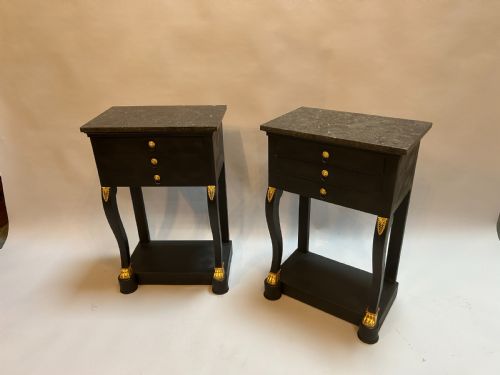
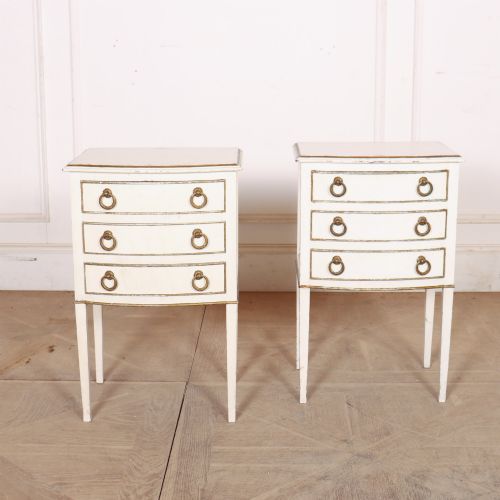
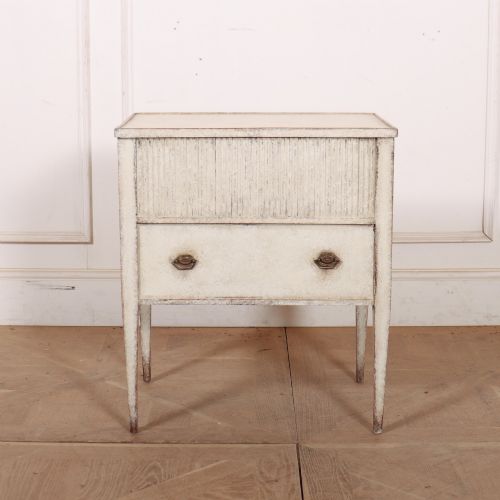
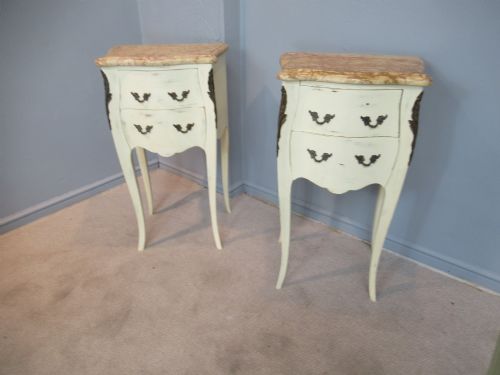
A french painted side cabinet encompasses a range of compact storage forms, most frequently appearing as bedside chests, night tables, and smaller commodes. These pieces emerge across the nineteenth and early twentieth centuries, reflecting styles from Louis XV and Louis XVI revivals to French Empire and Provincial designs.
Materials and Technique
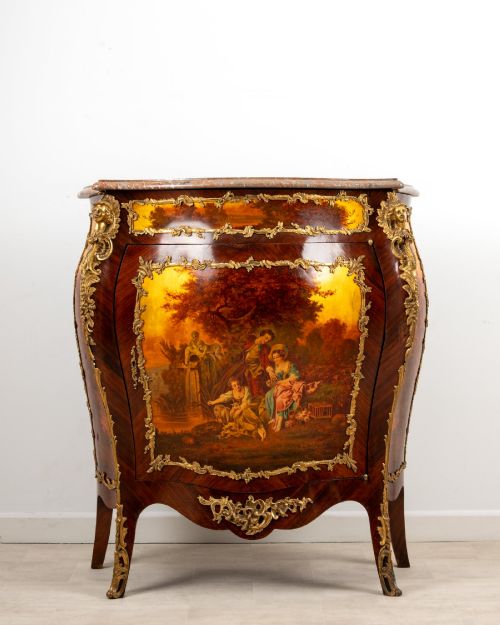
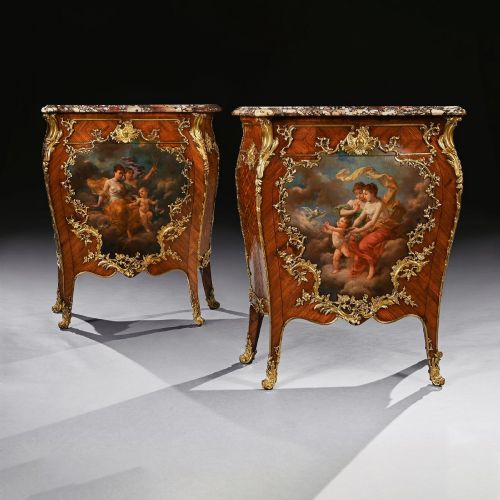
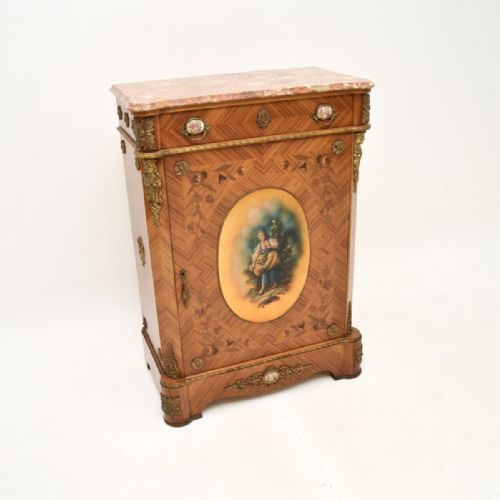
Makers constructed these cabinets using woods such as kingwood, rosewood, satinwood, and pine, applying paint finishes and decorative panels. Vernis Martin techniques appear on select pieces, combining layered varnish and painted scenes.
Surfaces frequently incorporate marble tops, supported by brass, gilt bronze, or metal mounts, or augmented with ormolu details.
Listings span periods from the eighteenth century to the 1930s, utilising marble, kingwood, brass, and painted wood.
Judging Quality
Quality rests upon the execution of the painted panels and the integration of decorative mounts. Finely rendered figural or floral paintwork elevates a piece, particularly when combined with genuine ormolu or gilt bronze rather than simpler metal mounts.
The choice of secondary woods, the weight and fit of the marble top, and the cohesion of revival styles dictate the standing of an individual cabinet within the range.
The French Painted Side Cabinet Glossary
- Commode
- A low chest of drawers or cabinet designed for domestic storage. These pieces frequently feature marble tops and decorative painted surfaces.
- Vernis Martin
- A simulated Japanese lacquer technique developed in eighteenth-century France. The method uses resin varnishes over painted decorations to create a glossy, luminous finish.
- Ormolu
- Gilded bronze mounts applied to furniture edges and corners. This decorative hardware enhances the architectural lines of the cabinet.
- Demi-lune
- A half-moon shape used for the footprint of certain tables and cabinets. This curved form fits flush against a wall while softening room geometry.
French Painted Side Cabinet: Frequently Asked Questions
What is a French painted side cabinet used for?
These cabinets serve as bedside storage, lamp tables, or accent pieces in reception rooms. Their enclosed cupboards and drawers hold small personal items while the top surface displays lighting or decorative objects.
Their compact footprints allow them to fit into tight spaces where larger case furniture cannot go. They bring colour and period character to domestic interiors.
How do I identify the period of these cabinets?
Dating relies on stylistic cues, construction methods, and materials. Pieces referencing Louis XV or Louis XVI revivals typically date from the nineteenth century, while simpler painted pine versions may trace back to provincial workshops.
Hardware, wood types, and the ageing of the paint surface provide further chronological clues. Archive comparisons help link specific decorative traits to decades between the mid-nineteenth and early twentieth centuries.
Are marble tops original to these side cabinets?
Many nineteenth and early twentieth-century pieces incorporate marble tops as an original design feature. The stone provides a durable, heat-resistant surface that contrasts with painted wooden carcases.
Matching the profile and thickness of the marble to the wooden frame helps confirm authenticity. Slips in edge bevelling or mounting can indicate later replacements.
How do I care for a painted wooden surface?
Painted and varnished surfaces require gentle maintenance using a soft, dry cloth for dusting. Avoid chemical cleaners, harsh solvents, or excessive moisture that might lift or cloud the paint layers.
Keeping the furniture away from direct sunlight and strong heat sources protects both the painted panels and the underlying wood. Wax polishes should be used sparingly, and only on unpainted wooden sections.