
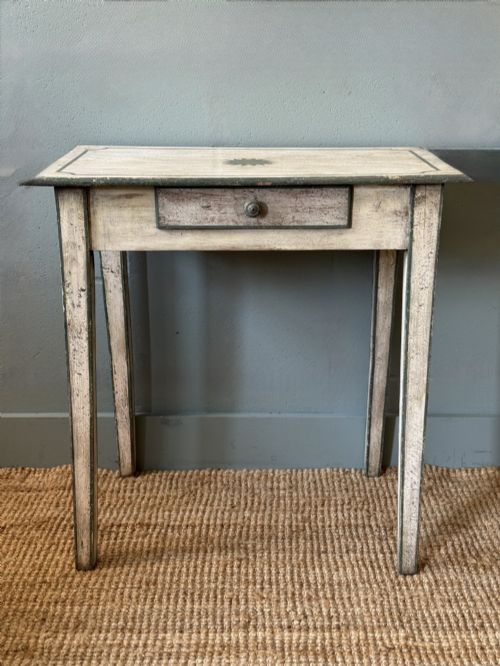
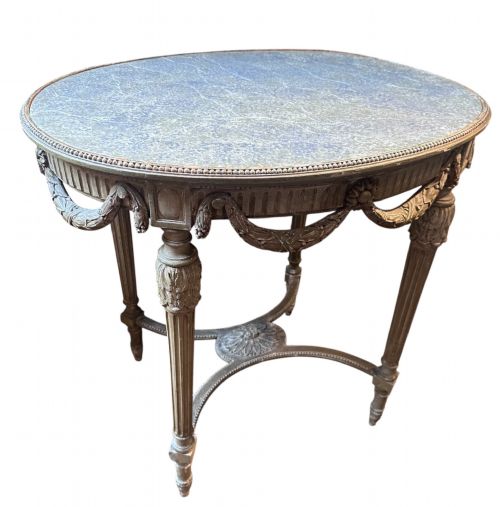


French Painted Occasional Table
A french painted occasional table brings lightness and decorative charm to a room, offering a functional surface shaped by provincial or formal taste.
French Painted Occasional Table
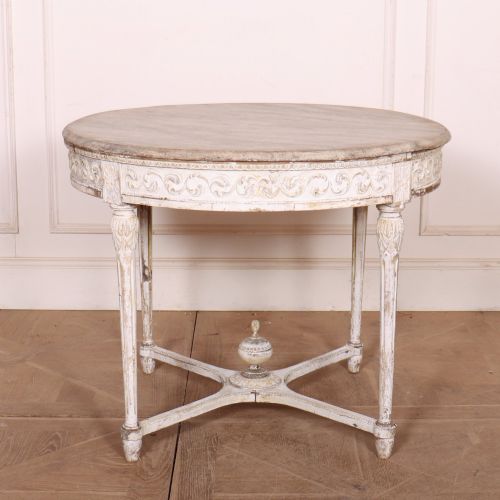
A french painted occasional table encompasses compact side pieces, lamp stands, Gueridon designs, and small centre tables originating from the nineteenth century into the twentieth century. These domestic items emerge in styles ranging from Louis XV and Louis XVI to Rococo, Neoclassical, and provincial interpretations.
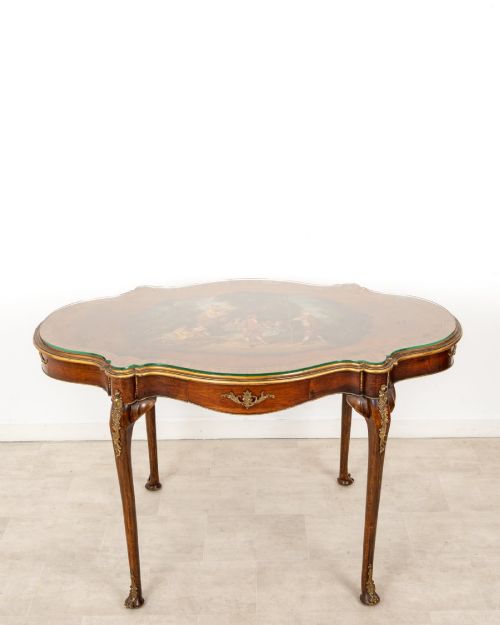
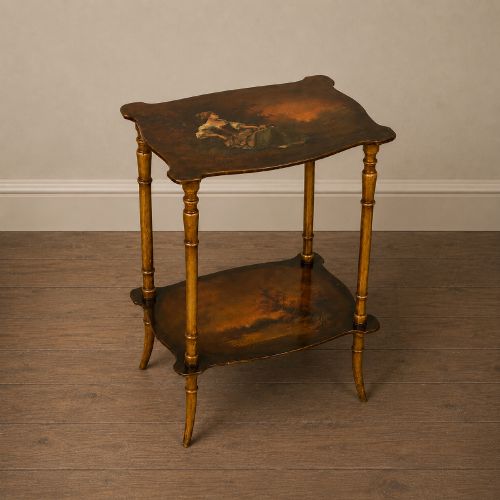
The versions most commonly met on this page span the nineteenth century and the Edwardian era, often featuring painted wood surfaces alongside marble tops or tiered structures. Makers and workshops applied floral motifs, Chinoiserie lacquer, or parcel gilding to create versatile tables suited for display and daily use.
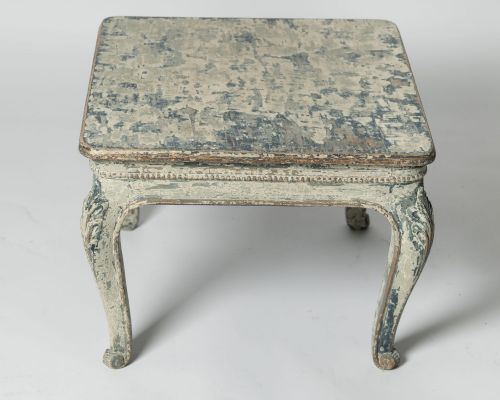
Forms vary from round gueridons and oval shapes to nests of tables and rectangular side tables, reflecting the diverse requirements of period interiors. Walnut, fruitwood, and pine serve as the underlying timbers beneath decorative paintwork and gilt bronze mounts.
Materials and technique
Construction relies upon timber frameworks of walnut, fruitwood, pine, and carved wood, which provide the structural foundation for decorative surface treatments. Artisans applied layers of paint, Vernis Martin finishes, Chinoiserie lacquer, and parcel gilding directly to the wood.
Many examples incorporate inset marble tops, Sevres style porcelain plaques, or brass and ormolu mounts to enhance the decorative scheme. Hand painting and floral decoration distinguish the surface work across both provincial and formal tables.
Listings feature periods spanning from the eighteenth century through to the 1940s, with nineteenth-century examples dominating the selection.
Variations in quality
Quality separates through the crispness of hand-carved details, the execution of painted decoration, and the integration of bronze or ormolu mounts. Tables featuring nuanced brushwork and detailed floral motifs display superior craftsmanship compared to simpler decorative treatments.
The choice of materials also defines the tier, with heavy marble tops, fine porcelain inserts, and genuine gilt wood or parcel silvering elevating a piece above standard painted timber construction.
The French Painted Occasional Table Glossary
- Gueridon
- A small round table, typically supported by a central pillar or three legs, often featuring a marble top.
- Vernis Martin
- A simulated Japanese lacquer technique developed in eighteenth-century France, known for translucent varnish and painted scenes.
- Ormolu
- Gilt bronze mounts applied to furniture for decorative enrichment, common in formal French design.
- Étagère
- A small open tiered table designed for display, utilising two or more shelves supported by slender uprights.
- Chinoiserie
- European decorative style employing imitation Chinese motifs, seen on lacquered occasional tables.
French Painted Occasional Table: Frequently Asked Questions
How were these tables used originally?
These tables served various light domestic functions, acting as lamp stands, side supports for reading materials, or display surfaces for decorative objects in drawing rooms and boudoirs.
Their portable nature allowed owners to move them easily about the room as social habits demanded.
How do I identify Louis styles?
Louis XV and Rococo designs feature curved cabriole legs and asymmetric floral carving, while Louis XVI and Neoclassical pieces display straight fluted legs and geometric symmetry.
Painted surfaces on these styles often utilise contrasting gilt highlights or soft pastel colours.
Are marble tops original?
Many occasional tables and gueridons were manufactured with fitted marble tops to provide a durable and cool surface for lamps and drinks.
These stone slabs sit within the wooden frame, matched to the specific period and style of the table.
How do I care for painted surfaces?
Maintain painted and gilt timber by dusting gently with a dry, soft cloth and avoiding chemical polishes that can degrade historic finishes.
Keep the tables away from direct sunlight and fluctuating heat sources to protect the painted decoration and underlying wood.