


French Painted Bedstead
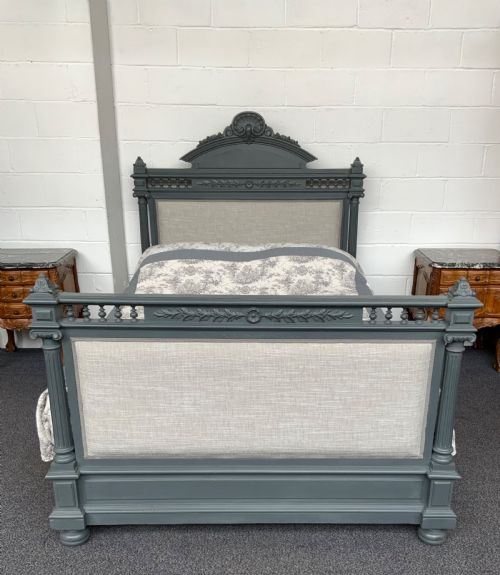
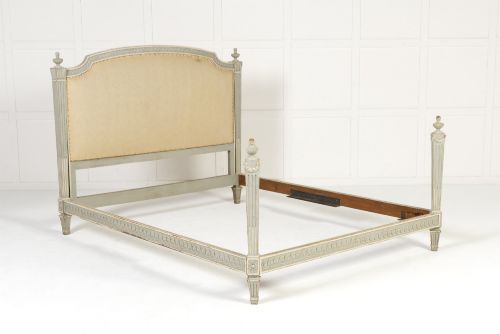
These pieces of french painted bedstead bring continental character to a bedroom through carved woodwork, painted finishes and upholstered panels.
French Painted Bedstead
A french painted bedstead forms the central framework of a sleeping space, constructed in sizes ranging from single and double up to king and super king proportions. Buyers seeking this form will find examples originating primarily from the nineteenth and early twentieth centuries, spanning periods such as the Victorian era and the nineteen-twenties.
The objects appear in regional and revivalist aesthetics including Louis XVI style, Louis XV style, French Provincial and French Chateau forms. These frames frequently incorporate matched bedside furniture or seating pieces when presented as part of a larger bedroom suite.
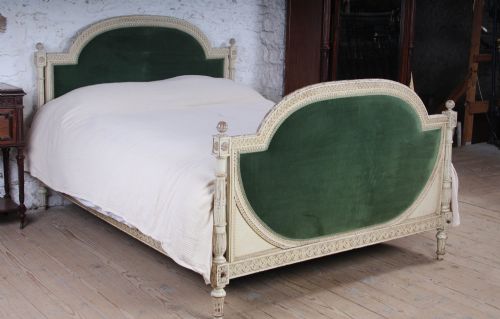
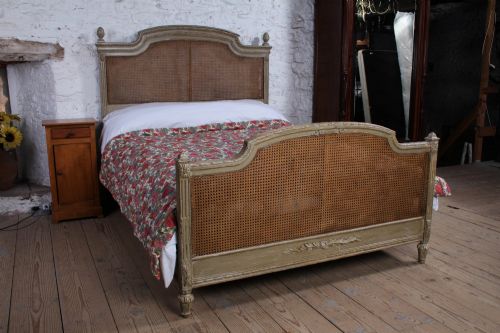
Single beds, double frames and larger king sizes dominate the selections, alongside platform configurations and corbeille designs with curved head and footboards. Many examples utilise cane panels or fabric upholstery within the painted wooden structure.
How they were made
Makers constructed these frames using painted wood and timber frameworks embellished with carved details, parcel gilding and hand-painted floral panels or portrait medallions. Some variants combine timber structures with cast iron, wrought iron and brass embellishments.
Upholstery techniques involve fabric coverings applied to headboards and footboards, utilising new textiles or retaining original material. Caning is woven into wooden frames to create textured panels alongside solid painted surfaces.
Materials recorded across the inventory include painted wood, cane, brass, cast iron, wrought iron and various upholstered fabrics.
What varies in quality
The refinement of carved woodwork and the execution of hand-painted decoration separate simpler frames from elaborately detailed pieces. Superior examples display crisp architectural carving in styles like Louis XVI revival, alongside carefully rendered polychrome portrait panels or floral motifs.
The integrity of integrated materials such as woven cane panels and cast or wrought iron structural components influences the overall standard. Matching suites that retain corresponding bedside cabinets or chairs demonstrate greater original cohesion.
The French Painted Bedstead Glossary
- Louis XVI Style
- A neoclassical design aesthetic characterised by straight lines, fluted columns and symmetrical carved ornamentation. This style appears frequently in nineteenth and early twentieth-century French bed frames.
- Caning
- A woven rattan material used to create open, textured panels within headboards and footboards. It provides a lighter visual weight to substantial wooden bed frames.
- Polychrome
- Painted in multiple colours, often found on decorative panels depicting floral arrangements or portraits. This technique adds pictorial detail to the painted wooden surface.
- Corbeille
- A French bed shape featuring curved or basket-like enclosing ends that wrap around the sleeper. These frames typically combine painted wooden structures with upholstered elements.
- Parcel Gilt
- A surface treatment where specific carved details or mouldings are highlighted with a thin layer of gold leaf over a painted base. It provides subtle contrast against the main body colour.
French Painted Bedstead: Frequently Asked Questions
How do I choose the right size?
Check the internal dimensions against standard mattress sizes rather than relying solely on descriptive terms like king or double, as antique proportions differ from modern standards.
Consider the height of the headboard and footboard in relation to your bedroom ceiling and window placement.
Are modern mattresses compatible with these beds?
Many listings include supportive bases or side irons designed to accommodate standard modern mattresses, but you should verify the internal frame measurements.
Some platforms require custom or specific slatted bases to fit historical timber dimensions correctly.
How should I care for painted wood and fabric?
Dust painted wooden surfaces regularly with a soft, dry cloth and avoid harsh chemical cleaning products that could damage the finish.
Vacuum upholstered panels gently using a low suction attachment to preserve the fabric and internal padding.
How do I distinguish between different revival styles?
Louis XVI style pieces generally feature straight, geometric lines, fluting and neoclassical motifs, whereas Louis XV style frames display more flowing, asymmetrical curves and rococo scrolling.
Examine the carved details on the crest rail and footboard to identify which French period inspired the design.