




French Painted Canape
A french painted antique canape brings elegance to a room through curved woodwork and classic upholstered forms.
French Painted Canape
A french painted antique canape is a seating form designed for parlours and salons, encompassing sofas, settees, daybeds, and love seats. When searching for a french painted antique canape, buyers encounter pieces from the nineteenth century alongside later revivals from nineteen ten and nineteen sixty.
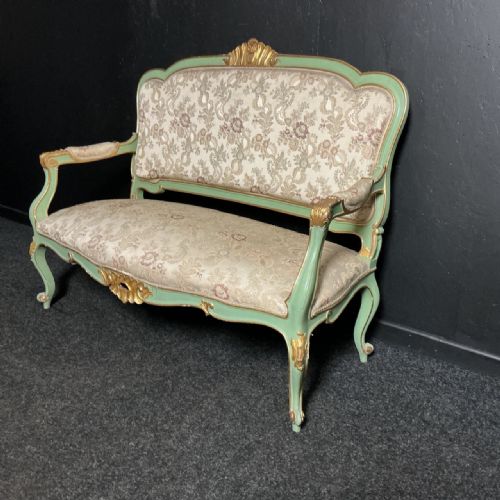
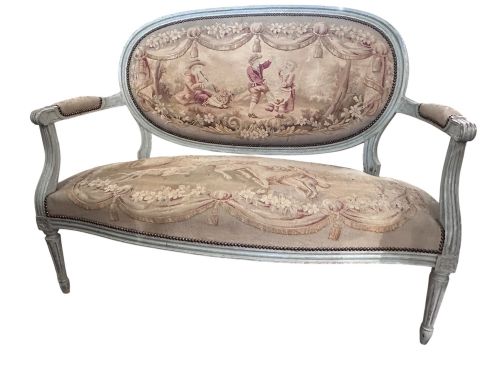
The selections on this page feature specific stylistic revivals, notably Louis XV and Louis XVI styles, alongside Edwardian neoclassical revival and French chateau aesthetics. These variations demonstrate the enduring appeal of classical seating forms across different decades.
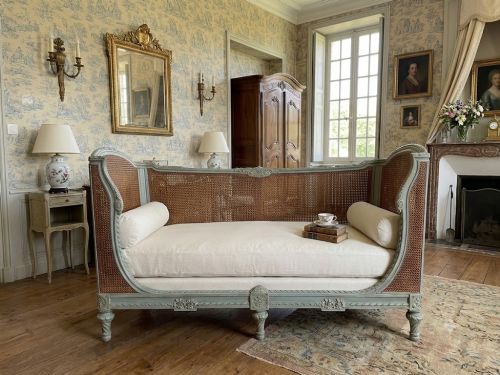
Most examples originate from the nineteenth century, built as multi-seat sofas or canapes with painted wood frames. Buyers frequently meet pieces that combine painted finishes with fabric upholstery or cane work.
Materials and construction
Makers utilised timber such as beech and other woods for the structural framework of each canape, shaping the components through carved wood techniques. These wooden frames received painted finishes, sometimes complemented by gilt details.
Upholstery and seating surfaces relied upon fabric, linen, and cane. Canework provided a lighter texture for daybeds and settees, while fabric and linen upholstered the padded backs and seats of larger sofas.
One unexpected piece wears Viennese enamel mounts alongside its nineteenth century frame.
Judging quality and execution
The refinement of the carved wood elements distinguishes finer examples, particularly where floral or classical motifs articulate the crest rails and frames. The crispness of the carving reflects the skill invested in the timber before the application of paint.
The integrity of the painted finish and the integration of cane panels or textile upholstery determine the overall presentation. Original surface treatments and carefully executed joinery elevate the stature of an individual settee.
The French Painted Canape Glossary
- Canapé
- A decorative sofa or settee with an upholstered seat and back, originating in France. These pieces often feature exposed wooden frames and carved details.
- Bergère
- An enclosed armchair or settee with upholstered sides integrated into the back. This seating type provides a comfortable, enveloping form.
- Cane
- Woven material made from rattan or other plant stems, utilised for chair and settee seats or backs. It offers a breathable and visually light surface.
- Louis XVI Style
- A neoclassical design aesthetic characterised by straight lines, symmetry, and classical ornamentation. It contrasts with the earlier, more fluid curves of the Louis XV style.
French Painted Canape: Frequently Asked Questions
What is a french painted antique canape?
A french painted antique canape is an upholstered settee or sofa featuring a painted wooden frame, originating from periods such as the nineteenth century or early twentieth century.
These pieces reflect historic French design aesthetics, including Louis XV and Louis XVI revival styles, designed for formal reception rooms.
How were these settees used originally?
In historic interiors, these settees served as sophisticated seating in salons, parlours, and drawing rooms for entertaining guests.
They provided comfortable seating for multiple people while functioning as prominent decorative focal points within a room.
How do I care for cane and painted wood?
Maintaining painted wood and cane requires gentle dusting with a soft, dry cloth and avoiding harsh chemical cleaners that might degrade the finish.
Keeping cane panels hydrated in very dry environments prevents the natural material from becoming brittle over time.
How do I distinguish Louis XV from Louis XVI?
Louis XV style pieces are defined by flowing asymmetrical curves, cabriole legs, and rococo ornamentation. This aesthetic creates a soft and organic silhouette.
Louis XVI style pieces introduce straight fluted legs, symmetry, and neoclassical geometric motifs, reflecting a return to classical architectural lines.