
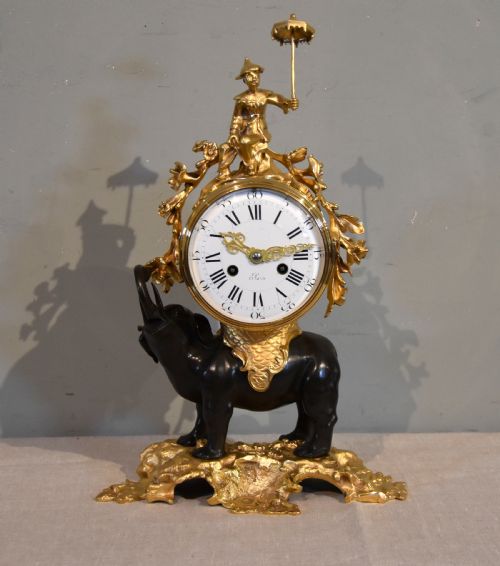
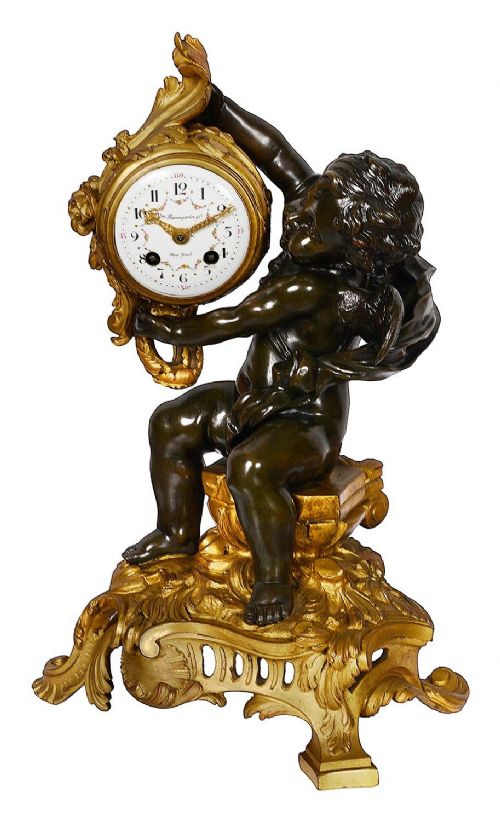


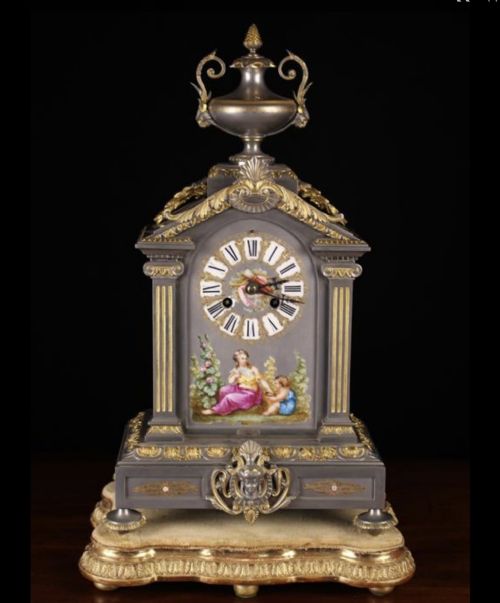


French Ornamental Mantel Clock
These french ornamental mantel clock pieces combine sculptural bronze, marble and porcelain to anchor a room with period proportion and mechanical movement.
French Ornamental Mantel Clock
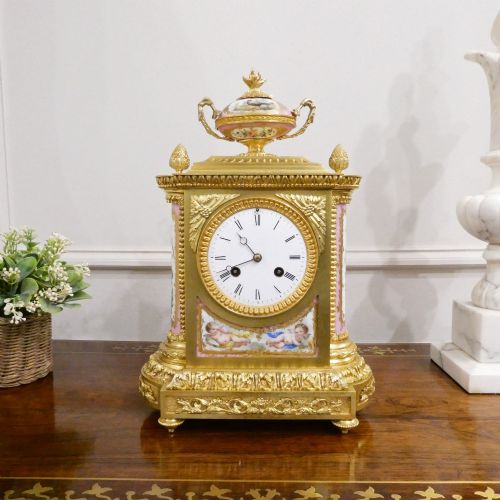
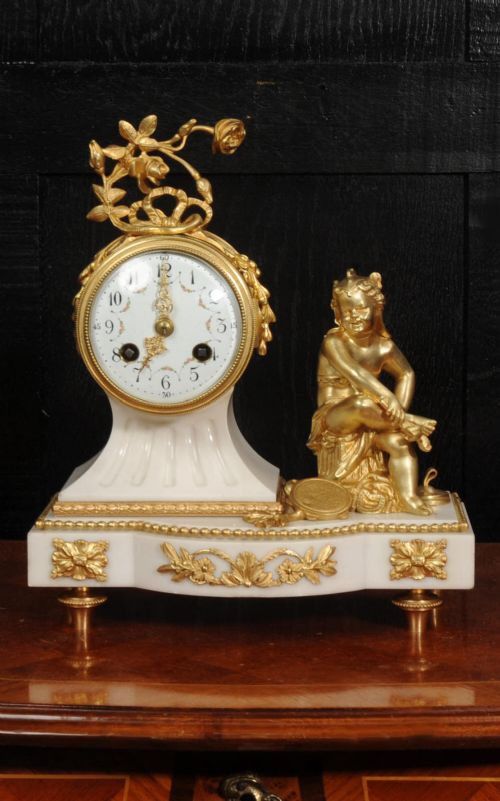
A french ornamental mantel clock serves as a functional centrepiece, drawing on architectural forms from portico designs to figural groups involving cherubs, lions and elephants. Most examples encountered here date from the nineteenth century, spanning Victorian production, Napoleon III extravagance and earlier revivals.
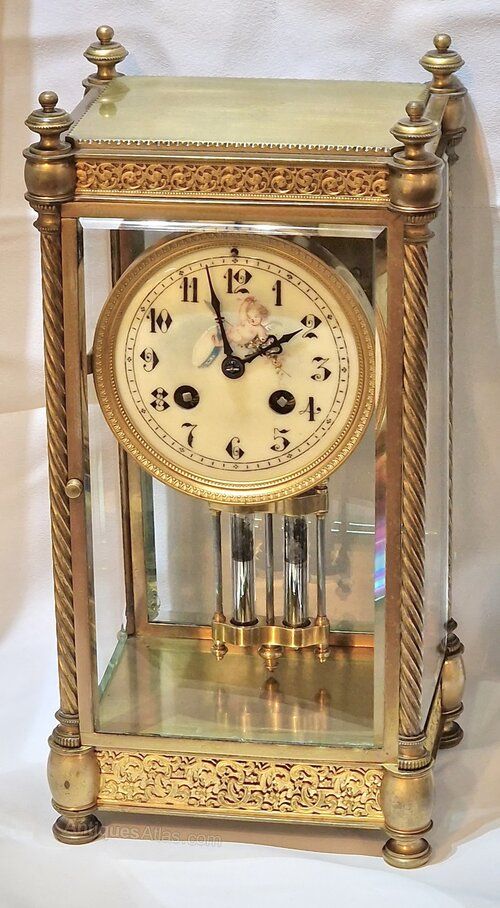
Makers housed these movements in varied housings, from four-glass enclosures showing visible escapements to porcelain-mounted urns and multi-piece garnitures. The aesthetic borrows heavily from French Empire, Louis XVI and Rococo vocabularies, translating grand interior design into tabletop scale.
Materials and Technique
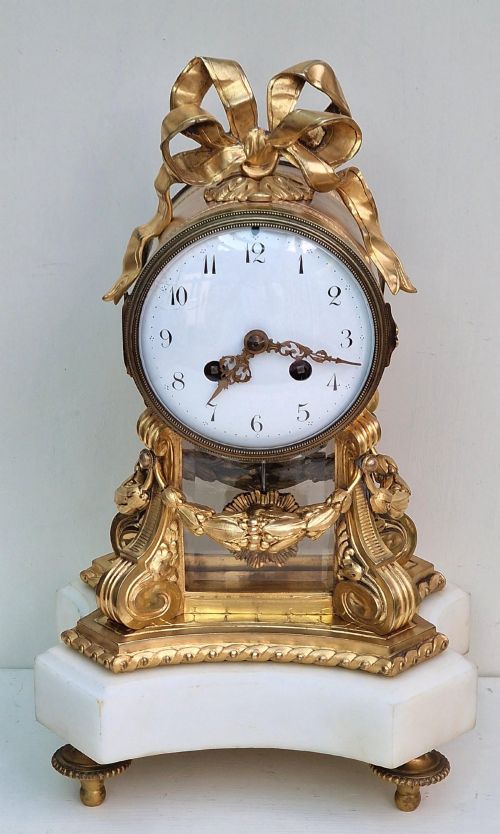
Foundry work relied on cast bronze, often treated with ormolu gilding or left in its natural dark patina, paired with white or coloured marble bases and carved alabaster. Gilt bronze merges with hand-painted porcelain panels depicting floral motifs or pastoral scenes, framed by brass bezels.
Glazing techniques created transparent four-glass housings that exposed the inner workings, while enamel was applied to chapter rings and dial faces. Cabinetmakers also utilised rosewood and lemon wood inlay for specialised portico clock frames.
Listings feature periods spanning the eighteenth, nineteenth and early twentieth centuries, utilising materials such as ormolu, porcelain, alabaster and glass.
Craft and Articulation
Quality rests in the crispness of the bronze chasing and the depth of the mercury gilding, where inferior pieces show softened cast details and dull metallic surfaces. Superior examples feature fully integrated sculptural figures, such as distinct animal forms or detailed cherubs, rather than generic applied ornaments.
The sophistication of the movement and dial construction further separates grades, with fine specimens incorporating visible escapements, enamel cartouches and signed brass backplates from established Parisian foundries.
Jean-Baptiste Delettrez·Japy Freres·Henry Dasson·Lemerle Charpentier·James Murray London·F Marti
The French Ornamental Mantel Clock Glossary
- Ormolu
- A technique of applying finely ground high-carat gold to a bronze object using a mercury amalgam. This process yields a warm, enduring lustre characteristic of high-status French pieces.
- Clock Garniture
- A matching set comprising a central mantel clock flanked by matching decorative objects such as urns or candelabra. These arrangements created symmetrical displays on nineteenth-century mantelpieces.
- Four Glass Clock
- A timekeeper housed in a brass or gilt frame with glass panels on all four sides. This design allows light to pass through and reveals the pendulum and gear train from multiple angles.
- Portico Clock
- A clock featuring an architectural case supported by columns, reminiscent of classical temple facades. Makers often inlaid these wooden or metal structures with contrasting veneers.
- Japy Freres
- A prominent French clockmaking firm known for supplying quality movements to various retailers and makers throughout the nineteenth century.
French Ornamental Mantel Clock: Frequently Asked Questions
How do I wind a french ornamental mantel clock?
Most eight-day movements require a dedicated key inserted into the winding holes on the dial face to tension the spring barrels evenly. Care must be taken not to overwind the mechanism.
Moving the hands should be done following specific directional guidelines to protect the striking train and escapement from misalignment.
How do I identify a nineteenth-century French clock?
Examination of the movement backplate often reveals maker stamps, serial numbers and exhibition medals that help date the piece. Stylistic cues such as Louis XVI revival details or Napoleon III proportions also point to the era.
Cast bronze quality and enamel dial construction provide further physical evidence of nineteenth-century French manufacturing standards.
Where should I place a heavy marble clock?
Due to the substantial weight of marble and bronze housings, select a stable, level surface capable of supporting heavy loads without shifting. A solid fireplace mantle or low sideboard works best.
Ensuring the surface is level helps the pendulum swing evenly and keeps the clock ticking reliably without stalling.