

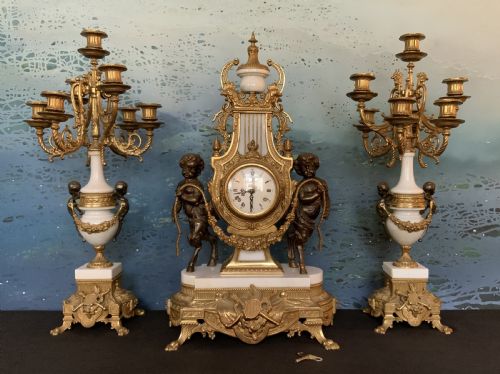


French Ormolu Candelabra Set
A french ormolu candelabra set brings monumental nineteenth-century presence and golden warmth to a mantelpiece.
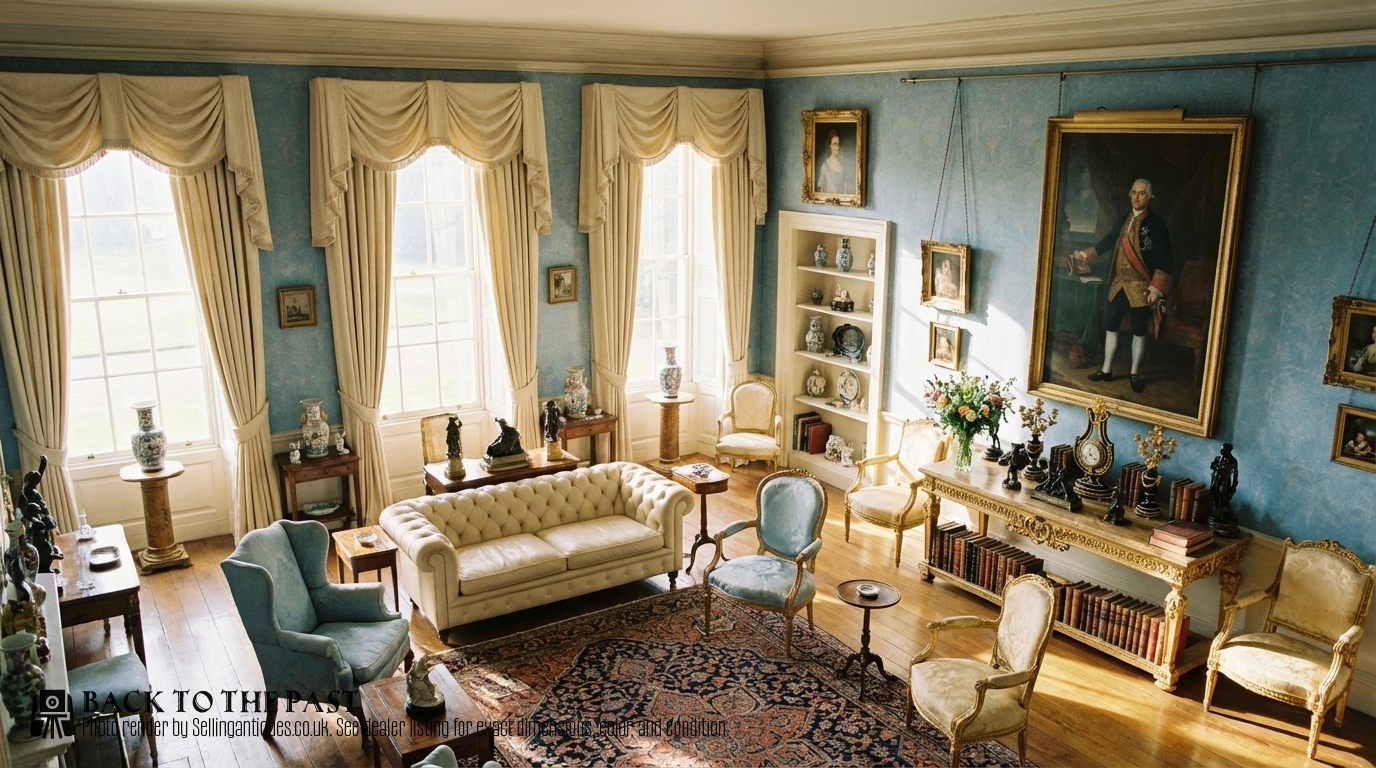
French Ormolu Candelabra Set
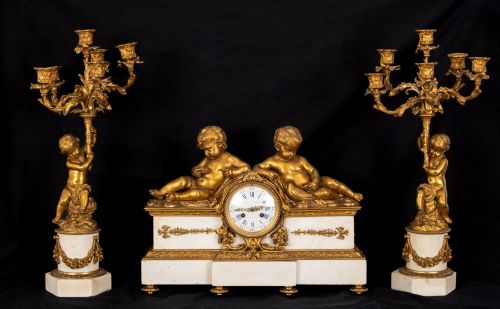
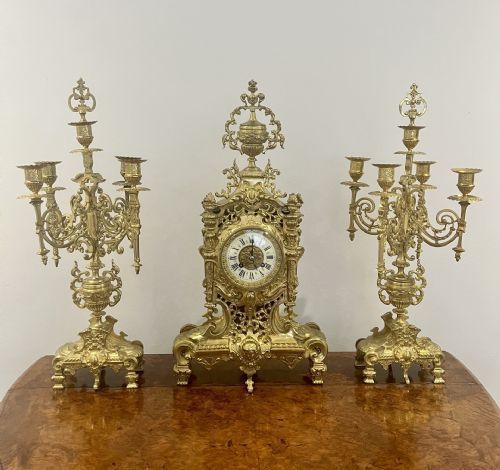
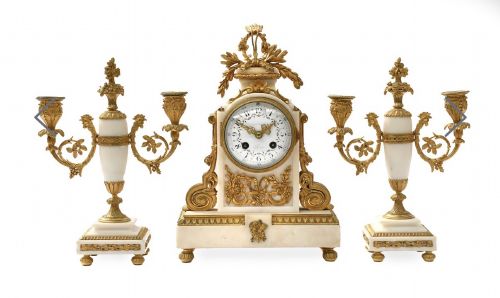
A french ormolu candelabra set typically comprises a central mantel clock flanked by matching candlesticks or multi-light candelabras, forming an integrated three-piecegarniture. These arrangements date primarily from the nineteenth century, encompassing periods from the Regency era through to the late Victorian decades.
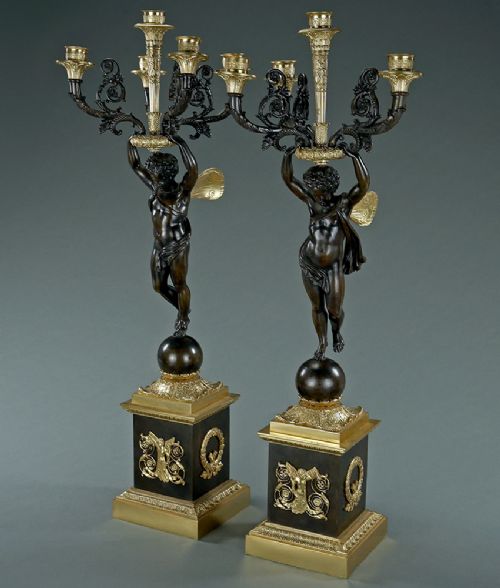
The aesthetic draws heavily on classical and revivalist vocabularies, most notably Louis XVI style, French Empire, and Rococo designs. Pieces frequently incorporate figural motifs such as cherubs, cupids, and classical subjects alongside architectural mounts.
Buyers most commonly encounter complete sets combining cast metalwork with contrasting plinths of white marble, onyx, or porcelain inserts. The matching candelabras mirror the ornamental detailing of the central timepiece to create a symmetrical display.
Materials and construction
The metalwork relies on bronze or brass cast in complex sections, then finished with mercury gilding or modern electroplating to achieve the characteristic ormolu surface. Patinated bronze often provides a dark, contrasting tone against the bright, reflective gold-coloured metal.
Natural stone forms the structural bases and clock housings, utilising white marble, black marble, or striated onyx shaped by sawing and polishing. Porcelain elements, including Sevres-style plaques and Bleu de Roi panels, introduce hand-painted floral or figural details framed by metal mounts.
Listings feature nineteenth-century pieces spanning the Regency, Victorian, and Second Empire periods, utilising white marble, onyx, gilt bronze, and porcelain.
Qualities of the work
The refinement of the chasing separates standard production from exceptional studio output, visible in the crispness of hair, drapery, and acanthus leaves on the bronze. Master makers such as Henry Dasson, Raingo Fres, and H Luppens invested heavily in deep relief and hand-finished surface textures.
Material selection and proportion dictate the overall impact, with heavy white marble plinths and thick mercury gilding holding greater visual weight than lighter brass and painted finishes. Integration between the clock movement and the matching candelabras determines whether the garniture reads as a unified sculptural suite.
Henry Dasson·Auguste Cain·H Luppens Paris·Raingo Fres Paris
The French Ormolu Candelabra Set Glossary
- Ormolu
- A method of applying finely ground high-carat gold to a bronze base, producing a rich golden lustre. The term derives from the French phrase for milled gold.
- Garniture
- A set of ornamental objects designed to be displayed together on a chimneypiece or sideboard. Typically comprises a clock flanked by matching candelabras or vases.
- Patinated bronze
- Bronze treated with chemical solutions to produce a darkened surface tone. This technique creates visual contrast against bright ormolu mounts.
- Bleu de Roi
- A deep, rich royal blue ceramic glaze developed at the Sevres porcelain factory. It frequently serves as a backdrop for gilt bronze mounts on nineteenth-century clock sets.
- Louis XVI style
- A neoclassical design movement characterised by symmetry, straight architectural lines, and classical motifs like urns and swags. It experienced a major revival during the nineteenth century.
French Ormolu Candelabra Set: Frequently Asked Questions
How do I date a clock garniture?
Dating relies on stylistic clues, movement types, and material combinations seen across nineteenth-century production. Regency pieces lean toward early classical austerity, while Louis XVI and Rococo revivals display heavier, more ornate scrolling foliage.
Maker signatures stamped on the brass clock movements or bronze bases also help narrow down the period of manufacture.
Where should I place a garniture set?
These large decorative sets require a wide, sturdy surface such as a fireplace mantel, a large sideboard, or a console table. The central clock anchors the arrangement, flanked symmetrically by the matching candelabras.
Due to their weight and components in marble and bronze, ensure the supporting furniture is level and capable of holding substantial stone.
How do I clean ormolu and marble?
Maintenance requires gentle dusting with a soft, dry cloth to protect the delicate gilt surface from abrasion. Avoid chemical polishes, water, or abrasive cleaners which strip historical patination and damage the gold layer.
Marble bases can be wiped gently with a barely damp cloth, taking care to keep moisture away from exposed clock movements and metal mounts.