
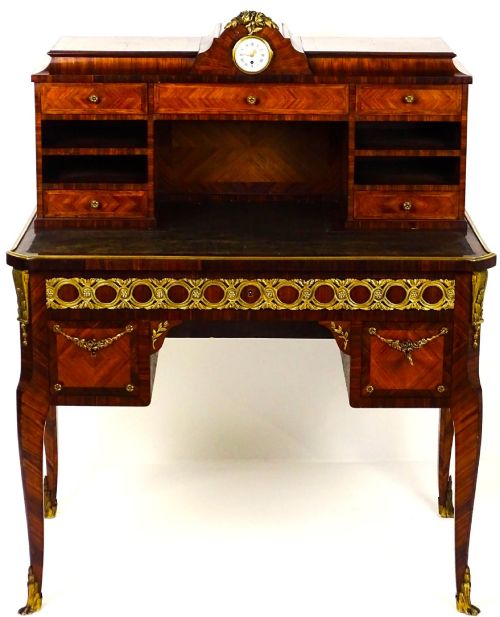
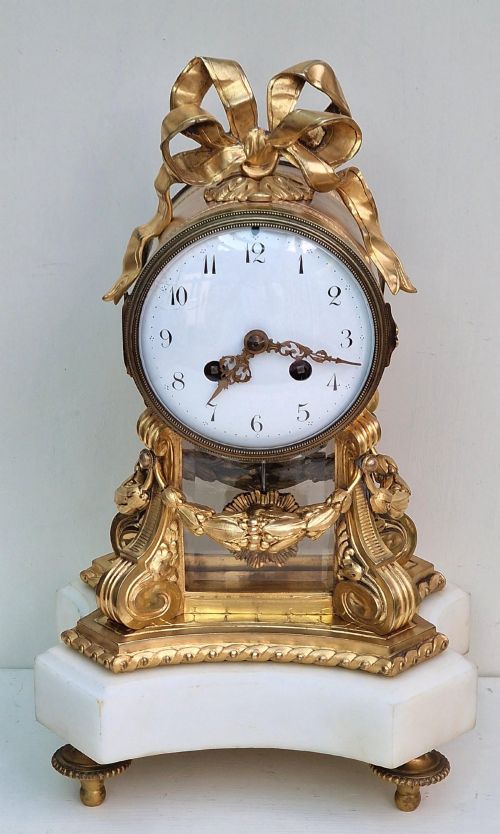
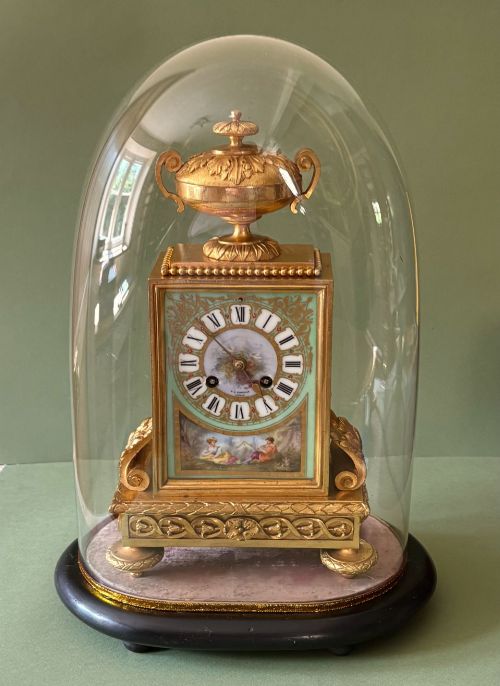
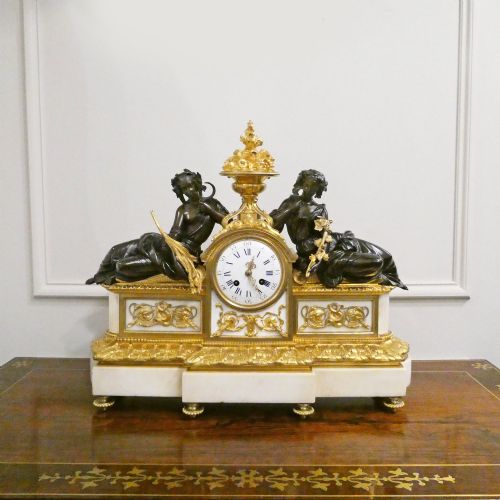

French Louis XVI Clock
A french louis xvi clock brings classical symmetry and gilt ornamentation into a room, uniting neoclassical restraint with elaborate metalwork.
French Louis XVI Clock
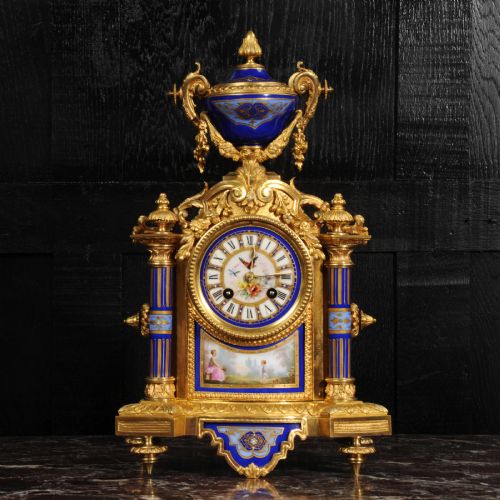
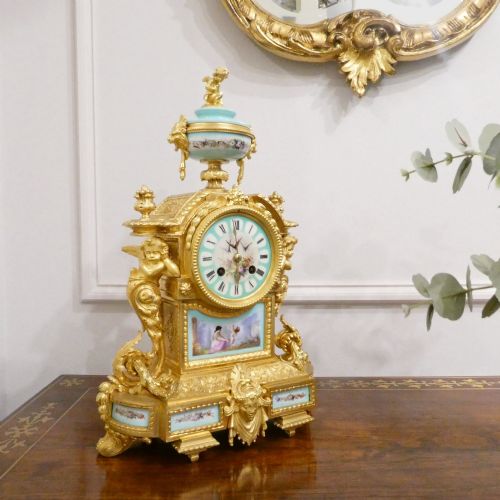
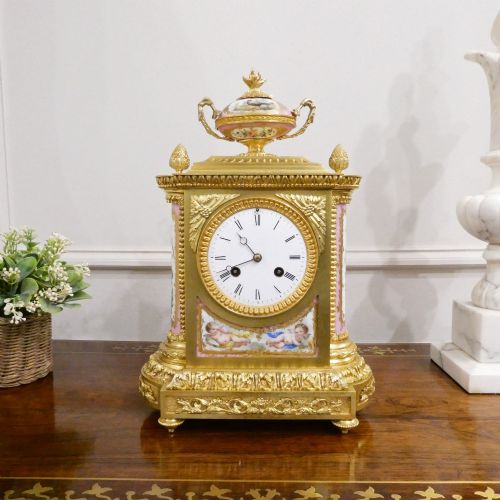
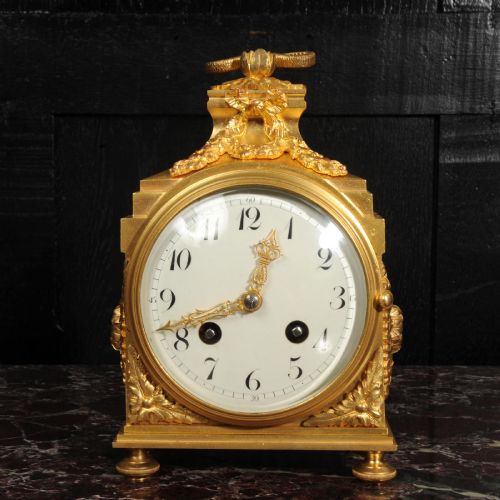
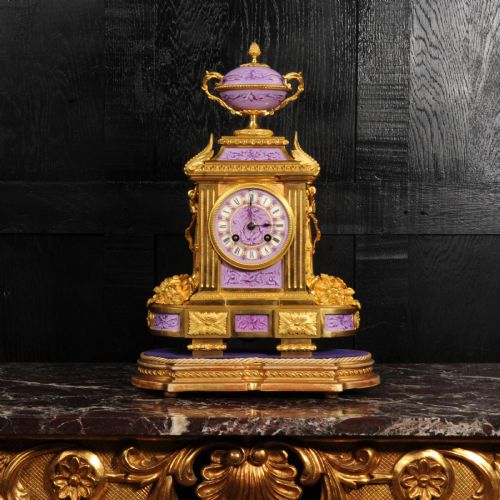
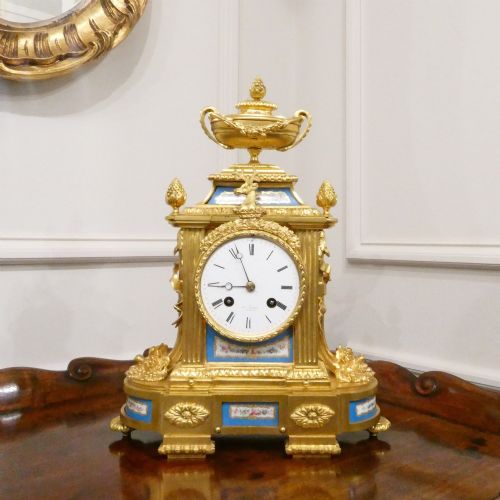
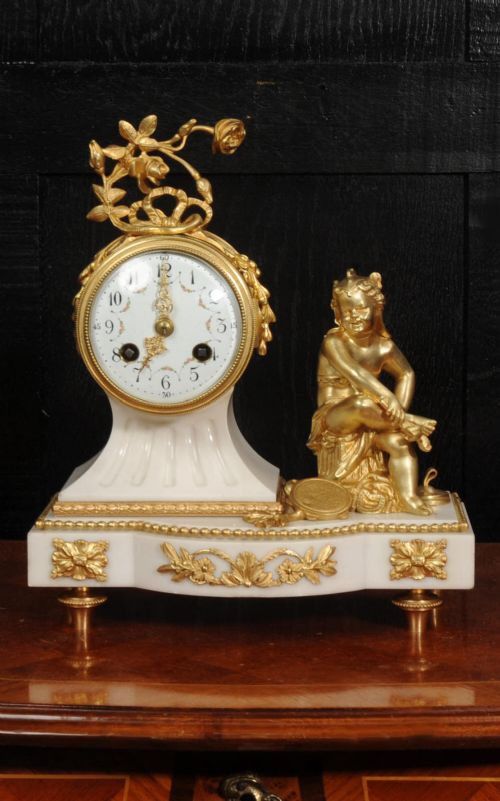
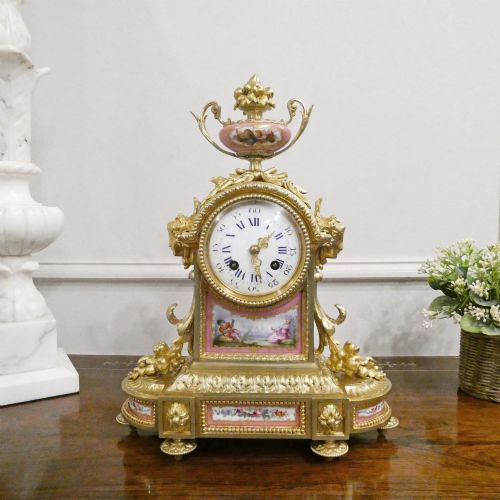
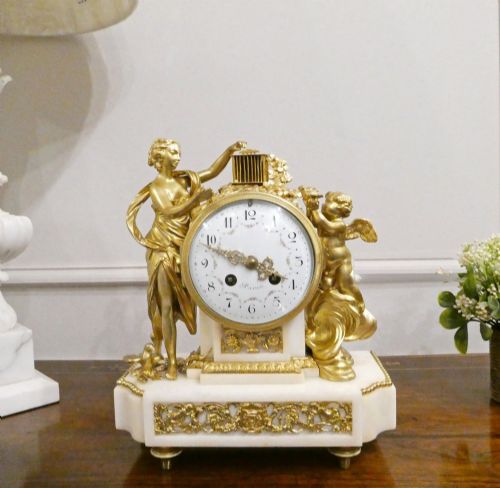
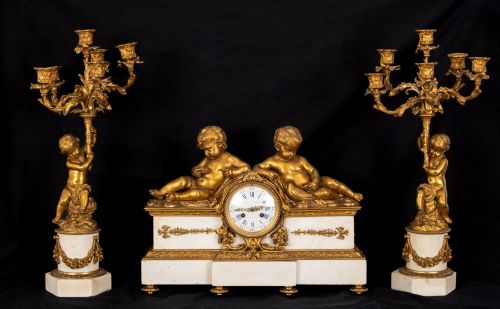
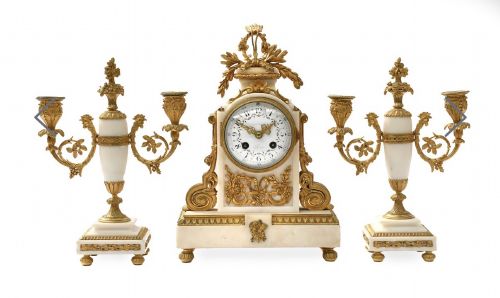
A search for a french louis xvi clock reveals works designed around architectural proportion, urn shapes, and symmetrical mounts. The items encountered most often on this page are mantel clocks and garniture sets produced during the nineteenth century in the revival taste.
Many examples combine cast bronze mounts with white or coloured marble, while others pair gilt surfaces with painted porcelain panels. Wall-hung cartel clocks and portico designs also appear among the selections.
The aesthetic draws directly upon eighteenth-century neoclassical vocabulary, utilising floral festoons, ribbons, and classical columns. Makers adapted these historical motifs for nineteenth-century domestic interiors.
Materials and construction
Foundry work relies heavily on bronze, cast and chased before receiving a layer of mercury gilding known as ormolu, or a warm gilt-bronze finish. Brass appears alongside bronze in various movements and secondary components.
Natural stones form the architectural bodies of these objects, with white marble, red marble, and sienna marble shaped into plinths, columns, and urns. Glass protects enamel dials, while porcelain plaques from factories like Sèvres provide painted decorative panels.
Clockmakers housed mechanical movements within these heavy housings, frequently utilising pendulum regulation and striking trains. Dial faces generally comprise white enamel chapters with painted numerals.
Materials recorded on this page include gilt bronze, ormolu, white marble, red marble, porcelain, enamel, glass, and brass.
Distinctions in manufacture
The refinement of the casting separates standard production from exceptional examples, particularly in the crispness of leaf work, drapery, and human figures. Sharp chasing defines the contours of the metal before gilding takes place.
The integration of materials dictates overall harmony, where well-balanced proportions between the marble body and bronze mounts create a unified object. Heavier, thicker gauge metalwork and substantial marble bases indicate superior construction.
Movement quality is marked by the reputation of the founding house or workshop stamped on the brass backplate. Signed dials and matching serial numbers across components elevate an example's integrity.
Japy Freres·Henry Dasson·Achille Brocot·Samuel Marti·Paul Sormani·Henri Picard·A.D. Mougin·Vincenti·Le Roy·Louis Goret
The French Louis XVI Clock Glossary
- Ormolu
- Gilded bronze produced through the application of a mercury and gold amalgam, fired to leave a rich metallic coating. This finish yields a warm golden hue that resists tarnishing.
- Garniture
- A set comprising a central clock flanked by matching decorative objects such as candelabra, urns, or vases. These suites were designed to sit symmetrically on a mantelpiece.
- Portico clock
- A timekeeping instrument framed by four or more architectural columns supporting an entablature. This style reflects direct inspiration from ancient Greek and Roman architecture.
- Enamel
- Fused glass powder applied to a copper or metal dial plate and fired in a kiln to create a smooth, glossy surface. Roman and Arabic numerals are then painted onto this white ground.
French Louis XVI Clock: Frequently Asked Questions
How do I wind a mechanical french clock?
A key is inserted into the winding holes on the enamel dial to tension the springs within the brass movement. Care must be taken not to over-wind the mechanism.
Most movements run for eight days before requiring attention. Keeping the clock level on its mantel surface ensures the pendulum beats evenly.
What is a clock garniture set?
A garniture consists of a central clock accompanied by matching side pieces, such as candelabra, urns, or vases. These sets were manufactured to create a balanced decorative arrangement on a fireplace mantel.
The matching objects repeat the materials and motifs of the clock, such as marble bases and gilt-bronze mounts.
How can I tell an original 19th-century piece from a later copy?
Nineteenth-century pieces exhibit hand-chased metalwork with subtle tool marks and natural weight distribution in the cast bronze and marble components. Movements often bear the stamped maker mark of the workshop on the backplate.
Modern reproductions generally lack the depth of mercury gilding or fire-gilt surfaces, showing uniform machine finishes instead of hand-worked detail.
Where should I place a heavy marble clock?
Due to the substantial weight of marble and bronze housings, these objects require a sturdy, level surface such as a mantelpiece, sideboard, or large desk. Placing the clock away from direct heat sources protects the internal oils and marble finish.
Securing the piece against vibrations prevents the pendulum from falling out of beat.