
French Ormolu Accent Table
A french ormolu accent table brings nineteenth-century Continental elegance to a room through gilded bronze mounts and rich timber veneers.
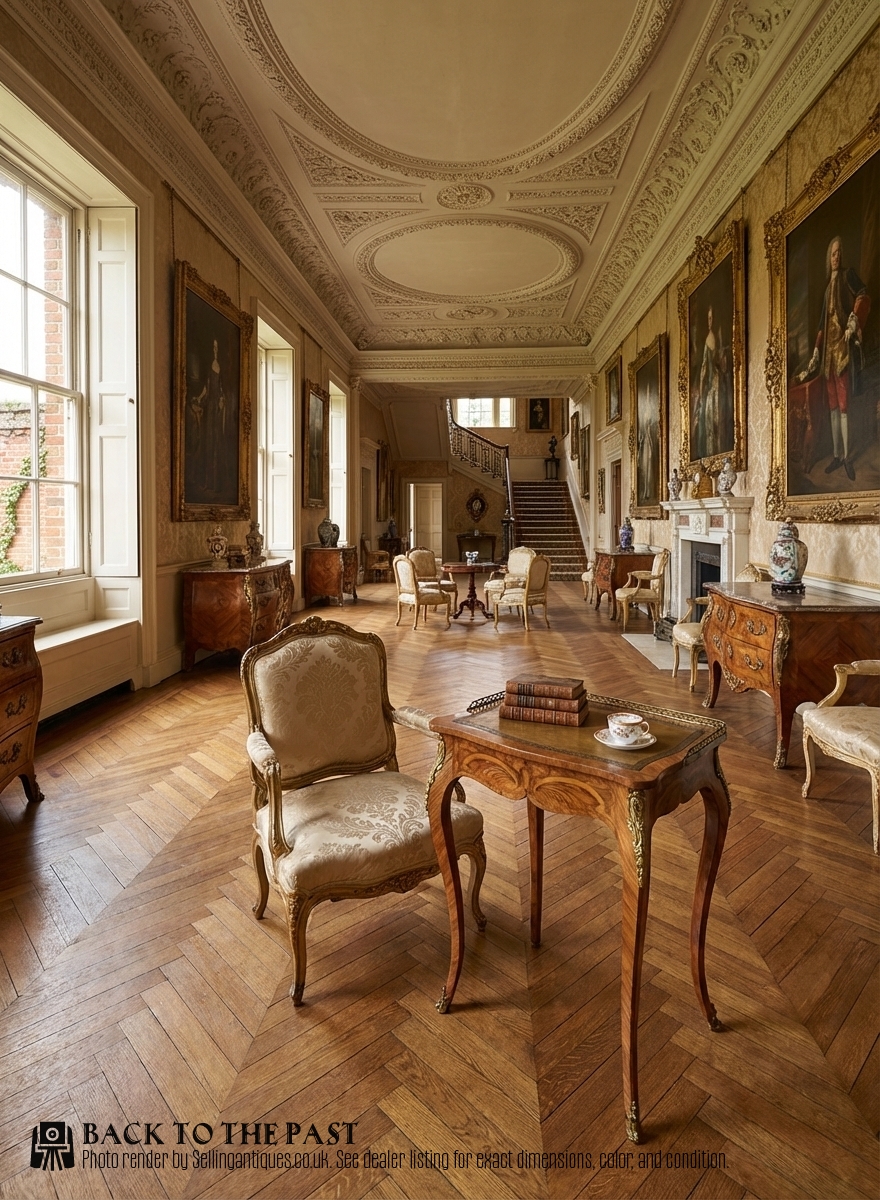
French Ormolu Accent Table
A French ormolu accent table serves as a decorative surface for salons and parlours, originating primarily across the nineteenth century. Buyers searching for a french ormolu accent table encounter side tables, occasional pieces, centre tables, and card tables.
The pieces on this page emerge predominantly from nineteenth-century workshops, spanning decades from eighteen-fifty to nineteen-ten. Louis XV revival and Rococo revival aesthetics dominate the forms, frequently pairing curved wooden silhouettes with cast bronze mounts.
Makers working in this tradition combine utilitarian small tables with elaborate decorative schemes suited to formal reception rooms. Walnut, kingwood, rosewood, and mahogany form the primary timber carcases for these accent surfaces.
Materials and construction
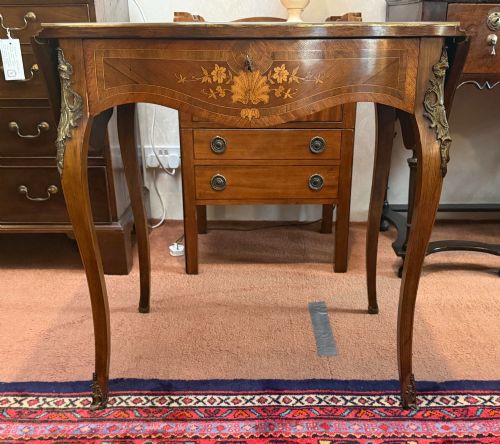
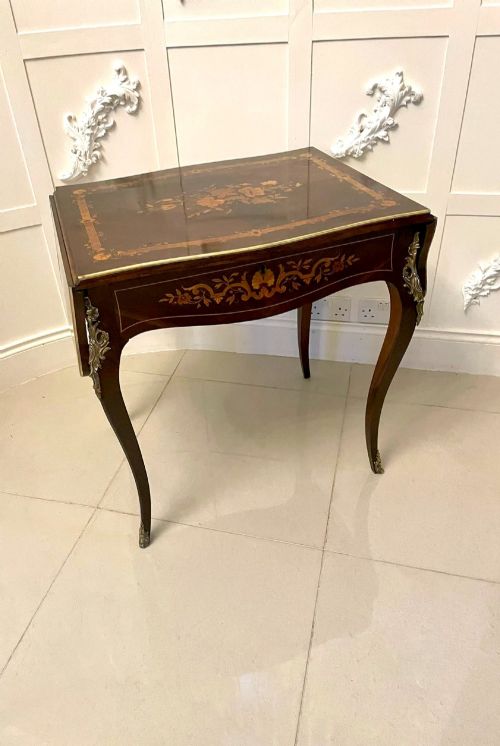
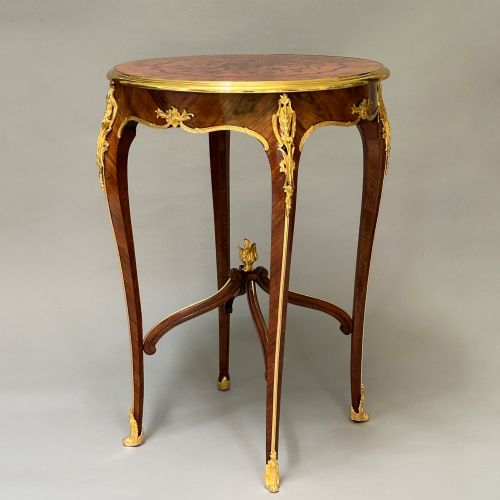
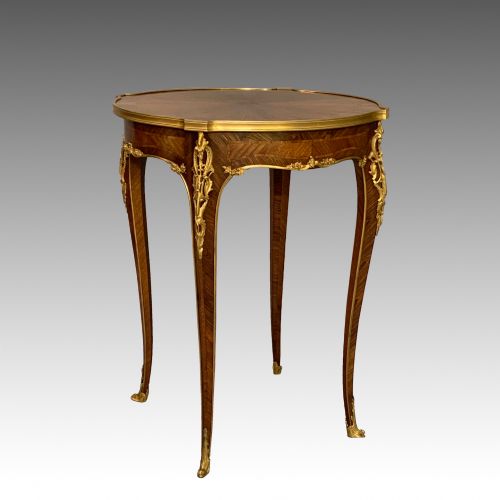
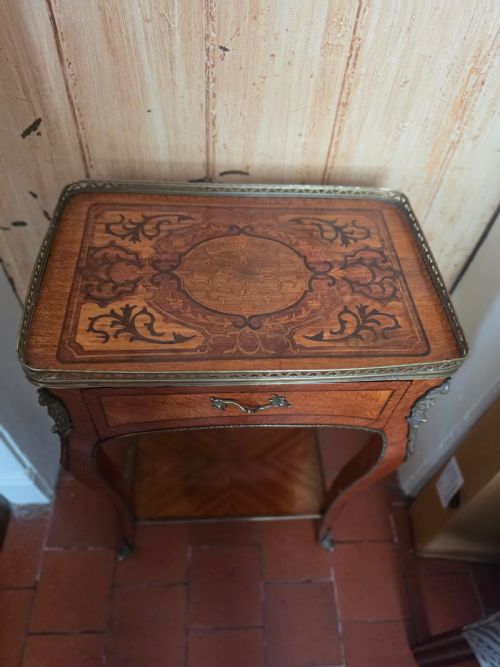
Cabinetmakers construct carcases from dense hardwoods like mahogany, walnut, kingwood, and rosewood, often applying intricate marquetry and parquetry patterns across the top and sides. Timber veneers are meticulously cut and fitted by hand to create geometric or floral motifs.
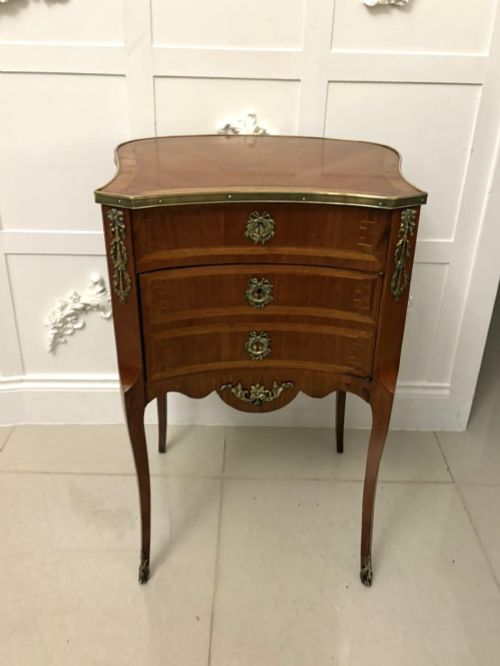
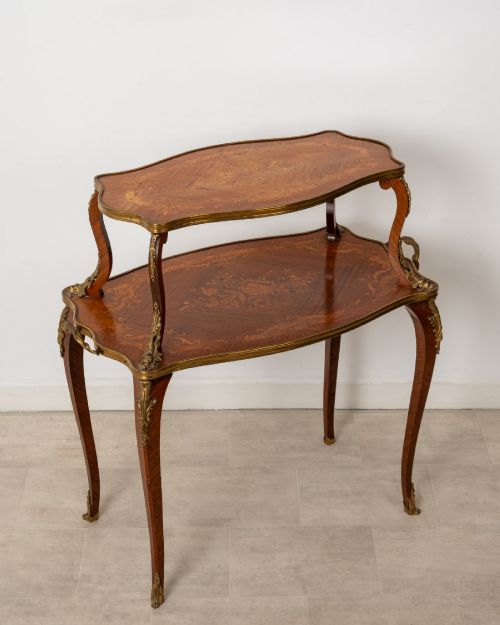
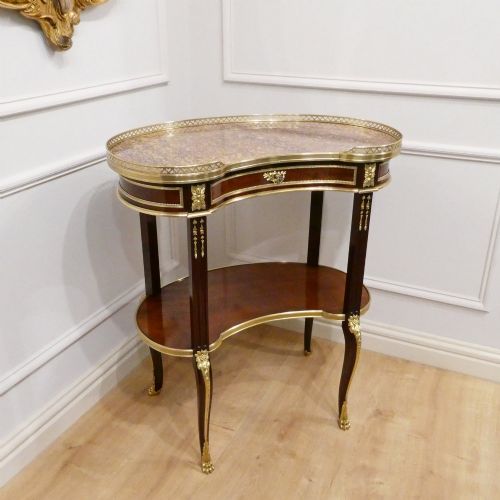
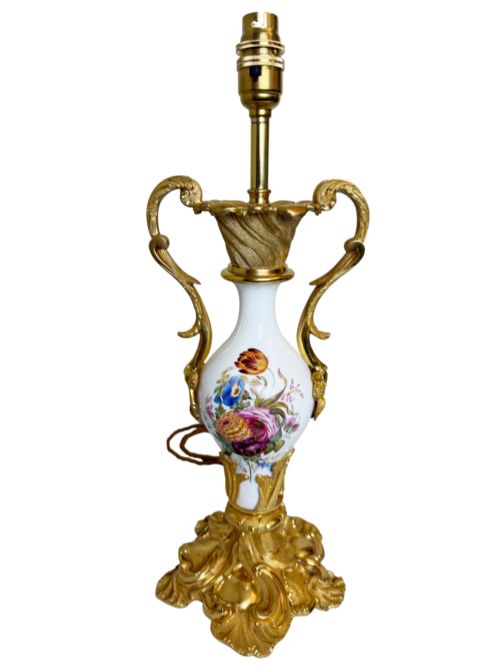
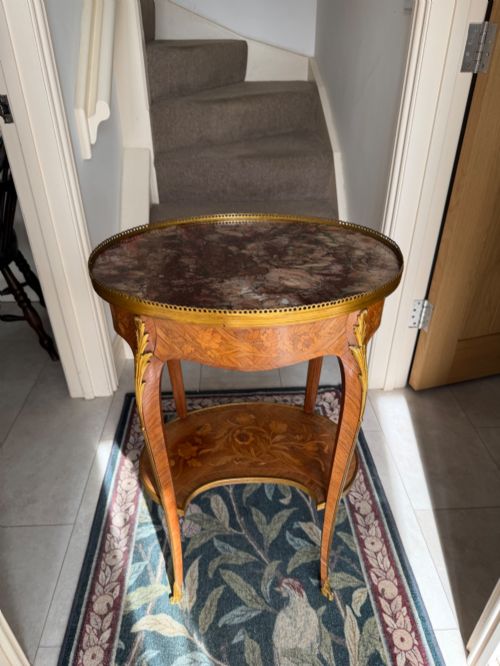
Ormolu mounts, cast in bronze and subsequently gilded, are secured to corners, legs, and aprons to accent the structural lines. Marble tops, occasionally in rouge or other decorative variants, drop into recessed wooden frames on specific occasional and centre tables.
Several tables wear tiny bronze pineapples and rams' heads on their corners, proving that nineteenth-century desks also appreciated a touch of whimsy.
Factors of quality
The crispness of the ormolu chasing separates exceptional pieces from standard production, as finely hand-tooled bronze displays sharp detail in foliage and scrollwork. Heavily cast mounts that integrate seamlessly with the timber carcase indicate superior workshop standards.
Maison Millet·Joseph-Emmanuel Zwiener·François Linke·Edwards & Roberts
The French Ormolu Accent Table Glossary
- Ormolu
- Gilt bronze mounted onto furniture or decorative objects. The technique involves applying a gold amalgam to cast bronze before heating.
- Marquetry
- Decorative veneer work forming pictorial or geometric patterns using various coloured woods. Craftsmen assemble these thin wood slices meticulously by hand.
- Parquetry
- Geometric mosaic woodwork arranged in repeating patterns such as cubes or chequers. It differs from marquetry by relying strictly on angular, repeating grids.
- Guéridon
- A small round table supported by one or more central columns or figurative legs. These French occasional tables serve functional and decorative purposes.
- Étagere
- A set of open shelves for displaying small ornaments or books. Multiple tiers are supported by slender vertical columns.
French Ormolu Accent Table: Frequently Asked Questions
What is a french ormolu accent table used for?
These tables function as decorative display surfaces for lamps, porcelain, or small objects within reception rooms and drawing rooms. Nineteenth-century households utilised them as occasional spots for holding books or serving tea.
Card tables and guéridons also provided specific surfaces for evening entertainment and parlour games. Their ornamental bronze mounts ensured they remained decorative focal points even when unoccupied.
How do I identify a louis xv revival table?
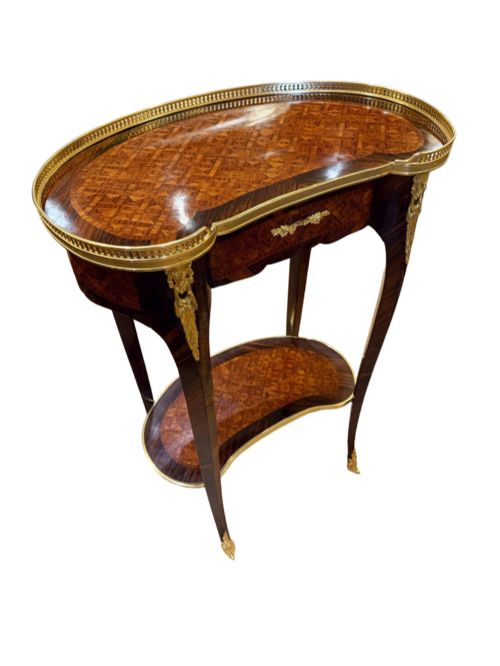
Louis XV revival pieces display characteristic asymmetrical curves, cabriole legs, and elaborate rococo floral or scroll motifs. Ormolu mounts accentuate the corners and aprons to highlight the flowing serpentine lines of the timber.
Carcases are frequently shaped in kidney or cartouche outlines rather than strict rectangles. This style draws heavily on eighteenth-century French royal aesthetics reinterpreted during the nineteenth century.
Are marble tops original to these tables?
Inset marble slabs are common on nineteenth-century French occasional and centre tables, specifically designed to withstand daily wear. Rouge and other coloured marbles complement the rich tones of kingwood and mahogany veneers.
Makers recessed the stone directly into the timber frame to sit flush with the ormolu border. These marble surfaces add considerable weight and stability to smaller occasional tables.
How should I care for ormolu mounts?
Ormolu requires gentle dusting with a soft, dry cloth to prevent the accumulation of grit in recessed chasing. Avoid abrasive metal cleaners or polishes that strip the historic gilt surface.
Maintaining stable room humidity protects the underlying timber carcase and prevents veneer lifting around the bronze mounts. Waxing the wood occasionally preserves the finish without affecting the metal.