




French Orientalist Sculpture
French orientalist sculpture brings figures, animals and decorative objects from North Africa and the Near East into European bronze, marble, porcelain and ceramic.
French Orientalist Sculpture
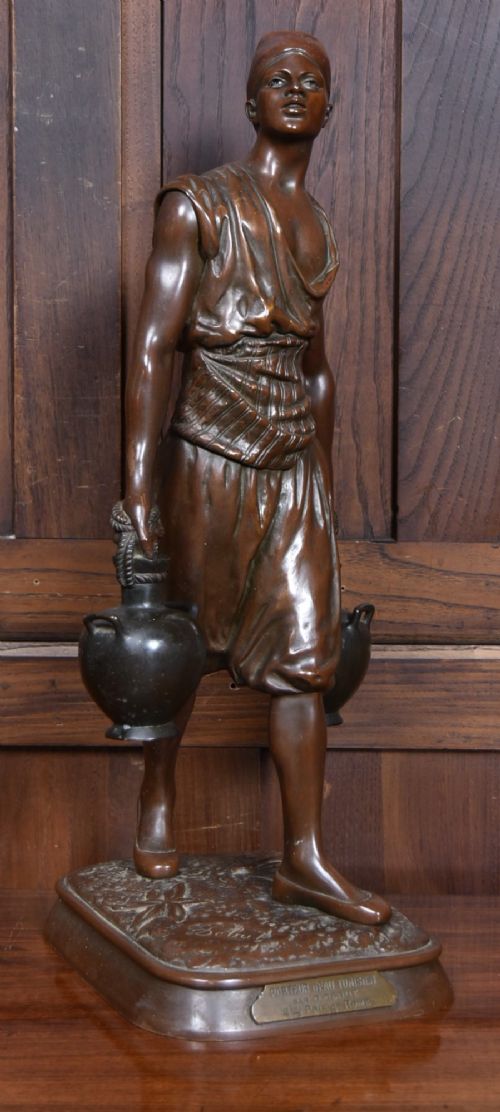
When you search for french orientalist sculpture, you find figures and table lamps produced across the nineteenth and early twentieth centuries. These works capture figures such as water carriers, merchants, dancers, and sentinels, alongside animals like camels and donkeys. The selection relies heavily on nineteenth-century bronze casts, alongside later Art Deco and Art Nouveau interpretations.
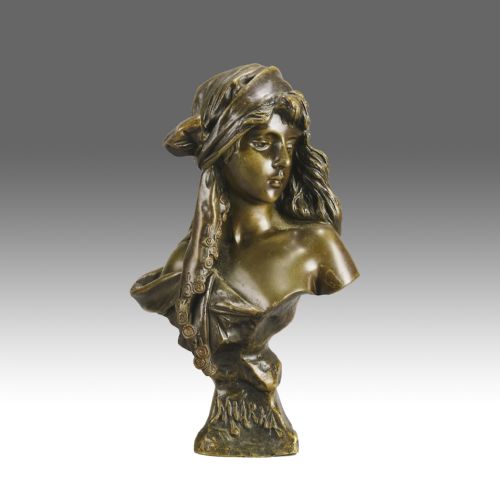
The objects take several forms, ranging from cabinet bronzes and large standing figures to mantel clocks, perfume lamps, and portrait busts. Many pieces draw directly from travel, mythology, and literature, translating foreign subjects into domestic European ornamentation. You will encounter both signed foundry editions and unsigned studies sharing identical themes.
How they were made
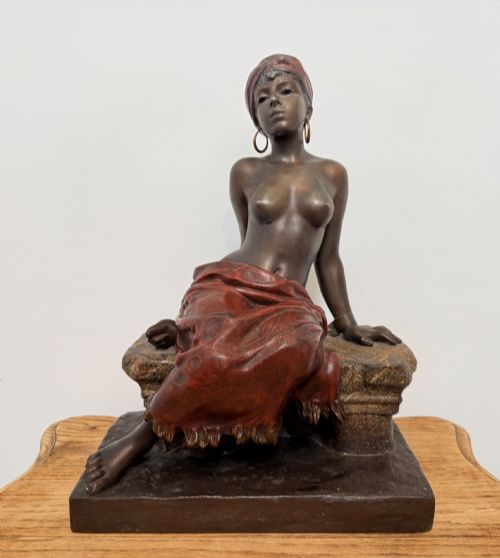
The pieces on this page are predominantly shaped from bronze, utilising patinated finishes, cold painting, and polychrome highlights to define drapery and skin tones. Founders combined metalcasting with marble bases, alabaster, and ceramic elements, adding enamel or glazed ceramic on specific lamp and clock bodies.
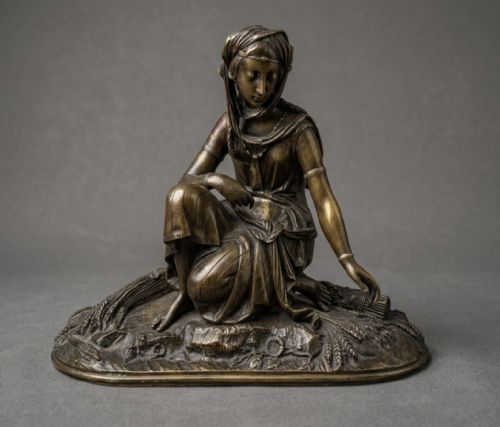
Casting methods varied between sand casting and the lost-wax process, allowing artists to capture intricate details in turbans, harnesses, and woven fabrics. Surfaces were then hand-finished with chemical patinas to achieve deep brown, gilt, or green colour variations across the metal.
Listings span the nineteenth century through the nineteen-thirties, incorporating Victorian, Art Nouveau, and Art Deco styles.
What varies in quality
The harmony between the main figure and any secondary materials, such as marble plinths or clock movements, also dictates the standard of the piece. Stronger casts show careful integration of base elements and sustained attention to proportions across both human and animal subjects.
Emmanuel Villanis·Edouard Drouot·Alfred Dubucand·Georges-Charles Coudray·Arthur Waagen·Charles Arthur Bourgeois·Claire Colinet·Demetre Chiparus·Pierre Jules Mène·Louis Hottoot
The French Orientalist Sculpture Glossary
- Patinated bronze
- Bronze treated with chemical solutions to produce a specific surface colour, most often deep brown, green, or near-black. This finish protects the metal and accentuates sculptural contours.
- Cold painted
- A technique where paint is applied to cured bronze or metal without heat-firing. It allows for bright polychrome details on robes, rugs, and accessories.
- Art Deco
- A design style emerging around the early twentieth century, marked by streamlined geometry and stylised human forms. In this selection, it appears in works from the nineteen-twenties and thirties.
- Veilleuses
- A type of ceramic or porcelain night light and warmer combined, frequently produced in France during the late nineteenth and early twentieth centuries.
- Alabaster
- A fine-grained, translucent stone carved into figures and bases. It offers a softer texture and lighter palette than marble.
French Orientalist Sculpture: Frequently Asked Questions
What subjects do these sculptures show?
The works depict figures and animals associated with North Africa and the Near East, including merchants, water carriers, snake charmers, dancers, and sentinels.
You will also find camels, donkeys, and narrative scenes drawn from travel and nineteenth-century romantic literature.
How do I identify Art Deco pieces?
Art Deco examples generally date from the nineteen-twenties and nineteen-thirties, featuring stylised lines and smoother, more geometric drapery than nineteenth-century works.
Artists such as Claire Colinet and Demetre Chiparus work within this streamlined aesthetic.
Are all sculptures signed?
Many bronzes carry signatures or foundry marks on the base, but a significant number of period studies remain entirely unsigned.
Unsigned works often match the quality and style of documented foundry productions from the same decades.
What materials are used besides bronze?
While bronze is the dominant medium, makers also utilised marble, alabaster, porcelain, and glazed ceramic for specific lamps and decorative figures.
Polychrome highlights and cold-painted finishes frequently add colour to garments and skin tones.
How should I clean my bronze sculpture?
Dust the surface gently with a soft, dry cloth to prevent the accumulation of grit in recessed areas and fine chasings.
Avoid using water, chemical polishes, or abrasive cleaners, as these can strip the original patinated finish.