




French Oak Nightstands
French oak nightstands bring sturdy continental character and useful bedside storage to a room.
French Oak Nightstands
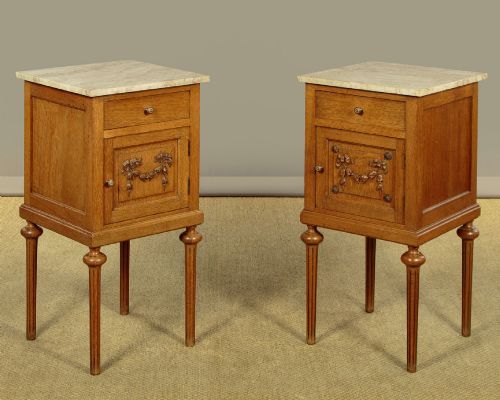
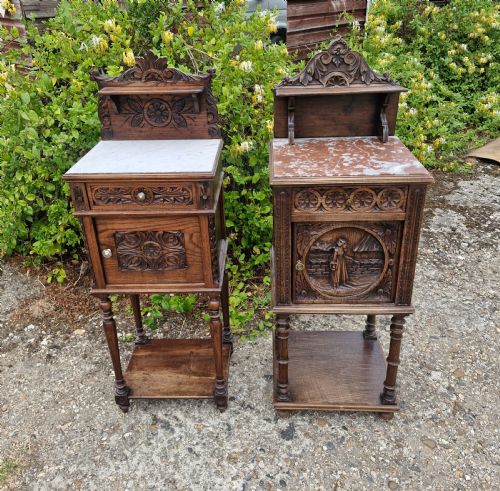
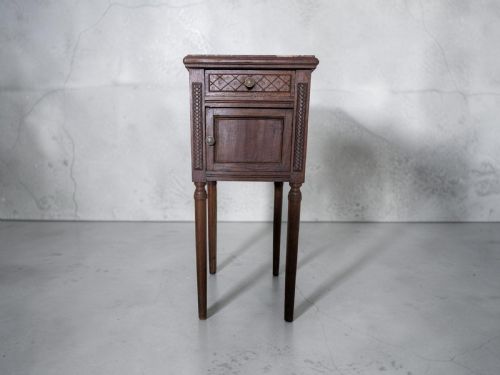
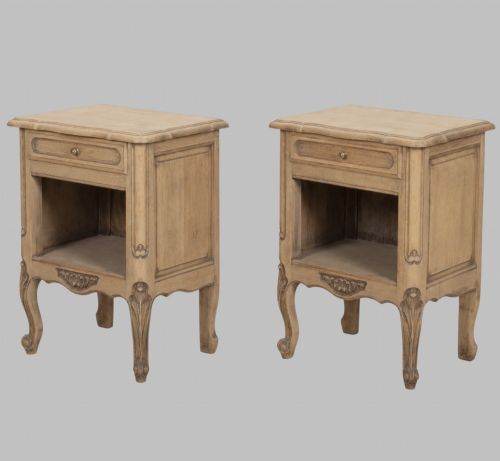
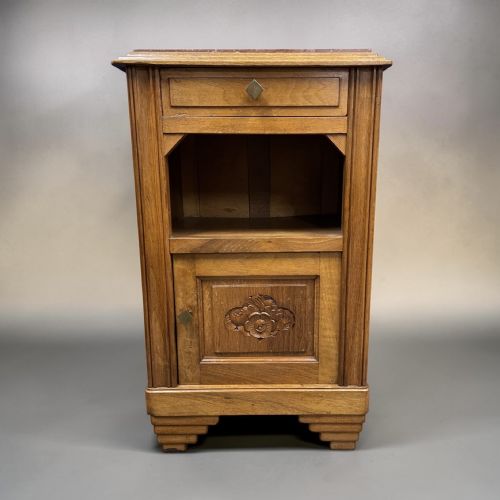
French oak nightstands appear primarily as enclosed bedside cabinets with single doors or drawers, alongside open bedside tables and etageres. These pieces emerge across the nineteenth and twentieth centuries, spanning periods from early nineteenth century regency up to mid-century decades.
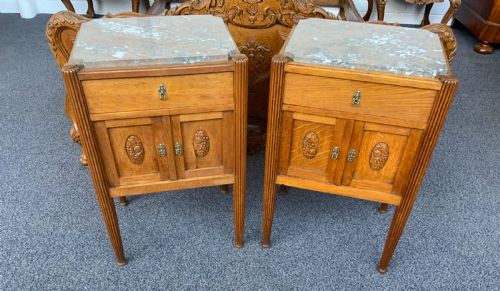
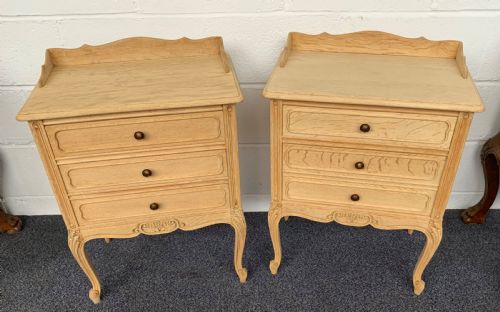
Buyers frequently encounter matched pairs designed to flank a bed, often styled in French provincial, Art Deco, or Louis formats. The selection also includes single cabinets and side tables originating from French chateau and country contexts.
Forms incorporate practical surfaces, sometimes fitted with marble tops or brass hardware, and occasionally paired with ensuite bedsteads. The primary wood forms a robust carcase that accommodates various regional decorative carvings.
Materials and Construction
Carpenters built these bedside items predominantly using solid oak, occasionally combining the timber with pine carcase elements or walnut accents. Metal components appear as brass handles, hinges, or decorative mounts, while iron and cane feature in specific etagere and cabinet designs.
Surface treatments vary from deep natural honey tones to contemporary bleached oak finishes that lighten the dense grain. Marble slabs provide durable, polished tops on selected Art Deco and antique models, contrasting with carved wooden panels.
Listings feature items dated from the early nineteenth century through to the 1950s, utilising oak, marble, brass, cane, and iron.
Assessing Quality and Craft
Excellence in these items rests on the crispness of hand-carved details and the structural integrity of the solid oak joinery. Superior examples maintain smooth drawer movement and tightly fitted doors without warping across the panels.
The integration of materials dictates distinction, particularly where veined marble tops meet precisely rebated timber frames. Bleached finishes applied during restoration require an even tone that respects the underlying grain pattern rather than masking it.
The French Oak Nightstands Glossary
- Etagere
- An open shelving unit used for bedside display or storage. This form often incorporates mixed materials like oak and canework.
- Serpentine
- A gently undulating curved front line found on finer case furniture. This shape requires skilled timber shaping.
- Art Deco
- A design style prominent in the early twentieth century featuring geometric lines and streamlined forms. Pieces from this era often utilise marble tops.
- French Provincial
- A regional domestic style characterised by simpler carved ornamentation and robust proportions. These items reflect traditional country craftsmanship.
- Bleached Oak
- Timber treated to produce a pale, neutral finish favoured in modern interiors. This process highlights the natural grain of the wood.
French Oak Nightstands: Frequently Asked Questions
How do I spot a true pair?
Matched pairs generally exhibit identical dimensions, wood grain direction, and carving motifs that mirror each other across the two pieces. Look for consistent hardware placement and matching interior construction methods.
Slight variations in hand-carved details indicate genuine age rather than modern factory replication. Inspect the back panels and drawer linings to confirm they share the same workshop origin.
Are marble tops original?
Marble tops frequently appear on Art Deco and turn-of-the-century bedside cabinets to provide a durable, wipe-clean surface. Original stone slabs sit flush within rebated wooden frames designed specifically to hold their weight.
Check the underside of the marble and the supporting wooden ledge for signs of matching age and wear. Replacements usually show cleaner cut edges or lack the patination found on surrounding oak.
What is bleached oak?
Bleached oak refers to timber treated with chemical solutions to remove the dark tannins and produce a pale, Scandinavian-influenced appearance. This treatment became popular on twentieth-century French furniture to create a lighter aesthetic.
Examining the interior surfaces helps determine if the bleaching covers the entire piece uniformly. High-quality examples retain depth in the grain despite the lighter overall tone.
How do I date these cabinets?
Dating relies on construction techniques such as dovetail joints, backboard thickness, and the presence of hand tools versus machine saws. Styles also provide a clear window, shifting from heavy Victorian and Henri II carvings to clean Art Deco geometry.
Hardware styles and lock mechanisms offer further clues to the manufacturing decade. Compare the wear patterns on internal runners with the exterior finish to verify consistency.
Can I use them as side tables?
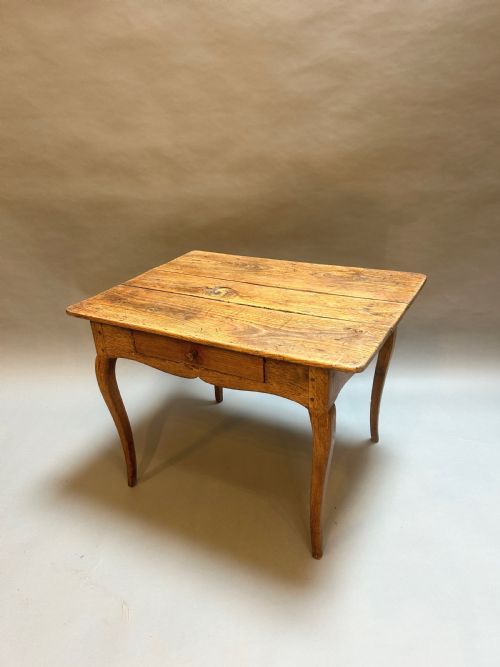
These versatile cabinets and tables function effectively in living rooms or hallways as well as beside a bed. Enclosed cupboards conceal clutter, while open shelves or marble tops display lamps and decorative objects.
Consider the height and depth of the piece relative to surrounding seating or upholstery. Compact footprints allow them to fit easily into smaller spaces.