
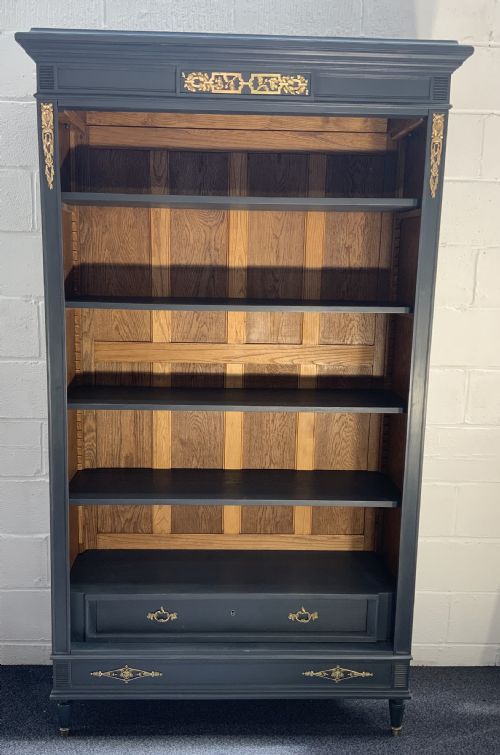


French Oak Bookcase
A french oak bookcase brings heavy timber and regional provincial character to a room, offering sturdy storage for heavy volumes.
French Oak Bookcase
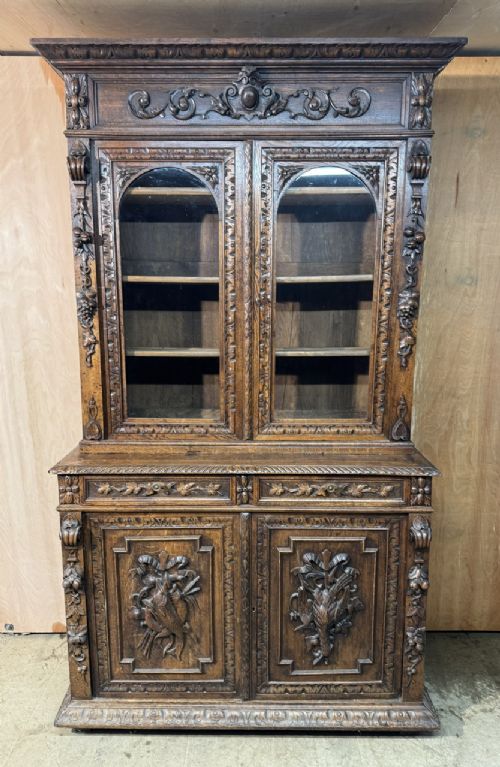
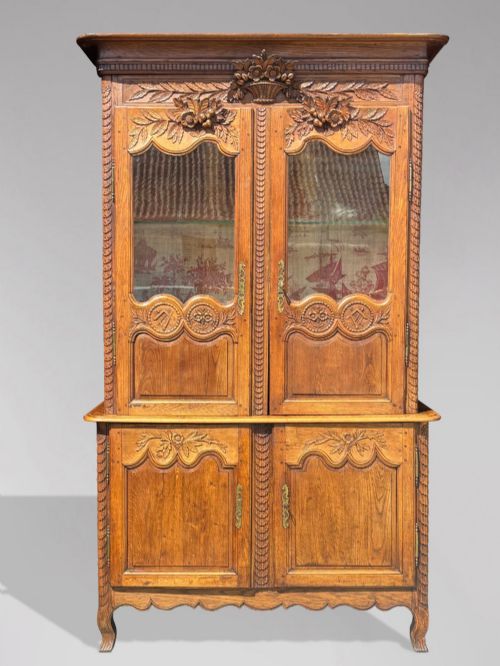
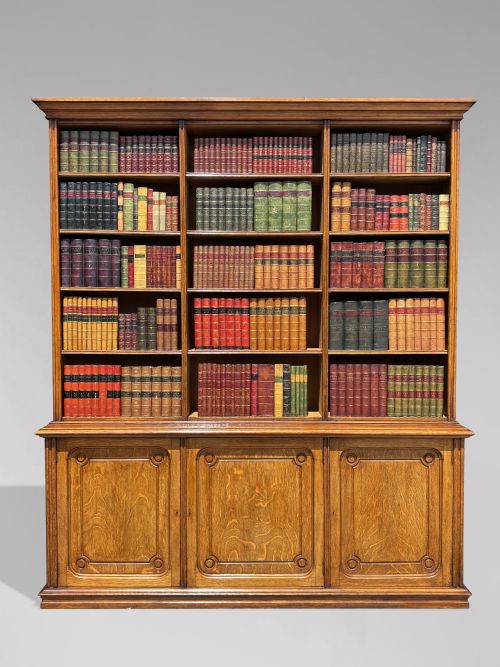
A french oak bookcase spans open front designs, tall glazed vitrines, and substantial two piece cabinets with carved details. You will regularly encounter 18th century provincial pieces alongside 19th century tall open bookcases and early 20th century iterations.
Makers and craftsmen built these forms using oak timbers, sometimes employing barley twist supports, carved panels, or gothic revival motifs. They serve utility as libraries, display cabinets, and storage units across domestic settings.
How they were made
Construction relies heavily on solid oak timber, frequently augmented by glass panes in doors and brass or iron hardware for hinges and locks. Workshops utilised traditional joinery to build tall frameworks and heavy two section pieces.
Surface treatments vary from natural waxed finishes to bleached oak, limed oak, painted wood surfaces, and honey tones. Carving appears directly on the oak structure, often displaying regional motifs or revival styles.
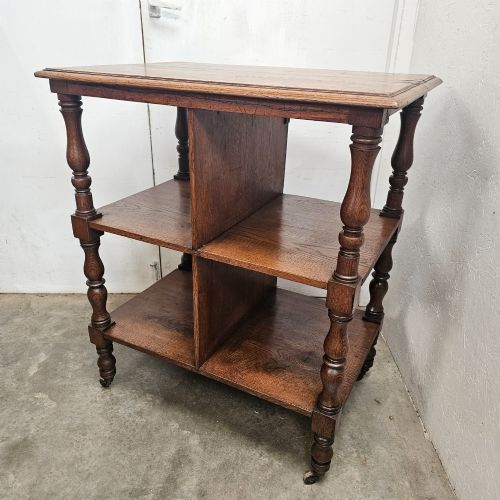
Some library carts roll quietly into the room, bringing historical reading material directly to your armchair.
What varies in quality
The standard of carving and the selection of timber dictate the distinction between standard provincial utility and finer formal examples. Crisp detail in carved oak panels and balanced proportions across taller two piece cabinets elevate the stature of a piece.
Original hardware, intact glass, and the treatment of the oak surface, whether bleached, stripped, or painted, influence the integrity of the object. Untouched period surfaces command greater interest than heavily altered timber.
Albert Gilles
The French Oak Bookcase Glossary
- Vitrine
- A glass fronted cabinet or bookcase designed for displaying books and objects. These pieces often feature glazed doors to protect the contents while maintaining visibility.
- Buffet deux corps
- A large two section cabinet featuring a lower cupboard base surmounted by an upper section or bookcase. This architectural form provides extensive storage.
- Bleached oak
- Timber treated to lighten the natural dark tone of oak, achieving a softer, paler surface finish. This treatment appears frequently on provincial examples.
- Barley twist
- A type of turning shaped like a twisted rope used for furniture legs and structural supports. It adds decorative relief to 19th century items.
- Provincial
- Describing items made in the regions outside major metropolitan centres, often displaying local traditions. These pieces combine rustic utility with regional stylistic touches.
French Oak Bookcase: Frequently Asked Questions
How do I date a french oak bookcase?
Dating relies on construction methods, hardware, and stylistic indicators such as louis xv curves or gothic revival motifs. Examining the backboards and drawer joints helps establish the era.
18th century pieces often show hand hewn joinery and provincial carving, whereas 19th century and 1910 examples utilise machine assisted preparation alongside traditional assembly.
What is a buffet deux corps?
A buffet deux corps is a substantial two piece storage unit where a lower cupboard supports an upper cabinet or bookcase. These imposing structures formed the storage backbone of large rooms.
They offer deep shelves and enclosed lower compartments, making them suitable for extensive libraries and heavy dining wares.
Are bleached oak bookcases original?
Bleaching timber is a treatment applied both historically and during later restoration to achieve a lighter, more neutral decorative finish. Many 18th and 19th century pieces have undergone this process to suit modern interiors.
Inspect the depth of the tone and the condition of the grain to understand how the surface has aged over time.
How should I care for antique oak furniture?
Maintain oak furniture by keeping it away from direct heat sources and sudden humidity changes that cause timber to split. Regular dusting with a dry cloth protects the wax or polished surface.
Avoid harsh chemical cleaners and periodically nourish the wood with appropriate furniture wax to preserve the natural grain.