



French Renaissance Revival Cabinet
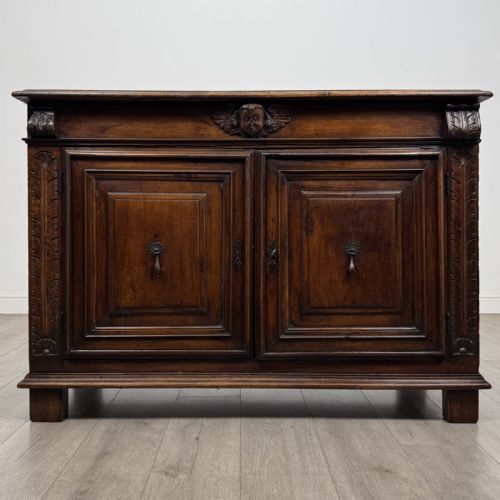
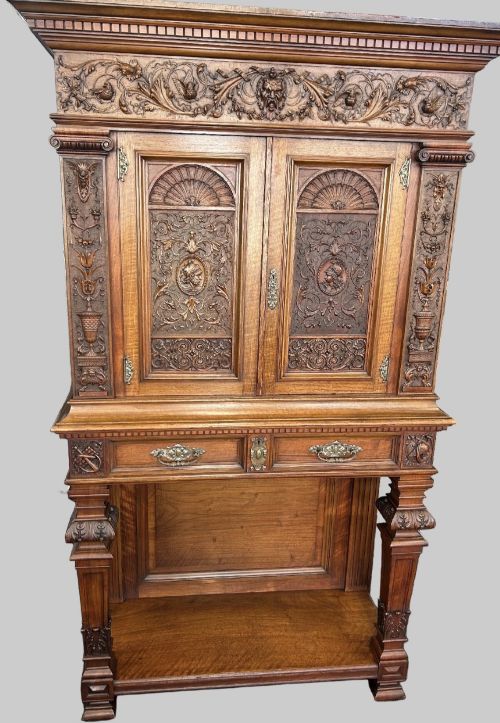
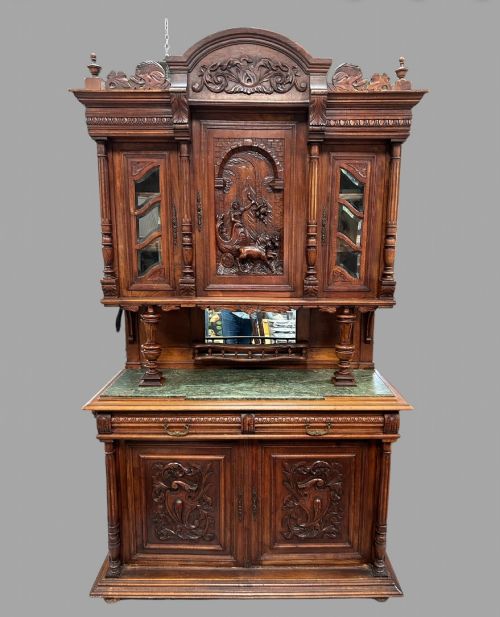
These heavy oak and walnut pieces are french renaissance revival cabinet examples designed to anchor a room with architectural carvings.
French Renaissance Revival Cabinet
A french renaissance revival cabinet brings nineteenth century architectural weight into a room through deep relief carving and imposing proportions. The selection on this page runs from tall buffet hall cupboards and game cupboards down to single bedside cabinets.
Most pieces seen here date from the nineteenth century, including Victorian examples and specific years such as 1860, 1890, 1900, and 1880. Forms range across sideboards, dressers, buffets and pot cupboards.
Stylistic influences overlap between French Renaissance Revival, Renaissance Revival, French Provincial, French Henri II, and Louis XIII Revival. Oak and walnut predominate as the primary structural woods across these forms.
How they were made
Carpenters built these cabinets primarily using solid oak and walnut, chosen for their strength in holding heavy architectural carving. Panel construction allowed timber to move naturally without splitting the frame.
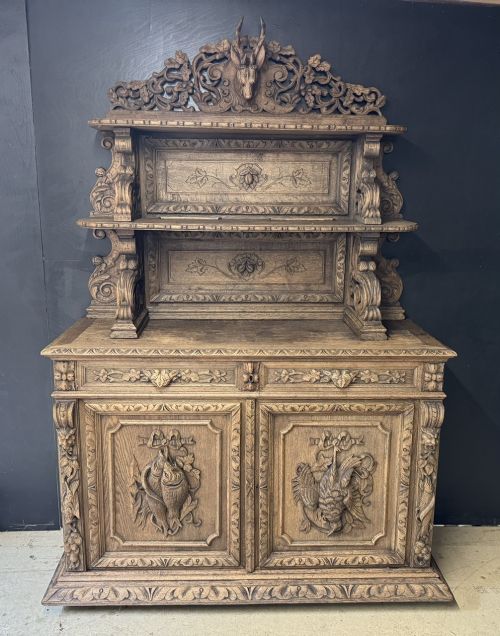
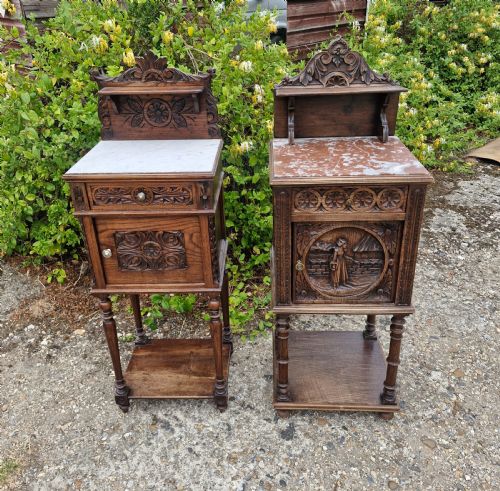
Carvers worked directly onto the timber to create game subjects, strapwork, and classical motifs in high relief. Additional elements incorporated marble tops, brass fittings, glass panels, and iron hardware.
Joinery techniques relied on traditional pegged mortise and tenon joints to support the massive weight of buffets, dressers, and tall hall cupboards.
French Renaissance Revival Cabinet Retail Price Guide 2026
Typical asking prices for french renaissance revival cabinet among the pieces listed under this phrase on Sellingantiques today, from the lower quarter to the upper quarter. They describe what is for sale here now, not the wider market.
Game cupboards come complete with carved oak wildlife ready to oversee the dining room.
What varies in quality
Depth and precision of the hand carving separate standard production from superior examples. Crisp undercutting in foliage, figures, and game subjects indicates a more skilled hand at the bench.
Selection of timber grain and the incorporation of heavy marble tops alter the presence and mass of a piece. Original brass or iron hardware and fitted glass panels add distinction to the final assembly.
The French Renaissance Revival Cabinet Glossary
- Buffet
- A sideboard or cupboard used for storing and serving food. These nineteenth century examples often feature extensive carved game motifs.
- Pot cupboard
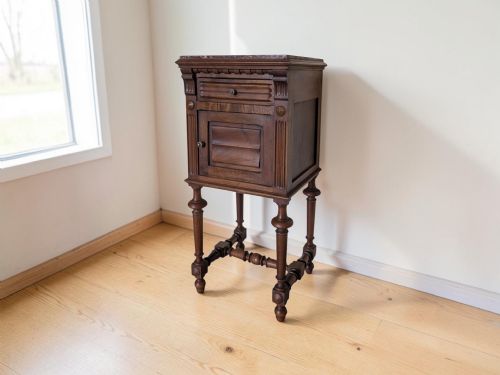
- A small bedside cabinet originally designed to house a chamber pot. They frequently match larger bedroom suites in oak or walnut.
- Renaissance revival
- A nineteenth century architectural and decorative style drawing on sixteenth century forms. It employs heavy mouldings, columns, and figural carvings.
- Louis XIII revival
- A nineteenth century furniture style characterised by heavy turned legs, panels, and geometric mouldings. Walnut is commonly utilised in these pieces.
French Renaissance Revival Cabinet: Frequently Asked Questions
What is a french renaissance revival cabinet?
A nineteenth century storage piece built from oak or walnut with deep architectural carving. These cabinets draw on sixteenth century design motifs.
They appear as tall hall cupboards, sideboards, buffets, dressers, and small bedside cabinets across the listings.
How were these cabinets used?
Large buffets and sideboards served for dining room storage and display, while game cupboards held provisions. Smaller bedside cabinets functioned as personal storage.
Their heavy construction suited formal reception rooms, halls, and dining spaces in nineteenth century homes.
How do I date a cabinet?
Dating relies on recorded periods such as the nineteenth century or Victorian era, alongside specific dates like 1860, 1880, 1890, and 1900. Construction methods and stylistic crossovers help place them.
Renaissance Revival, Henri II, and Louis XIII Revival styles all emerged during the nineteenth century.
Which woods were used?
Oak and walnut form the structural basis for these pieces, chosen for their durability and suitability for deep relief carving. Marble frequently tops select cabinets.
Additional materials include brass, glass, and iron for hardware, glazing, and structural reinforcement.