
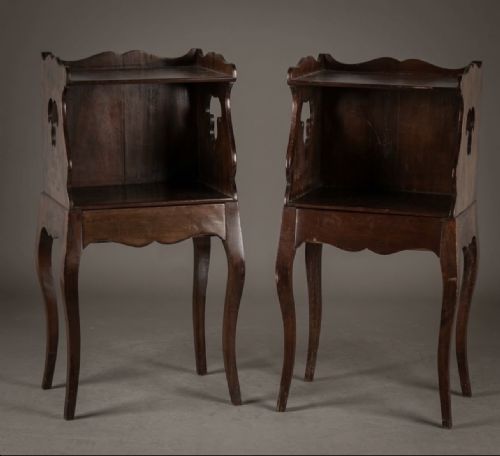
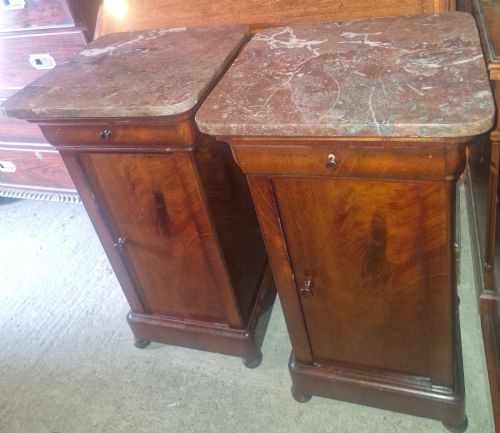
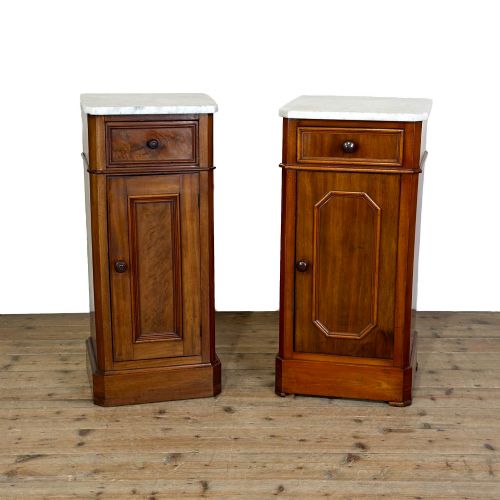
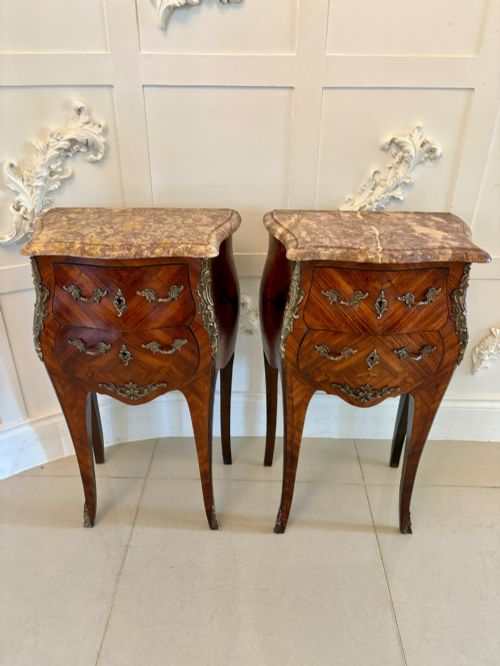
French Nightstand Table
These French nightstand table examples range from 19th Century walnut cabinets to 1930s marquetry pieces, offering practical bedside storage with distinctive continental character.
French Nightstand Table
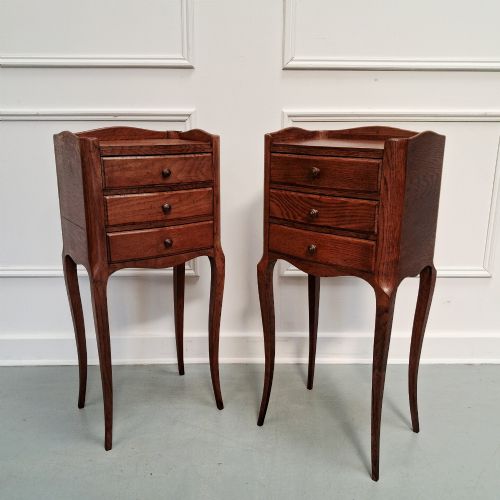
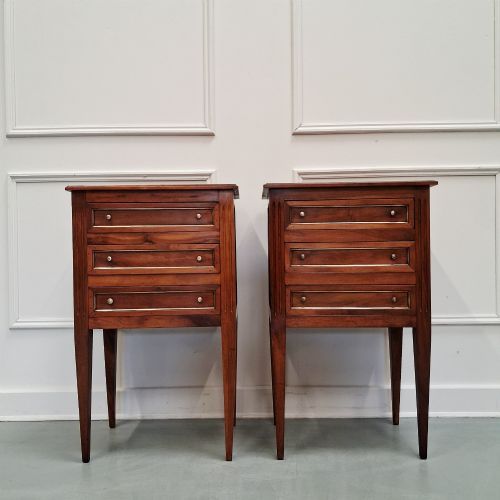
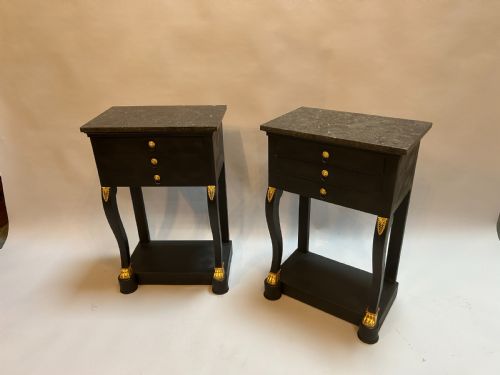
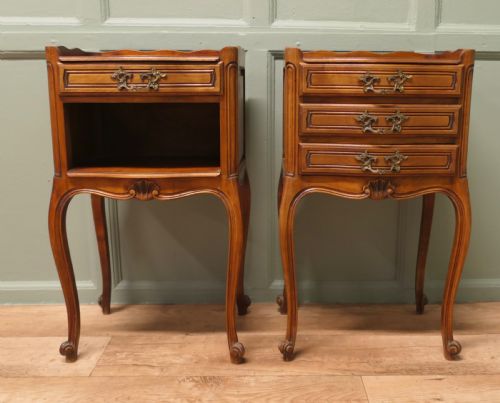
A french nightstand table encompasses bedside tables, cabinets, chests, and side tables originating from France or built in distinct continental styles. You encounter forms ranging from simple cherrywood cupboards to elaborate marble-topped kingwood chests.
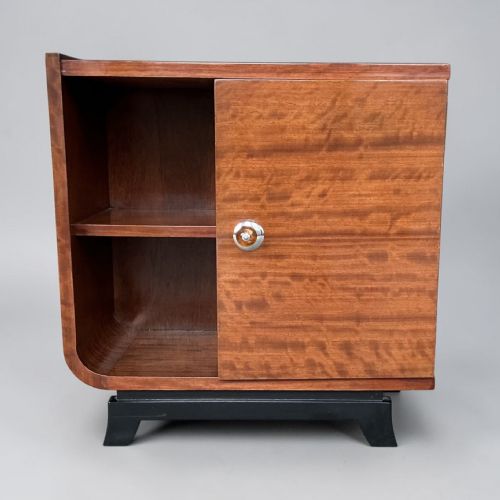
The selections span the 19th Century through the Edwardian era and into the 1930s, reflecting periods such as Louis XV Revival, Louis XVI Revival, and Art Deco. These pieces function primarily as bedside storage or occasional lamp tables.
Makers and designers worked across various regional interpretations, producing French provincial furniture alongside chateau-style side cabinets and ebonised tiers. The most frequent configurations include compact bedside chests with single drawers and cupboards.
How they were made
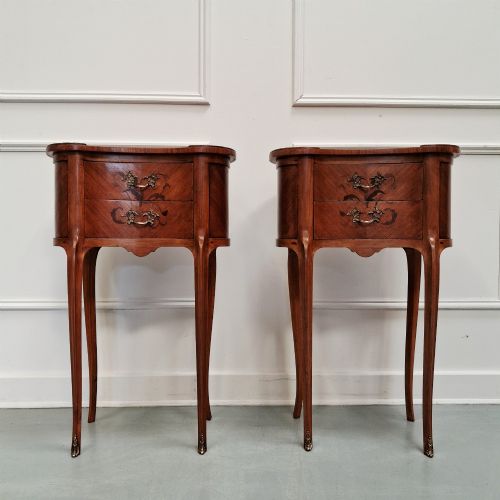
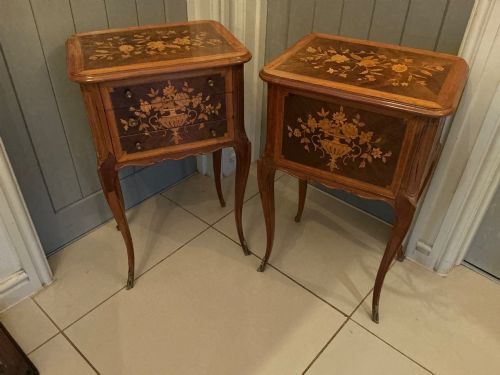
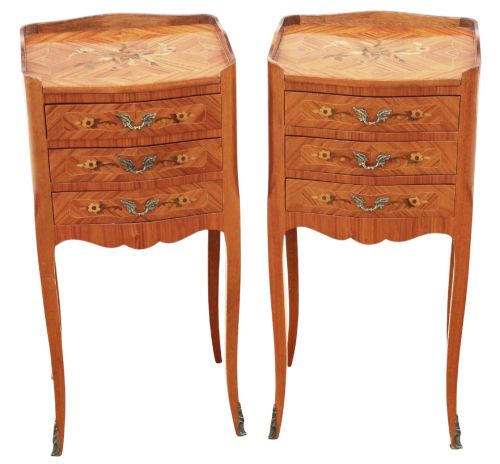
Cabinet makers utilised dense hardwoods including mahogany, walnut, oak, satinwood, and kingwood, often applying intricate marquetry and parquetry patterns. Surfaces frequently incorporate decorative veneers alongside turned legs and carved details.
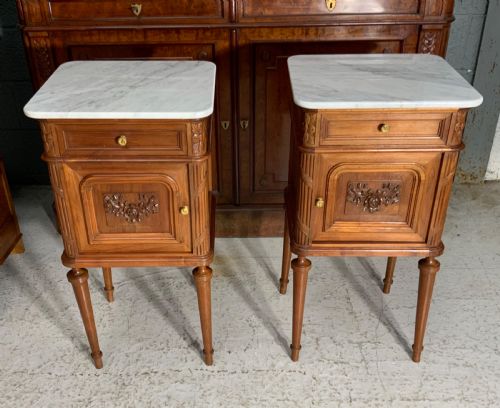
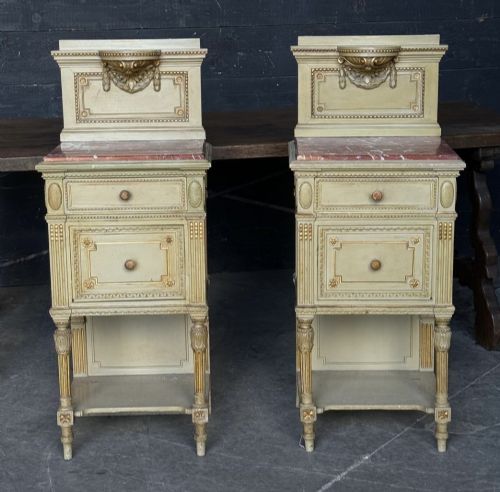
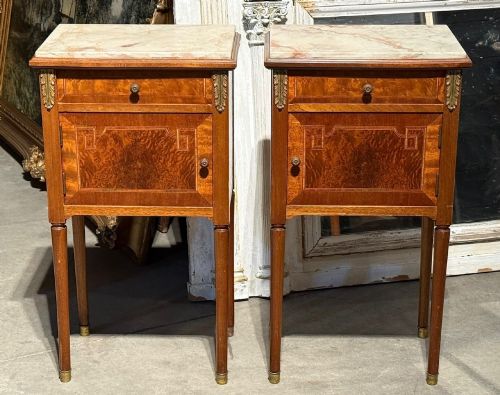
Many examples feature inset marble tops designed to protect the wood from water and daily use, paired with cast or chased ormolu mounts. Glass, brass, and mirrored components appear on select side tables and etageres.
What varies in quality
The refinement of the timber and the complexity of the inlay distinguish standard output from exceptional cabinet work. Pieces featuring finely matched kingwood veneers or detailed marquetry demonstrate superior workshop execution.
The quality of hardware, specifically cast ormolu mounts and functional side locks, marks the distinction between ordinary bedside cupboards and bespoke commissions. Integrated marble slabs and carefully jointed carcases also indicate higher grade manufacturing.
François Linke·Druce and Co
The French Nightstand Table Glossary
- Marquetry
- Decorative veneer patterns applied to furniture surfaces to create pictorial or geometric designs. Craftsmen assemble thin slices of various wood species into intricate compositions.
- Ormolu
- Gilded bronze mounts and decorative fittings applied to furniture edges and handles. This technique enhances the visual richness of 19th Century and revival pieces.
- Parquetry
- Geometric wood inlay forming repeating patterns such as cubes or chequers. It differs from marquetry through its strict geometric arrangement.
- Etagere
- An open shelving unit used for display or as a side table. These pieces often feature multiple tiers supported by slender uprights.
- Commode
- A low chest of drawers or cabinet. In continental furniture, this form frequently serves a bedside function.
French Nightstand Table: Frequently Asked Questions
What materials are used?
Cabinet makers utilised hardwoods such as mahogany, walnut, oak, kingwood, and satinwood. Many examples incorporate decorative veneers alongside marble tops and ormolu mounts.
Secondary materials include brass, glass, mirrored tiers, and cherrywood depending on the specific period and provincial or urban origin.
How do I date a piece?
Dating relies on stylistic revival periods, construction methods, and timber choices recorded across 19th Century, Edwardian, and 1930s examples. Louis XV and Louis XVI revival forms typically point to the 19th Century.
Art Deco and vintage retro examples correspond to the 1920s and 1930s. Provincial pieces in cherrywood or oak often display traditional hand-cut joinery.
Are they sold as pairs?
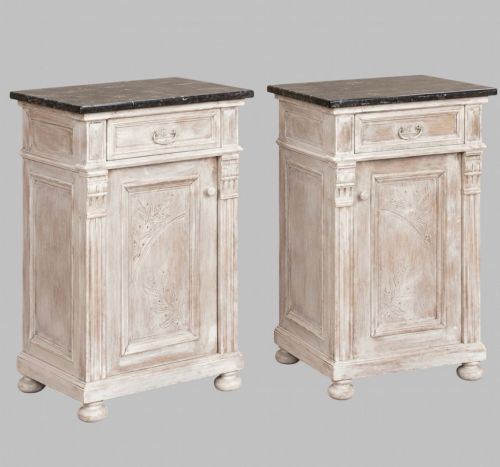
Many listings feature matching pairs of bedside cabinets and nightstands alongside individual side tables and chests. Pairs often share identical marquetry inlay or marble tops.
Near pairs also appear, displaying slight variations in proportion or timber grain while maintaining a consistent style.
Where were they placed?
These pieces functioned primarily as bedside tables, cabinets, and nightstands for holding lamps and personal items. Their compact proportions suited bedrooms and boudoirs.
Certain forms also operated as occasional tables, music cabinets, or side lockers in living spaces and hallways.