



French Neoclassical Plinths
French neoclassical plinths bring classical architecture indoors, offering sturdy stone and bronze columns to elevate fine sculptures and urns.
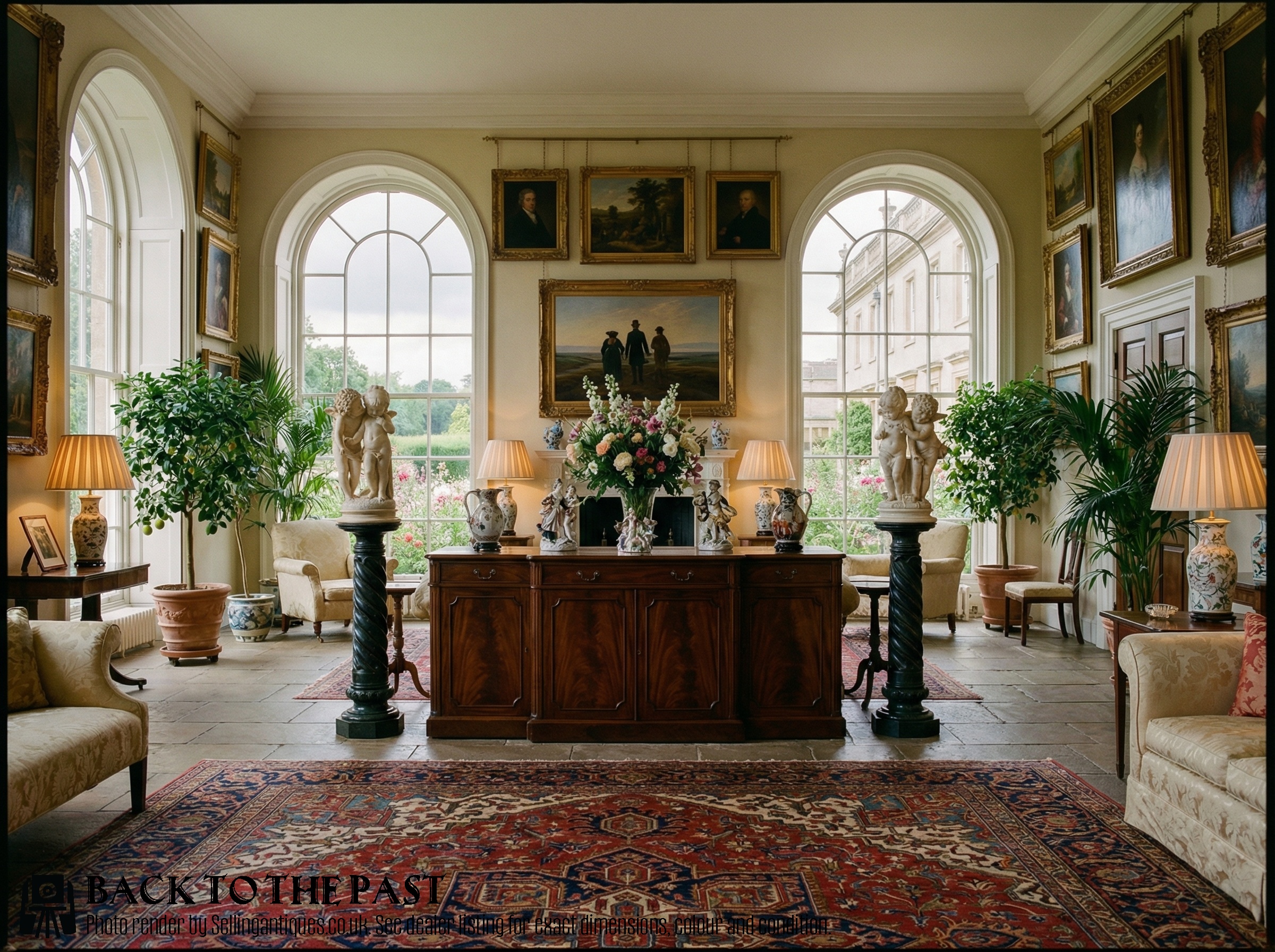
French Neoclassical Plinths
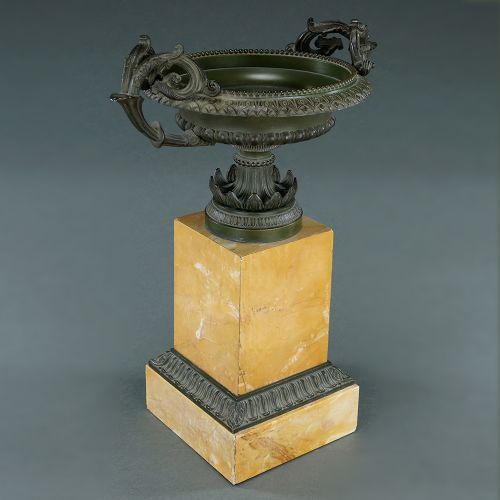
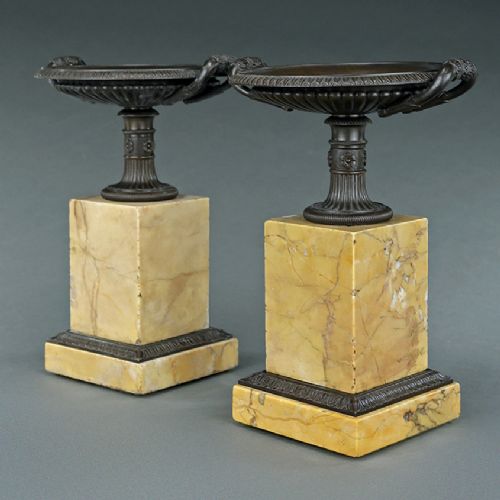
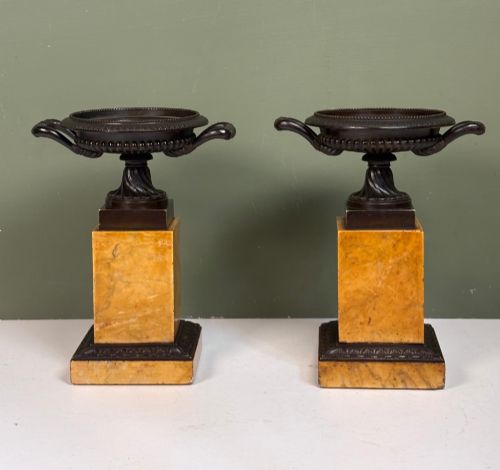
French neoclassical plinths encompass architectural columns, pedestals, and statue stands rooted in classical design, often supporting bronze figures, tazzas, and decorative urns.
Buyers encountering these pieces on this page will primarily find 19th-century works, including Edwardian examples from around nineteen hundred, cast in bronze, marble, and onyx.
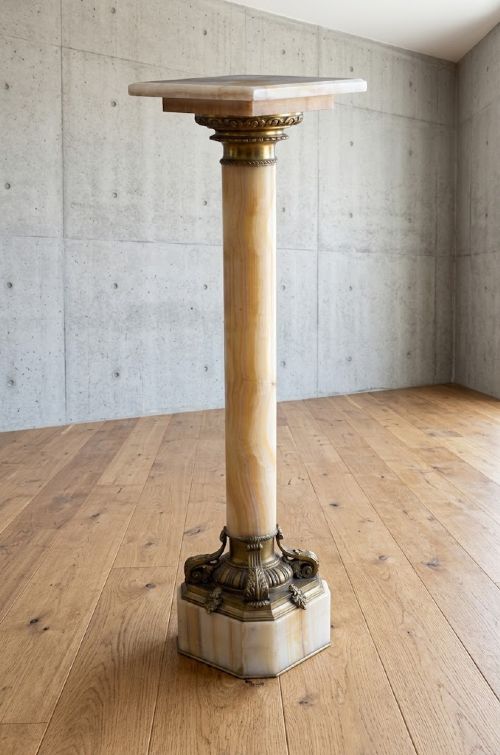
Forms range from slender cylindrical columns to stepped plinth bases and rotating stands, reflecting French Empire and Restauration stylistic influences.
Materials and construction methods
Makers utilised natural hardstones such as green serpentine marble, sienna marble, and onyx to turn solid columns and square bases.
Metalwork involved patinated and gilt bronze, ormolu collars and mounts, and brass, cast and chased to frame the stone.
Alternative materials include ebonised wood, mahogany, painted plaster, and terracotta, providing diverse textures for sculptural display.
Factors determining quality
The choice and figuring of the marble or onyx dictate visual impact, with select mineral columns showing rich veining and precise turning.
Quality shows in the crispness of the bronze or ormolu mounts, where hand-chasing brings out fine detail in collars and classical motifs.
Construction integrity, including the stability of multi-component columns and the secure integration of metal mounts to stone, separates standard production from finer workshop pieces.
Barbedienne
The French Neoclassical Plinths Glossary
- Ormolu
- Gilded bronze, where finely ground gold is applied to a bronze base using mercury. This technique creates a rich, durable surface finish popular in French decorative arts.
- Campana urn
- A bell-shaped vessel with a flared rim and pedestal foot, derived from ancient Roman pottery. These forms frequently appear mounted on classical plinth bases.
- Tazza
- A shallow saucer-like cup or vase raised on a stem and foot. They are often cast in bronze and paired with marble pedestals.
- Caryatid
- A sculpted female figure serving as an architectural support taking the place of a column. They appear on pedestals supporting classical structures.
French Neoclassical Plinths: Frequently Asked Questions
What periods do these plinths date from?
The pieces span the nineteenth century, including French Empire and Restauration periods, alongside Edwardian examples from around nineteen hundred.
Craftsmanship from these eras relies on traditional stone turning and bronze casting techniques.
How were marble columns used originally?
Columns and plinths served as elevated display stands for sculptures, busts, and decorative vases within grand interiors.
They positioned art at eye level to mimic classical temple architecture.
What materials are most common?
Marble, onyx, and bronze dominate the construction, often accented with gilt bronze or ormolu mounts.
Secondary materials include mahogany, ebonised wood, and painted plaster.
How do I care for marble and bronze?
Dust stone surfaces with a dry cloth and avoid harsh chemical cleaners that can etch the polish.
Bronze and ormolu require minimal intervention beyond gentle dusting to preserve their patination.