


French Neoclassical Armchair
A french neoclassical armchair brings disciplined classical lines and rich period upholstery into a room.
French Neoclassical Armchair
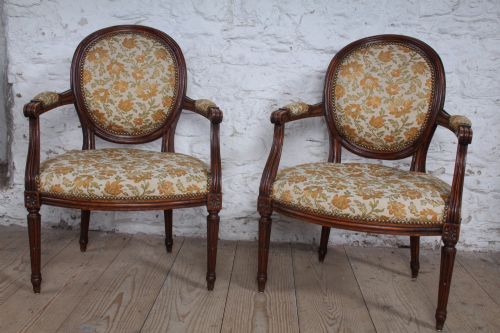
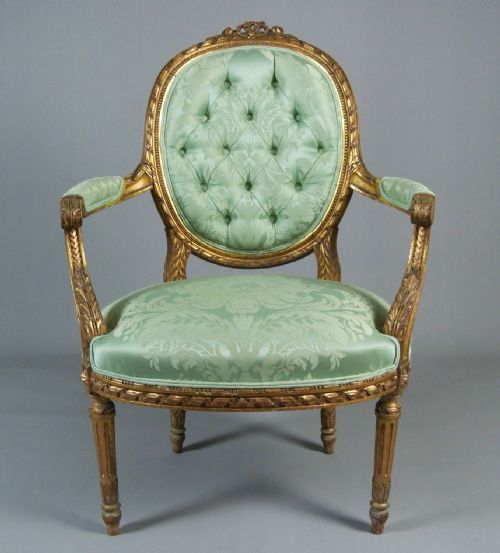
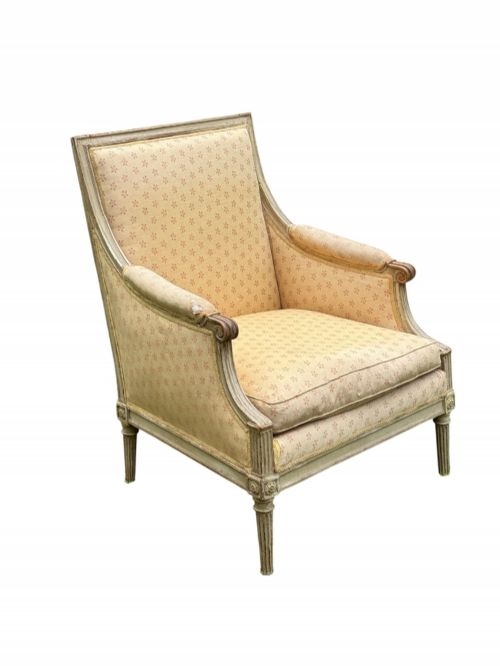
A french neoclassical armchair embodies the architectural restraint and antique motifs that succeeded the flowing curves of earlier centuries. You encounter pieces spanning the eighteenth century through later revival periods, capturing styles from Louis XVI and Empire to Directoire.
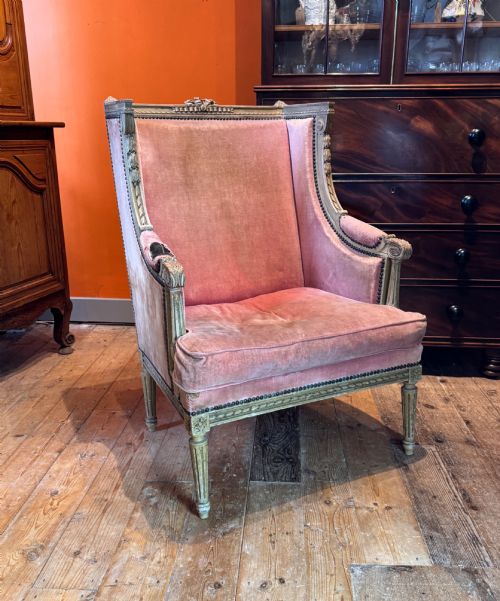
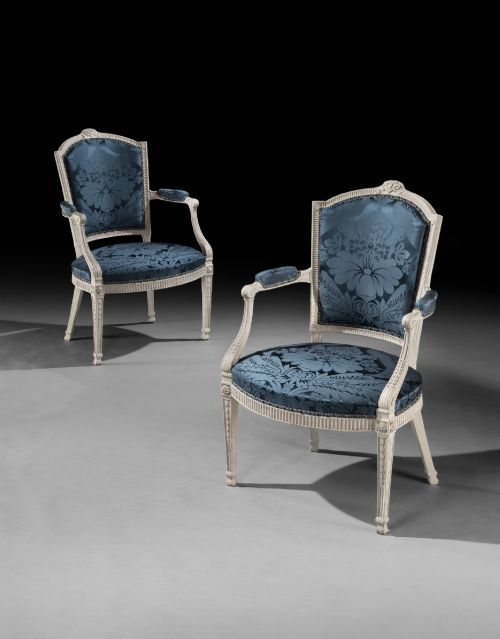
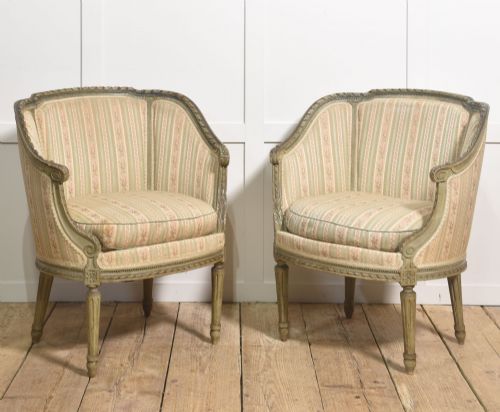
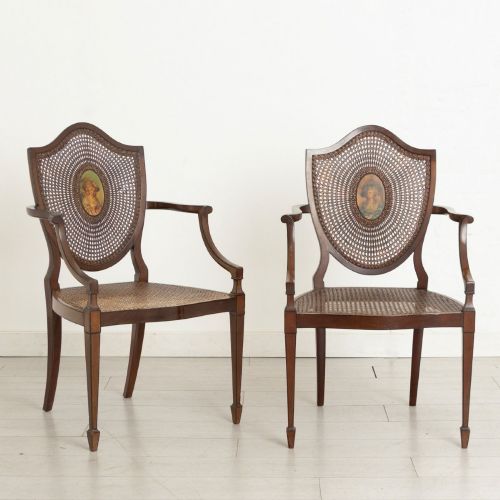
The evidence shows these seats taking various forms, including open armchairs or fauteuils, tub chairs, desk chairs, and large salon suites. Many appear as pairs, alongside occasional single pieces originating from chateaux or townhouses.
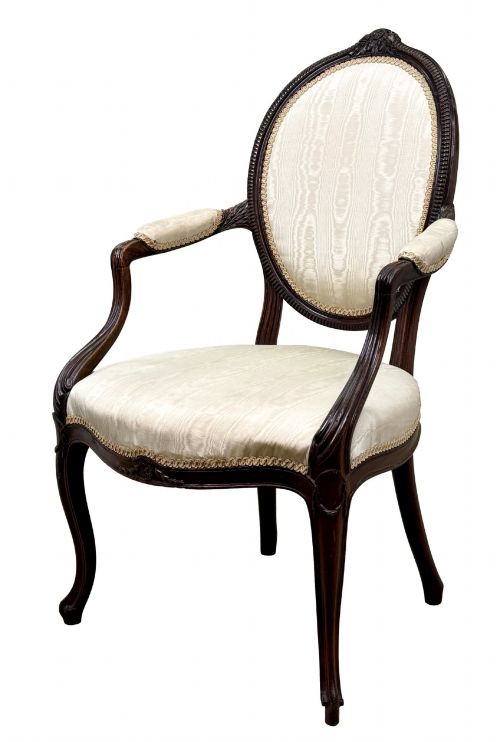
Originating in walnut, mahogany, and painted wood, these chairs reflect both formal French design and English interpretations such as Regency and George III neoclassical work. They serve equally well at a desk, in a parlour, or as a striking pair in a bedroom.
Evaluating the Pieces
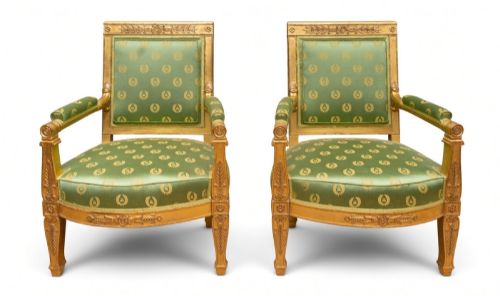
Quality rests in the crispness of the wood carving and the fidelity of the classical proportions. Pieces featuring original paint or period gilding hold particular distinction over later, heavy-handed restorations.
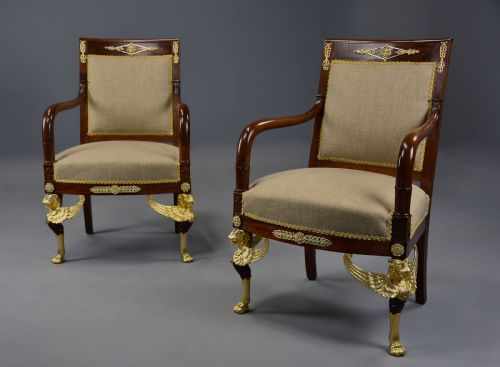
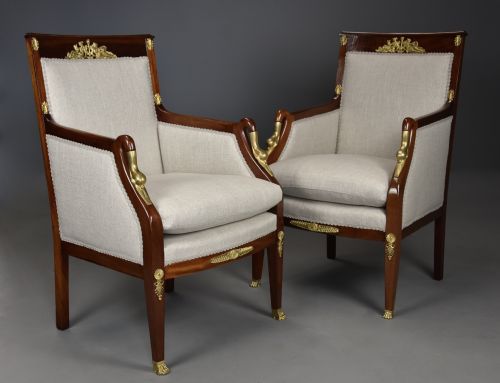
The integrity of the frame and the quality of the mounting work, such as precise ormolu application, separate standard workshop output from exceptional examples. Provenance and original upholstery schemes also elevate certain armchairs significantly above ordinary examples.
One suite provides forty-two matching dining chairs, ensuring no guest ever has to stand.
Jacob-Desmalter·Thomas Chippendale·Henri Jacob
The French Neoclassical Armchair Glossary
- Fauteuil
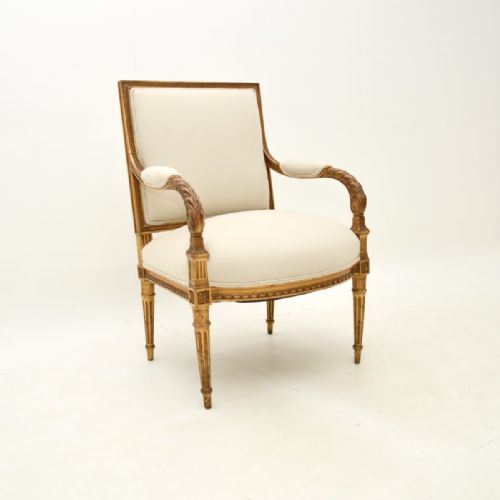
- An open-framed upholstered armchair with wooden armrests, typical of French seating design. These open arm chairs often feature carved detailing along the frame.
- Ormolu
- Gilt bronze mounted onto furniture frames, frequently utilised on Empire and neoclassical pieces. This decorative metalwork adds a bright metallic accent to mahogany timber.
- Giltwood
- Timber coated with gold leaf or gilt preparation, creating a brilliant decorative surface. It defines many formal salon chairs from the eighteenth and nineteenth centuries.
- Medallion Chair
- A seat featuring an oval backrest framed by carved wood, strongly associated with Louis XVI style. This geometric back shape echoes classical architectural motifs.
- Directoire Style
- The transitional design phase preceding the French Empire, marked by austere classical lines. Pieces from this period favour stripped-back neoclassical dignity over elaborate ornamentation.
French Neoclassical Armchair: Frequently Asked Questions
Where were these armchairs placed originally?
They furnished formal salons, bedchambers, and libraries in chateaux and townhouses. Specific forms like the fauteuil du bureau served as dedicated desk chairs.
Owners arranged them in matched pairs or large salon suites to accommodate guests during social gatherings.
Are revival pieces as desirable as eighteenth-century originals?
Nineteenth and early twentieth-century revival pieces offer skilled craftsmanship and decorative presence, often reinterpreting earlier classical themes with great skill.
While period eighteenth-century examples command higher regard, revival pieces in mahogany or giltwood provide similar visual impact in a modern interior.
What textiles were used for upholstery?
Original and period-appropriate upholstery includes silk damask, velvet, tapestry needlepoint panels, and standard woven fabrics. Needlepoint work from the late eighteenth century represents particularly fine textile artistry.
Many surviving pieces retain historic fabric schemes or showcase replacement textiles chosen to match their neoclassical frames.