


Louis XVI Carved Fauteuil
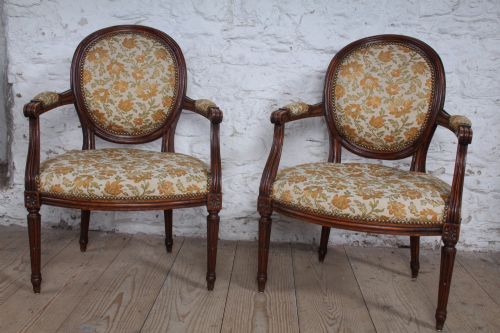
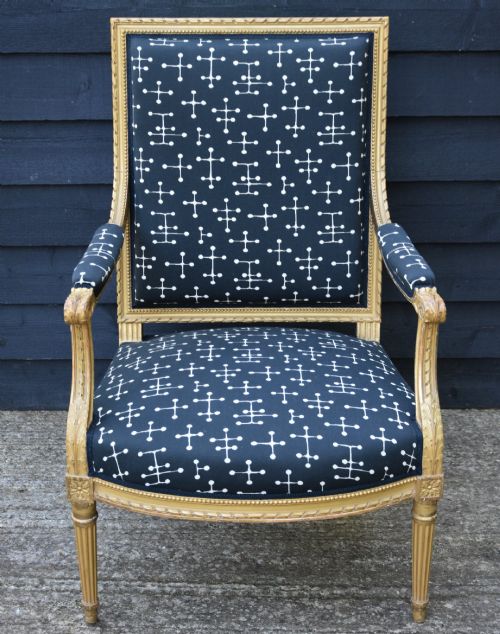
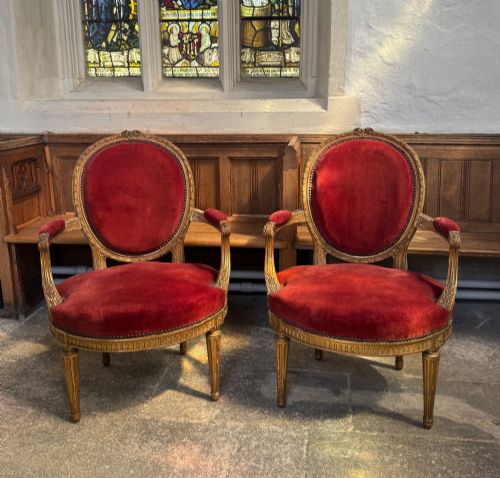
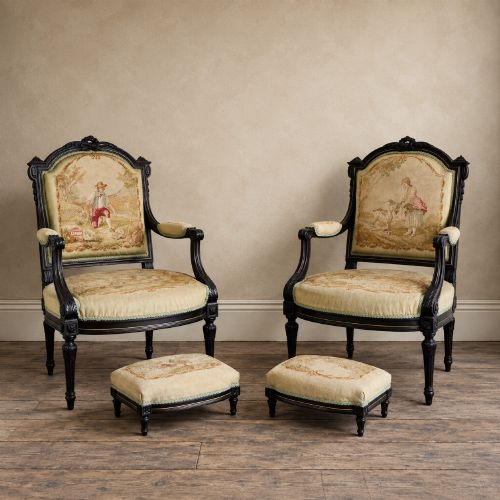
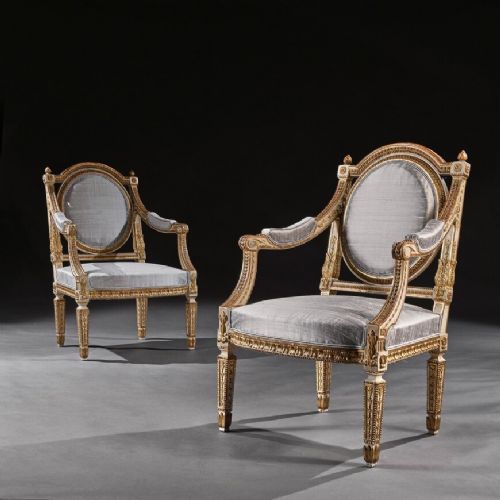
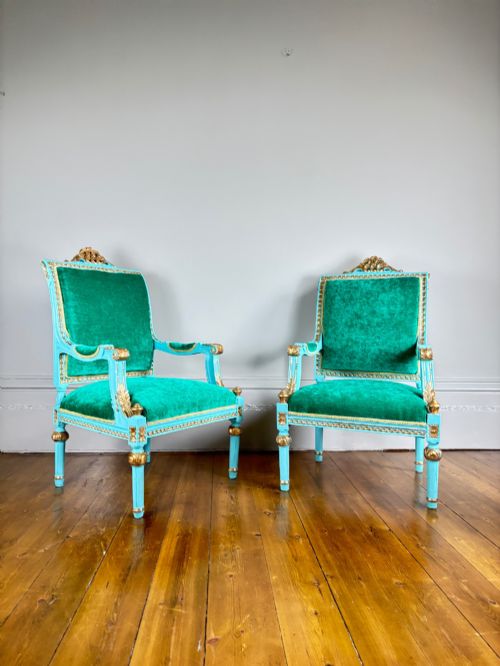
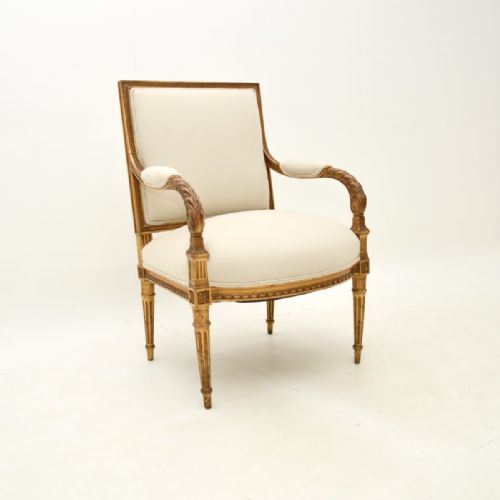
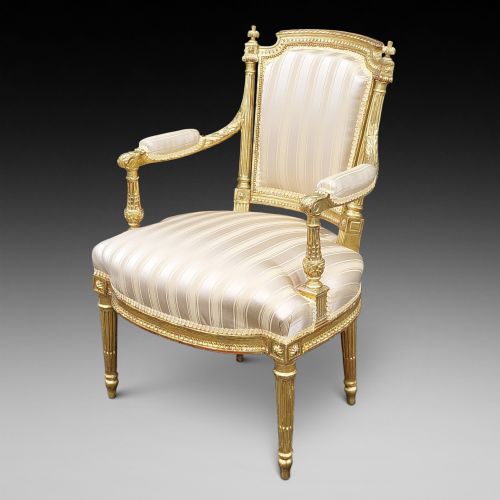
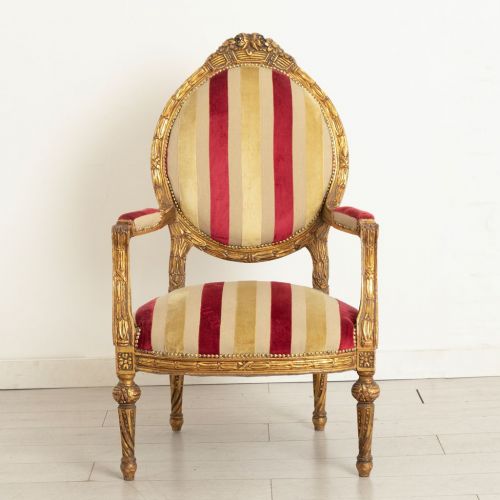
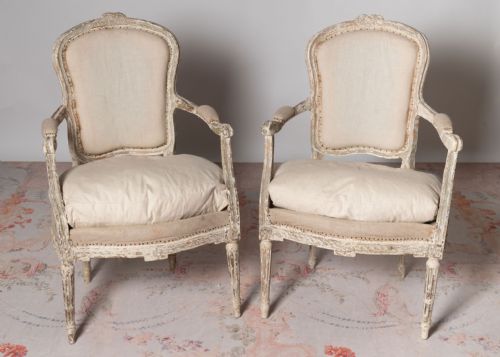
A louis xvi carved fauteuil brings neoclassical elegance to a room with its upright geometry and carved wooden frame.
Louis XVI Carved Fauteuil
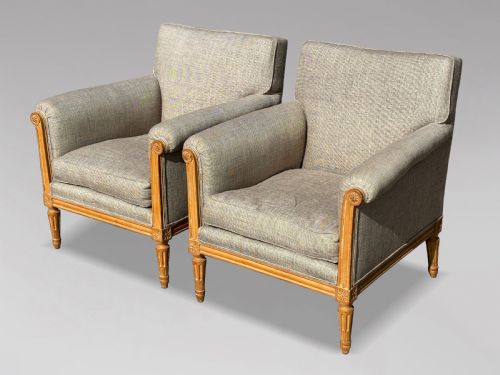
A louis xvi carved fauteuil is an open-armed seating form defined by classical restraint, straight fluted legs and rectilinear proportions. Buyers look for these armchairs to introduce French taste and formal symmetry into traditional or eclectic interiors.
Most examples met on this page date from the nineteenth century and the early twentieth century, spanning revival periods up to nineteen twenty. These later interpretations faithfully reproduce the architectural lines and ornamental vocabulary of the eighteenth century original pieces.
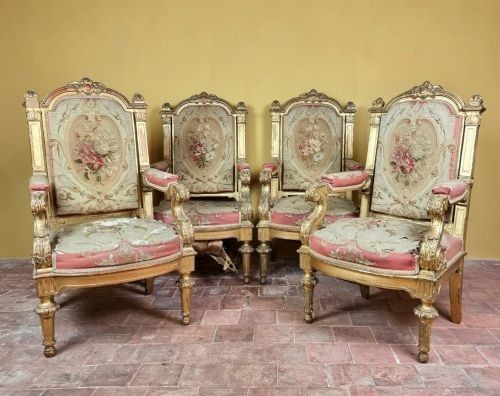
The inventory ranges from single salon chairs to matched pairs and larger sets, often appearing alongside related salon suites and small settees. Beech and walnut provide the structural support beneath giltwood, painted finishes and textile upholstery.
Indicators of Quality
Quality rests in the crispness of the wood carving and the proportion of the frame, where hand-tooled depth distinguishes superior work from shallow mechanical output. Original surface treatments, whether aged gilding or early paint, hold greater visual appeal than later refinishing.
The integrity of the structural joinery and the survival of period textiles or needlepoint panels elevate certain pieces above standard production. Matching pairs and complete sets command distinct attention for their symmetry and decorative impact.
Holland and Sons
The Louis XVI Carved Fauteuil Glossary
- Fauteuil
- An open-armed upholstered armchair with exposed wooden framing. This form developed in France during the eighteenth century.
- Giltwood
- Wood coated with a thin layer of gold leaf applied over a prepared gesso ground. It provides a bright metallic finish.
- Neoclassical
- A style drawing inspiration from classical antiquity, featuring straight lines, symmetry and architectural motifs. It defines the Louis XVI aesthetic.
- Needlepoint
- Embroidery stitched onto a stiff canvas mesh to create pictorial or geometric panels. These often cover the seats and backs of salon chairs.
Louis XVI Carved Fauteuil: Frequently Asked Questions
How do I identify a true period piece?
Examine the timber construction, tool marks on the carved elements and the ageing of the gilt or paint layers beneath close inspection.
Nineteenth-century revivals often display different wood preparation and joinery methods compared to eighteenth-century originals.
Are these armchairs comfortable for daily use?
These chairs feature upright backs and open arms designed for formal sitting rather than deep lounging. Their proportions suit dressing rooms, studies and reception spaces.
Modern buyers often use them as occasional accent chairs in living rooms or bedrooms.
Can I mix different finishes in one room?
Pairing giltwood frames with painted wood pieces creates a collected interior rather than a rigid matching suite. Maintaining a consistent neoclassical style bridges different finishes.
Similar leg shapes and upholstery tones help unify mixed seating arrangements.
How should I care for giltwood frames?
Dust the carved wooden surfaces gently with a soft, dry cloth to prevent accumulation without disturbing the gold leaf. Avoid liquid cleaners and harsh chemicals entirely.
Keep the chairs away from direct sunlight and moisture to protect the underlying gesso and wood.