
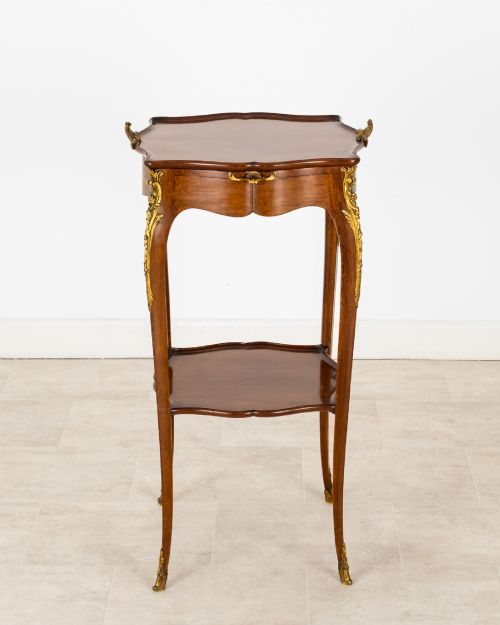
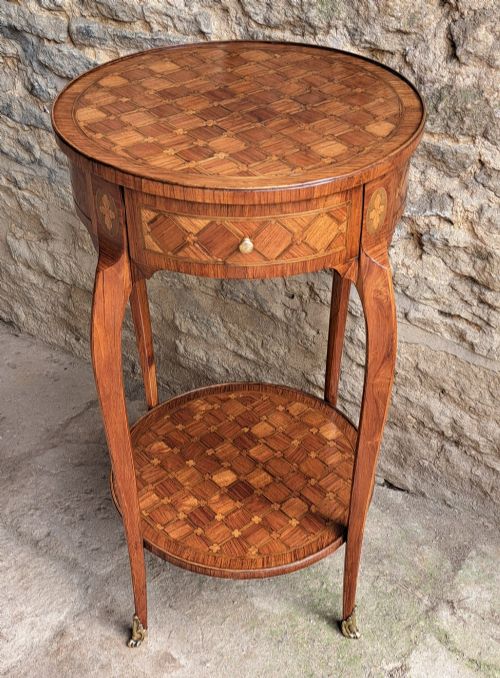


French Marquetry Tiered Table
A french marquetry tiered table brings layered display surface and floral wood inlay together in a single piece.
French Marquetry Tiered Table
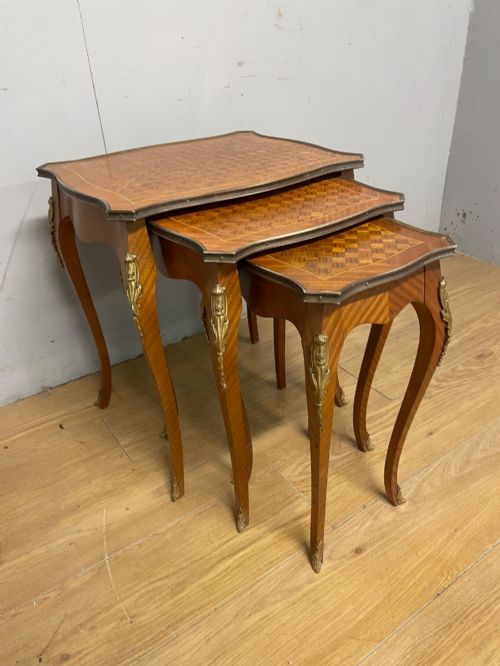
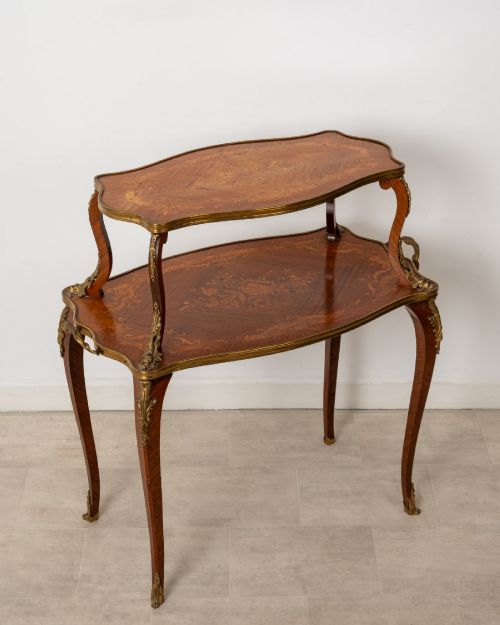
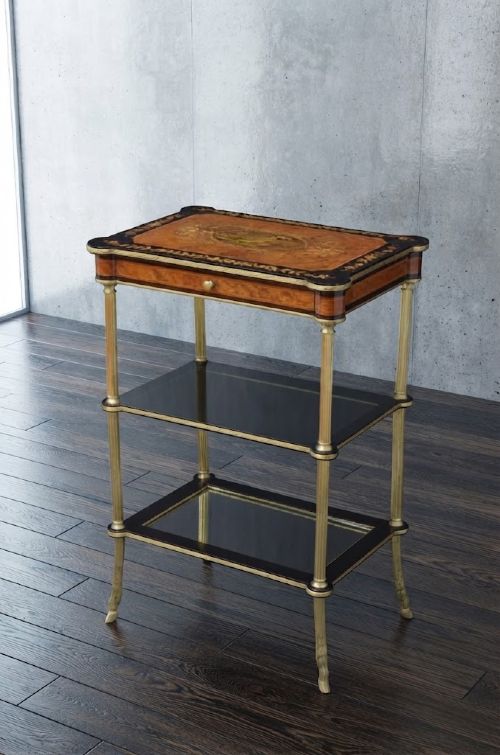
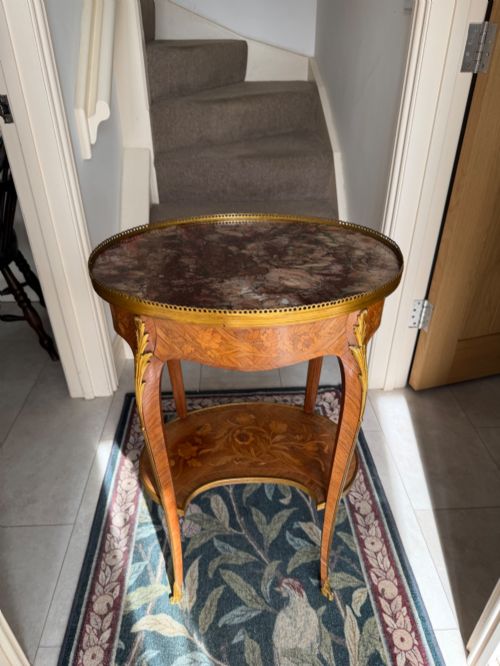
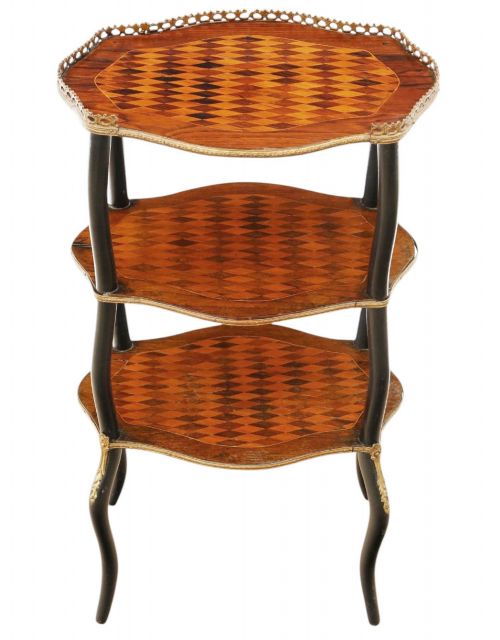
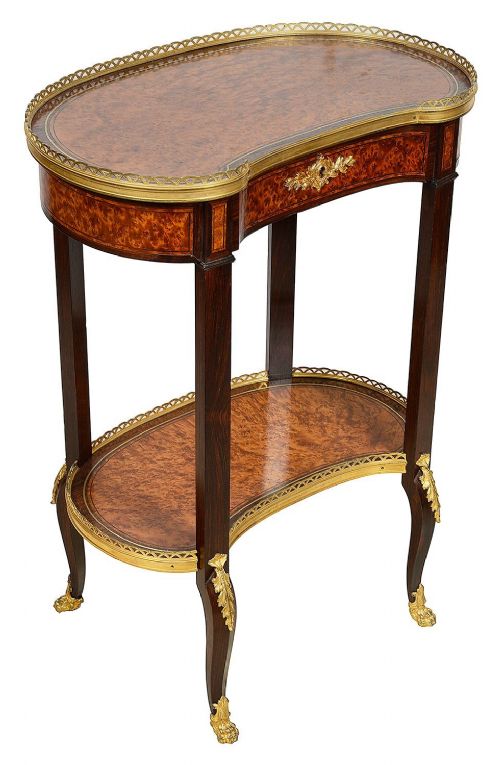
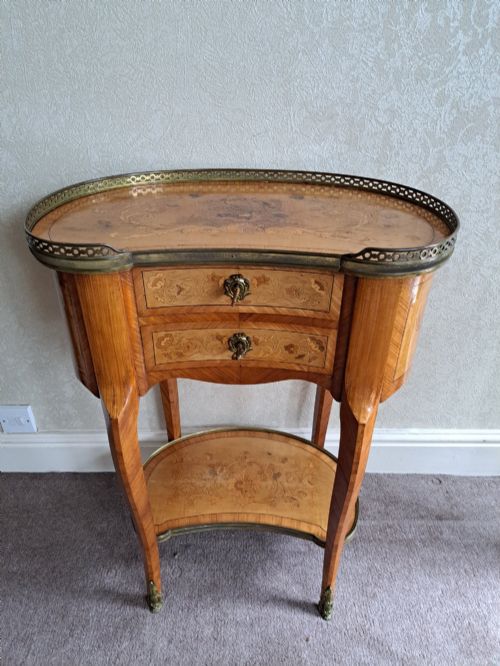
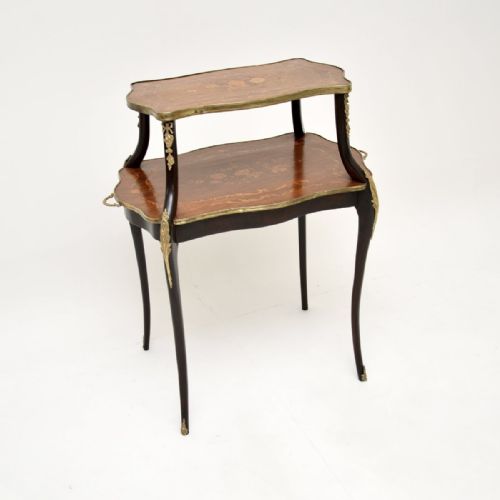
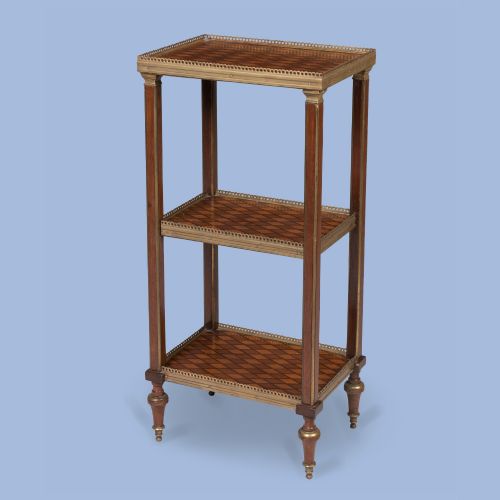
A french marquetry tiered table takes the form of an etagere, whatnot, or multi-level occasional table designed for display and light use. These pieces appear frequently in nineteenth-century and early twentieth-century periods, often following Louis XV and Louis XVI revivals.
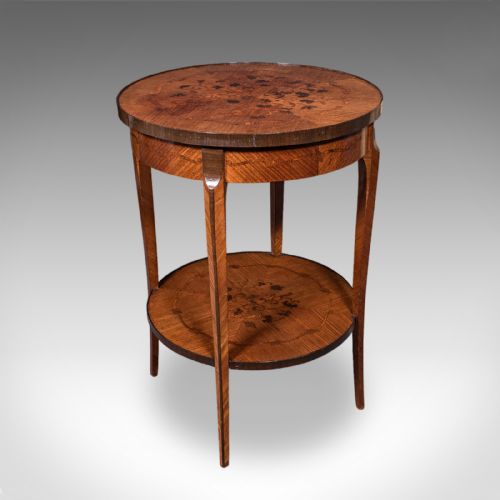
The buyer encounters two-tier and three-tier formats most commonly on this page, alongside side tables and lamp tables with inlaid surfaces. The construction ranges from freestanding centre tables to corner-fitting display shelves.
Materials and construction
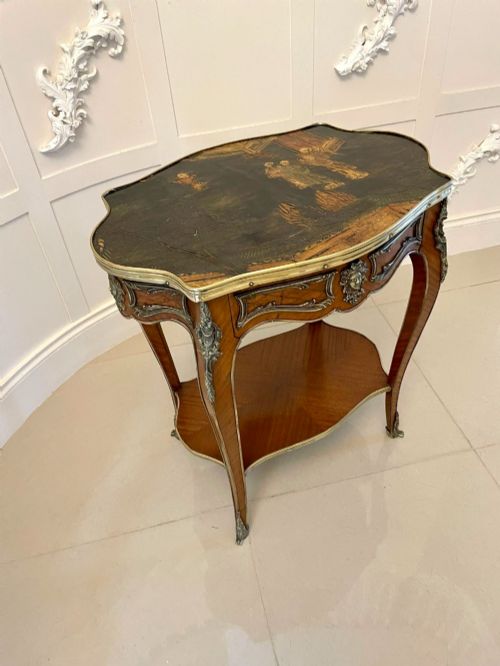
Cabinetmakers build these tables using a carcass of walnut, mahogany, rosewood, or kingwood, upon which intricate floral and geometric marquetry is laid. Ebonised wood also provides a dark contrasting ground for detailed inlay work.
Mounts in ormolu, gilt bronze, and brass edge the tiers, frame the legs, and protect corners, while glazed or mirrored panels occasionally form the backing of upper display shelves.
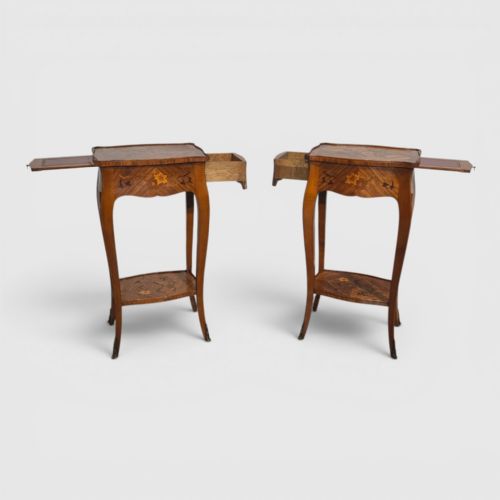
Some tables include tiny hidden shelves meant for holding visiting cards or pocket watches out of sight.
Design and execution
The standard of a french marquetry tiered table rests on the depth of the timber selection and the precision of the cut veneers forming the floral motifs. Subtle shading in the wood pieces creates perspective that distinguishes superior marquetry from simpler geometric parquetry.
Mounting hardware contributes significantly to the final distinction, where chased ormolu with crisp detail elevates the piece far above standard brass stampings. The fluidity of the cabriole legs and the balance of the tiers determine the harmony of the proportion.
François Linke·Edwards & Roberts·Haentgos Freres
The French Marquetry Tiered Table Glossary
- Marquetry
- Decorative veneer work cut into pictorial patterns such as flowers and foliage. It differs from parquetry by forming organic shapes rather than geometric grids.
- Etagere
- A piece of furniture consisting of open shelves for displaying small objects. This form provides multiple tiers supported by slender uprights or columns.
- Ormolu
- Gilded bronze used for mounts and decorative trims on furniture. The technique involves applying a gold amalgam to bronze and heating it.
- Parquetry
- Geometric wood inlay forming patterns like cubes, chequers, or herringbone. It provides a structured contrast to curved floral marquetry.
- Whatnot
- A freestanding set of open shelves used for ornament or books. Victorian makers produced these in various woods with multi-tier designs.
French Marquetry Tiered Table: Frequently Asked Questions
How do I care for marquetry?
Keep inlaid wooden surfaces away from direct sunlight and strong heat sources to prevent the natural veneers from drying or lifting. Regular dusting with a soft, dry cloth protects the polished finish.
Apply a microcrystalline wax occasionally to nourish the wood and maintain the subtle contrast between the different timber species used in the pattern.
Are these tables sturdy enough for daily use?
Tiered tables suit decorative display, holding lamps, porcelain, or books rather than heavy items. The slender legs and multiple joints require gentle handling when moving the piece.
Placing the table on an even floor prevents strain on the uprights and ensures the upper tiers remain balanced.
How do I distinguish Louis XV and Louis XVI styles?
Louis XV style pieces emphasise curved lines, asymmetrical floral marquetry, and flowing cabriole legs. The overall silhouette is organic and fluid.
Louis XVI style favors symmetry, straight tapered legs, and neoclassical motifs like fluting and urns, reflecting a return to classical straight lines.