


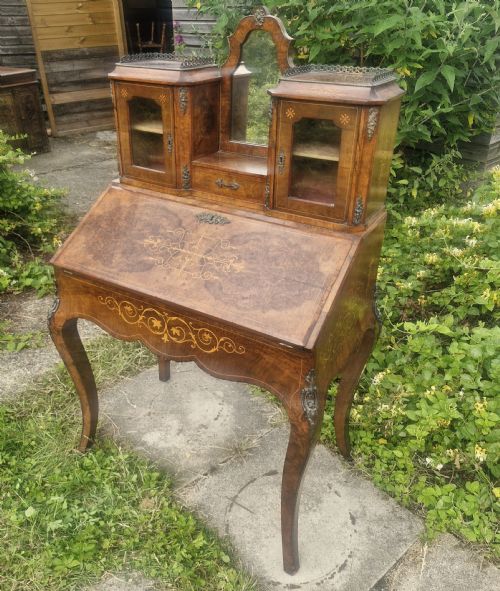


French Marquetry Ladies Desk
A French marquetry ladies desk brings intricate floral veneers and refined cabinetry to a private study, offering a compact writing surface designed with elegance.
French Marquetry Ladies Desk
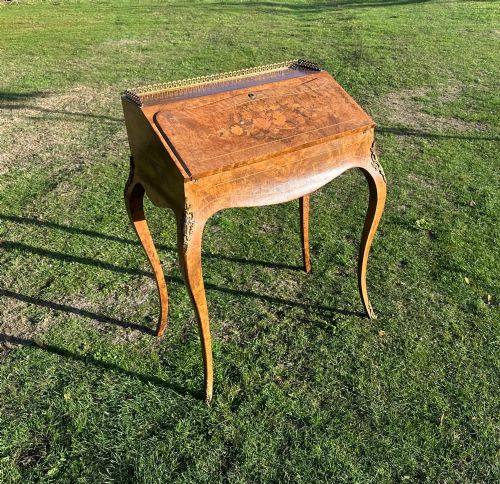
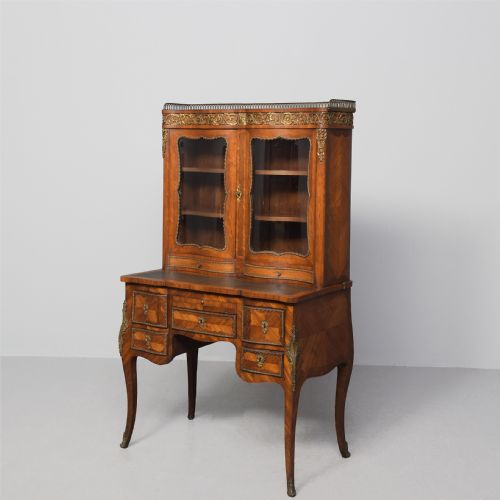
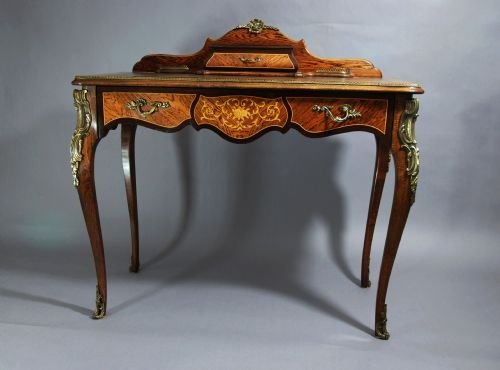
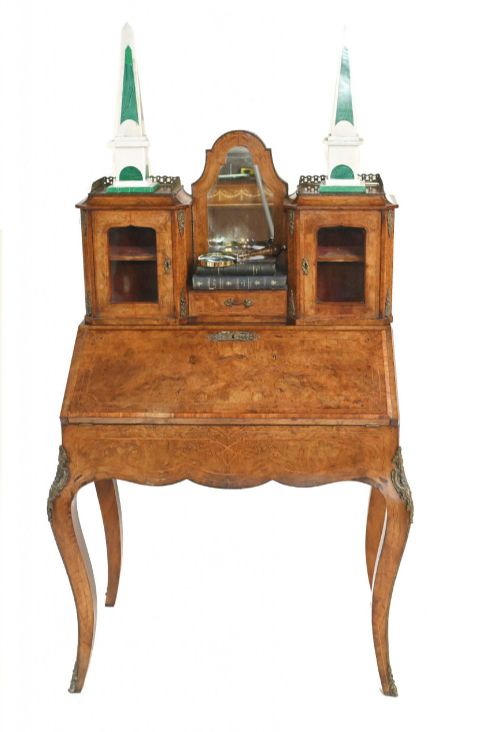
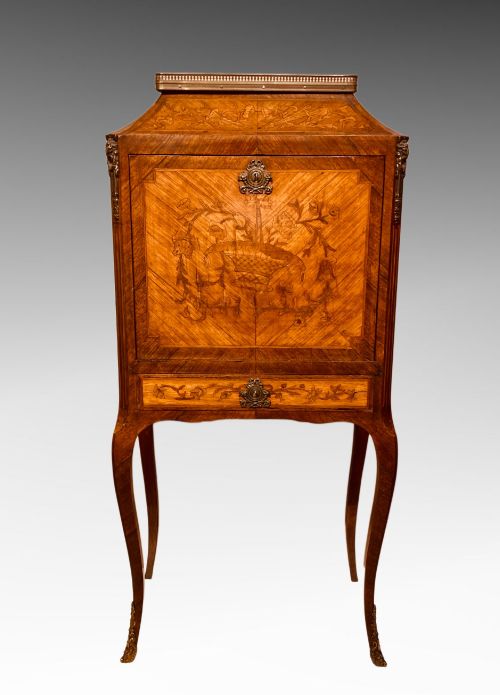
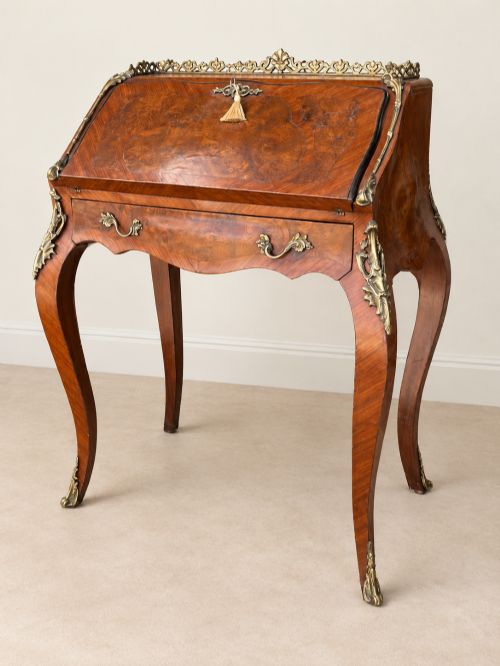
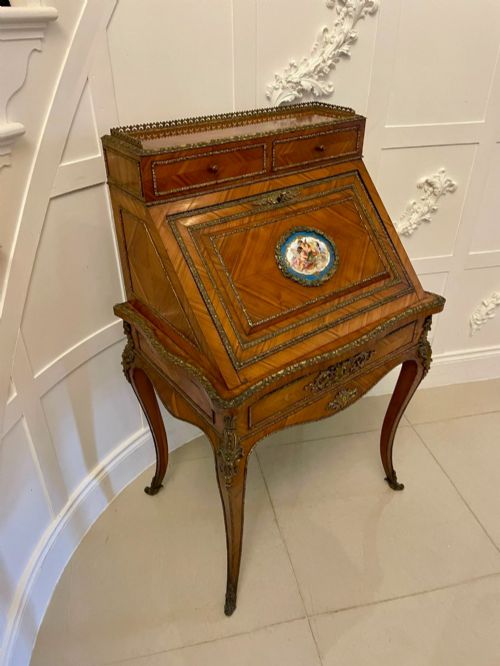
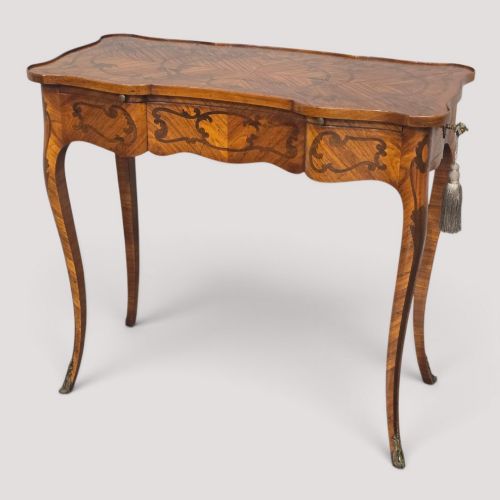
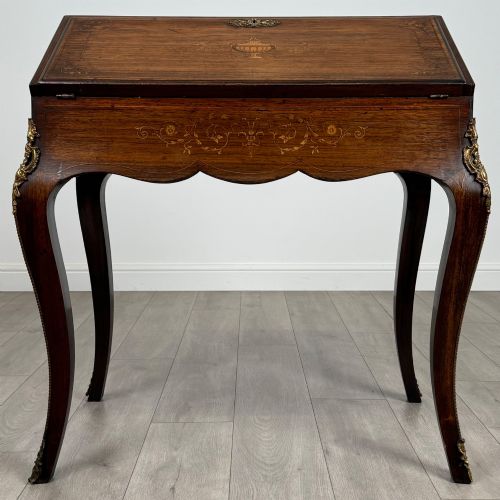
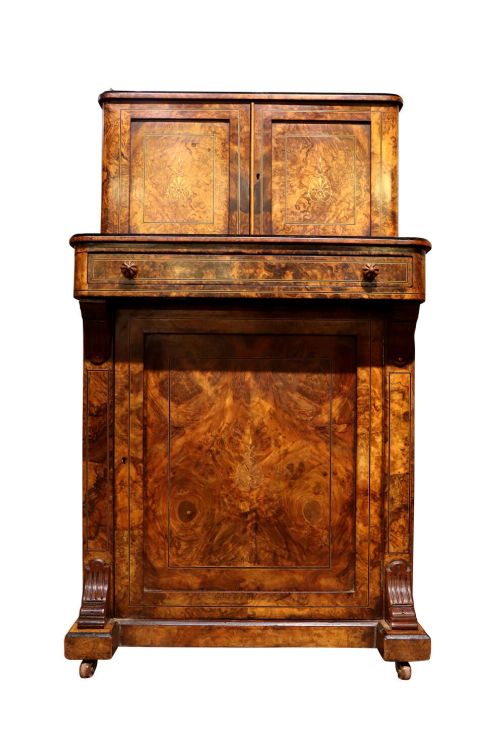
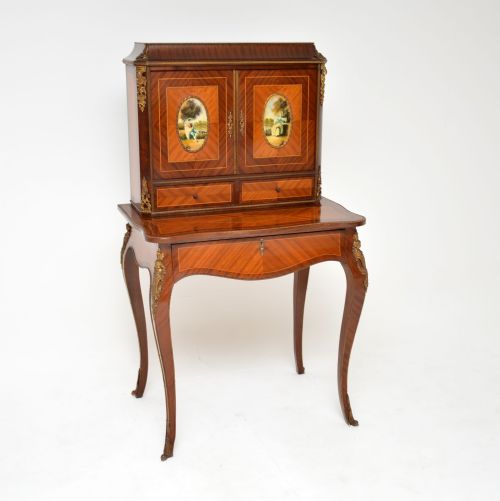
A French marquetry ladies desk typically takes the form of a bonheur du jour, an escritoire, or a compact writing table intended for personal correspondence and light paperwork. These pieces frequently appear in nineteenth century styles, particularly referencing Louis XV revivals alongside Victorian interpretations.
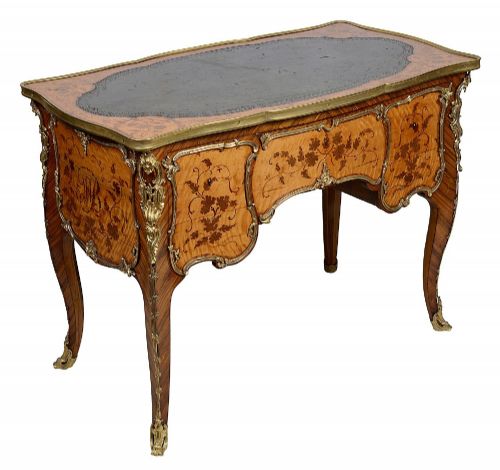
The layout incorporates small drawers, correspondence compartments, and writing surfaces often lined with leather. Examples range from serpentine kidney shapes to neat rectangular writing cabinets suited for boudoirs and private sitting rooms.
How they were made
Cabinetmakers constructed carcass frames from timbers such as walnut, kingwood, rosewood, burr walnut, and satinwood, applying contrasting wood veneers to form detailed floral and geometric marquetry patterns. Brass inlay and gilt bronze ormolu mounts accentuate the curves of the framework.
Surface ornamentation relies on precise cutting of decorative woods, complemented by cast ormolu trims along the feet, borders, and escutcheons.
French Marquetry Ladies Desk Retail Price Guide 2026
Typical asking prices for french marquetry ladies desk among the pieces listed under this phrase on Sellingantiques today, from the lower quarter to the upper quarter. They describe what is for sale here now, not the wider market.
Materials span kingwood, rosewood, walnut, ormolu mounts, and leather writing surfaces.
What varies in quality
The standard of a French marquetry ladies desk rests on the intricacy and precision of the veneer work, alongside the crispness of the cast ormolu mounts. Finer examples display harmonious grain selection in woods like kingwood and burr walnut, integrated smoothly with the underlying structure.
Francoise Linke
The French Marquetry Ladies Desk Glossary
- Marquetry
- A decorative technique applying pieces of veneer to a structure to form pictorial or geometric patterns. It relies on contrasting tones of timber.
- Bonheur du jour
- A light writing desk featuring a small cabinet or set of shelves superstructure upon the main writing surface. This form gained popularity during the eighteenth and nineteenth centuries.
- Ormolu
- Gilt bronze mounts applied to furniture for decorative trim. The material provides bright metallic contrast against dark woods like rosewood and kingwood.
- Escritoire
- A writing cabinet featuring a fall front or sloping lid that conceals interior pigeonholes and small drawers. These pieces served personal correspondence needs.
- Bureau de dame
- A lady's desk, typically compact in scale, designed for domestic correspondence. It often incorporates internal drawers and a fitted writing slope.
French Marquetry Ladies Desk: Frequently Asked Questions
What is a bonheur du jour?
A bonheur du jour is a small writing desk featuring a tiered cabinet superstructure with drawers or shelves above the writing surface.
Cabinetmakers designed these compact pieces for domestic use in private sitting rooms and boudoirs.
How do you use a bureau de dame?
A bureau de dame serves as a compact writing desk equipped with internal compartments for storing stationery and letters.
The drop front or surface provides a dedicated writing space for personal correspondence.
What woods are used in these desks?
Cabinetmakers utilised exotic and domestic hardwoods including kingwood, rosewood, walnut, burr walnut, and satinwood.
These timbers provided rich natural grains suited for detailed marquetry inlay.
How do you date a nineteenth century desk?
Dating relies on stylistic indicators, construction techniques, and wood choices that align with Victorian and Louis XV revival periods.
Makers frequently combined traditional joinery with nineteenth century revival aesthetics.