
French Marble Top Pier Table
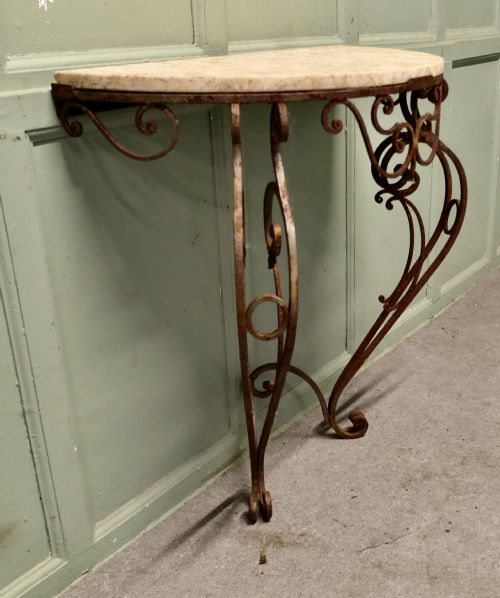
A french marble top pier table combines solid stone with carved wood or iron, offering a functional surface designed to anchor a wall.
French Marble Top Pier Table
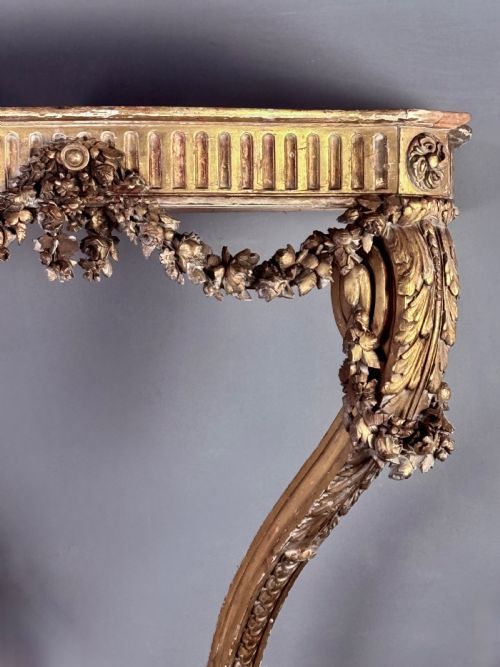
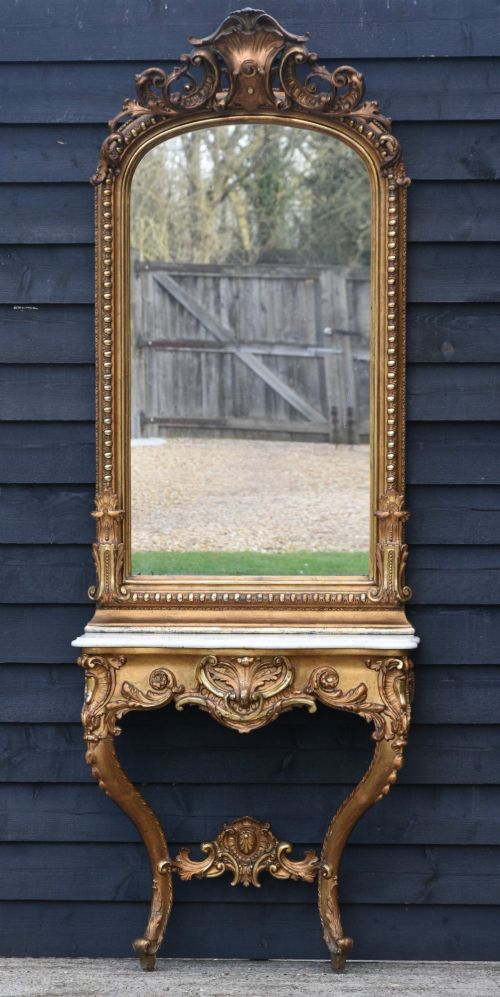
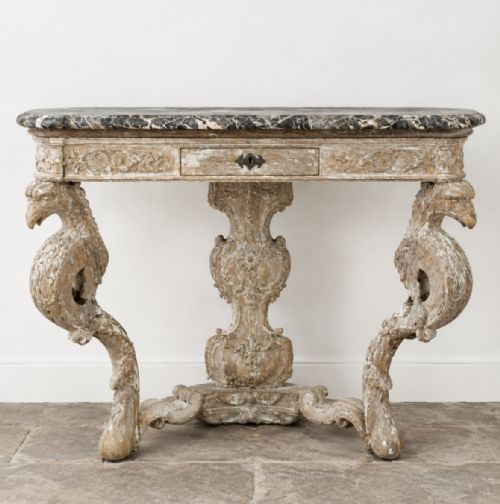
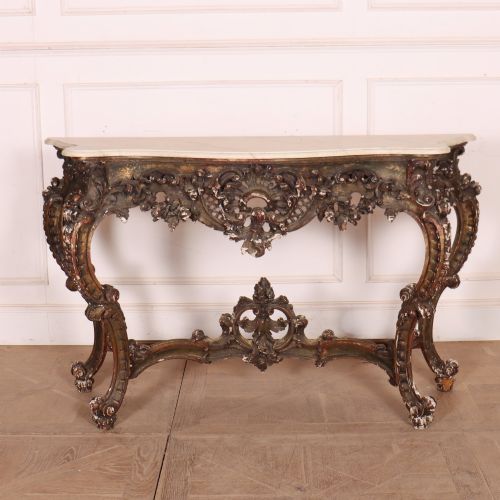
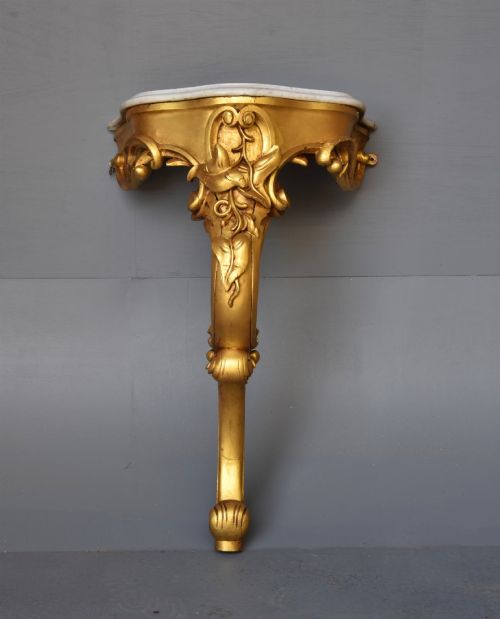
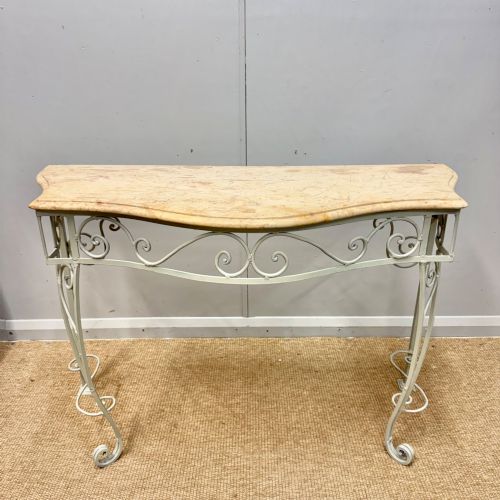
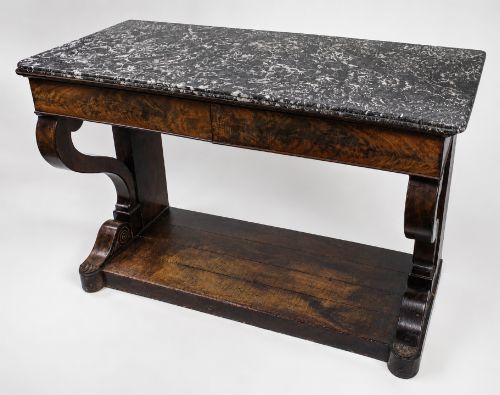
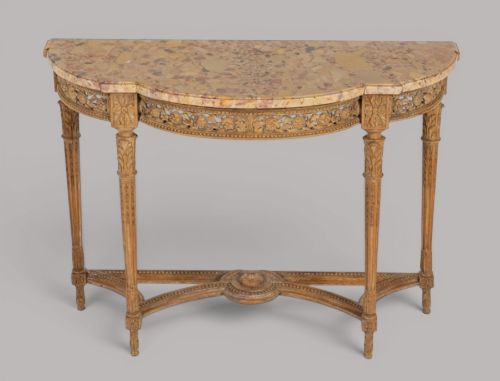
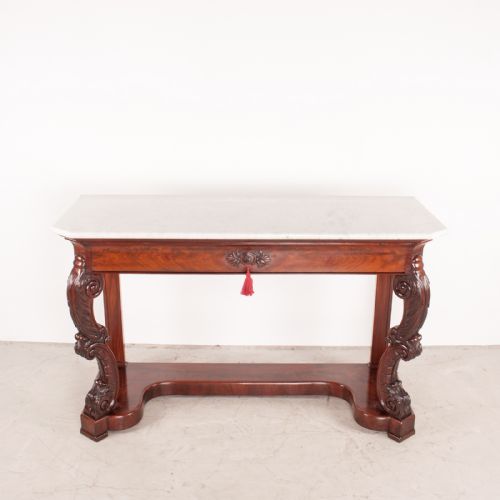
A french marble top pier table is a console or side table designed to stand flat against a wall, frequently paired with a matching mirror above it. The form appears across the eighteenth and nineteenth centuries, spanning periods from the reign of Louis XVI and the Charles X era through to later revival movements.
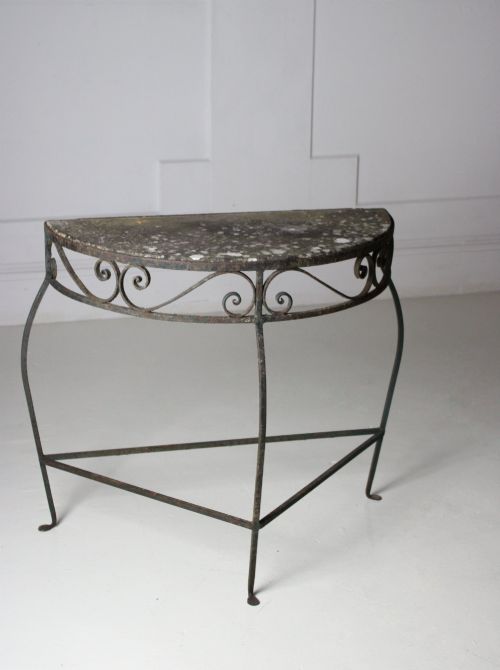
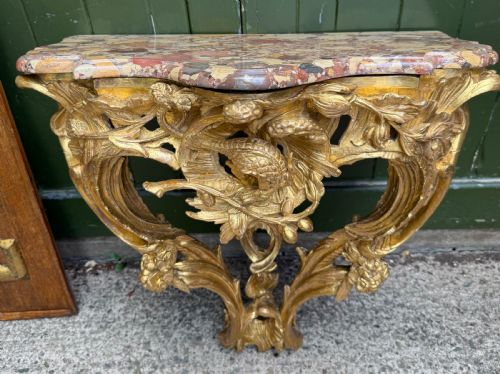
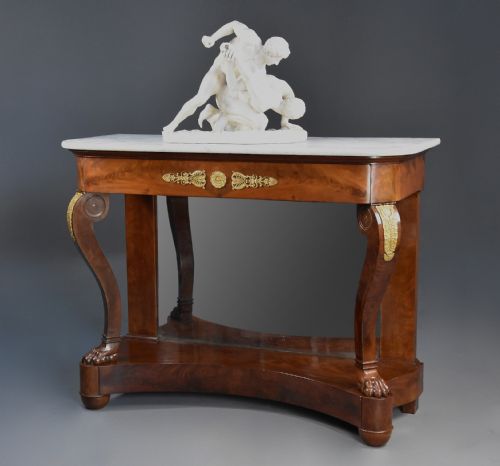
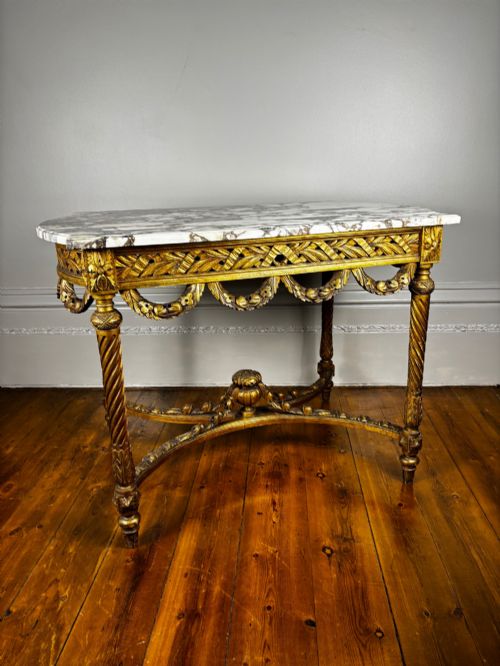
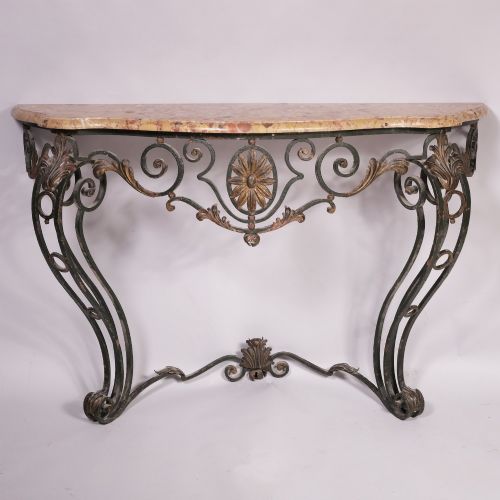
The surviving pieces include variations in mahogany, walnut, and giltwood alongside simpler wrought iron frames. These items function primarily as decorative architectural furniture intended for hallways, living rooms, and reception spaces.
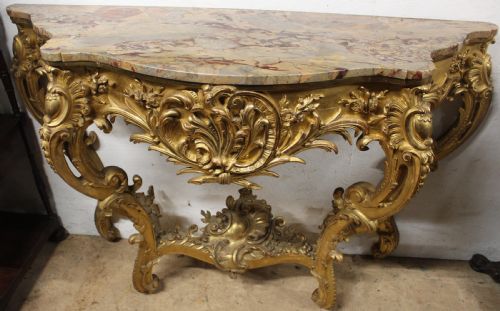
Buyers will encounter forms ranging from serpentine front designs to large console tables with matching trumeau mirrors. The selection encompasses both ornate gilt decoration and understated rustic finishes.
How they were made
The construction relies heavily on native and imported timbers such as mahogany, walnut, and oak for the structural carcass and legs. Giltwood and gesso pieces utilise carved wooden frames built up with layers of gold leaf or applied gilding.
Workshops combined heavy stone surfaces with these wooden or wrought iron bases, often employing marble types including breche d'alep, fossil marble, and Italian marble. Metal mounts in brass were frequently added to frame the woodwork on Empire period items.
The inventory spans the eighteenth century through to the early twentieth century, including various revival periods.
What varies in quality
The standard of the carving on the wooden frames separates standard production from exceptional pieces. Crisp detailing in giltwood and walnut indicates greater workshop skill.
The choice and thickness of the stone slab influence the overall standard. Figured marble or specialised stone varieties elevate the individual piece.
Felix-Alfred Ternisien·Krieger Paris
The French Marble Top Pier Table Glossary
- Pier table
- A table designed specifically to stand against the wall between two windows, often beneath a mirror. This form anchors interior decorative schemes.
- Giltwood
- Wood that has been coated with gold leaf or powder over a prepared gesso surface. This finish creates a bright metallic sheen.
- Serpentine
- A furniture front or surface that curves outward in the centre and inward at the sides. This shape provides fluid movement to wooden furniture.
- Trumeau
- A decorative wall mirror or panel placed between windows or above a fireplace. These mirrors match the finish of the accompanying table.
- Gesso
- A plaster mixture applied to wood as a base for painting or gilding. This substance accepts fine carved detail before metal leaf is laid down.
French Marble Top Pier Table: Frequently Asked Questions
What is a pier table?
A pier table is a narrow console designed to fit flat against a wall space, typically positioned between two architectural windows.
These tables frequently support heavy stone slabs and serve as decorative display surfaces within formal rooms.
Where should I place a console table?
These tables suit hallways, entryways, and reception rooms where floor space is limited against a flat wall. Placing a mirror above the surface completes the traditional arrangement.
The slim proportions allow the furniture to sit securely without obstructing movement through the room.
How do I identify the period?
Dating relies on stylistic markers such as the restrained geometry of Neoclassical pieces or the curving lines associated with Rococo revival designs. Timber choices like mahogany or walnut also point towards specific eras.
Makers' stamps or specific marble types can help narrow down the decade of manufacture.
Are marble tops original?
Many surviving tables retain their period stone slabs, which are fitted directly into the wooden framework. Natural variations in the stone match the era of the base.
Examining the underside of the table reveals how the stone rests upon the wooden support structure.