



French Marble Tall Table
A french marble tall table brings substance and classical poise to a room, combining cool stone surfaces with warm timber frames.
French Marble Tall Table
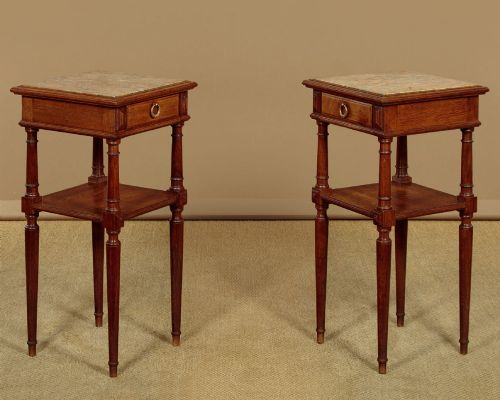
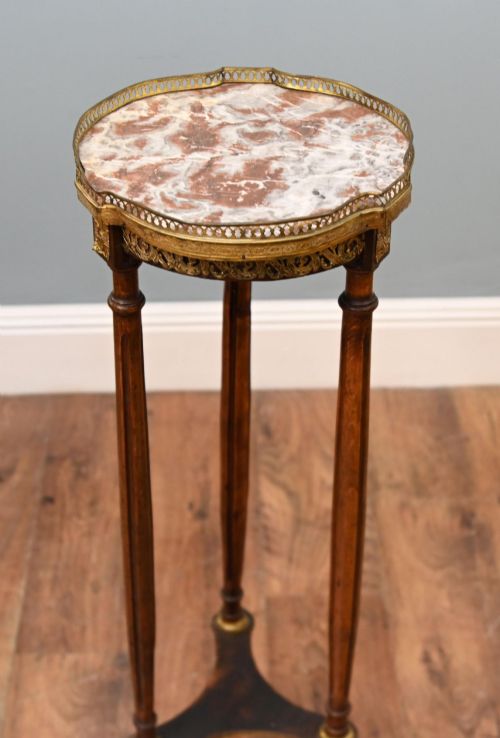
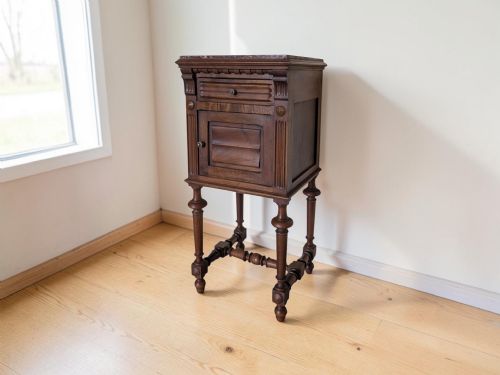
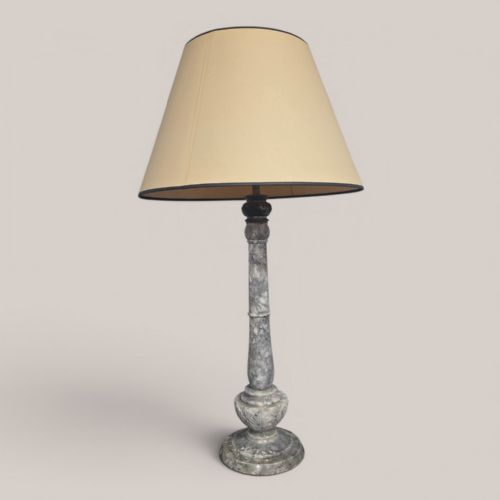
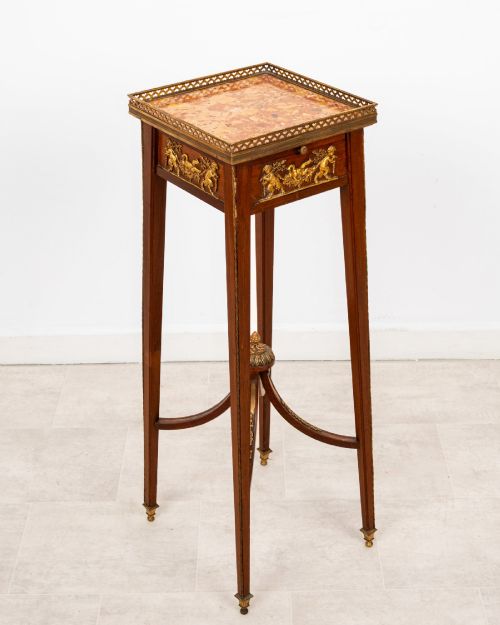
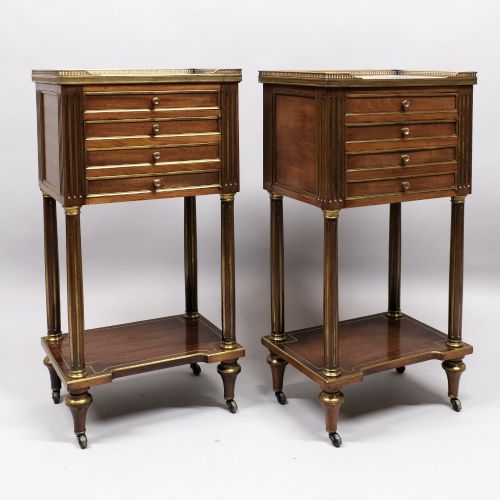
When searching for a french marble tall table, buyers encounter a diverse selection of nineteenth-century furnishings ranging from bedside cabinets and nightstands to occasional tables, plant stands, and slender table lamps. These pieces combine substantial stone tops with timber structures, frequently standing at elevated proportions designed for specific domestic functions.
Originating largely from French workshops, these items serve practical roles as bedside storage or display surfaces while introducing distinct period character. The integration of contrasting elements, such as grey marble or onyx tops set upon giltwood or mahogany frames, defines the visual appeal of these tall tables.
What varies in quality
The standard of execution depends heavily on the crispness of the timber carving, the precision of parquetry veneer work, and the quality of the selected marble slab. Superior examples display harmonious proportions between the elevated wooden base and the inset stone top.
Metalwork provides another indicator of grade, where finely chased ormolu mounts and solid brass galleries elevate a piece beyond standard production. The integration of luxury timbers like burr walnut alongside well-figured marble marks the upper tier of the range.
French Marble Tall Table Retail Price Guide 2026
Typical asking prices for french marble tall table among the pieces listed under this phrase on Sellingantiques today, from the lower quarter to the upper quarter. They describe what is for sale here now, not the wider market.
Plant stands topped with alabaster remind us that Victorians took their indoor foliage very seriously indeed.
François Linke
The French Marble Tall Table Glossary
- Ormolu
- Gilded bronze used widely for decorative mounts on nineteenth-century furniture. This technique imparts a rich metallic lustre that complements polished stone tops.
- Parquetry
- Geometric mosaic woodwork used for decorative veneer patterns on tabletops and cabinet doors. Skilled cabinetmakers arranged contrasting timber grains to create intricate surface designs.
- Console table
- A table designed to stand against a wall, frequently supported by decorative brackets or legs. These forms often feature heavy marble surfaces suited to formal reception rooms.
- Toleware
- Lacquered or painted metalware used in decorative objects and lamp bases. It provides a durable, smooth finish popular in twentieth-century lighting design.
French Marble Tall Table: Frequently Asked Questions
What rooms suit a tall french marble table?
These elevated tables function effectively in bedrooms as bedside storage or in reception rooms as display surfaces for lamps and plants. Their slender proportions allow them to occupy compact spaces while offering a robust stone surface.
The cool touch of marble combined with warm timber tones pairs well with both traditional and contemporary interiors. They serve practical roles without overwhelming surrounding furniture.
How do I care for the marble top?
Marble requires gentle cleaning with a damp cloth and mild soap to preserve its polished surface. Acidic liquids should be wiped away promptly to prevent etching on the stone.
Applying a specialist stone wax periodically helps protect the top from moisture and everyday wear. Regular dusting maintains the natural lustre of the material.
How are different stylistic periods identified?
Stylistic markers such as straight tapered legs indicate Louis XVI influence, while heavier carved details point towards Henri II or Rococo Revival origins. Examining the choice of timber and mounting hardware helps narrow down the manufacturing era.
Empire pieces often incorporate neoclassical motifs like brass columns and dark patinated finishes. Comparing these construction traits against known period examples clarifies the dating.
Were these tall tables used as bedside cabinets?
Many of these pieces were specifically designed as bedside cabinets or nightstands to hold nighttime necessities and lighting. Their increased height accommodated the taller bed frames popular during the nineteenth century.
Enclosed compartments and drawers provided discrete storage for personal items. The stone tops offered a durable surface resistant to water from jugs and glasses.