


French Marble Side Chest
A French marble side chest brings tactile stone surfaces and Continental cabinet work into domestic interiors.
French Marble Side Chest
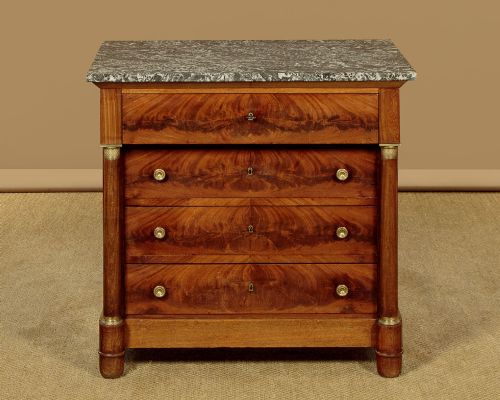
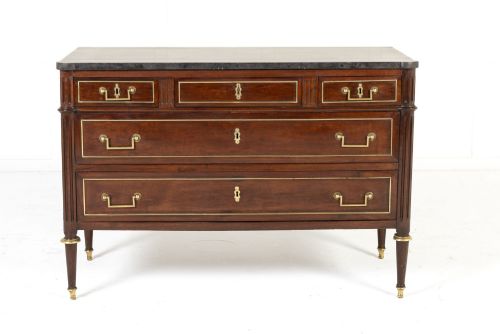
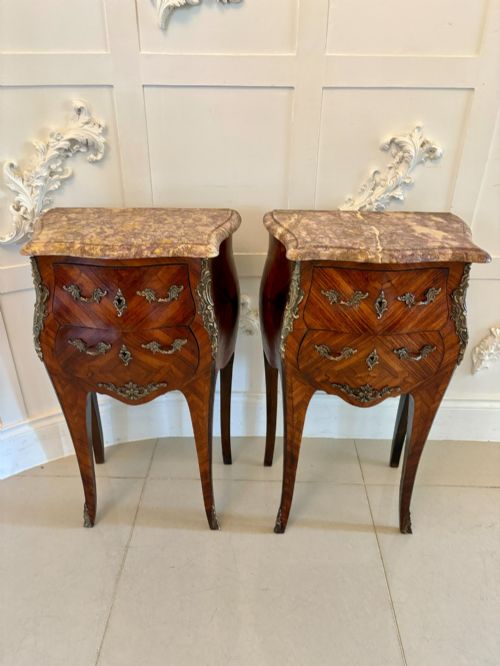
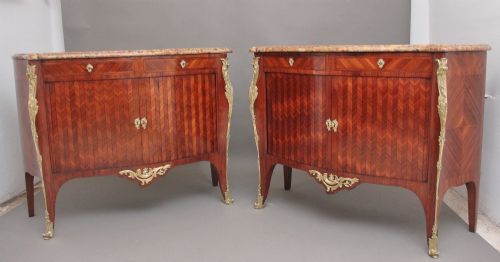
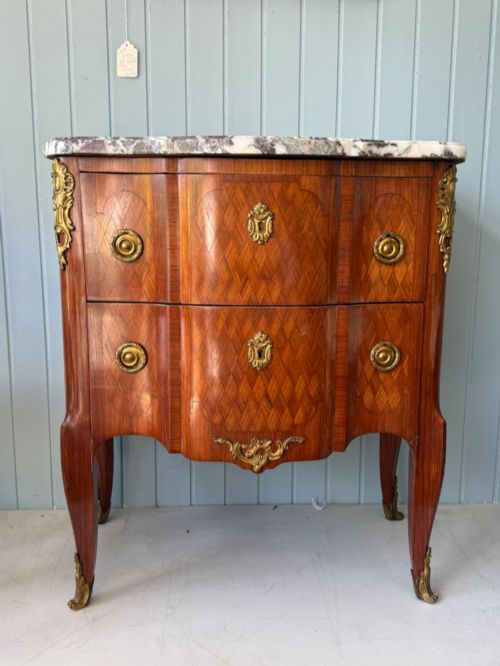
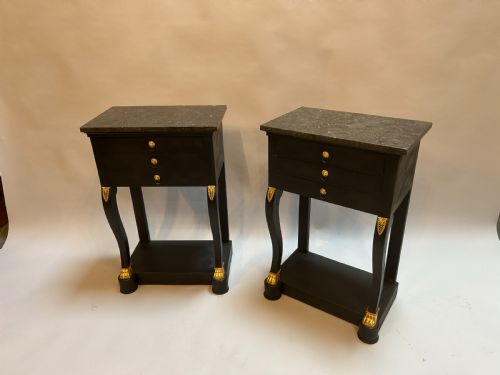
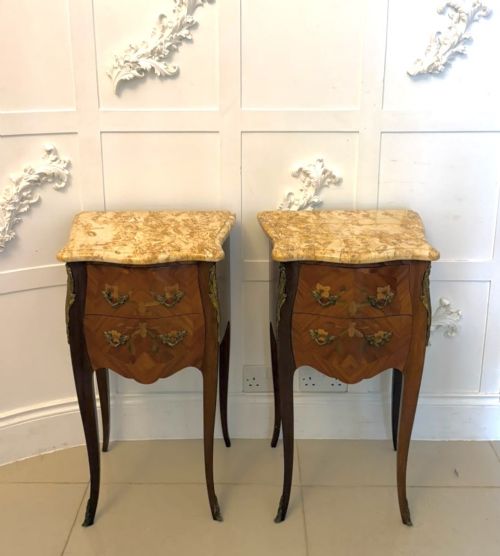
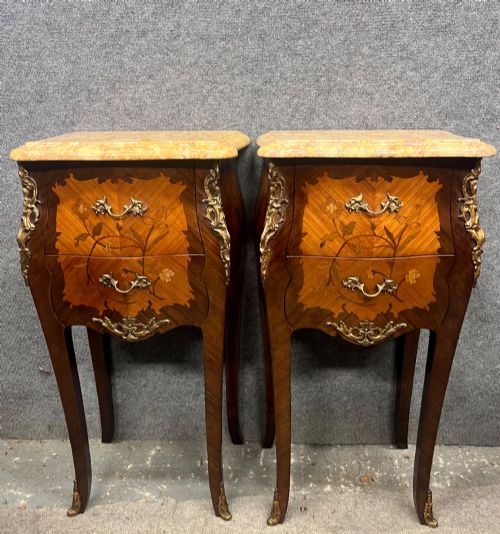
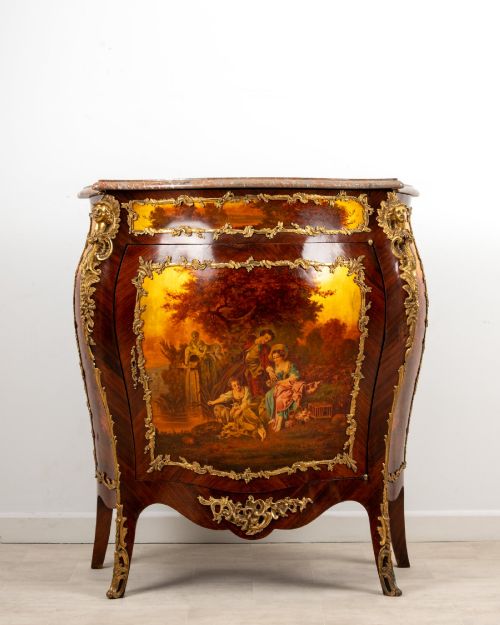
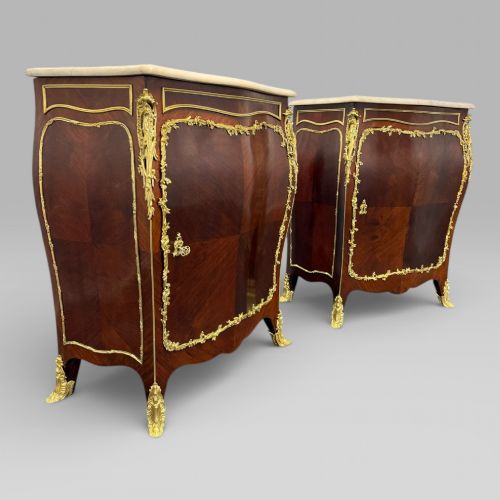
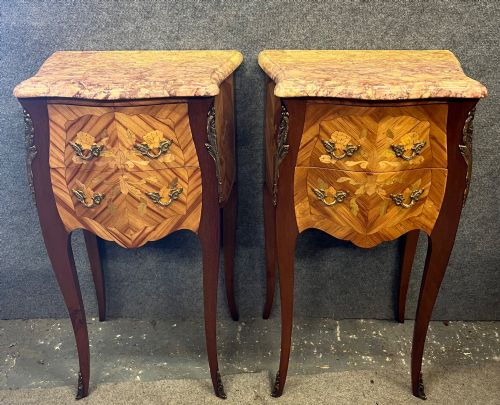
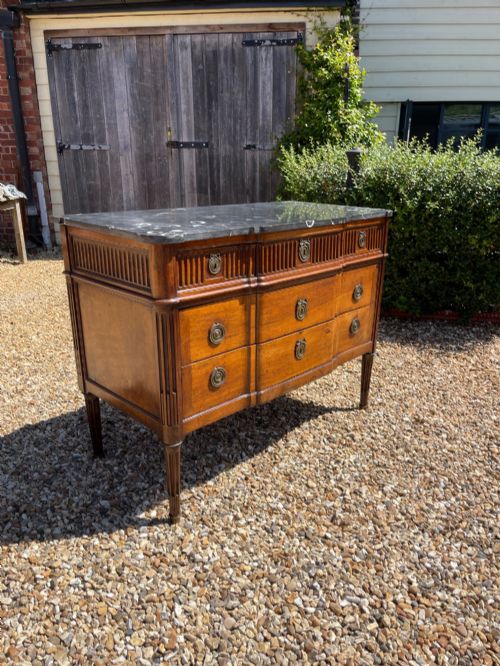
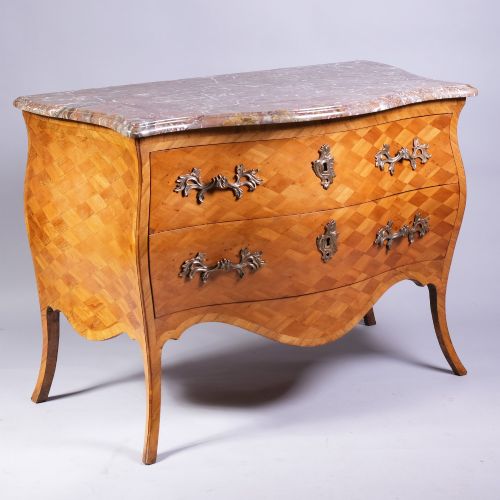
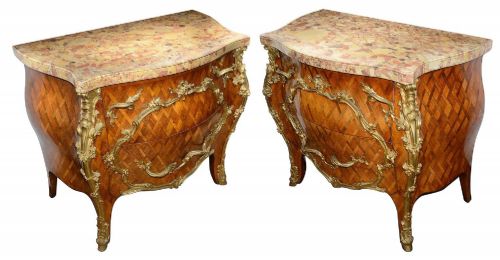
A French marble side chest encompasses items recorded as commodes, bedside tables, and small cabinets spanning the eighteenth century through to the early twentieth century. These pieces serve as functional storage surfaces topped with heavy stone slabs, appearing frequently in walnut, kingwood, and mahogany.
The dominant aesthetic draws heavily from the Louis XV and Louis XVI styles, showcasing serpentine or bombe profiles alongside cleaner neoclassical lines. Buyers encounter substantial full-sized commodes alongside compact pairs of bedside cabinets designed for domestic chambers.
Distinctions in execution
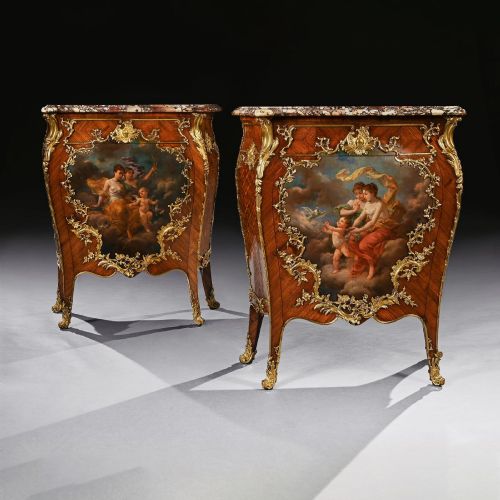
The refinement of the ormolu mounts and the precision of the marquetry inlay dictate the standing of a piece within its period. Crisp, hand-chased bronze mounts indicate superior workshop output compared to simpler cast alternatives.
The integration of the marble slab to the timber carcase, alongside the thickness and natural figuring of the stone itself, marks the difference between standard production and exceptional cabinet work.
French Marble Side Chest Retail Price Guide 2026
Typical asking prices for french marble side chest among the pieces listed under this phrase on Sellingantiques today, from the lower quarter to the upper quarter. They describe what is for sale here now, not the wider market.
Some nineteenth-century bedside cabinets were specifically built as miniature architectural facades to hide chamber pots in polite company.
E. Kahn·Jean-Henri Riesener·Charles Cressant
The French Marble Side Chest Glossary
- Commode
- A low French chest of drawers featuring multiple working drawers, commonly fitted with a stone top.
- Ormolu
- Gilded bronze mounts applied to furniture corners, handles, and feet for decorative contrast.
- Marquetry
- Inlaid wood veneers assembled to create pictorial patterns or symmetrical geometric designs across the furniture surface.
- Bombe
- A swelling, outward-curved contour found on the sides and fronts of eighteenth and nineteenth-century cabinet work.
- Demi Lune
- A half-moon shaped table or chest designed to sit flat against a wall in domestic interiors.
French Marble Side Chest: Frequently Asked Questions
How do I clean the marble top?
Use a soft cloth dampened with warm water and mild soap, avoiding acidic cleaning agents that etch the stone surface.
Dry the marble thoroughly afterwards to maintain its polished finish and prevent water rings.
Are these chests suitable for modern bedrooms?
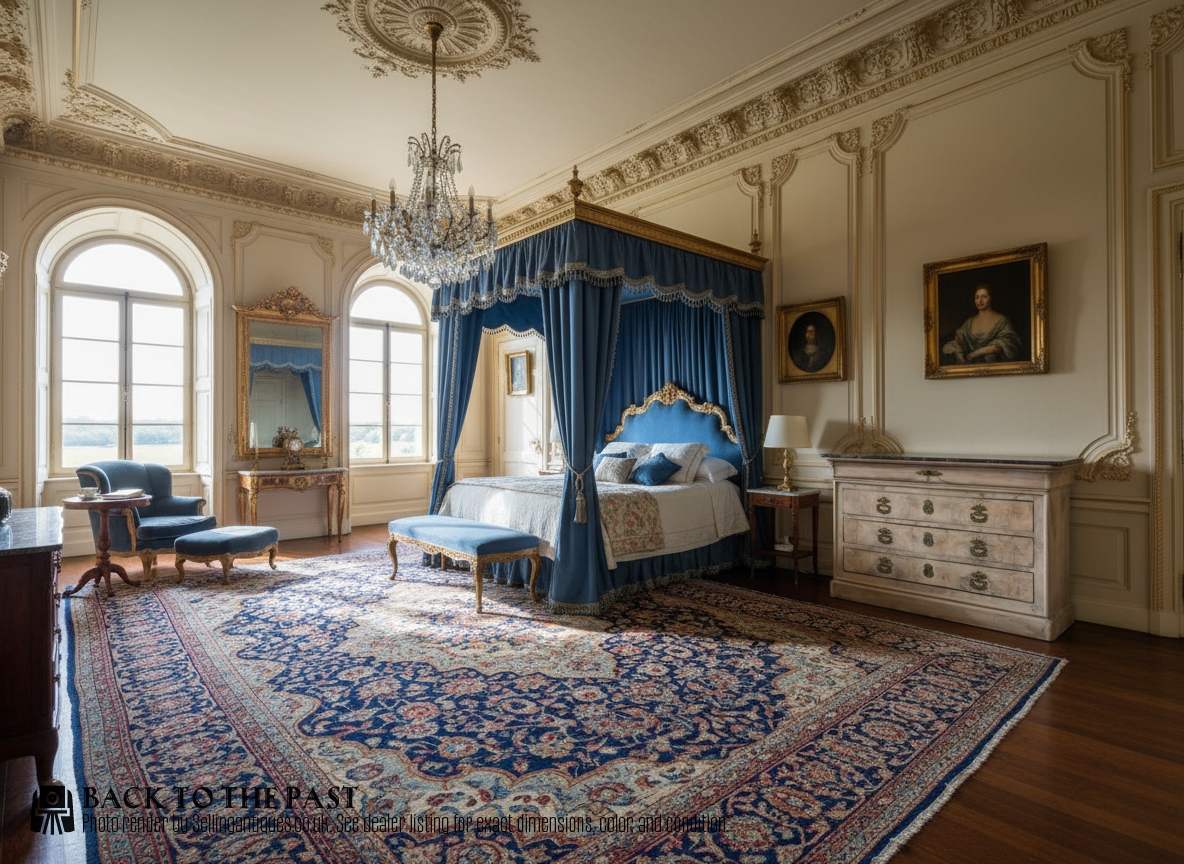
Compact bedside chests and neat-sized commodes fit easily beside contemporary bed frames while providing enclosed storage.
The combination of timber and stone works well against neutral walls in both period and modern settings.
How do I distinguish Louis XV from Louis XVI style?
Louis XV pieces feature asymmetrical curves, swelling bombe fronts, and flowing cabriole legs derived from rococo design principles.
Louis XVI furniture introduces straight tapered legs, right angles, and classical symmetry inspired by neoclassical revivals.
Why are some marble tops coloured?
Different European quarries supplied marble slabs featuring grey veining, white backgrounds, or scagliola compositions depending on the date of manufacture.
Natural geological variations ensure each stone top possesses unique mineral patterns and colouration.