
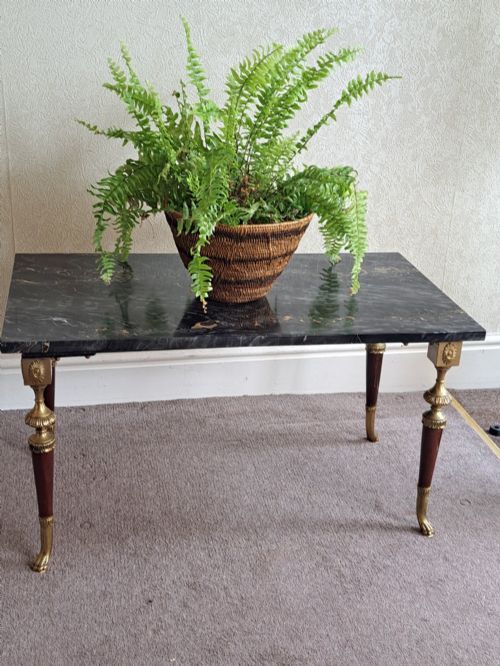
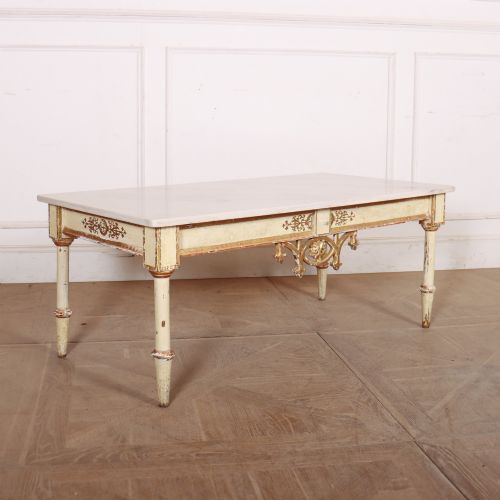
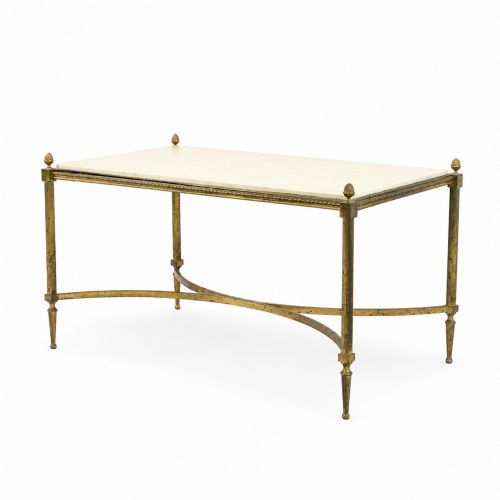


French Marble Low Table
These french marble low table pieces combine stone tops with wood, brass, or iron frames for a functional room centrepiece.
French Marble Low Table
A french marble low table brings a solid stone surface down to coffee table height, drawing on nineteenth-century and early twentieth-century designs. Buyers examine items ranging from the Edwardian period up to nineteen-thirty, taking in various revival aesthetics.
Most examples function as coffee tables, occasional tables, or centre tables lowered for contemporary living. The selection spans French chateau, provincial, and neoclassical styles, alongside Louis XVI and Empire influences.
Makers often adapted taller centre tables or designed specific low forms using durable stone slabs. These surfaces sit upon frames shaped from mahogany, walnut, painted wood, giltwood, or forged metal.
Materials and construction
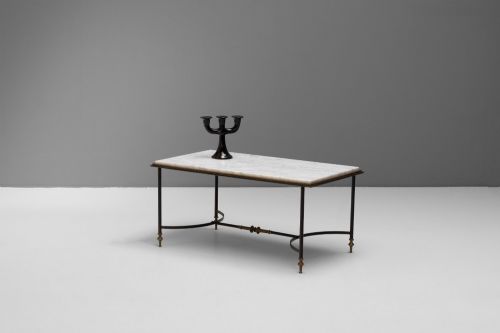
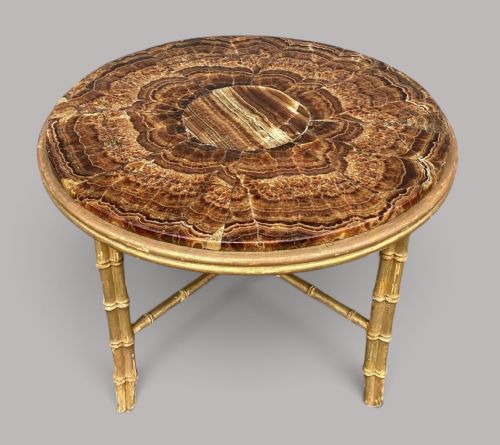
Makers cut and polished heavy marble or onyx slabs to form smooth tabletops, sometimes pairing the stone with black or white variations. These heavy tops rest within supportive wooden rims or directly onto metal bases.
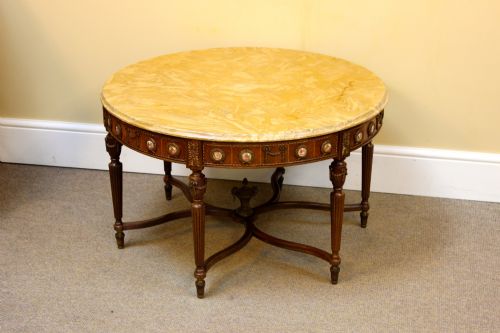
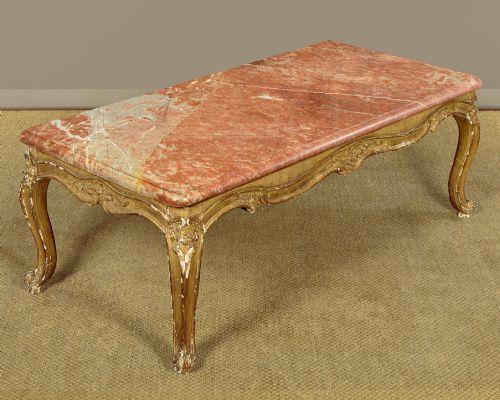
Supporting structures utilise brass, giltwood, and wrought iron alongside solid timbers like mahogany and walnut. Artisans applied parcel-gilt and painted finishes to wooden frames, while ironworkers forged scrolling supports for heavier stone.
Listings feature items spanning the nineteenth century through the nineteen-thirties, utilising brass, giltwood, mahogany, and wrought iron.
Assessing quality and craft
Quality rests in the precision of the stone cutting and the weight of the marble slab relative to its base. Finer examples display crisper carved details in giltwood and more substantial metal casting in brass or iron.
The integration between the stone top and the supporting frame dictates structural integrity, distinguishing carefully fitted pieces from simpler adaptations.
The French Marble Low Table Glossary
- Centre table
- A freestanding table designed to be viewed from all sides rather than pushed against a wall. These often provided the structural basis for later low table conversions.
- Giltwood
- Wood carved and coated with a thin layer of gold leaf or gilt paint. This technique appeared frequently on neoclassical and revival frames.
- Neoclassical
- A style drawing inspiration from classical antiquity, featuring restrained ornamentation and symmetrical lines. It heavily influenced French furniture design across the nineteenth and twentieth centuries.
- Onyx
- A banded variety of chalcedony quartz sometimes utilised in place of traditional marble for decorative table tops. It offers distinct translucent layers within the stone.
- Wrought iron
- Iron beaten and shaped by hand while hot to form structural frames and decorative supports. It provides high durability for tables holding heavy stone tops.
French Marble Low Table: Frequently Asked Questions
What is a french marble low table?
These pieces are low-standing tables featuring stone tops supported by wood, brass, or iron frames. They draw on traditional French design periods from the late nineteenth and early twentieth centuries.
Buyers select them to anchor a seating area, combining the cool, smooth utility of stone with decorative woodwork or metalwork.
How do I clean a marble top?
Use a soft cloth dampened with warm water and mild, non-acidic soap to wipe the stone surface. Avoid harsh chemicals or abrasive pads that can dull the polish.
Dry the marble thoroughly afterwards to prevent water spots and protect the natural finish of the stone.
Are these tables sturdy enough for daily use?
The heavy stone tops provide considerable weight and stability to the overall structure. Frames made from wrought iron, brass, or solid hardwoods like mahogany and walnut offer strong support for everyday items.
Care should be taken when moving them, as the combined weight of the marble and frame is substantial.
How do I identify the style?
Look at the framing details, such as the gilded carved wood of Louis XVI style pieces or the scrolling ironwork of provincial designs. Neoclassical examples often feature straight, clean lines and classical motifs.
The materials and construction methods generally point towards the Edwardian era or the early decades of the twentieth century.