


French Marble Candelabra
These French marble candelabra combine carved stone and cast metal to anchor a formal interior scheme with period presence.
French Marble Candelabra
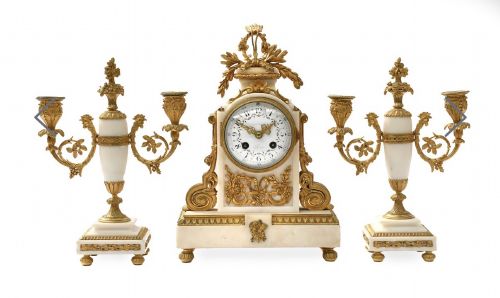
When you search for french marble candelabra, you encounter stately lighting pieces designed to sit on mantelpieces or side tables, frequently found as pairs or as part of larger clock garniture sets. These objects originate predominantly from nineteenth-century France, drawing heavily on Louis XVI and Empire design vocabularies.
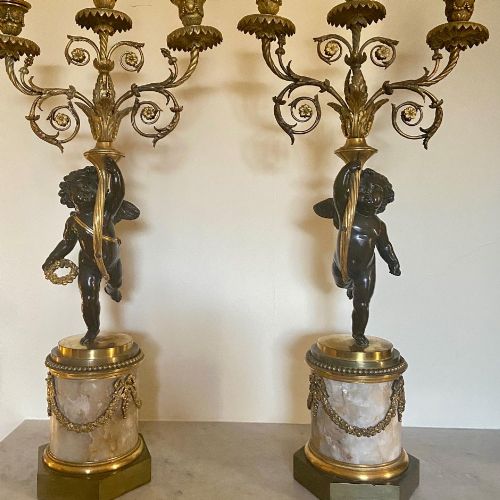
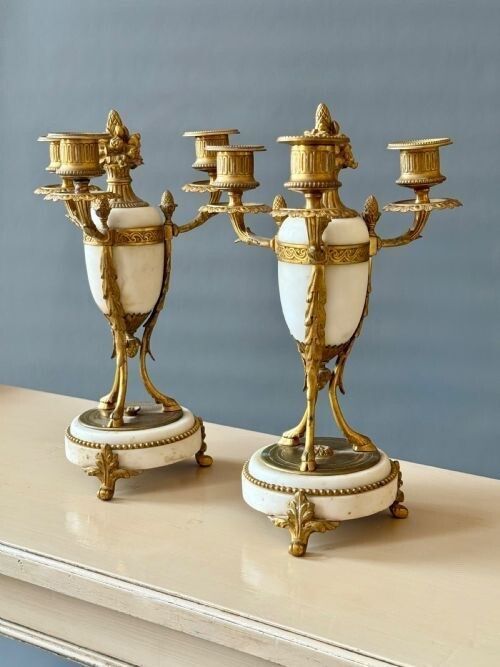
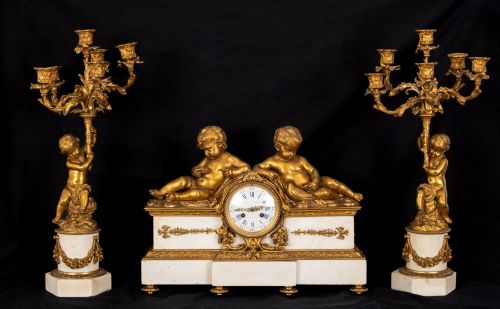
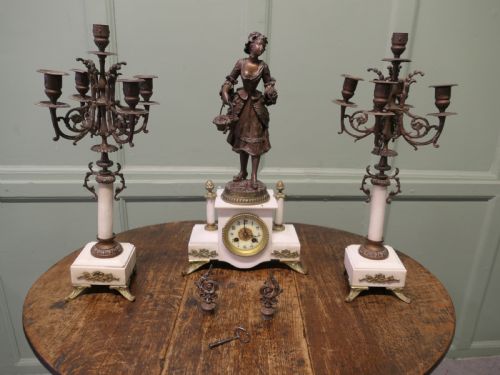
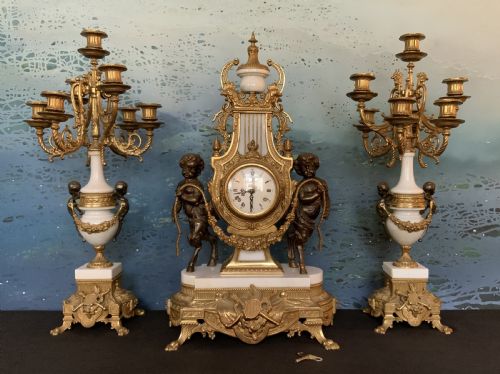
The standard configuration pairs a carved marble column or plinth with metal candle branches, often featuring patinated bronze figures such as putti, cherubs, or classical maidens. White and green marble variations dominate the selections, usually elevated on cast brass or ormolu feet.
Many survivors form the flanking elements of a three-piece garniture set alongside a matching mantel clock. They vary from simple two-arm candleholders to substantial multi-branched candelabra standing with considerable height and weight.
Materials and Technique
The construction relies on the union of turned or carved natural marble and intricately cast metal components. Foundries utilised bronze, brass, and gilt metal, applying fire gilding or ormolu techniques to achieve a durable golden lustre on the metal elements.
Figural details such as cherubs or maidens were cast in bronze using traditional lost-wax or sand-casting methods, then finished with patination or gilding before being mounted onto the stone bases with threaded steel rods and nuts.
The marble bases were shaped on lathes or worked by hand, then polished to a smooth finish, occasionally incorporating decorative brass bezels or collars to unite the stone and metal sections securely.
Bronze cherubs occasionally balance precarious candelabra arms with expressions of solemn, unwavering concentration.
Judging the Standard
Quality rests primarily in the crispness of the bronze chasing and the precision of the marble turning. Finer examples display deeply undercut cast details on figures and foliage, where every feather or fold of drapery remains sharp and distinct.
The selection of the marble itself dictates the tier of the piece, with dense, uniform white or rich green varieties commanding attention over heavily veined or repaired stone. Furthermore, the thickness and weight of the ormolu mounts signal whether a piece was cast for a luxury atelier or produced as a simpler commercial item.
Francois Redmond·H Luppens Paris·Claude Clodion
The French Marble Candelabra Glossary
- Ormolu
- A technique of applying finely ground, high-carat gold-mercury amalgam to bronze, creating a rich golden surface that resists tarnish. It defines the bright metal highlights on classical French decorative pieces.
- Garniture
- A set of matching ornamental objects designed to be displayed together on a mantelpiece, typically comprising a central clock flanked by two candelabra or vases. This arrangement creates a balanced decorative focal point.
- Patinated Bronze
- Bronze treated with chemical solutions to produce a dark, uniform surface colour ranging from deep brown to near black. This finish highlights the bright gilt mounts placed adjacent to it.
- Putto
- A plump, naked male child figure frequently depicted as a winged cherub in classical decorative arts. These figures often support the candle branches or adorn the marble bases.
- Louis XVI Style
- A neoclassical design movement characterised by straight lines, symmetry, and classical Roman motifs such as urns, swags, and fluted columns. It experienced a major revival during the nineteenth century.
French Marble Candelabra: Frequently Asked Questions
How do I clean french marble candelabra?
Dust the marble gently with a dry, soft cloth to prevent dirt from settling into the porous stone. Avoid harsh chemical cleaners or abrasive pads that can strip the delicate ormolu surface on the metal mounts.
For the metal sections, use a very lightly dampened microfibre cloth. Keep moisture away from any exposed interior fixing bolts or joints to prevent corrosion.
Were these always part of clock sets?
Many were manufactured specifically to accompany a matching mantelpiece clock as a three-piece garniture set. The central clock and the flanking candelabra shared identical decorative motifs, materials, and patination.
However, numerous pairs were also produced independently as standalone table or mantel lighting. Both single pairs and complete garnitures appear frequently in period collections.
How can I tell the period from the style?
Nineteenth-century pieces frequently revive eighteenth-century neoclassical idioms, making stylistic dating rely on secondary clues. Closer inspection of assembly methods, such as the type of internal screw threads and the formulation of the bronze alloy, helps distinguish original eighteenth-century work from later Victorian revivals.
Furthermore, the quality of the marble turning and the depth of the hand-chasing on the ormolu often reflect the technological advancements and aesthetic preferences of the eighteen-fifties onward.
Can these candelabra hold modern candles?
Most historical sockets accept standard taper candles, though minor variations in nineteenth-century sizing can occur. Measuring the internal diameter of the drip pan or nozzle ensures a secure fit for standard modern wax tapers.
Some examples have been adapted historically or recently to accept electrical fittings for lamps. Checking the nozzle construction reveals whether the original configuration remains intact.