
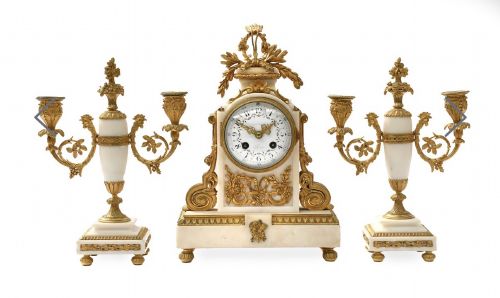


Louis XVI Ormolu Candelabrum
A louis xvi ormolu candelabrum brings neoclassical symmetry, gilt bronze highlights and marble bases to a mantelpiece or side table.
Louis XVI Ormolu Candelabrum
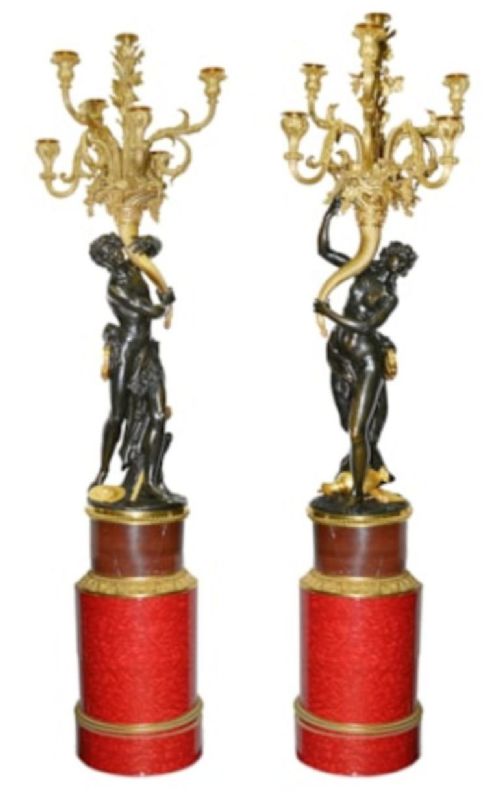
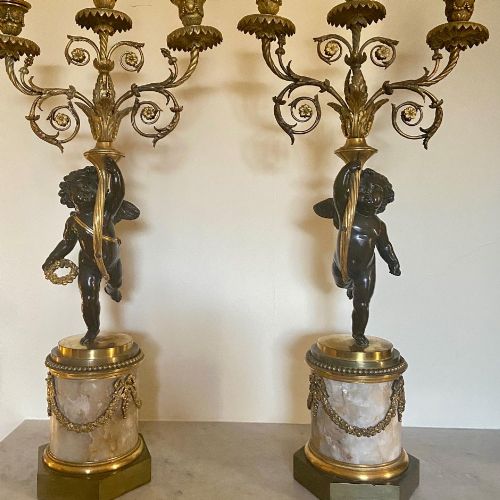
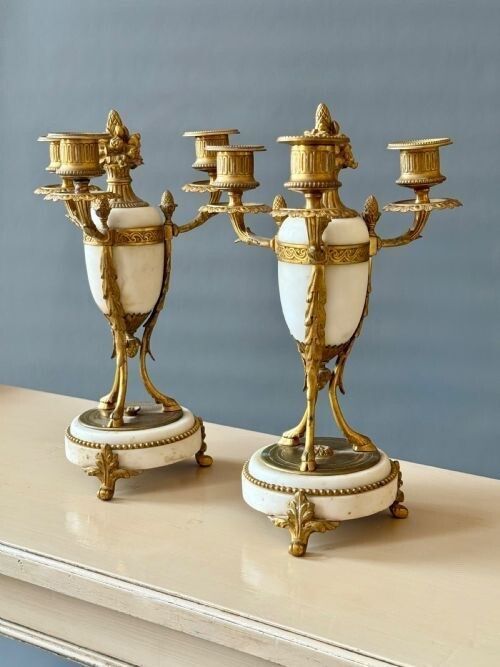
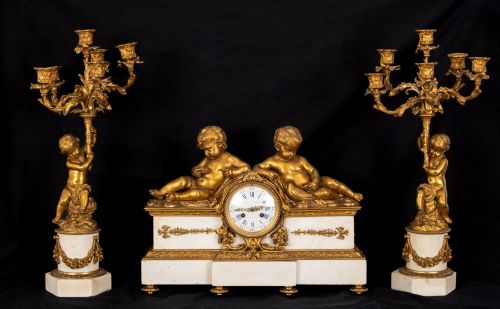
Forms range from single candelabra and wall sconces to grand ten-light arrangements and complete clock sets involving putti, cherubs and classical figures. Materials combine patinated and gilded bronze with white marble, enamel and occasional porcelain elements.
How they were made
Maker workshops cast bronze using traditional methods before chiselling and applying gold via ormolu mercury gilding or electroplating. The metal components integrate closely with turned or carved white marble plinths and occasionally fluorspar or enamel details.
Candelabra arms connect securely through threaded pins or hidden fasteners, supporting drip pans and nozzles designed to catch wax while maintaining balanced proportion across multiple lights.
Winged bronze putti frequently shoulder heavy candle branches with cheerful expressions.
What varies in quality
The crispness of the bronze chasing dictates visual success, separating sharply detailed cast ornament from soft, blurred surface decoration. Heavier bronze gauge and substantial marble bases provide structural stability and better tactile presence.
Original mercury gilding displays a deep, warm metallic lustre compared to later flat chemical coatings. The integration between bronze mounts and stone plinths reveals the care taken during assembly.
Henry Dasson·Francois Redmond·AD Mougin Paris·H Luppens Paris·Claude Clodion·Vincenti
The Louis XVI Ormolu Candelabrum Glossary
- Ormolu
- Finely ground high-carat gold amalgam applied to a bronze base, creating a durable golden surface layer. This technique defined luxury French metalwork of the eighteenth and nineteenth centuries.
- Garniture
- A coordinated set of decorative objects, typically comprising a central mantel clock flanked by matching candelabra or vases. These sets created visual symmetry on nineteenth-century fireplace mantels.
- Putto
- A plump naked infant figure, often winged, derived from classical art and frequently modelled supporting candelabra branches. Pluralized as putti, these figures appear widely in nineteenth-century revivals.
- Patinated Bronze
- Bronze treated with chemical solutions to produce a dark brown, black or greenish surface coloration. This dark tone contrasts against bright ormolu highlights.
- Wall Sconce
- A branched lighting fixture mounted directly to a vertical wall surface rather than resting on furniture. These match the decorative style of freestanding candelabra.
Louis XVI Ormolu Candelabrum: Frequently Asked Questions
What is a clock garniture?
A clock garniture consists of a central mantel clock accompanied by two matching side pieces, such as candelabra or urns, designed to display together as a unified set.
These coordinated ensembles provided balanced decoration for formal nineteenth-century drawing room mantelpieces and sideboards.
Are these candelabra wired for electricity?
Most antique candelabra retain their original form intended for wax candles, though some pieces underwent conversion into lamps during past decades.
Buyers should examine the physical structure to check whether wiring modifications alter the original bronze and marble components.
How do I date a nineteenth-century piece?
Dating relies on casting quality, maker signatures stamped on clock movements, material combinations and stylistic markers typical of revival periods.
Comparing the construction methods of the bronze mounts and marble bases against known nineteenth-century workshop standards helps narrow the decade of production.