
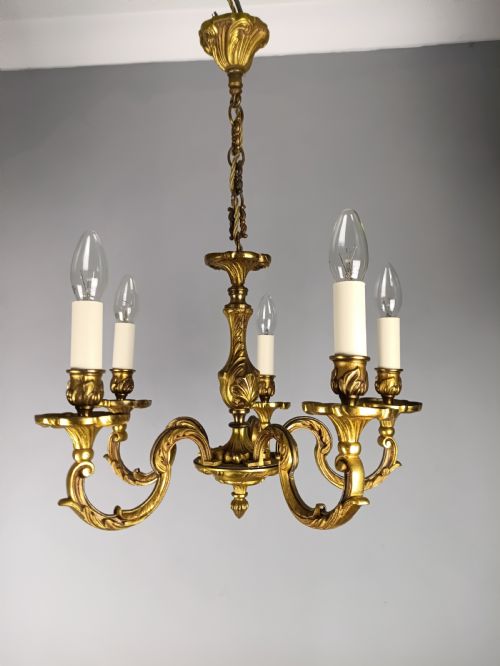

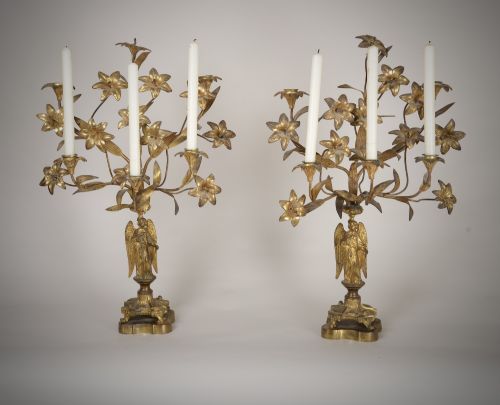
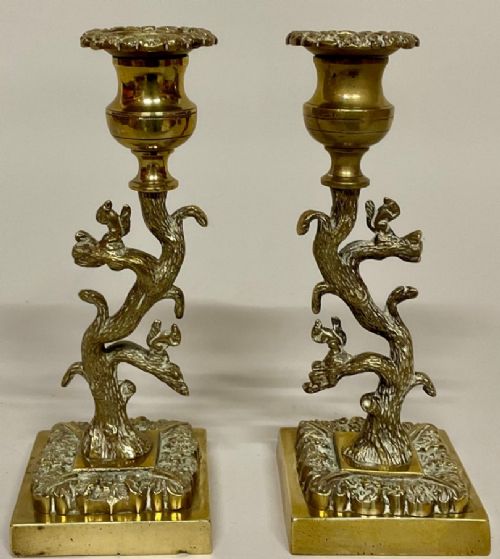
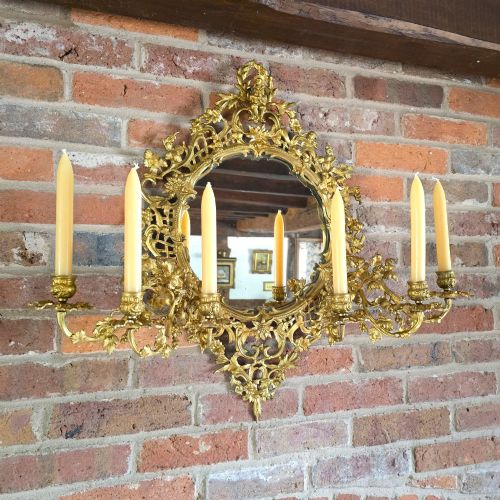
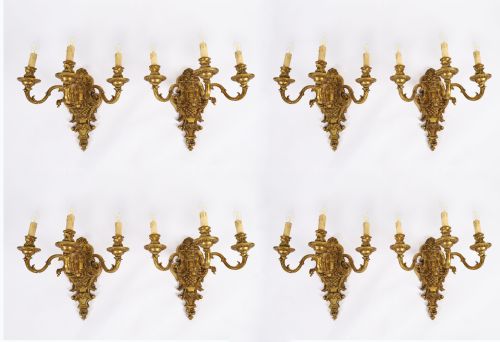
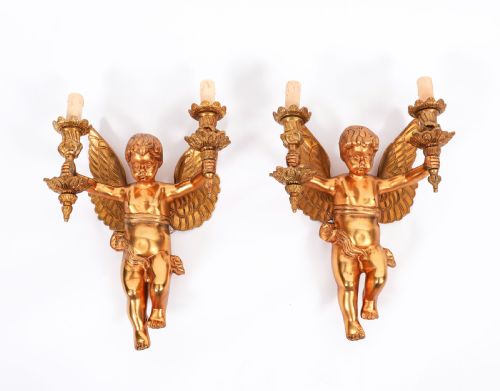
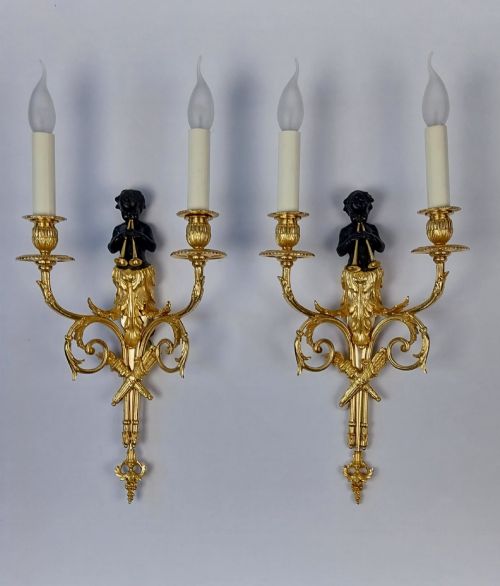


Gilt Bronze Candle Branches
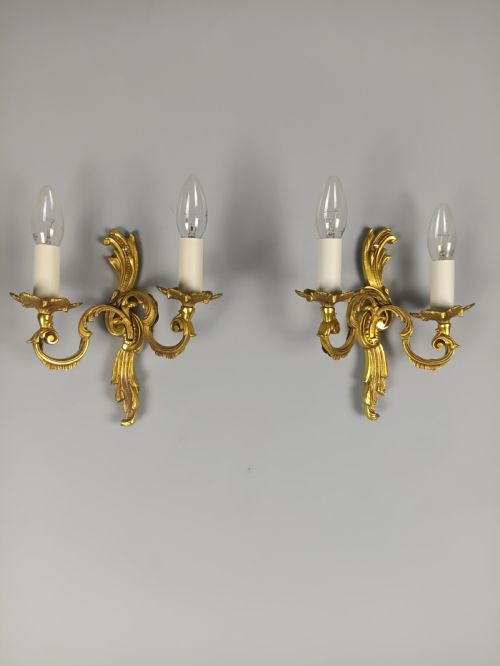
These gilt bronze candle branches bring nineteenth-century illumination into a room, offering heavy cast metal forms designed to mount on walls or stand on tables.
Gilt Bronze Candle Branches
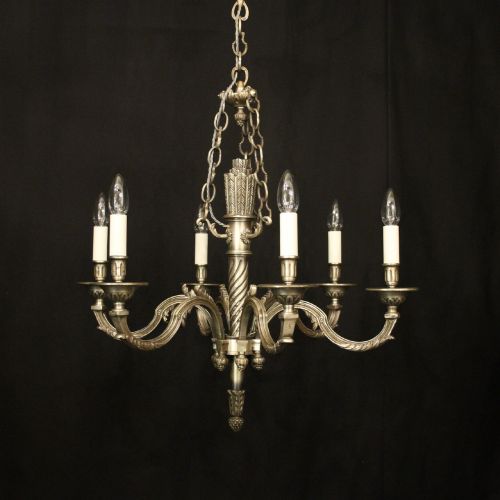
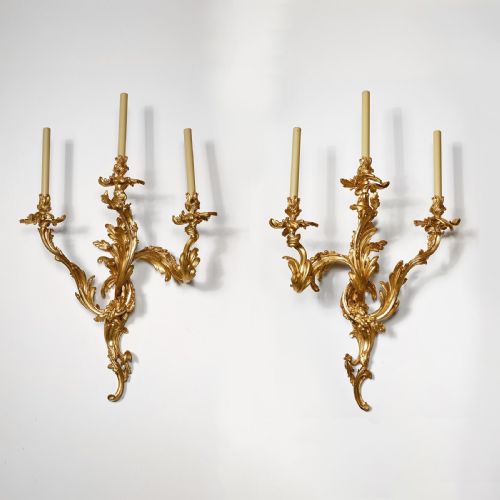
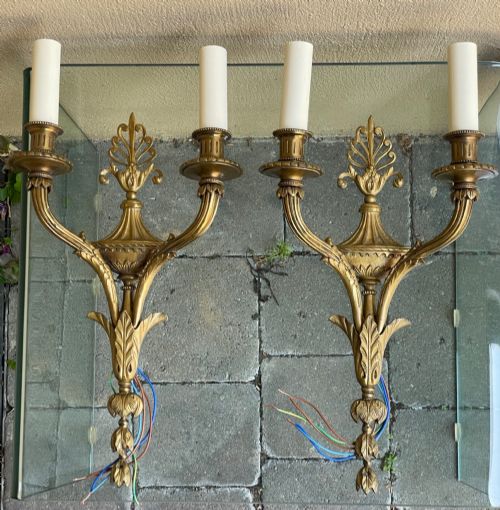
Gilt bronze candle branches encompass wall lights, sconces, chandeliers, and candelabra designed for domestic lighting. These pieces emerge predominantly in nineteenth-century French designs, alongside English and Italian examples.
Makers configure these items as multi-arm fixtures holding two to eight candles, frequently incorporating figural elements such as cherubs or naturalistic motifs like trees.
The selection ranges from compact pairs of twin-arm wall sconces to large multi-branch chandeliers spanning several lights.
How they were made
Foundries cast these objects in bronze, brass, or gilt metal, applying a layer of gold or ormolu to the metallic surface. Artisans frequently combine this metalwork with contrasting materials like white marble or glass.
Craftsmen chased and finished the cast components by hand, detailing sculptural elements such as acanthus leaves, cherubs, and architectural borders before assembly.
Listings feature items from the eighteenth, nineteenth, and early twentieth centuries, utilising gilt bronze, ormolu, brass, and marble.
What varies in quality
The depth and application of the gilding or ormolu determine the richness of the surface reflection. Substantial bronze weight and secure, traditional mechanical joints separate superior workshop production from lighter commercial output.
Claude Clodion·Maison Baques
The Gilt Bronze Candle Branches Glossary
- Ormolu
- A technique of applying finely ground high-carat gold to a bronze base using mercury. This process creates a warm, deep metallic sheen characteristic of high-end French decorative metalwork.
- Girandole
- An ornamental branched candlestick or light fixture, often mounted in front of a wall mirror to multiply the reflection of the flames. These pieces frequently feature multiple candle arms.
- Candelabra
- A multi-branched candlestick holder designed to support several candles from a single central stem. Examples often stand on heavy square or circular bases.
- Appliqué
- A wall-mounted lighting fixture designed to be fixed directly onto wood paneling or plaster walls. The term is frequently used interchangeably with wall sconce.
- Campana
- A vase-shaped candle socket resembling an ancient Roman bell crater. This form supports the candle and catches melting wax.
Gilt Bronze Candle Branches: Frequently Asked Questions
How do I clean gilt bronze candle branches?
Dust the metal gently with a soft, dry brush to prevent accumulation in recessed chased areas. Avoid abrasive polishes or chemical dips that strip the historic surface layer.
Use a damp cloth only when necessary, drying the metal immediately afterwards to protect the original gilding.
Can these candle branches be wired for electricity?
Many wall lights and chandeliers are adapted for modern electrical wiring by threading slim cords through the central stems. This allows historic fixtures to function safely as primary room lighting.
Consult a professional lighting specialist experienced with antique metalwork to preserve the original structural integrity during conversion.
How do I tell Louis XVI style from Rococo?
Louis XVI style pieces display straight lines, symmetry, and classical architectural motifs like urns and acanthus leaves. They reflect an ordered, neoclassical aesthetic.
Rococo designs favor asymmetrical curves, C-scrolls, and exuberant naturalistic motifs. This style creates a more fluid, dynamic silhouette.
Where should I mount wall sconces?
Position wall lights at eye level to ensure even illumination and proper visual balance within the room. Consider placing them flanking mirrors or architectural focal points.
Ensure the mounting surface can support the substantial weight of cast bronze and marble components.