


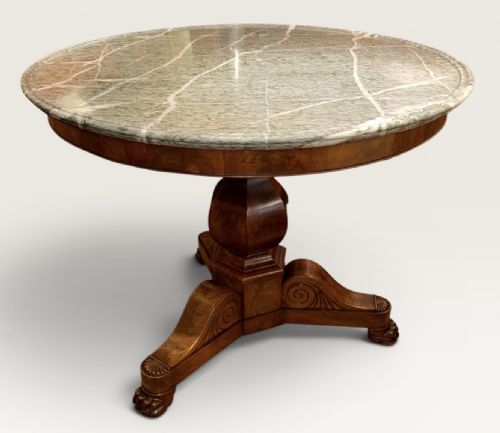

French Mahogany Pedestal
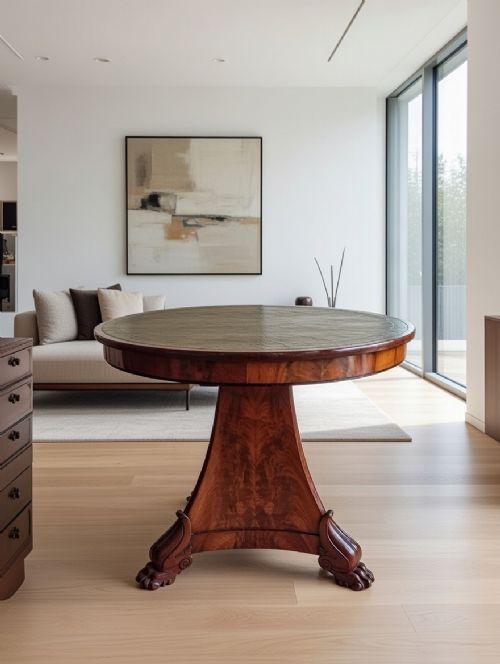
When you search for a french mahogany pedestal, you are looking at substantial structural timbers raised on central supports or fitted as cabinets, designed to anchor a room.
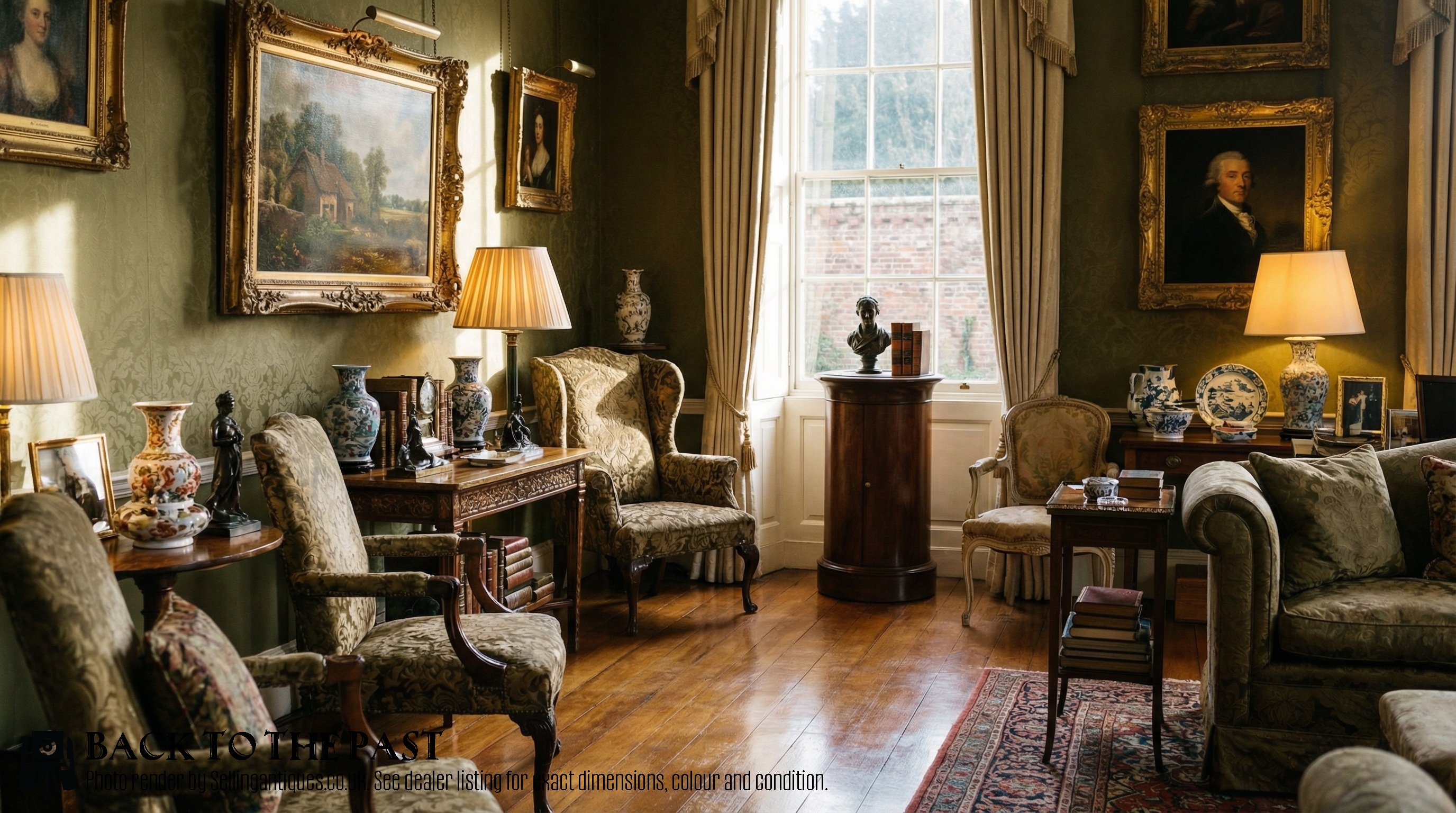
French Mahogany Pedestal
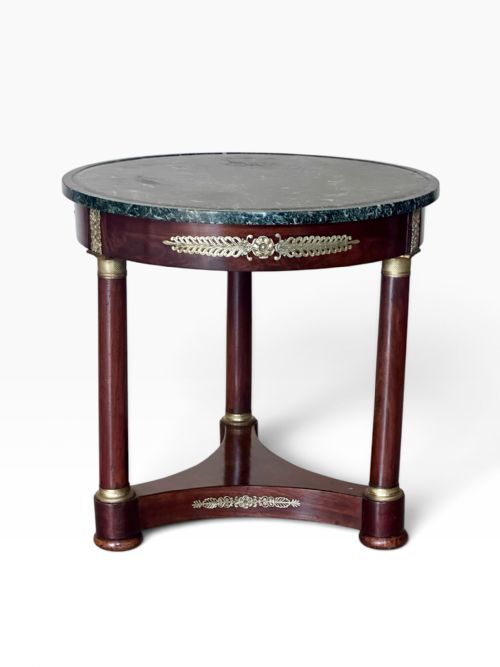
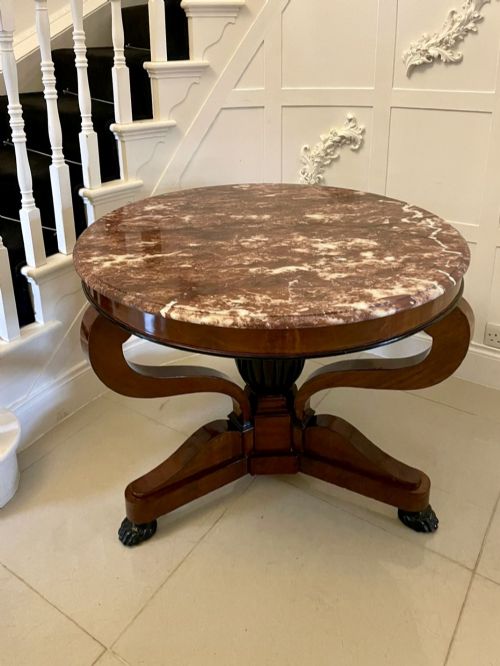
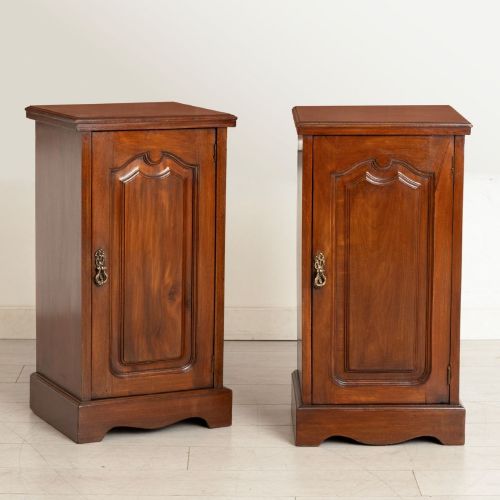
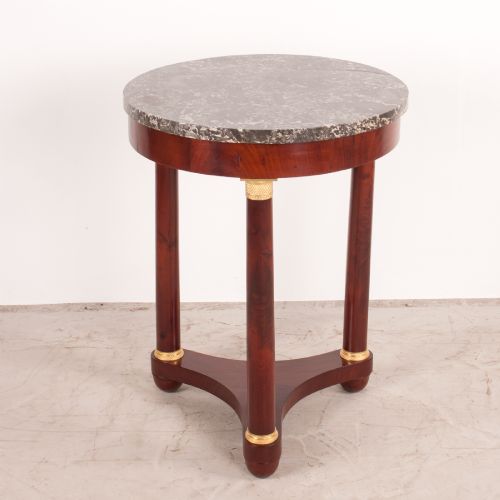
When buyers search for a french mahogany pedestal, they encounter forms that span gueridons, centre tables, bedside cabinets, and twin pedestal desks. The core of the selection comprises nineteenth-century pieces alongside examples from the early twentieth century.
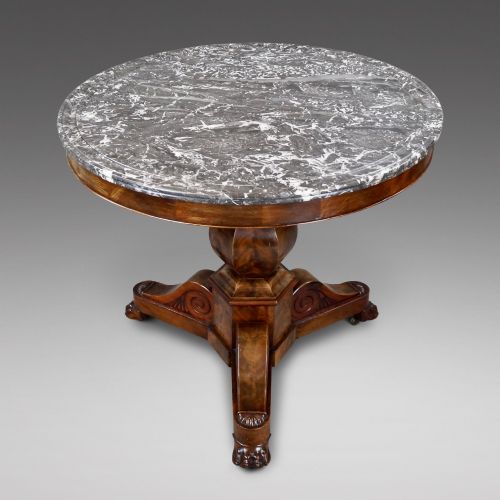
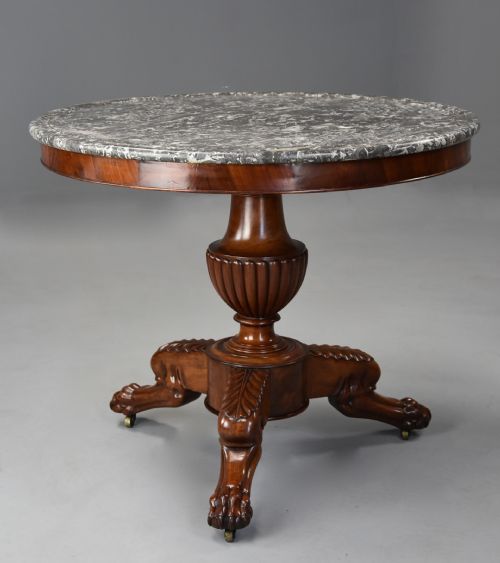
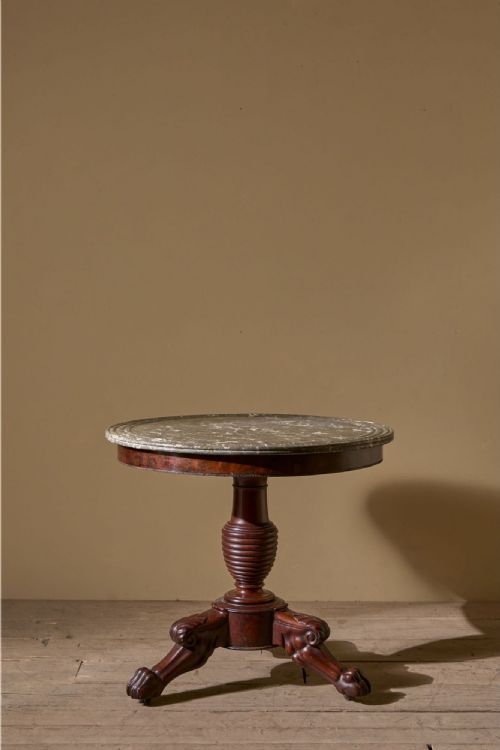
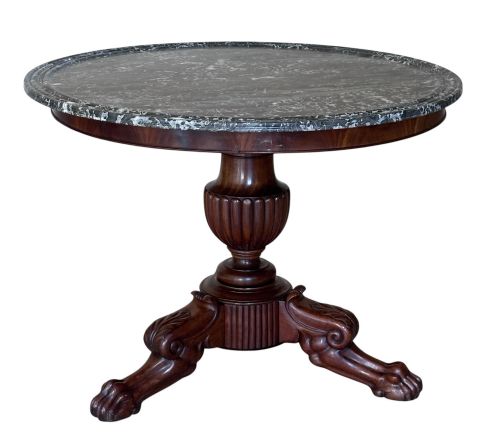
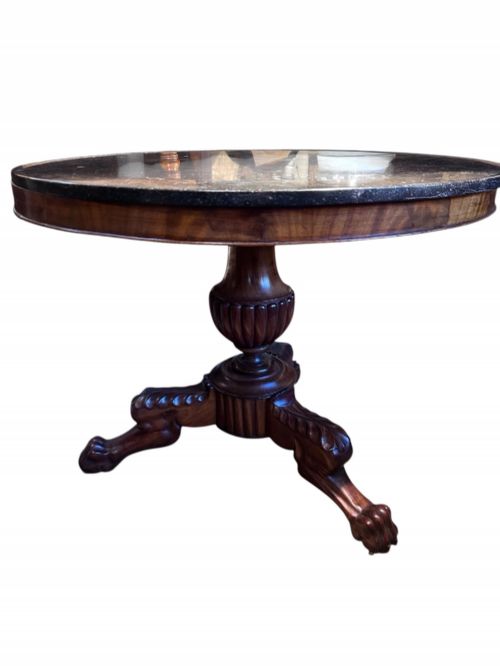
Gueridons and centre tables dominate the current selection, usually featuring circular marble tops supported by single central columns. Side tables, occasional tables, and bedside cabinets also appear frequently, often paired with matching pedestals.
Stylistic influences run from French Empire and Louis Philippe to Louis XVI Revival and French Neoclassical designs. Makers working in these idioms employed column and pedestal configurations to support heavy stone or timber upper surfaces.
Materials and Construction
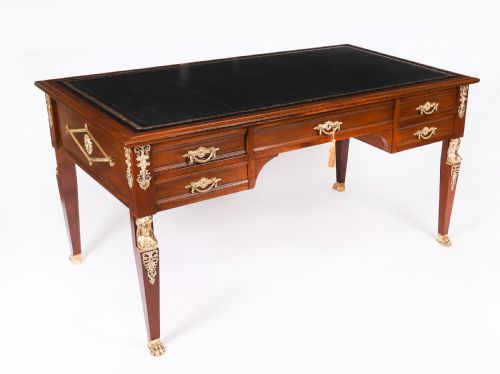
Makers utilised solid mahogany and flame mahogany veneers over secondary timbers, building up deep figuration across table tops and cabinet doors. These mahogany surfaces frequently incorporate contrasting brass stringing, inlaid brass motifs, or leather writing inserts.
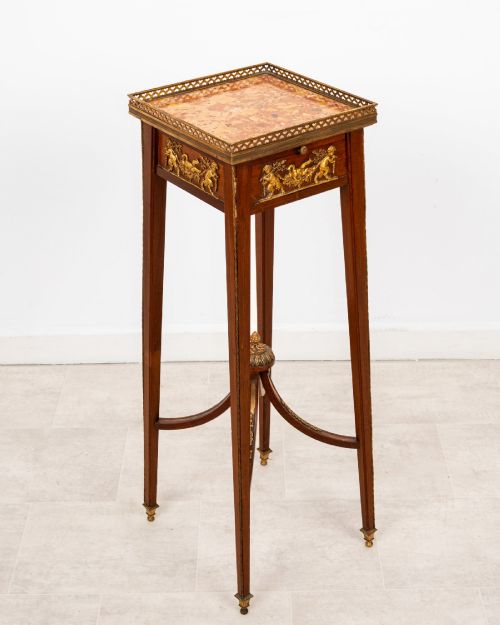
Structural elements frequently integrate white, grey, or rouge marble slabs fitted directly into recessed table tops. Metalwork components, particularly cast or chased ormolu and gilded brass mounts, embellish capitals, columns, and feet.
Periods represented include nineteenth-century Victorian, Louis Philippe, French Empire, and early twentieth-century revivals.
Assessing the Pieces
Distinction across the range lies in the crispness of the ormolu mounts and the depth of figure within the mahogany veneer. Higher quality examples display heavier cast bronze elements rather than lighter pressed brass.
The integration of original veined marble tops that fit their rebates precisely separates superior items from those altered later. Timber selection, particularly the use of symmetrical flame mahogany, indicates the workshop's original tier of production.
A Hugnet Paris·François Linke
The French Mahogany Pedestal Glossary
- Gueridon
- A small round table supported by a single central pillar or pedestal. These were originally introduced in seventeenth-century France and remained popular through the nineteenth century.
- Ormolu
- Gilded bronze mounts applied to furniture for decorative effect. The technique involves applying a mercury and gold amalgam to cast bronze.
- Bureau Plat
- A freestanding writing table fitted with drawers across the frieze. These desks often feature leather inserts on the top surface.
- Flame mahogany
- Timber cut from the fork of the mahogany tree where branches join the trunk. This cutting method produces a distinctive flickering, flame-like grain pattern.
- Restauration
- A French decorative style bridging the Empire period and the reign of Louis Philippe. It is characterised by simpler mahogany surfaces with reduced reliance on heavy bronze mounts.
French Mahogany Pedestal: Frequently Asked Questions
What is a gueridon table?
A gueridon is a small circular table supported by a single central column rather than standard side legs. These pieces were utilised historically as lamp tables, stands, or centre tables in formal rooms.
Most surviving examples pair a mahogany base with a heavy marble top. Their compact footprint allows them to function easily as display surfaces in modern interiors.
How do I identify French Empire style?
French Empire pieces rely on classical architectural motifs, bold mahogany veneers, and prominent gilt bronze mounts. Columns, pilasters, and claw feet are typical structural elements.
This aesthetic draws directly on ancient Roman and Greek design vocabulary. The resulting furniture projects a heavy, monumental presence.
Are marble tops original to these tables?
Original marble tops sit flush within wooden rebates and match the exact period characteristics of the base frame. They usually feature specific edge profiles and natural veining appropriate to nineteenth-century French quarries.
Replacement marble slabs often show modern machine cutting on the underside or lack the expected historical patina. Inspecting the bearing surfaces reveals whether the stone has stayed with the piece since manufacture.
How were pedestal bedside cabinets used?
Pedestal cabinets functioned as enclosed bedside storage units for chamber pots or personal items. Their cylindrical or rectangular column forms kept bedroom layouts orderly and concealed utilitarian functions.
Today, they serve as functional bedside tables with interior shelving and cupboards. Pairs frequently survive intact, matching in timber grain and mount placement.