





Antique Cylindrical Table
An antique cylindrical table is a circular form built for bedside or occasional use, offering compact storage with clean lines.
Antique Cylindrical Table
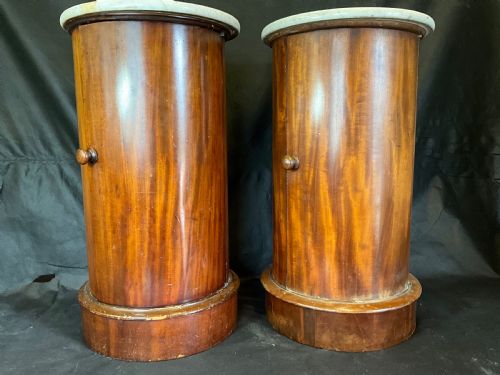
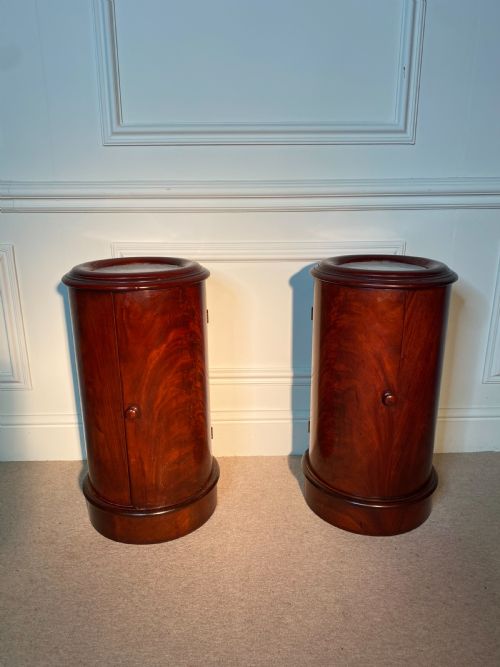
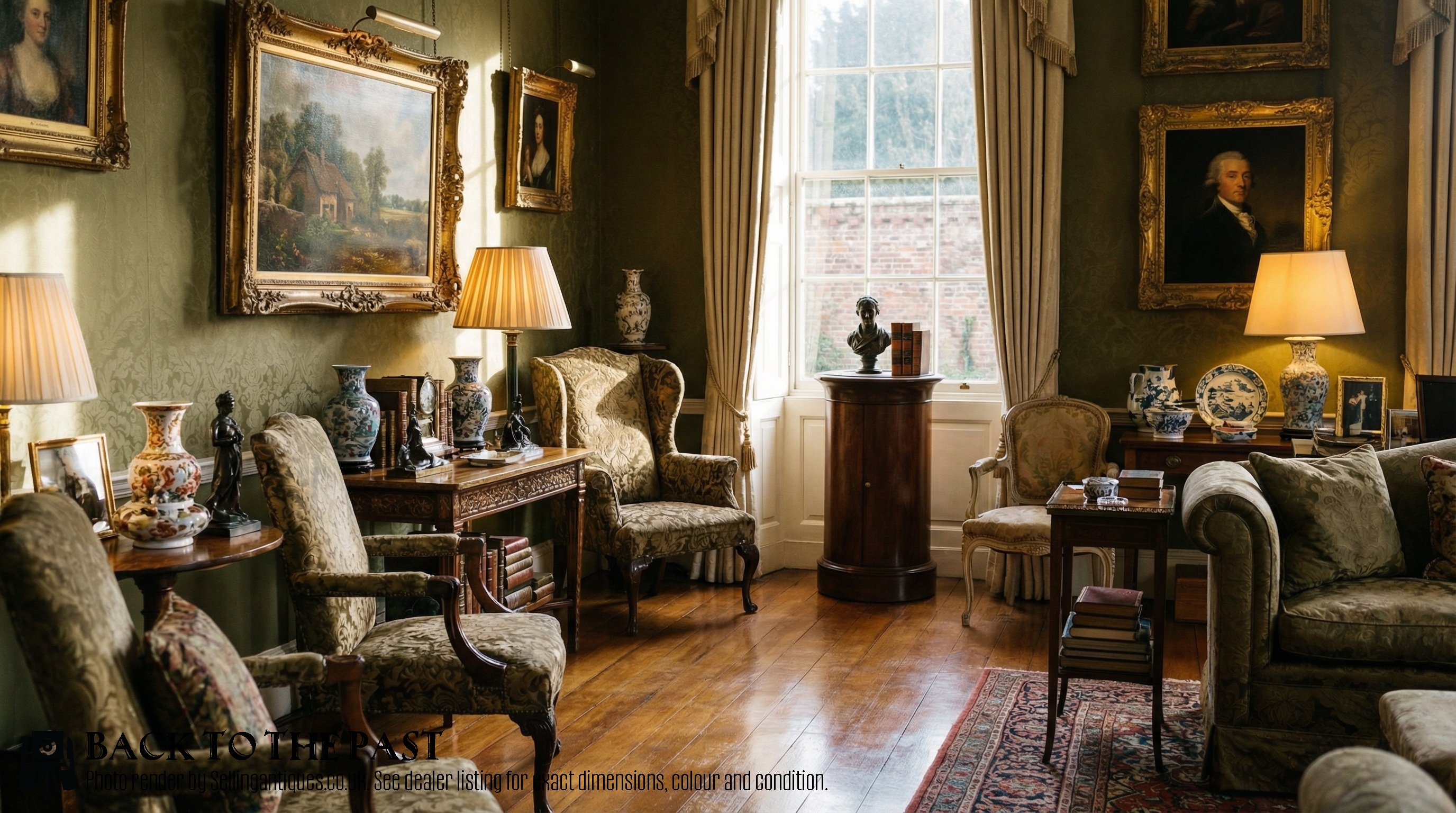
An antique cylindrical table most commonly appears on this page as a Victorian or nineteenth-century bedside cabinet, pot cupboard, or pedestal. These circular pieces function as practical nightstands and small bedside tables within bedrooms and reception rooms.
The evidence shows various forms including marble top cabinets, column pedestals, and French Empire or Regency examples. Buyers find single items as well as matched pairs designed to sit on either side of a bed.
Earlier nineteenth-century versions sit alongside pieces dated around eighteen-sixty and eighteen-eighty, demonstrating a steady production of circular wooden and marble-topped furniture throughout the period.
How they were made
Cabinet makers constructed these cylindrical bodies primarily using solid and veneered timbers such as mahogany, flame mahogany, and walnut. Wood surfaces often display rich grain patterns shaped around the curved carcass.
Many tops feature fitted white or grey marble slabs inset into the wooden rim to provide a durable, wipe-clean surface. Brass hardware and ceramic elements occasionally appear as handles or internal fittings within the cupboards.
What varies in quality
Quality rests upon the selection of timber and the precision of the curved joinery forming the circular door and frame. Superior examples utilise figured flame mahogany or incorporate heavy, well-fitted marble tops rather than painted faux finishes.
The sophistication of the period style distinguishes finer French Empire and Regency pieces from simpler Victorian utility cabinets. Construction details such as tight door hinges and clean interior shelving separate workshop standards.
The Antique Cylindrical Table Glossary
- Flame mahogany
- A wood veneer cut from timber fork joints that produces a distinctive flickering flame pattern across curved surfaces.
- Pot cupboard
- A small bedside cabinet originally built to enclose a chamber pot behind a single curved door.
- Pedestal
- A tall, single-column support structure adapted to serve as a freestanding cabinet or stand.
- Regency
- A British design period spanning the early nineteenth century characterised by classical lines and architectural influence.
- French Empire
- A continental style from the nineteenth century featuring bold mahogany surfaces and classical decorative restraint.
Antique Cylindrical Table: Frequently Asked Questions
What is an antique cylindrical table?
These pieces are circular cabinets and pedestals, predominantly built as nineteenth-century bedside furniture.
They offer enclosed storage inside a compact curved footprint designed to fit beside a bed.
How were marble tops used?
Marble slabs were fitted directly into the top of nineteenth-century bedside cabinets to provide a robust surface.
This stone insert protected the wooden structure from spills and heavy washstand items.
Are pairs common?
Matched pairs appear frequently alongside single cabinets throughout the nineteenth-century listings.
Pairs allow buyers to place identical cylindrical stands on both sides of a bed.
What woods were used?
Mahogany and flame mahogany form the primary timber choice for these circular nineteenth-century cabinets.
Walnut also appears among the pedestal designs alongside painted wooden versions.