


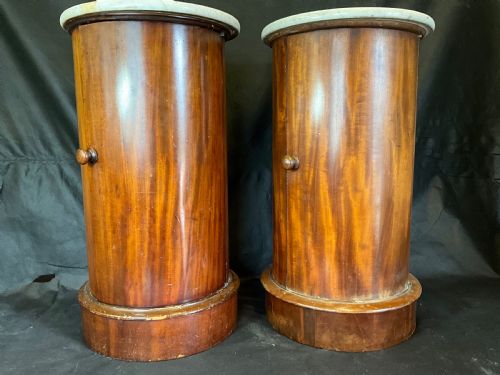


Circular Bedside Cupboard
A circular bedside cupboard is a cylindrical piece of bedroom furniture designed to hold chamber pots or night essentials, offering compact bedside storage with a distinctive silhouette.
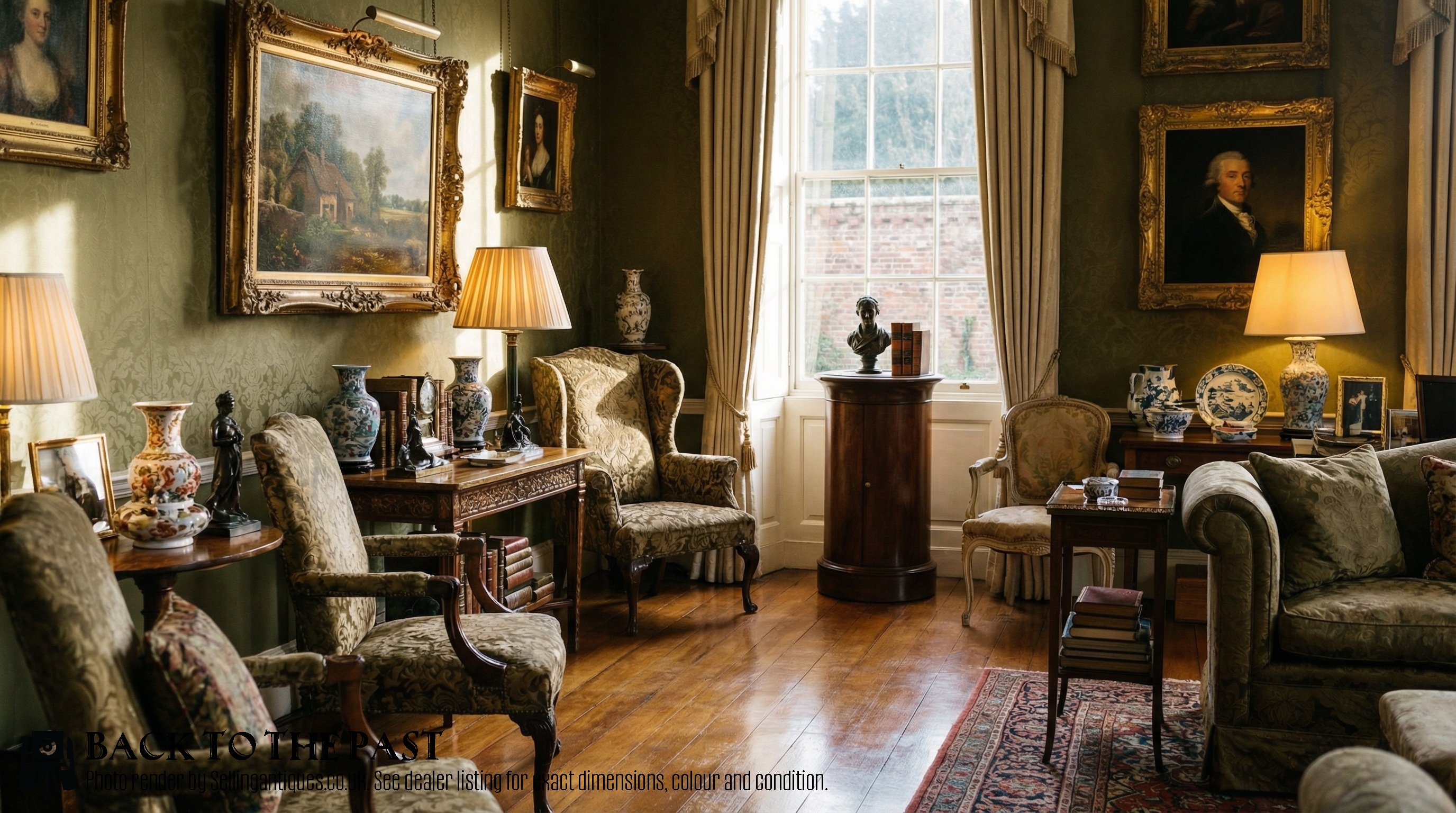
Circular Bedside Cupboard
When searching for a circular bedside cupboard, buyers encounter cylindrical cabinets that conceal storage behind a curved door. These items take the form of bedside cabinets, pot cupboards, pedestals, and display stands.
The pieces on this page span the Regency, Victorian, and Art Deco periods. Mahogany is the most frequent material seen, alongside flame mahogany, burr walnut veneer, and walnut, often paired with marble tops.
Origins include English and French Empire workshops, as well as Italian makers of the Art Deco era. Most examples date from the nineteenth century, ranging from simple mahogany cylinders to elaborate marble-topped pedestals.
How they were made
Cabinet makers constructed the curved bodies of these cupboards using bent wood techniques or segmented staves overlaid with veneers. Flame mahogany and burr walnut veneer provide the striking grain patterns seen across the cylindrical carcasses.
Marble slabs were fitted to the tops of many nineteenth-century examples to create a durable, wipe-clean surface for lamps and water jugs. Details such as brass mounts and ceramic elements complete the construction of French Empire and Victorian pieces.
Marble tops appear frequently on Victorian and mid-nineteenth-century cylindrical stands.
What varies in quality
The dexterity of the cabinet maker in handling the curved door reveals the standard of the piece. A superior cylinder cupboard maintains a seamless junction where the door meets the frame without gaps.
The choice of timber defines the upper tier of the range, particularly matched flame mahogany or burr walnut veneers. The inclusion of an original marble top rather than a later replacement elevates the finish.
The Circular Bedside Cupboard Glossary
- Flame mahogany
- A figure in mahogany timber resembling flickering flames, achieved by cutting across the branch junction. This veneer was prized for high-end nineteenth-century cabinet work.
- Pot cupboard
- A small bedside cabinet originally built to enclose a chamber pot. They frequently feature a cylindrical body with a single internal shelf and a door.
- French Empire
- A neoclassical design style originating in France during the early nineteenth century. It is characterised by architectural proportions and restrained classical ornamentation.
- Burr walnut veneer
- Thin slices of wood taken from walnut tree growths, displaying complex swirling grain patterns. It provides a highly decorative surface on luxury furniture.
- Cylindrical
- Having the form of a cylinder with straight parallel sides and circular ends. This geometric shape defines the primary carcass of these bedside pieces.
Circular Bedside Cupboard: Frequently Asked Questions
What is a circular bedside cupboard?
A circular bedside cupboard is a cylindrical storage item designed to sit beside a bed. These pieces typically feature a curved door enclosing a shelved interior for night-time necessities.
Historically, many served as pot cupboards to house chamber pots out of sight. Today, they function as compact bedside tables or lamp stands.
How do I date a cylinder cabinet?
Dating relies on timber choices, construction methods, and stylistic markers. Regency and French Empire pieces often display architectural simplicity and rich mahogany grains.
Victorian examples frequently introduce marble tops and turned columns. Art Deco pieces from the 1930s utilise walnut veneers with smoother, unadorned cylindrical forms.
Are marble tops original?
Many nineteenth-century cabinets were fitted with marble tops to provide a practical, heat-resistant surface for bedside lamps and jugs. Examining the seating of the stone helps determine if it belongs to the original construction.
French and Victorian makers utilised marble frequently on cylindrical pedestals to add weight and a contrasting colour to the dark wood body.
How do I style a drum cabinet?
The compact footprint of a cylindrical cabinet makes it suitable for small bedrooms or tight spaces beside low beds. The curved surface removes sharp corners from the bedside layout.
Pairing a mahogany or walnut cylinder with modern or antique lighting creates a focal point. The enclosed interior keeps books and personal items out of sight.