
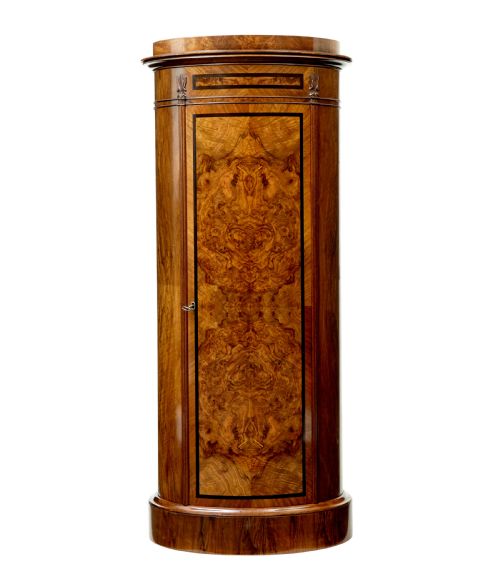


Antique Cylinder Cupboard
An antique cylinder cupboard is a compact, cylindrical piece of storage furniture offering a discreet bedside or corner solution.
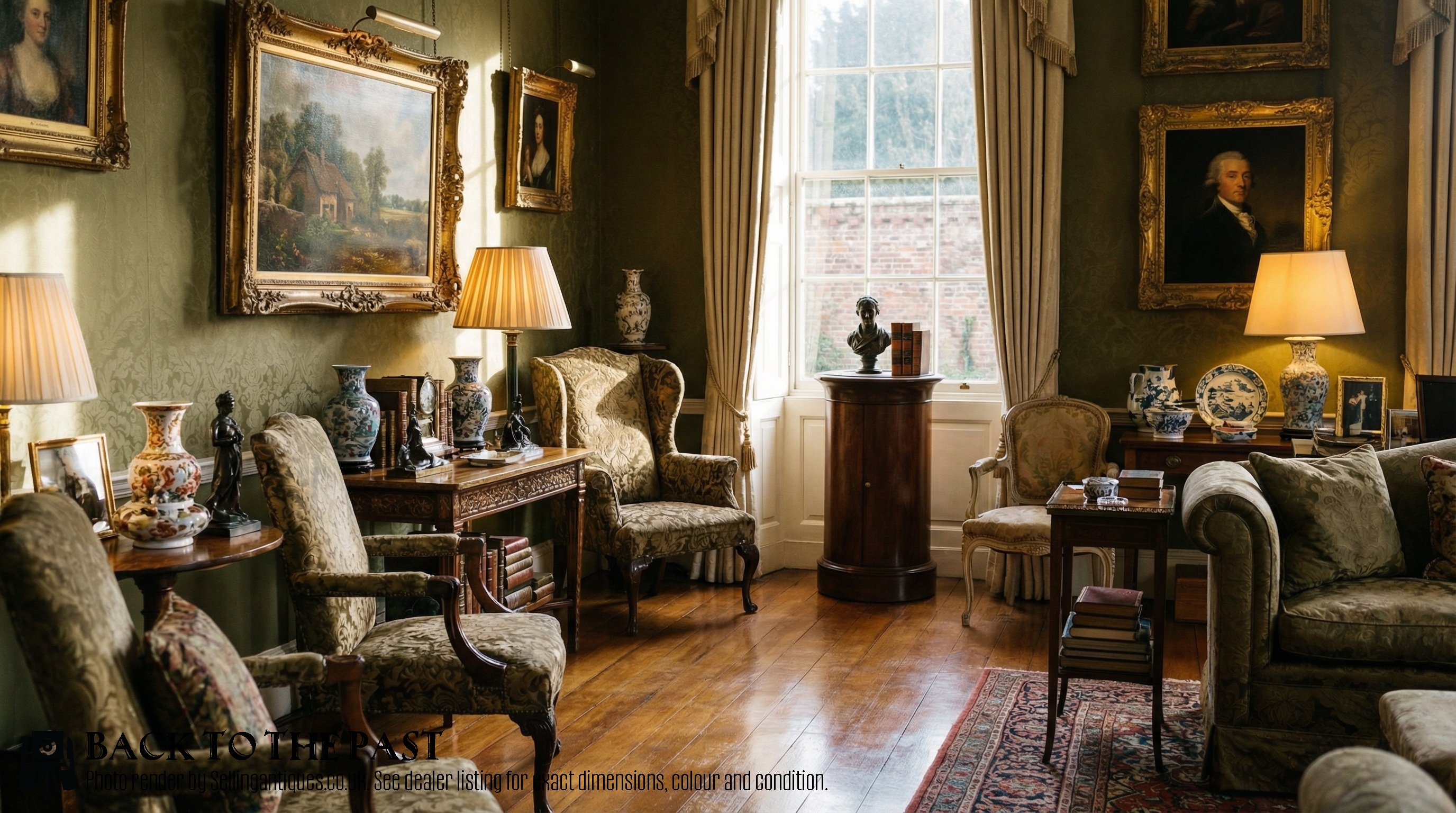
Antique Cylinder Cupboard
An antique cylinder cupboard provides enclosed storage in a circular format, frequently utilised as a bedside cabinet or pot cupboard. These pieces emerge predominantly from the nineteenth century, encompassing Regency, Victorian, and Early Victorian eras.
The form typically manifests as a pedestal or cabinet featuring a curved door that conceals interior shelving. Variations include examples topped with marble or ceramic surfaces alongside standard timber tops.
Origin points span English and French Empire workshops, delivering cylindrical forms designed to fit neatly into domestic corners and tight spaces.
How they were made
Cabinetmakers constructed these cylindrical bodies using dense timbers such as mahogany, flame mahogany, walnut, burr walnut, and oak. The curved doors required precise joinery to maintain smooth movement around the circular frame.
Surface enhancement relied heavily on timber selection, displaying figured grains like flame mahogany and burr walnut. Selected pieces incorporated brass hardware and fitted marble or faux marble tops for durability.
Some nineteenth-century cylinder cupboards doubled as discreet laundry chutes for Victorian socks.
What varies in quality
Quality rests in the precision of the curved door action and the tightness of the timber joints around the cylinder. Superior examples display unbroken grain continuity and carefully chosen veneers across the rounded surface.
The integration of heavy marble slabs or detailed brass mounts distinguishes finer constructions from utilitarian chambers. Finer pieces demonstrate meticulous interior fitting and stable structural timber.
The Antique Cylinder Cupboard Glossary
- Flame mahogany
- A timber cut displaying distinctive rippled, flame-like grain patterns. This decorative veneer was favoured for prominent furniture fronts during the nineteenth century.
- Burr walnut
- Wood taken from walnut tree growths, producing an intricate, swirling pattern. It creates a highly decorative surface on nineteenth-century cabinets.
- Pot cupboard
- A small bedroom cabinet originally designed to house a chamber pot. They frequently share the cylindrical pedestal form seen in bedside cabinets.
- Regency
- A British design period spanning the early nineteenth century. Furniture from this era often exhibits classical restraint and clean geometric lines.
Antique Cylinder Cupboard: Frequently Asked Questions
What is a cylinder cupboard used for?
These cabinets serve primarily as bedside storage or compact stands within domestic spaces. The cylindrical shape allows them to tuck neatly into corners while concealing contents behind a curved door.
Historically, many served as pot cupboards in bedrooms before transitioning into general bedside tables and lamp stands.
How do I date an antique cylinder cupboard?
Dating relies on examining the timber species, construction methods, and stylistic markers recorded across the nineteenth century. Regency and French Empire pieces often display classical proportions, while Victorian examples introduce marble tops and varied walnut veneers.
Secondary woods inside the cabinet and the style of brass hardware further clarify the exact period of manufacture.
Are marble tops original to these cabinets?
Many nineteenth-century cylindrical cabinets feature fitted marble or faux marble surfaces designed to resist water and staining. These tops were frequently integrated during production, particularly on Victorian and French Empire bedside pieces.
Checking the fit against the timber rim helps confirm the integrity of the marble top to the base.
How do I care for mahogany and walnut surfaces?
Protect antique timber surfaces from direct sunlight and excessive moisture to prevent veneer lifting and fading. Regular dusting with a soft, dry cloth preserves the polished finish without building up residue.
Apply occasional appropriate wax polish sparingly to maintain the natural lustre of the mahogany or burr walnut grain.