




French Mahogany Mirror Table
These french mahogany mirror table examples combine figured timber and plate glass, offering practical surface space alongside architectural reflection.
French Mahogany Mirror Table
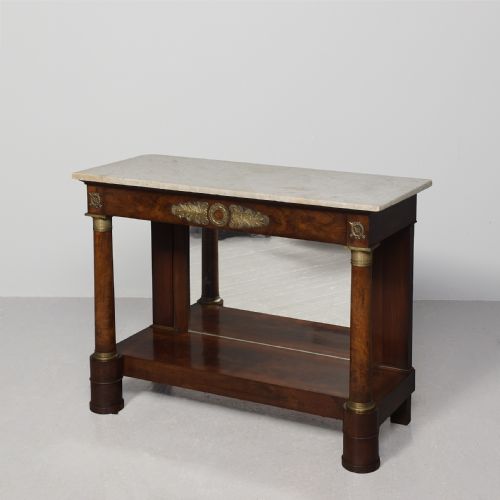
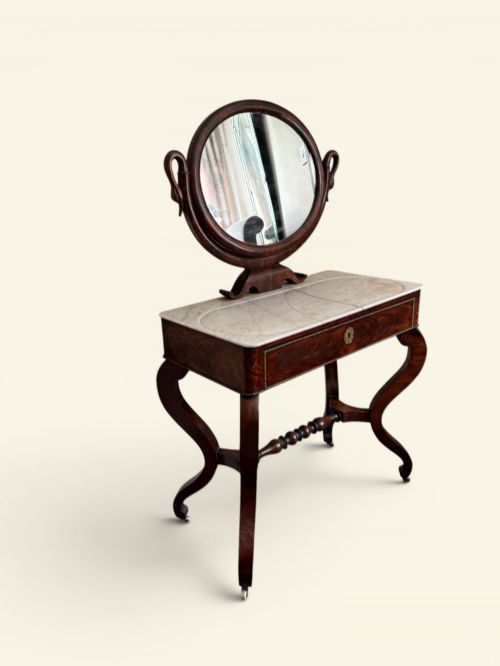
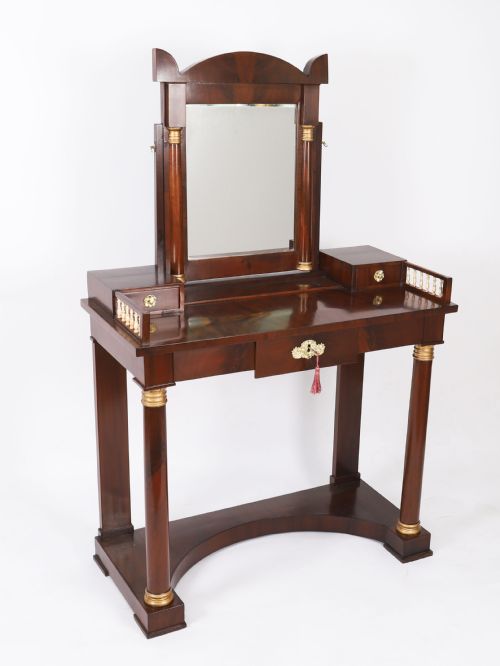
A french mahogany mirror table brings together timber frames and reflective glass, frequently appearing as dressing tables or console tables with associated mirrors. The pieces span periods from the eighteenth century through to the nineteenth century and into nineteen ten.
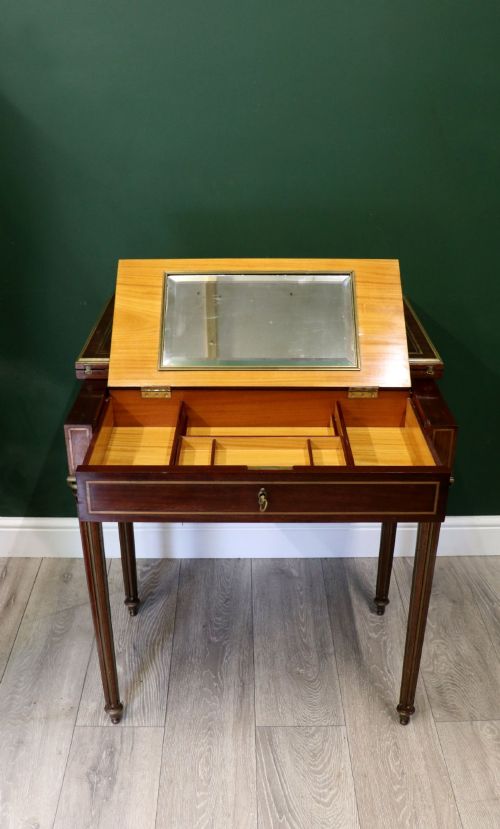
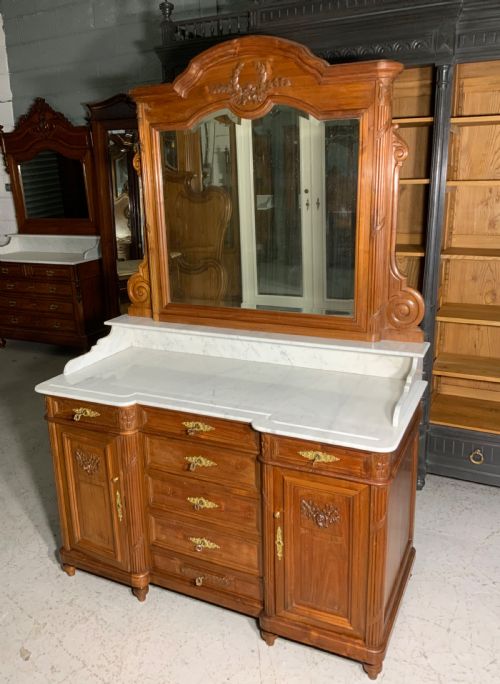
The evidence shows various forms including washstands, chiffoniers, desks, and writing desks, alongside the core console and dressing table designs. Stylistic influences run from French Empire and Charles X to Neoclassical Revival and Napoleon III.
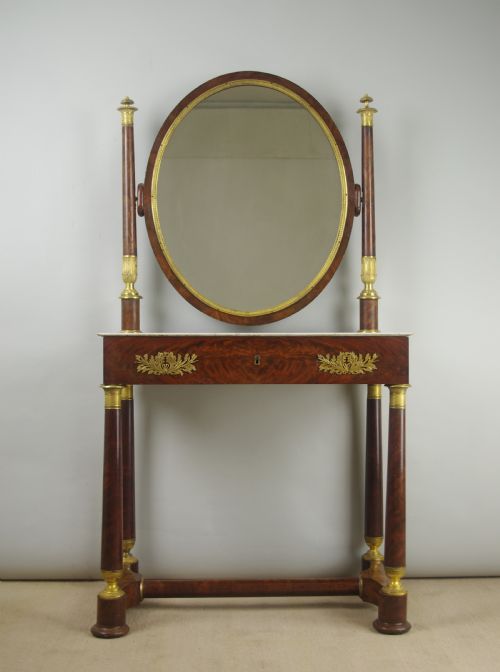
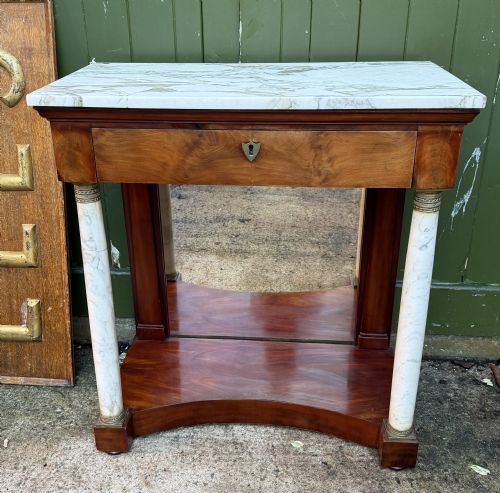
Buyers encounter mahogany timber paired with marble tops, brass accents, or ormolu mounts across these examples. The physical configurations range from freestanding console tables with mirrored backs to dedicated dressing chests.
Construction and materials
Makers utilised solid and veneered mahogany over supporting timber carcases, selecting figured stock for visible surfaces. This timber formed the primary structure of tables, consoles, and dressing furniture.
Marble tops in white and carrara varieties provided durable, cool surfaces on console and dressing tables, often secured above mahogany framing. Mirror glass was integrated into backboards or hinged frames to create reflection.
Metal enrichment involved cast and chased ormolu, gilt bronze, and brass mounts applied to corners, friezes, and supports. Leather inserts also appeared on specific desk variants within the record.
French Mahogany Mirror Table Retail Price Guide 2026
Typical asking prices for french mahogany mirror table among the pieces listed under this phrase on Sellingantiques today, from the lower quarter to the upper quarter. They describe what is for sale here now, not the wider market.
Some nineteenth-century tables arrive with secret drawers deep in the frieze, originally designed for storing private correspondence or jewellery.
Assessing quality in construction
The standard of a french mahogany mirror table depends on the selection and matching of mahogany veneers across wide surfaces. Superior pieces display continuous grain patterns and careful timber preparation.
Ormolu and brass mounts reveal the standard of workshop execution through crispness of cast detail and secure mechanical attachment. Finer examples integrate these metal elements harmoniously with the mahogany structure.
The French Mahogany Mirror Table Glossary
- Mahogany
- A durable tropical hardwood imported for high-grade furniture production. It accepts polish readily and provides a stable base for fine veneers.
- Ormolu
- Gilt bronze mounted onto furniture framework. The technique involves applying gold amalgam to cast bronze before heat treatment.
- Console table
- A table designed to stand against a wall, frequently paired with a mirror above. Early nineteenth-century examples often featured marble tops.
- Bonheur du jour
- A small light lady's writing desk featuring a tiered superstructure with drawers and cupboards above the main writing surface. The form gained popularity during the eighteenth and nineteenth centuries.
French Mahogany Mirror Table: Frequently Asked Questions
What is a French mahogany mirror table?
A French mahogany mirror table is a piece of furniture combining timber construction with an integrated or en suite mirror. These items function primarily as console tables, pier tables, or dressing tables.
The design draws on styles such as French Empire, Charles X, and Neoclassical Revival. They incorporate materials like carrara marble tops and ormolu mounts.
How were these tables used originally?
Original usage varied by the specific form of the furniture piece. Dressing tables and chests served personal grooming and storage needs in private chambers.
Console and pier tables stood against drawing room walls to display decorative objects beneath hanging wall mirrors or attached mirror backs. Writing desks accommodated correspondence and administrative tasks.
Where should I place a mirror table?
These tables suit hallways, living rooms, and bedrooms depending on their specific form. Console variants function well against blank wall spaces to anchor decorative displays.
Dressing tables and desks find placement in bedrooms or studies where their surface area and storage remain accessible. The reflective glass helps distribute light within smaller rooms.
How do I identify a nineteenth-century piece?
Nineteenth-century pieces show construction traits and stylistic markers aligned with periods like the French Empire, Victorian era, or Napoleon III. Examining the timber framing, joinery methods, and hardware offers clues to age.
Stylist details such as ormolu mounts, mahogany veneer thickness, and marble edge profiles correspond to the manufacturing standards of specific decades.