

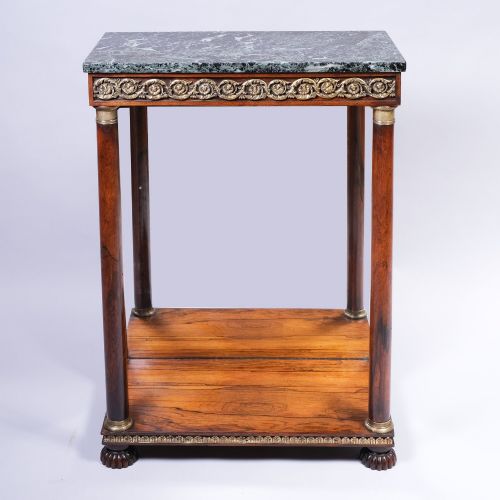


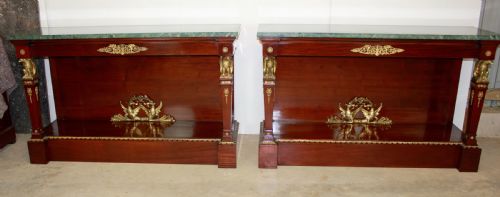
Ormolu Mounted Pier Table
When you select an ormolu mounted pier table, you acquire a grand decorative console designed to anchor a drawing room wall.
Ormolu Mounted Pier Table
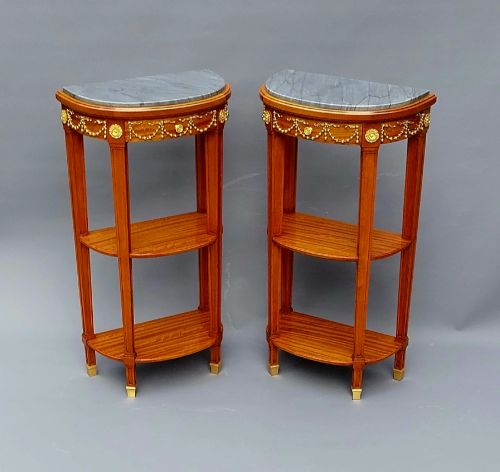
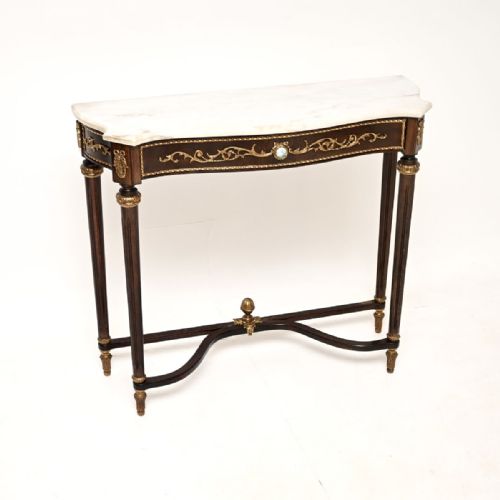
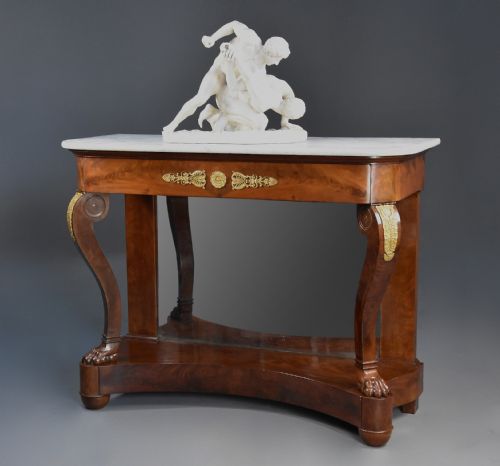
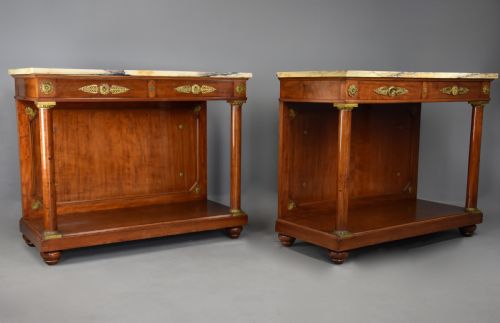
An ormolu mounted pier table is a console furniture form designed to stand against a wall between architectural windows, usually topped with marble and finished with gilt metal mounts. The examples seen here span the nineteenth century and the early twentieth century, taking forms such as console tables, side cabinets, side tables, chiffoniers, and centre tables.
The style lineage draws heavily from French Empire, French Restoration, Louis XVI Style, Louis XV Revival, and Regency Revival traditions. Mahogany, rosewood, walnut, and satinwood form the timber carcases, while marble and fossil stone provide the flat upper surfaces.
Makers and workshops of the period, such as Krieger Paris, produced pieces that combined rich flame mahogany or marquetry with classical brass and ormolu decoration. These tables range from early nineteenth-century First Empire designs down to later revival pieces from nineteen hundred and ten.
Materials and construction methods
The construction relies on solid timber carcases and fine veneers of mahogany, rosewood, walnut, and satinwood, frequently enhanced by marquetry inlay and intricate brasswork. Timber frames support heavy tops of marble or fossil stone, requiring robust joinery to bear the weight.
Ormolu mounts, cast as gilt bronze or brass, are applied to the angles, friezes, and supports of the tables to provide classical enrichment. Metal mounts are chased and secured directly to the wooden structure to frame the mahogany or rosewood surfaces.
Ormolu Mounted Pier Table Retail Price Guide 2026
Typical asking prices for ormolu mounted pier table among the pieces listed under this phrase on Sellingantiques today, from the lower quarter to the upper quarter. They describe what is for sale here now, not the wider market.
Even a heavy marble top sometimes hides the simple pine framing underneath its grand mahogany skirt.
Distinctions in craftsmanship
The standard of the gilt bronze or ormolu mounting distinguishes the ambitious workshop output from standard commercial production, showing sharper chasing and heavier gilding on superior pieces. Figured timbers such as flame mahogany and dense rosewood indicate careful selection of raw materials by the cabinetmaker.
Structural complexity, including marquetry inlay, stamped maker signatures like Krieger Paris, and heavy marble or fossil stone tops, marks the upper tier of surviving examples. Simpler revival pieces of later decades rely on plainer mahogany and minimal brass mounts.
Krieger Paris
The Ormolu Mounted Pier Table Glossary
- Ormolu
- Gilt bronze mounted upon furniture or decorative objects. The technique involves applying a gold amalgam to bronze before firing.
- Pier table
- A table designed to fit against a wall pier between windows. It typically supports a mirror above.
- Console table
- A wall table supported on console brackets or legs. Many examples feature marble tops.
- Marquetry
- Veneering patterns formed from pieces of coloured wood or shell. It decorates the flat surfaces of cabinets and tables.
- Chiffonier
- A small sideboard or tall cabinet with drawers and shelves. This form appears alongside console tables in nineteenth-century rooms.
Ormolu Mounted Pier Table: Frequently Asked Questions
Where did these tables stand?
These tables were built to stand against the flat wall space between large drawing room windows, directly beneath a wall mirror.
This placement reflected light around the room and created a formal focal point for the interior.
What are the tabletops made of?
The upper surfaces are predominantly constructed from heavy slabs of marble or fossil stone, fitted directly onto the wooden carcase.
Some tables also feature timber tops in mahogany or marquetry depending on the specific revival style.
How do I care for marble tops?
Marble surfaces require regular dusting with a dry cloth and immediate wiping of any liquid spills to prevent staining.
Avoid acidic cleaners which can etch the polished stone surface over time.
Are these pieces French?
Many of the surviving examples originate from French workshops following Empire and Louis styles throughout the nineteenth century.
English Regency and later revival pieces also appear within the recorded styles.