


19th Century Marquetry Credenza
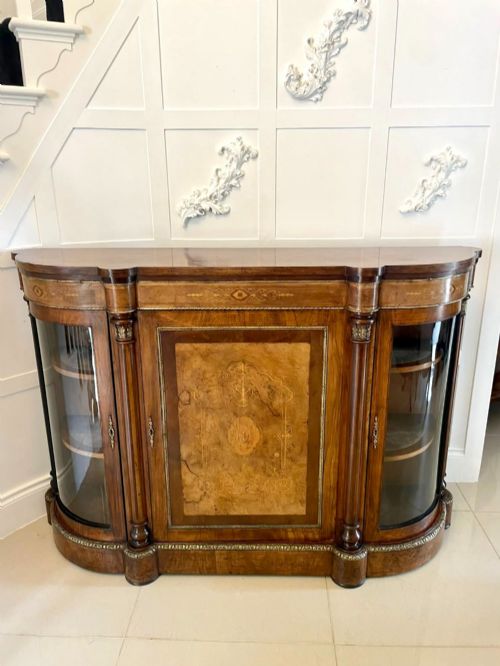
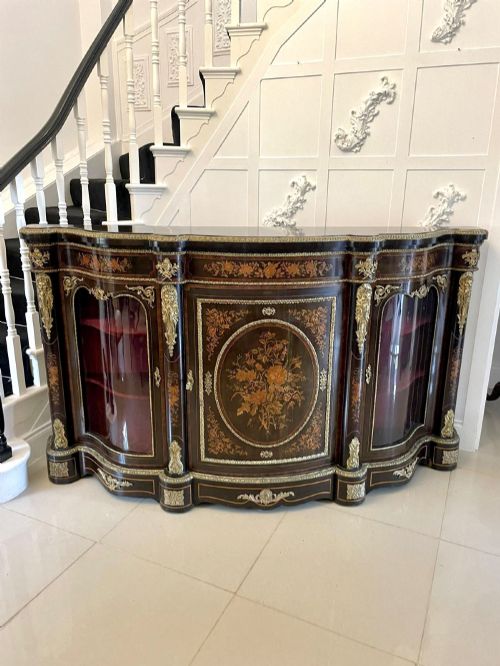
A 19th century marquetry credenza brings refined woodwork and grand display space to a principal room.
19th Century Marquetry Credenza
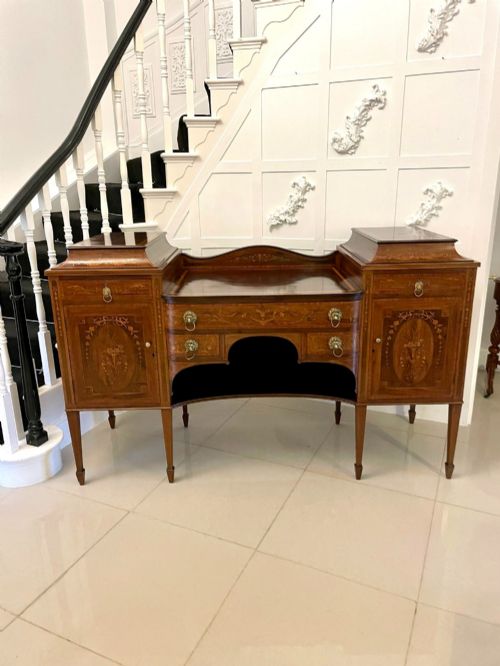
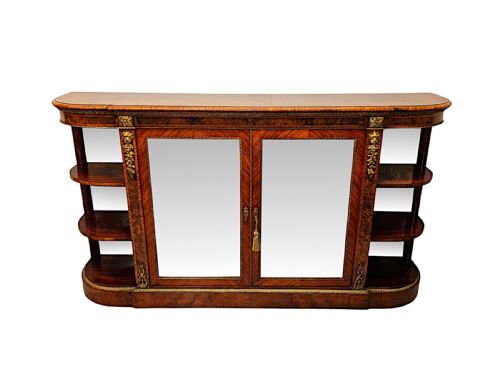
A 19th century marquetry credenza is a low, polished cabinet designed for storage and display, frequently featuring intricate floral or geometric wood inlays across its primary doors and panels. These pieces span the Victorian era alongside French Napoleon III and Louis XV Revival styles, often incorporating curved serpentine shapes or straight fronts.
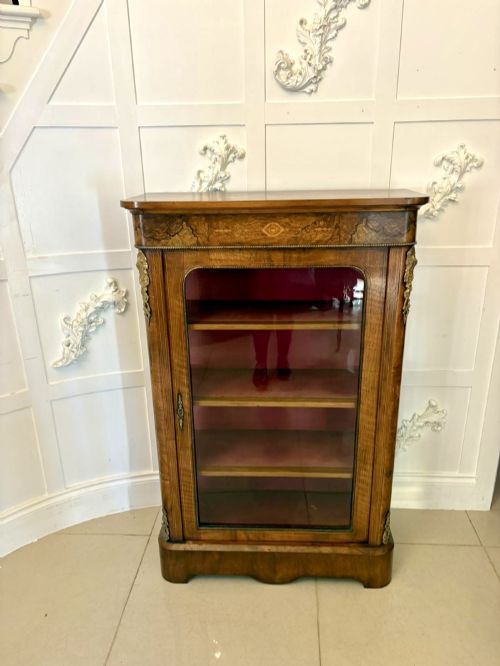
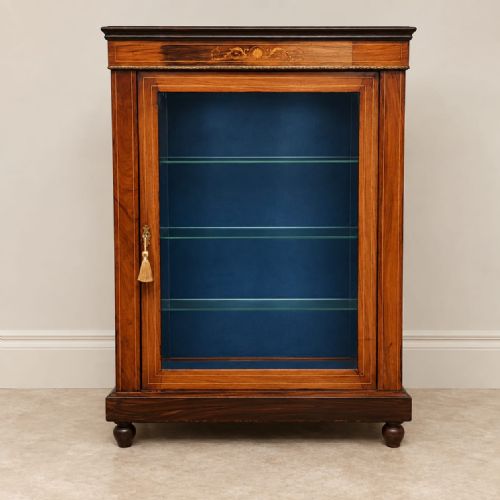
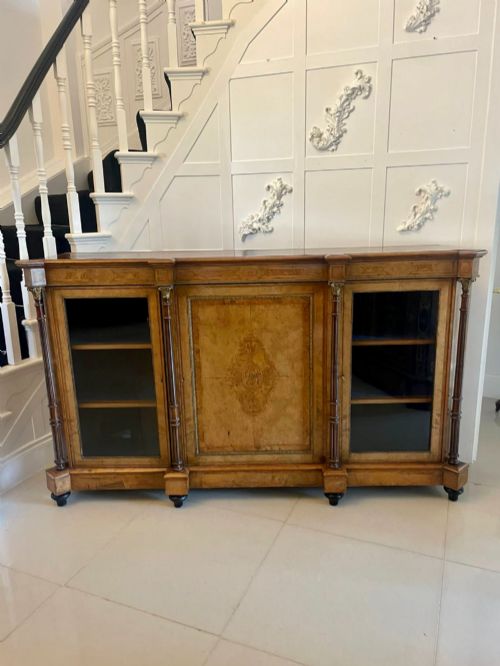
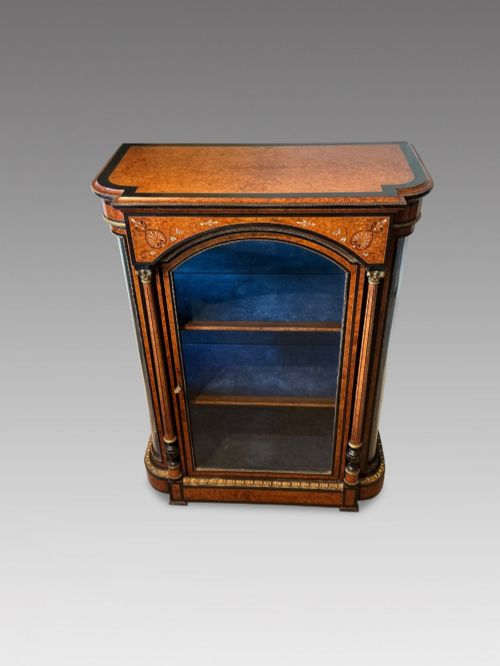
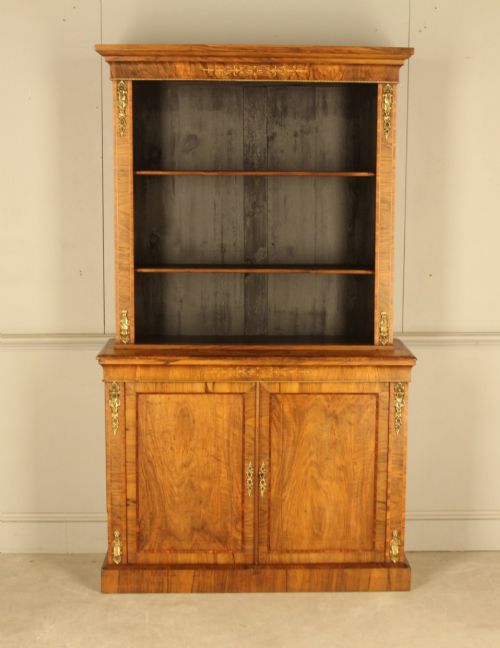
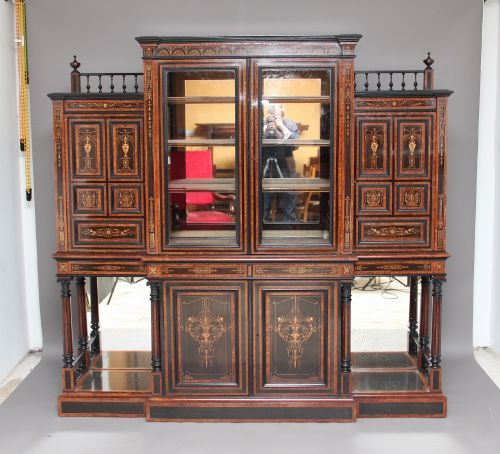
Buyers examining this selection encounter numerous variations including side cabinets, pier cabinets, and larger bookcase hybrids. Walnut, burr walnut, and ebonised wood form the primary foundation of these architectural forms, frequently paired with glazed display sections.
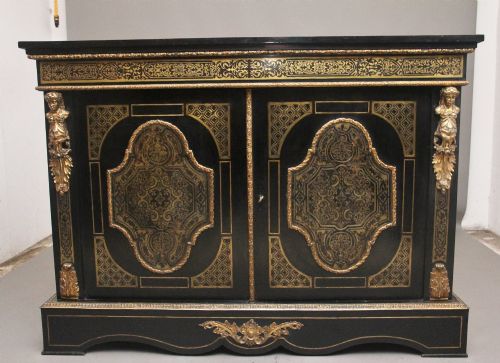
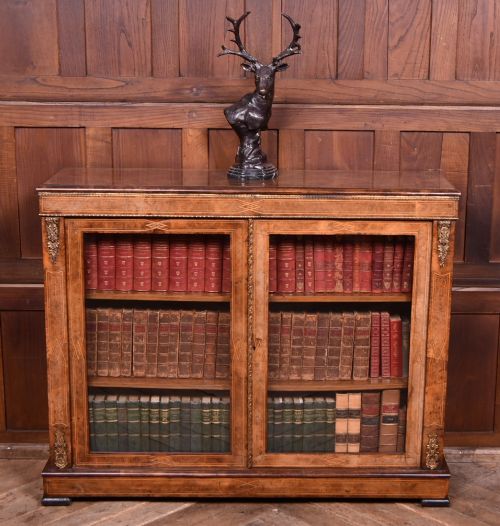
Origin points across the surviving examples include English Victorian workshops alongside French cabinetmakers utilising traditional boullework and gilt bronze mounts. The typical layout places a central cupboard flanked by glass-fronted side compartments designed for porcelain and books.
Distinguishing quality levels
The refinement of the marquetry cutting marks the distinction between standard production and top-tier execution, with tighter joints and greater botanical detail elevating a piece. Superior examples employ choice burr walnut veneers selected for deep grain movement rather than plain stock.
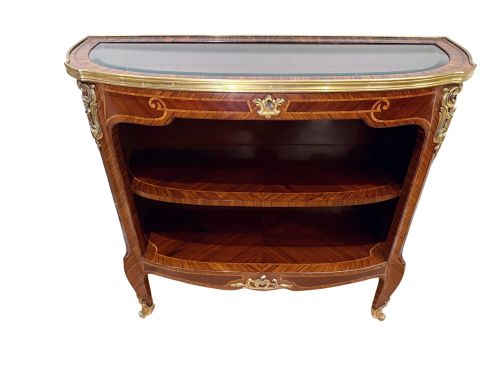
Castings of ormolu mounts vary from crisp, chased bronze work to softer, simpler brass applications that lack three-dimensional depth. The architectural proportion of the serpentine curves and the weight of the timber framing determine the overall presence of the cabinet.
Several credenzas preserve original velvet-lined interiors that once showcased fragile Victorian ceramics to dinner guests.
Hewetsons London·Lamb of Manchester·Gillows
The 19th Century Marquetry Credenza Glossary
- Marquetry
- The practice of arranging small pieces of coloured wood veneer into pictorial or decorative patterns. This technique decorates the primary doors and friezes of the credenzas.
- Ormolu
- Gilded bronze used for decorative mounts, feet, and edge trims on furniture. It provides bright metallic contrast against dark woods.
- Boulle
- An inlay technique combining brass and tortoiseshell developed in France. It appears on ebonised cabinets from the Napoleon III period.
- Burr walnut
- Timber taken from the gnarled growth of a walnut tree, producing swirling, highly figured patterns. It served as the primary veneer for Victorian credenzas.
- Pier cabinet
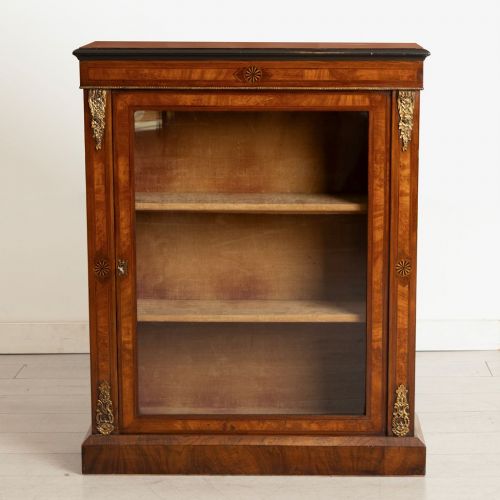
- A narrow display cabinet built to fit the wall space between windows. These share similar marquetry and glass designs with larger credenzas.
19th Century Marquetry Credenza: Frequently Asked Questions
What is a credenza?
A credenza is a low cabinet designed during the nineteenth century for formal entertaining and display. These pieces usually feature a central enclosed cupboard flanked by glass-fronted sections.
Cabinetmakers built them to stand against principal walls in dining rooms and parlours. They provided a surface for serving food and a secure place for valued porcelain.
How do I distinguish French and English pieces?
French Napoleon III examples frequently utilise ebonised wood combined with elaborate brass and tortoiseshell boullework or Sevres porcelain plaques. Ormolu mounts on French pieces tend to be heavier and more sculptural.
English Victorian credenzas rely more often on natural burr walnut and rosewood veneers decorated with floral marquetry and restrained brass stringing. The overall proportions on English cabinets lean towards architectural symmetry.
Where should I place a credenza?
These cabinets suit principal reception rooms, long hallways, or dining spaces with sufficient wall length to accommodate their low, wide proportions. They perform best away from direct sunlight to protect vulnerable wood veneers and interior velvet linings.
The glass display sections make them suitable for housing collections of ceramics, glass, or books. Their height allows art or mirrors to be hung comfortably above them.
How do I care for nineteenth-century wood?
Maintain a stable room temperature and avoid placing the cabinet near active heat sources which cause veneers to split or lift. Regular dusting with a dry, soft cloth preserves the polished shellac finish.
Apply a traditional beeswax polish sparingly to nourish the timber without building up a heavy residue. Protect the top surface from moisture by using coasters under any displayed items.