
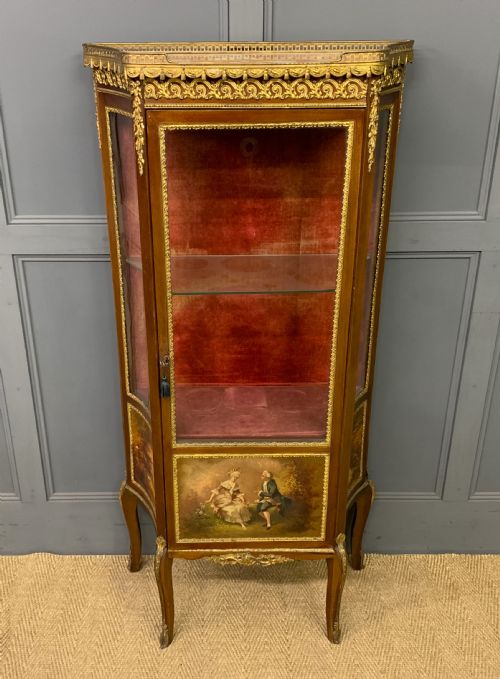
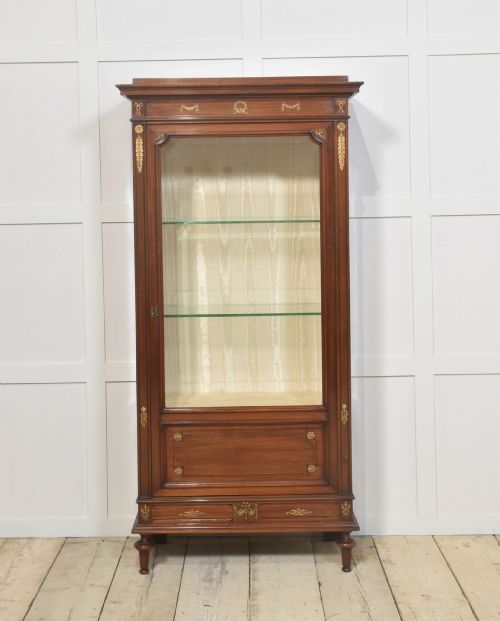


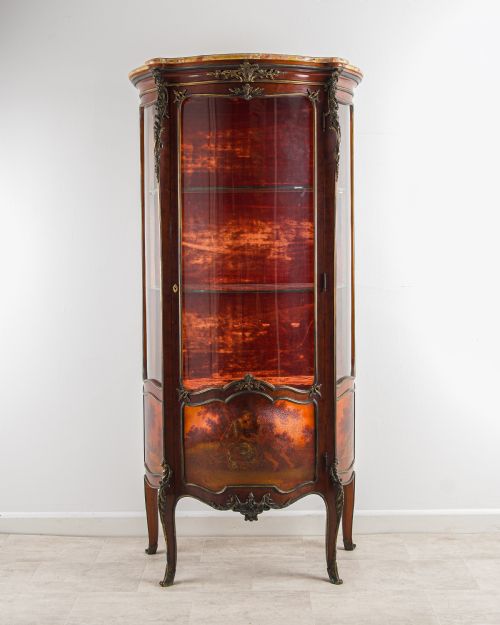
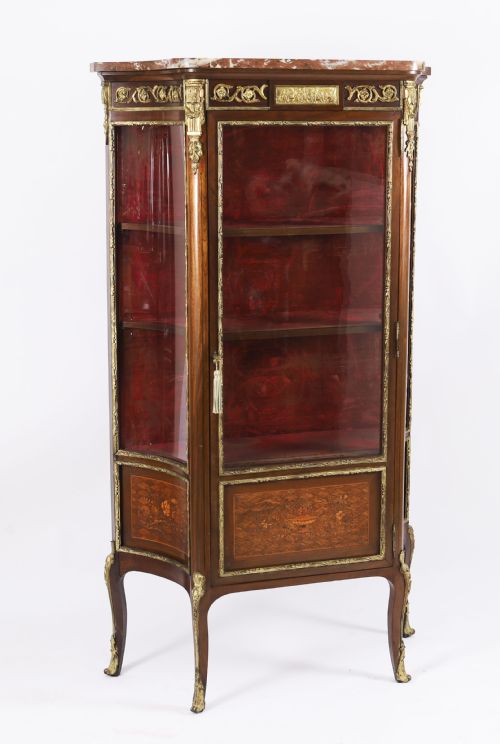

French Mahogany Curio Cabinet
A french mahogany curio cabinet brings elegance to any room by displaying cherished possessions behind glass.
French Mahogany Curio Cabinet
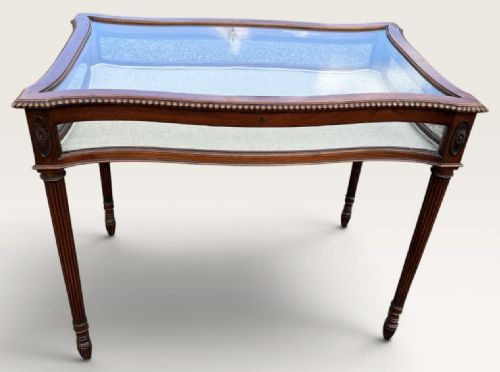
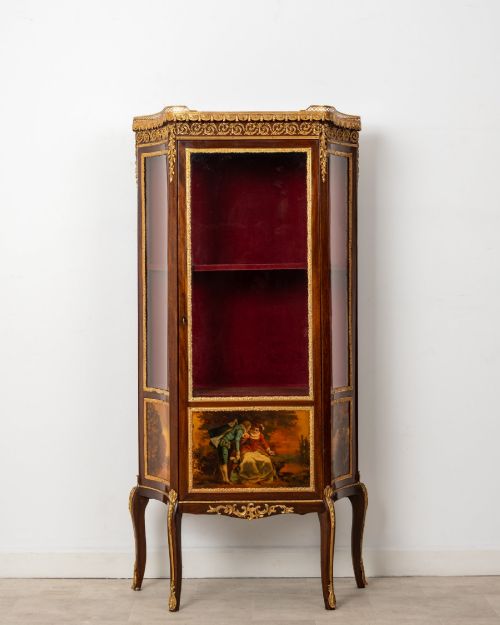
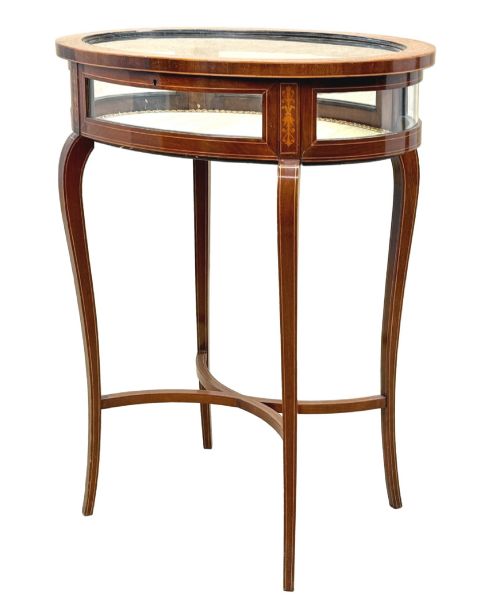
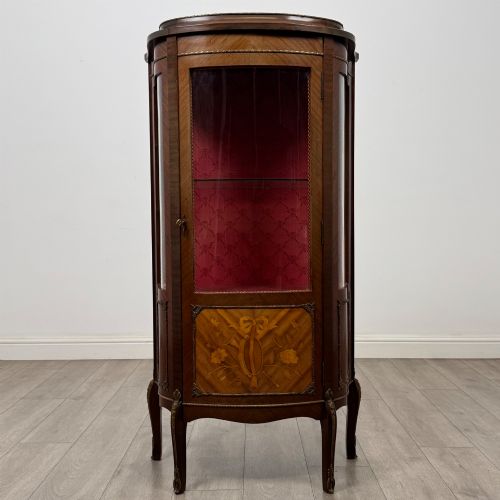
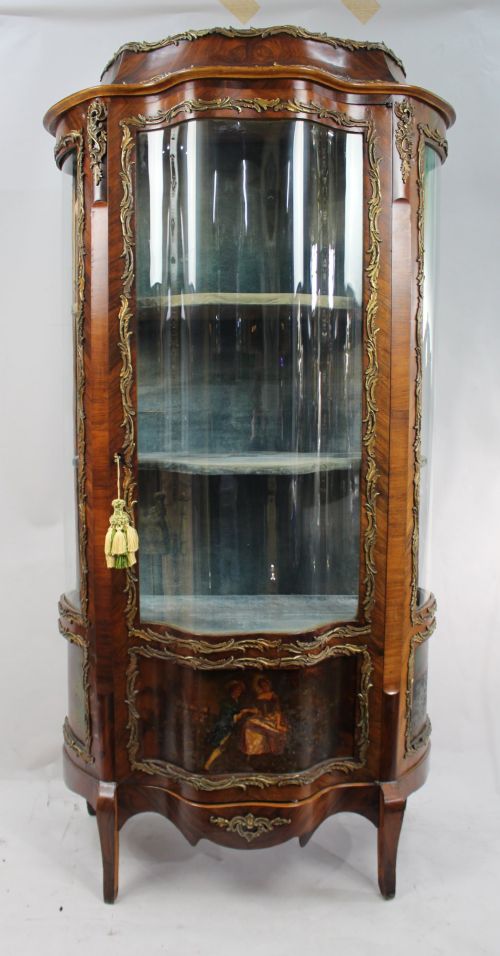
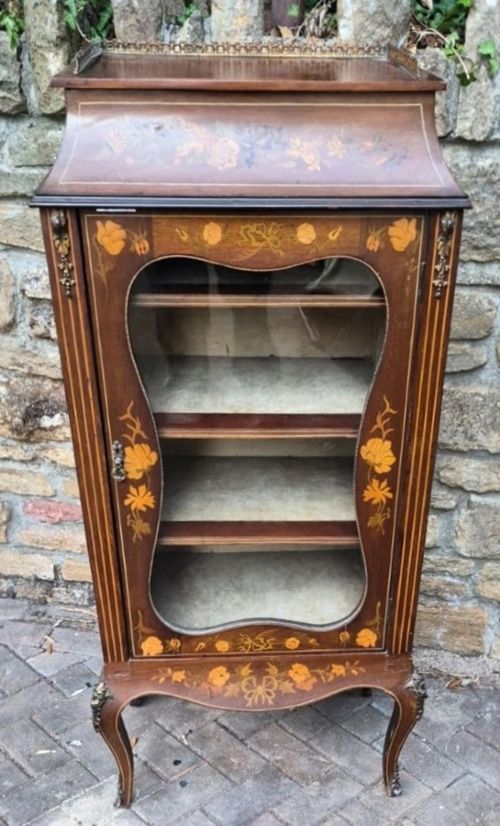
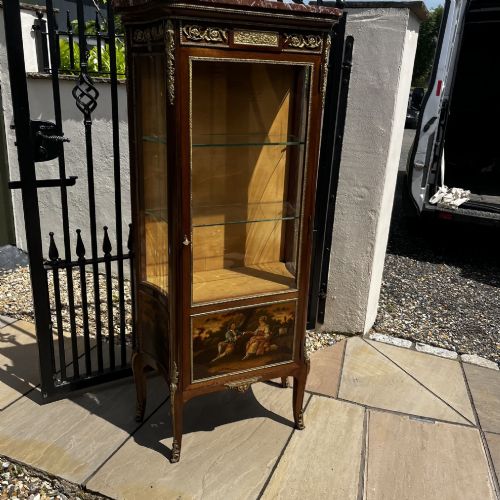
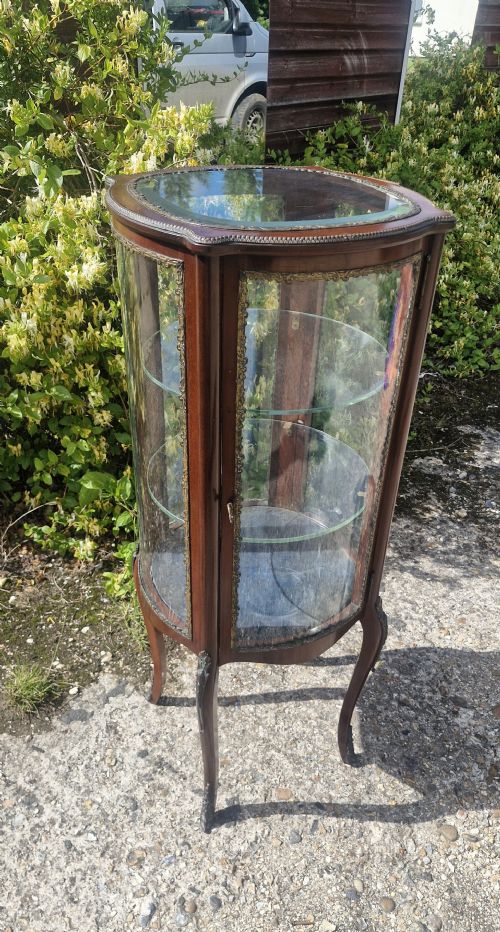
A french mahogany curio cabinet is a glazed display piece designed to showcase small treasures, porcelain, and objects of curiosity. These furnishings appear in forms such as tall vitrines, freestanding cabinets, and low bijouterie tables with glass tops.
The pieces on this page span the nineteenth century into the early twentieth century, taking shape through periods including Edwardian times and the Victorian era. Makers and cabinetmakers adopted historic revival aesthetics to shape these display items.
Makers drew heavily upon French design vocabulary, producing items in Louis XV style, Louis XVI style, Directoire style, and French Rococo Revival. Buyers find serpentine fronts, oval shapes, and upright vitrine forms dominating the selections.
How They Were Made
Carpenters built the structural carcases using mahogany, often incorporating kingwood veneers or marquetry inlay alongside brass and gilt-metal mounts. Artisans selected marble for tops on specific vitrine models to provide a sturdy and decorative surface.
Metalwork played a defining role, with ormolu and gilt bronze cast into mounts that framed glass doors, corners, and legs. Fabric linings in velvet added a soft interior floor for displaying delicate objects inside tables and cabinets.
Painted panels executed in the Vernis Martin technique frequently decorated the lower sections of cabinets, employing translucent varnishes over decorative scenes. Cabinetmakers constructed curved serpentine glass panels and fitted hinged doors with working brass locks.
Listings feature mahogany, ormolu, marble, and velvet across nineteenth-century and Edwardian display pieces.
What Varies in Quality
The standard of ormolu mounts creates a major distinction between pieces, as finely chased gilt bronze displays sharper detail and deeper relief than simpler brass castings. Heavier bronze mounts secured with proper screws signal attentive workshop production.
Cabinetwork precision separates standard production from exceptional furniture, seen in the smooth operation of serpentine doors and the careful matching of mahogany veneers. Painted Vernis Martin panels display varying degrees of artistic skill in their composition.
Attribution to prominent makers elevates certain pieces, with workshops such as Paul Sormani, Maison Krieger, and François Linke representing superior craftsmanship. The inclusion of original marble tops and intact silk or velvet linings preserves historical integrity.
François Linke·Paul Sormani·Maison Krieger
The French Mahogany Curio Cabinet Glossary
- Vitrine
- A glass-fronted cabinet designed for displaying porcelain, curiosities, and fine objects. These upright display pieces often feature glazed sides to let light pass through to the interior shelves.
- Bijouterie table
- A low display table featuring a glazed top and a shallow velvet-lined interior compartment. These tables were designed for holding jewellery, medals, and small decorative items.
- Vernis Martin
- A simulated Japanese lacquer technique developed in eighteenth-century France and emulated later. Artisans applied multiple layers of translucent varnish over painted panels to achieve a glossy, lustrous finish.
- Ormolu
- Gilt bronze mounts applied to the exterior angles, feet, and cornices of fine furniture. The technique involves applying a gold amalgam to bronze before firing.
- Marquetry
- Decorative woodwork where small pieces of veneer are assembled to form pictorial patterns and floral designs. Cabinetmakers used contrasting timbers to build intricate geometric scenes on cabinet doors.
French Mahogany Curio Cabinet: Frequently Asked Questions
What is a french mahogany curio cabinet?
A french mahogany curio cabinet is a glazed display furniture piece created to exhibit small decorative objects and porcelain collections. These items utilise mahogany timbers, glass panels, and decorative metal mounts.
Craftsmen built these display pieces in various formats, including tall upright vitrines and low glass-topped tables. They serve as functional display furniture with historical French design influences.
How were these cabinets used?
These cabinets housed precious ornaments, porcelain figures, and small collectibles gathered during travels or collected as status symbols. The glass doors and panels protected items from dust while keeping them visible.
Bijouterie tables specifically served as waist-height display cases for inspecting jewellery and medals at close range. Velvet linings cushioned the objects placed inside.
How do I identify a revival style?
Revival styles draw on specific historical design periods, such as Louis XV or Louis XVI aesthetics, characterised by particular leg shapes and ornamentations. Louis XV style pieces often feature curved cabriole legs and asymmetrical rococo mounts.
Louis XVI style items display straighter tapered legs, classical symmetry, and architectural bronze mounts. Makers during the nineteenth century revived these historic motifs with contemporary cabinetmaking techniques.
Where should I place one?
These display cabinets suit drawing rooms, reception spaces, and hallways where natural light can illuminate the glass interior. Placing them away from direct sunlight protects both the mahogany timber and interior fabric linings.
Freestanding models require sufficient floor space to allow doors to open fully without obstruction. Their decorative ormolu mounts make them suitable as focal points in a room.