




Curved Glass Curio
A curved glass curio brings together timber and bent glazing to display ornaments.
Curved Glass Curio
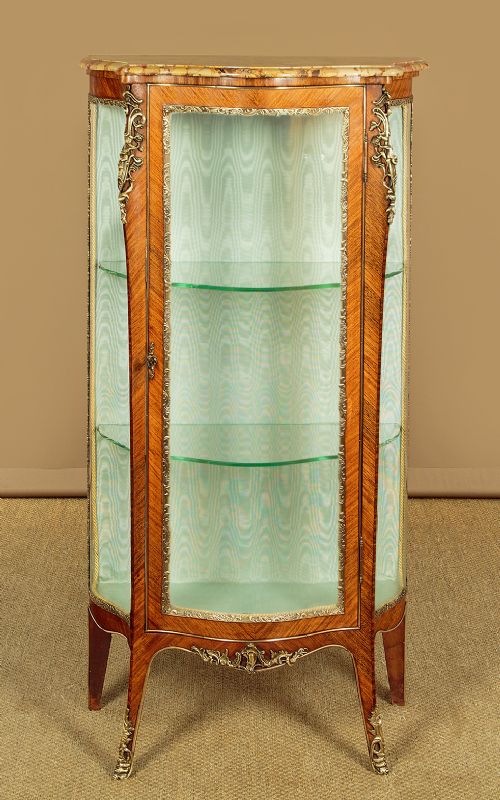
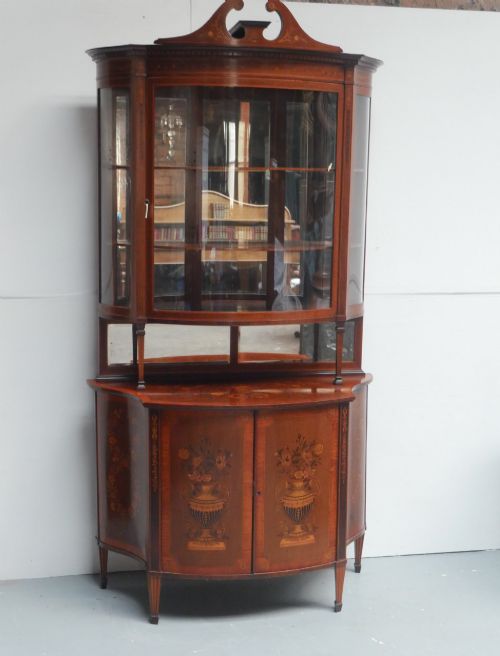
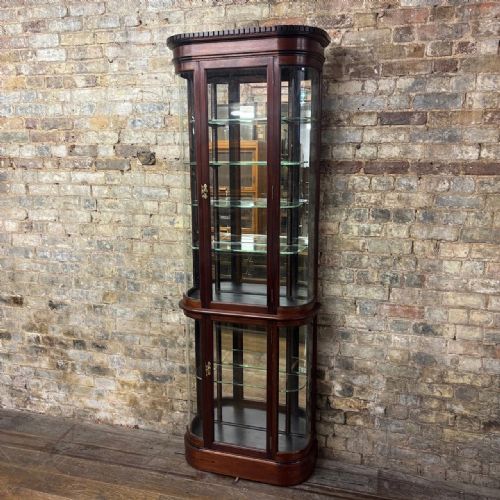
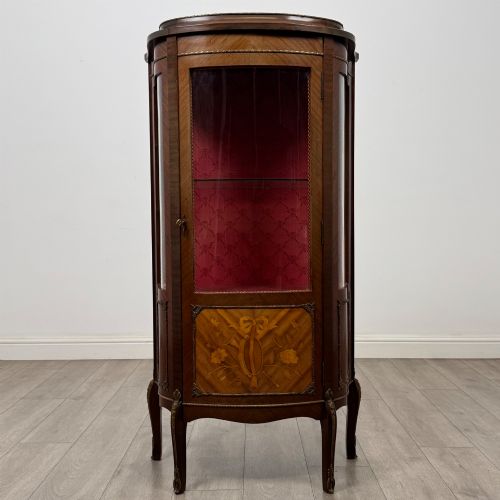
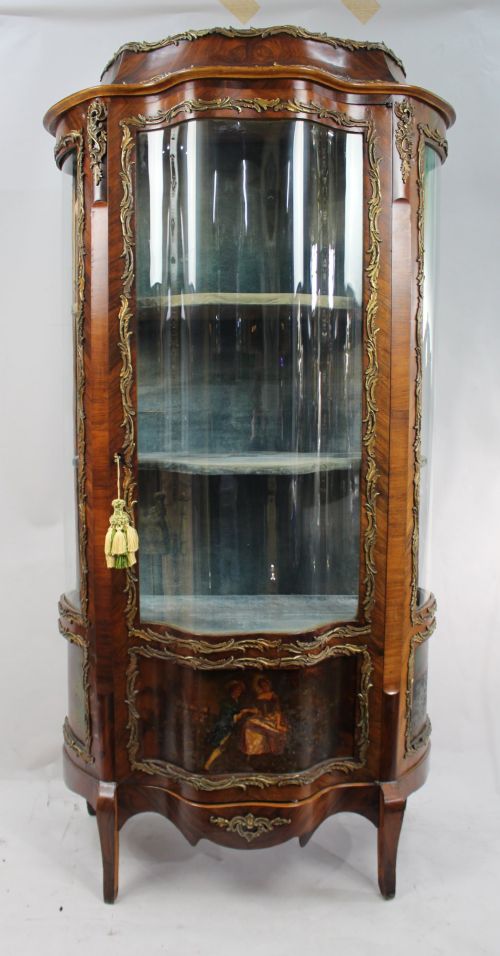
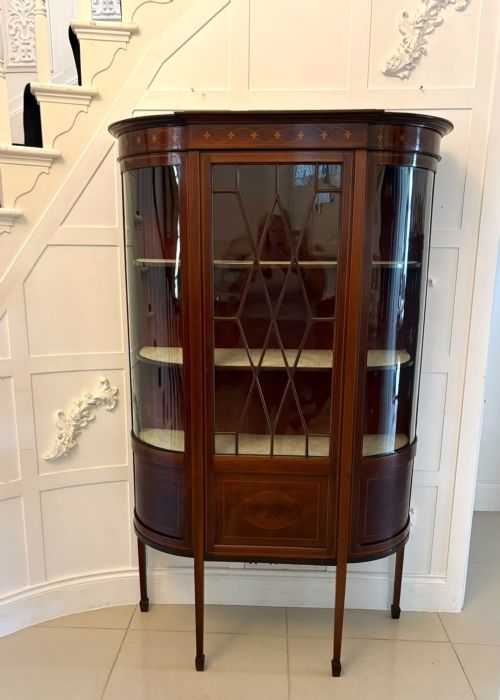
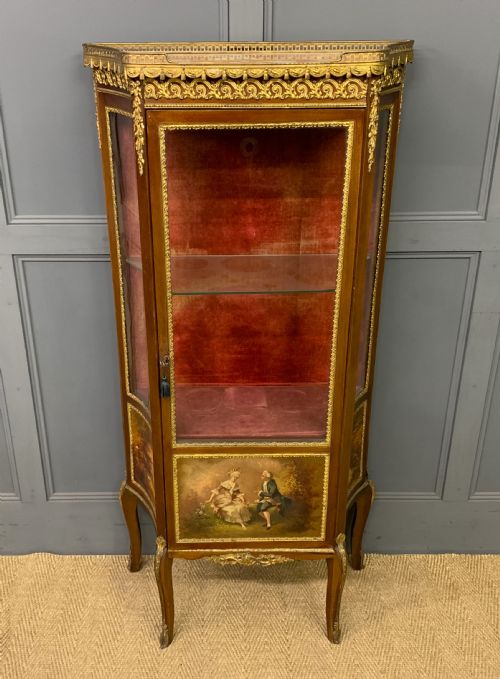
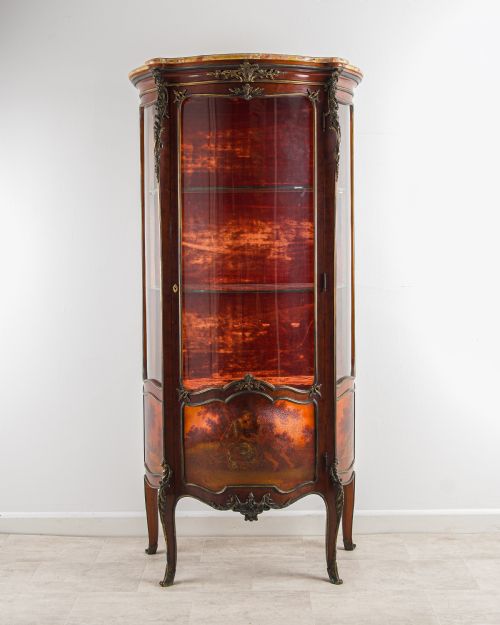
A curved glass curio encompasses display cabinets, vitrines, and wall cabinets designed to exhibit porcelain and small valuables through bent or bowed panes. Buyers seeking a curved glass curio commonly encounter pieces fashioned in Edwardian, French Rococo Revival, Louis XV, Louis XVI, Sheraton Revival, and Art Deco styles. These cabinets originate primarily from the nineteenth and early twentieth centuries, spanning periods from the Victorian era through the nineteen-thirties.
The forms vary from small tabletop bijouterie cabinets and oval freestanding vitrines to large serpentine or bow-fronted floor standing display cabinets. Mahogany, kingwood, and walnut form the primary timber carcasses, whilst marble tops and fabric-lined interiors appear frequently among French and English examples.
How They Were Made
Cabinetmakers constructed these pieces using dense hardwoods like mahogany and kingwood, often embellished with satinwood, fruitwood, and marquetry inlays. The distinctive curved glass panels required specialised heating and bending techniques to fit smoothly into bowed or serpentine wooden frames.
Gilt bronze, brass, and ormolu mounts punctuate the exterior designs, framing doors and corners with cast metal decoration. Hand-painted panels in the Vernis Martin tradition complement the polished timber surfaces on decorative French vitrines.
What Varies in Quality
The standard of a curved glass curio rests upon the crispness of the bronze or ormolu mounts and the depth of the timber marquetry. Cabinets bearing meticulous hand-painted Vernis Martin panels and heavy marble tops sit firmly above plain veneered alternatives.
Proportion and execution determine the tier of each piece, distinguishing exhibition standard furniture from standard domestic display cases.
Edwards and Roberts·François Linke·Paul Somani
The Curved Glass Curio Glossary
- Curio
- A small cabinet or table designed for displaying ornaments, curiosities, and precious objects. These pieces rely on clear glazing to provide all-round visibility.
- Vitrine
- A glass-sided display cabinet used primarily for porcelain and fine objects. French examples often incorporate elaborate ormolu mounts and curved glass.
- Ormolu
- Gilt bronze ornamentation applied to furniture. High-grade pieces display hand-chased detail within the metalwork.
- Marquetry
- Inlaid patterns formed by fitting contrasting veneers into a timber ground. Craftsmen utilise this technique to create floral and geometric designs on cabinet doors.
- Serpentine
- A curved line that undulates inwards and outwards in a continuous wave. This shape requires advanced cabinetmaking skill to achieve.
Curved Glass Curio: Frequently Asked Questions
How do I clean the curved glass?
Use a soft microfiber cloth and a mild glass cleaning solution applied directly to the cloth rather than the cabinet.
Avoid spraying liquid near the wooden frame or metal mounts to protect the timber polish and ormolu.
Where should I place a curio?
Position the cabinet away from direct sunlight to prevent the interior fabric lining and timber veneers from fading.
Ensure the floor is level so the doors and bent glass panels align correctly without binding.
What is a bijouterie cabinet?
A bijouterie cabinet is a low display table or case with a glazed top and sides intended for small jewellery and trinkets.
These pieces typically feature hinged lids lined with velvet or satin to showcase precious items from above.
How do I identify French revival styles?
French revival pieces incorporate curved cabriole legs, ormolu mounts, and symmetrical floral marquetry reminiscent of eighteenth-century court furniture.
Nineteenth-century makers reinterpreted these Louis styles using dense exotic hardwoods and advanced glazing techniques.