

French Mahogany Bureau
A French mahogany bureau brings elegance to a room, offering refined writing surfaces and concealed compartments built by skilled cabinet-makers.
French Mahogany Bureau
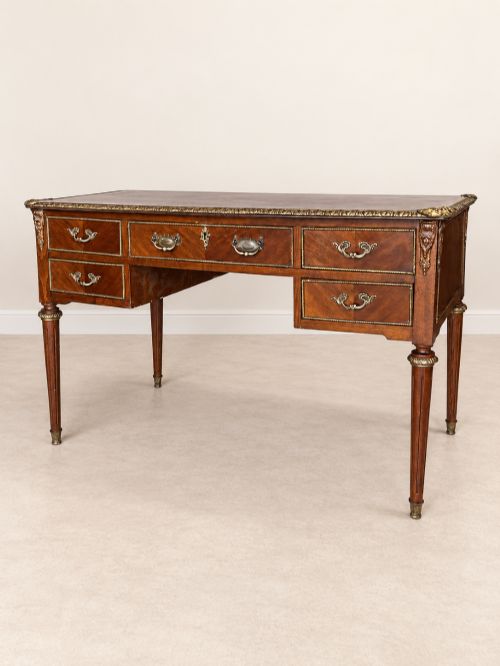
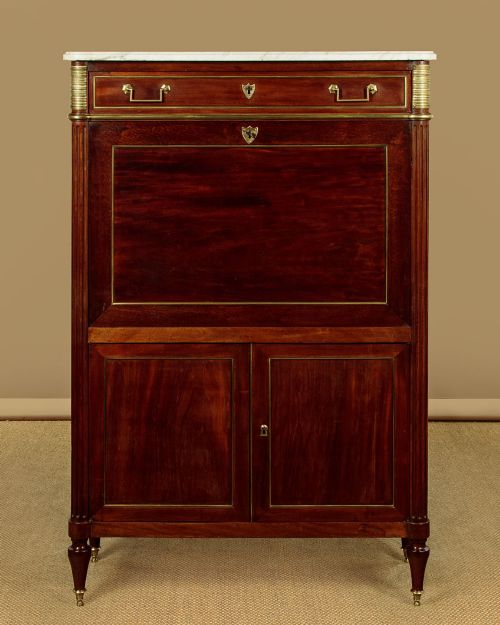
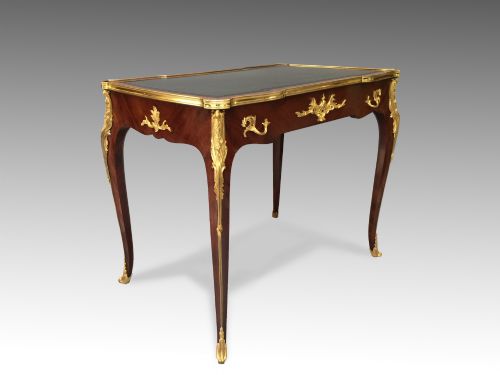
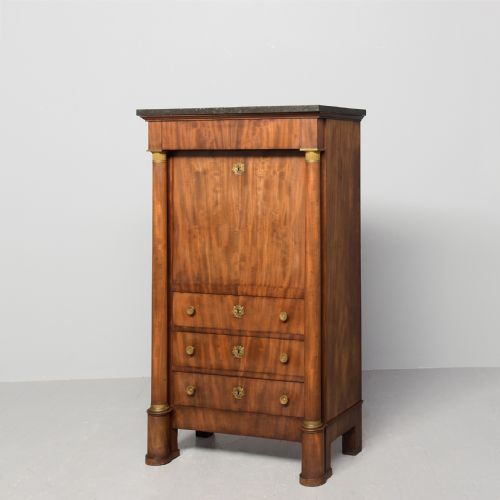
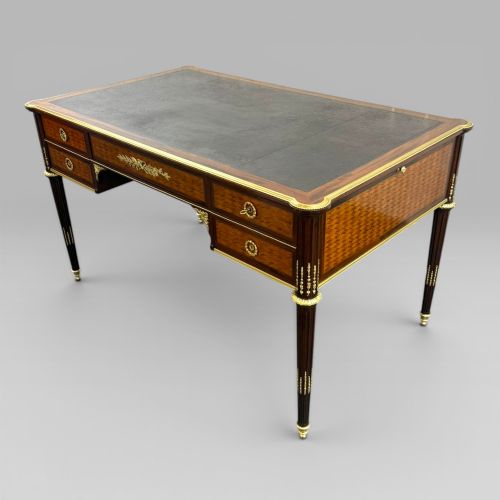
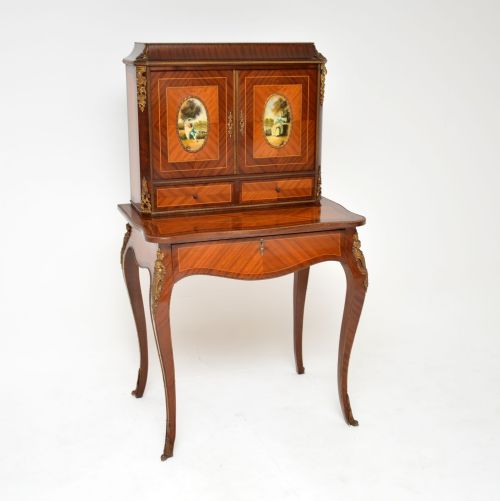
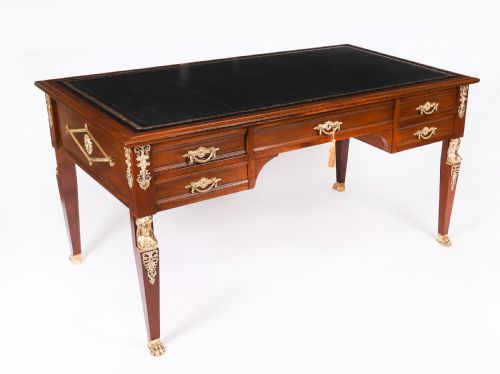
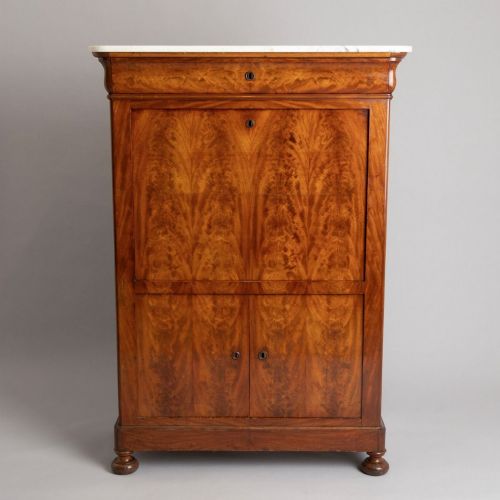
A French mahogany bureau encompasses a range of sophisticated writing furniture, from the drop-front secretaire abattant to the freestanding bureau plat and the dainty bonheur du jour.
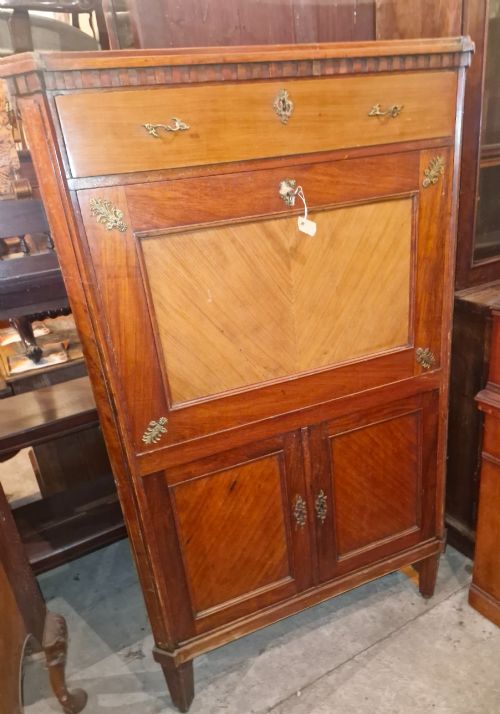
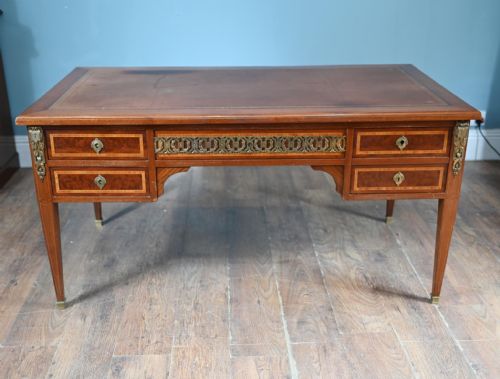
The version most commonly met on this page is the nineteenth-century bureau plat or the upright secretaire cabinet, often fitted with a marble top, leather writing insert, and secret interior drawers.
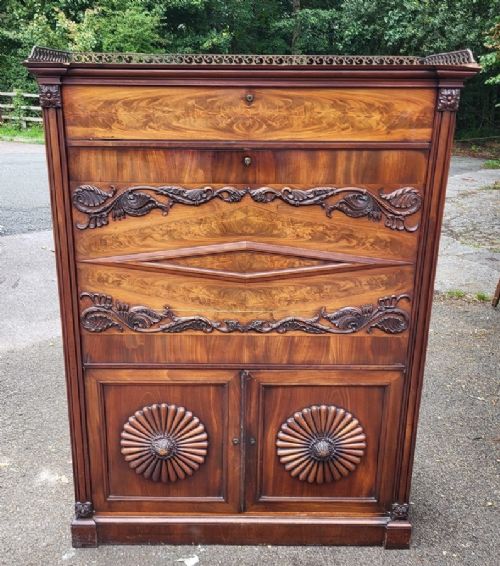
Originating across diverse periods including the Empire, Directoire, and various Louis revivals, these desks combine structural utility with decorative parquetry, ormolu mounts, and rich flame mahogany grains.
How they were made
Cabinet-makers constructed these pieces using solid mahogany and flame mahogany veneers laid over secondary timbers, often accentuating the surfaces with satinwood or kingwood parquetry.
Many examples incorporate cast and gilt bronze ormolu mounts, brass stringing, and inset leather writing panels to create contrast and formal detail.
Internal compartments utilise secret drawers and drop-front mechanisms, while structural elements frequently support heavy white or coloured marble slabs.
One nineteenth-century workshop even prepared a miniature one-quarter size apprentice furniture sample for travelling salesmen.
What varies in quality
Quality separates pieces through the crispness of the bronze ormolu mounts, the selection of figured flame mahogany veneers, and the sophistication of internal mechanisms.
Signed works by master makers such as François Linke, Alphonse Tahan, or Edwards & Roberts display superior hand-chiselling on metal mounts and finer precision in joinery.
Simpler workshop pieces provide functional utility without the elaborate marquetry, intricate brass inlays, or heavy marble tops found on high-end salon desks.
François Linke·Edwards & Roberts·Alphonse Tahan·H Lebrun
The French Mahogany Bureau Glossary
- Bureau plat
- A freestanding writing table, typically with drawers along the frieze, lacking a superstructure or sloping lid. It stands on four legs and served as a partner or library desk.
- Secrétaire à abattant
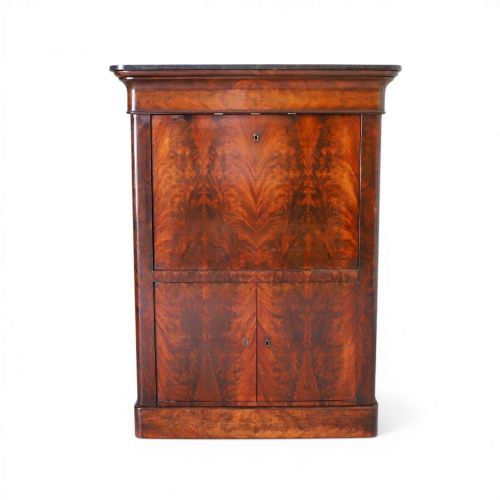
- An upright cabinet featuring a fall-front writing surface that conceals pigeonholes and small drawers. When closed, it presents a flat vertical panel, often topped with marble.
- Ormolu
- Gilt bronze mounts applied to furniture for decorative effect, cast and chased by hand to produce sharp architectural or floral relief details.
- Bonheur du jour
- A light ladies' writing desk featuring a small cabinet or superstructure with shelves and drawers above the main writing surface.
- Tambour
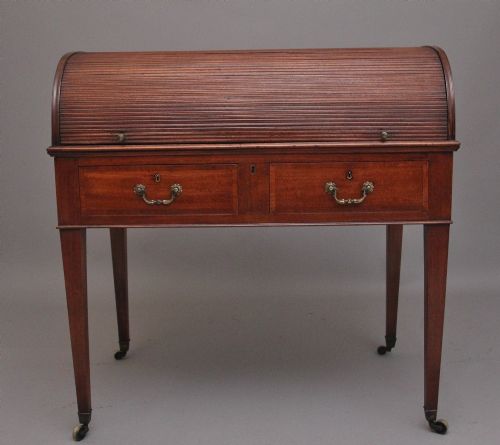
- A sliding door or shutter constructed from narrow vertical strips of wood glued to a canvas backing, allowing it to curve around corners in cylinder desks.
- Vernis Martin
- A specialised European lacquer finish imitating Asian japanning, prized for its translucent depth and painted pictorial scenes.
French Mahogany Bureau: Frequently Asked Questions
What is the difference between a bureau plat and a secretaire?
A bureau plat is a flat-topped freestanding writing table with drawers beneath the surface, designed to sit in the middle of a room.
A secretaire, such as the abattant, is a tall vertical cabinet with a drop-front flap that opens to reveal internal compartments and writing drawers.
How do I identify a Louis XVI revival piece?
Louis XVI revival pieces from the nineteenth century display neoclassical characteristics like straight tapered legs, fluting, and restrained geometric symmetry.
They frequently incorporate brass ormolu mounts, mahogany veneers, and subtle parquetry rather than the curving lines of earlier Louis XV styles.
Where should I place a French mahogany bureau in my home?
A bureau plat works well as a central library table or a distinctive dressing desk against a main wall.
Upright secretaire cabinets fit comfortably in sitting rooms or studies where vertical storage and a fold-down writing ledge are practical.
What is flame mahogany?
Flame mahogany is a veneer cut from the branch forks of the mahogany tree, producing a distinctive, fiery feather-like grain pattern.
Cabinet-makers used this timber on prominent exterior panels of desks and cabinets to create striking visual movement.