

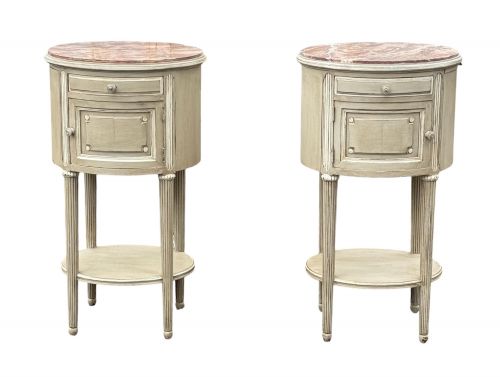


French Louis XVI Chevet
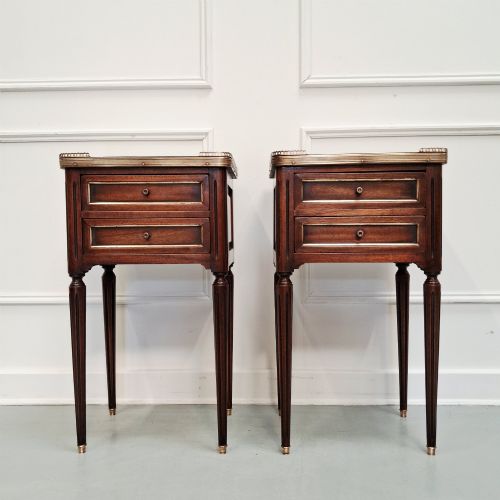
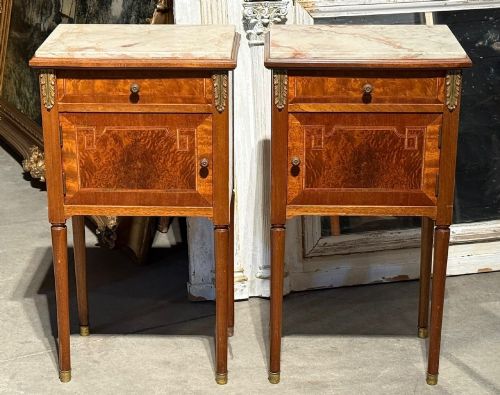
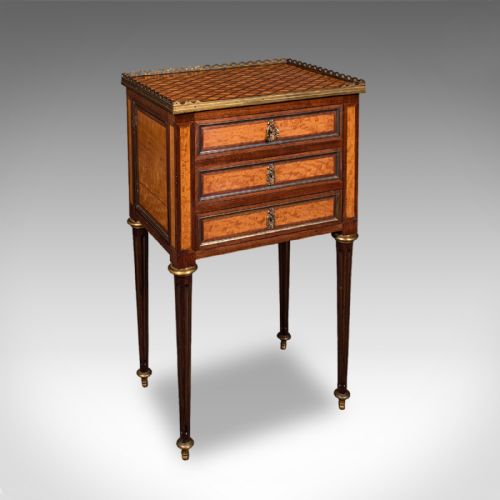
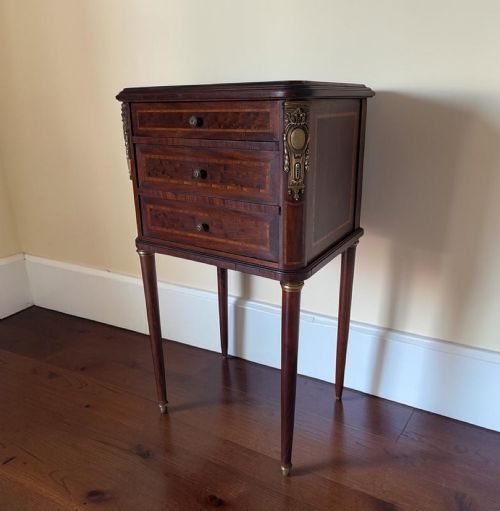
These French Louis XVI chevet items are elegant bedside tables and cabinets that bring refined neoclassical proportions and classical detailing to a bedroom.
French Louis XVI Chevet
When you search for a French Louis XVI chevet, you are looking at compact bedside furniture designed for the bedroom or boudoir, typically taking the form of a small cabinet, chest, or table. These pieces emerge across the nineteenth and early twentieth centuries, spanning periods such as Victorian, 1900, 1920, and 1930, capturing the enduring revival of eighteenth-century neoclassical taste.
The versions you are most likely to meet on this page include walnut, mahogany, and painted wood bedside chests, often paired with marble tops and brass details. Alongside standard bedside tables and cabinets, you will encounter boudoir cabinets and nightstands created in French Provincial, Louis XVI style, and Louis XVI revival aesthetics.
How They Were Made
The construction of these pieces relies on fine hardwoods such as walnut, mahogany, rosewood, satinwood, and kingwood, frequently utilised as solid timbers or as intricate marquetry and inlay. Cabinetmakers combined these rich woods with cane panels and painted wood surfaces to achieve varied textures across the bedside chests.
Decorative embellishments define the manufacturing technique, integrating cast or chased ormolu mounts, brass details, and polished marble tops. These metallic and stone additions were fitted carefully to the wooden frames to provide both functional durability and classical ornamentation.
French Louis XVI Chevet Retail Price Guide 2026
Typical asking prices for french louis xvi chevet among the pieces listed under this phrase on Sellingantiques today, from the lower quarter to the upper quarter. They describe what is for sale here now, not the wider market.
A smart pair of tables preserves the eighteenth-century Louis XVI taste while safely housing modern bedtime reading.
What Varies In Quality
The standard of timber selection and marquetry work establishes a clear division between ordinary and exceptional examples. Finer pieces display carefully matched grain patterns, precise wood veneers like kingwood and satinwood, and sophisticated inlay rather than simple painted finishes.
The integration of decorative hardware and stone surfaces similarly separates the tiers of production. Heavier, finely chased ormolu mounts, genuine marble slabs fitted flush to the timber, and refined brass detailing elevate the execution well beyond basic utility furniture.
The French Louis XVI Chevet Glossary
- Chevet
- A French term for a bedside table or small bedside cabinet. It describes compact furniture designed to sit beside a bed for night-time storage.
- Ormolu
- Gilded bronze used for decorative mounts and furniture fittings. It provides a bright golden accent against darker woods like mahogany and walnut.
- Marquetry
- The art of applying pieces of veneer to a structure to form decorative patterns. Craftsmen utilised woods such as rosewood and kingwood to create detailed pictorial or geometric designs.
- Louis XVI Style
- A neoclassical design movement characterised by straight lines, symmetry, and classical motifs. This aesthetic revived ancient Greek and Roman forms during later centuries.
- Boudoir Cabinet
- A small private cabinet or chest intended for a personal dressing room or bedroom. These pieces often feature delicate proportions and refined materials.
French Louis XVI Chevet: Frequently Asked Questions
What is a French chevet?
A chevet is a traditional French term for a bedside table or small bedside cabinet. These pieces provide compact storage beside a bed.
They appear in various forms, including nightstands and boudoir cabinets, incorporating drawers, cupboards, and open surfaces.
How were these tables used?
These cabinets served primarily as bedside storage for personal items during the night. They kept lamps, books, and small possessions close at hand.
Their compact scale also allowed them to function as small decorative chests in dressing rooms and boudoirs.
What materials are common?
The listings feature woods such as walnut, mahogany, rosewood, satinwood, and kingwood. Many examples incorporate painted wood and cane elements.
Surfaces frequently feature fitted marble tops, while brass details and ormolu mounts provide classical decorative accents.
How do I date these pieces?
Dating relies on examining the construction methods, secondary woods, and stylistic revival cues. Pieces span the nineteenth century through the early twentieth century.
Victorian and early twentieth-century interpretations often revive eighteenth-century Louis XVI taste using period-specific woodworking techniques.
How do I live with a chevet?
These compact cabinets fit easily beside modern or antique beds as functional bedside tables. Their small footprint makes them adaptable for various room layouts.
Marble tops and wooden surfaces require simple dusting and care to preserve the polished finishes and ormolu mounts.