

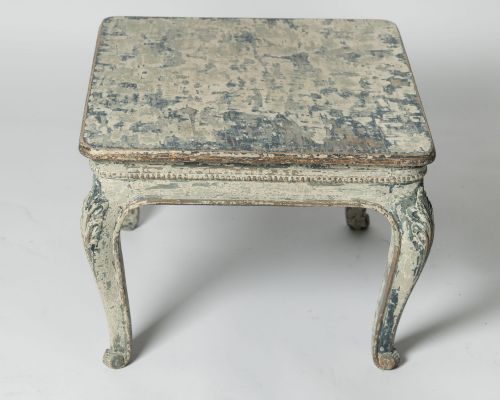


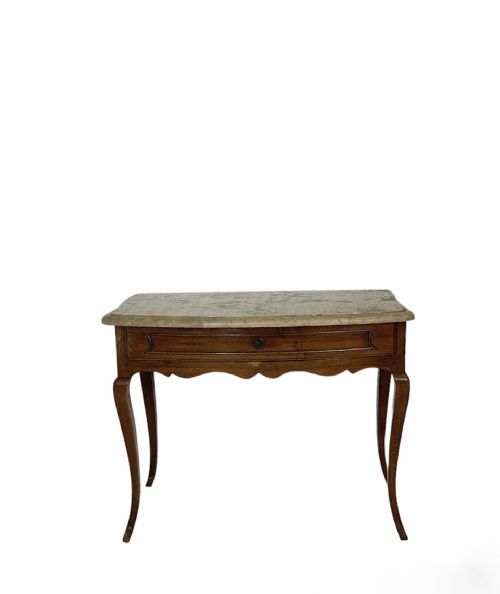
Grey French Accent Table
A grey french accent table brings refined Continental elegance to a room, offering a versatile surface with characteristic period charm.
Grey French Accent Table
A grey french accent table encompasses side, occasional, bedside, centre, and console formats spanning the eighteenth to the early twentieth century. Buyers seeking this style encounter pieces influenced by French Chateau, French Provincial, French Empire, French Rococo, Louis XVI Style, Napoleon III, and Charles X aesthetics.
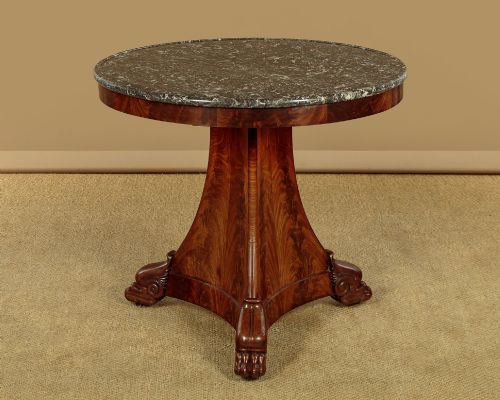
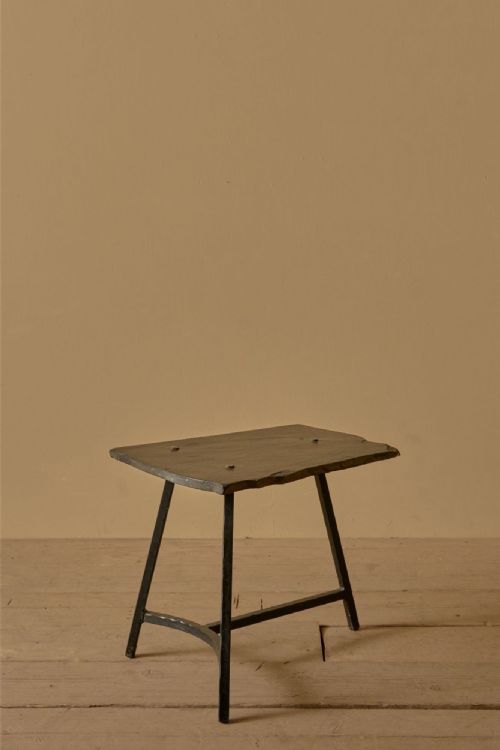
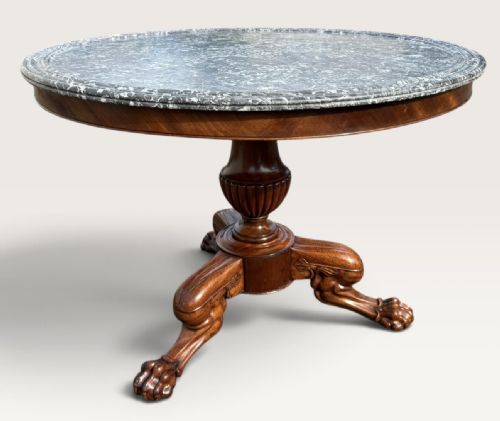
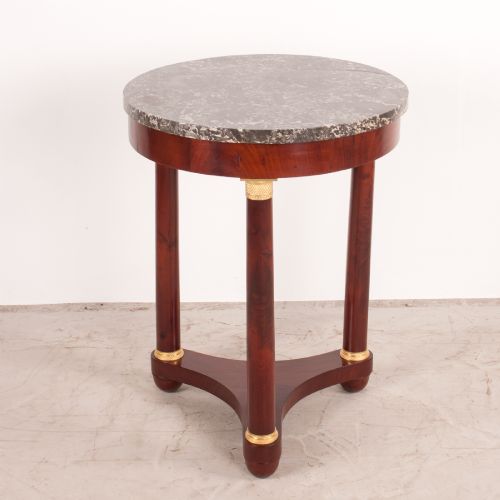
The selections available here range from rustic painted country house tripod tables to formal nineteenth-century mahogany gueridons and gilt-bronze mounted creations. The typical grey french accent table frequently combines painted wood structures with inset marble tops, reflecting various historical French design movements.
Construction and Materials
Construction relies heavily on traditional timber framing, utilising mahogany, walnut, and general painted wood to form the structural bodies of these occasional pieces. Artisans shaped these timbers to create tripod bases, column supports, and console frameworks.
Surface finish and ornamentation define the visual weight through the application of paint, ormolu, gilt-bronze, and brass mounts. Inset marble tops provide a durable and cool contrasting surface frequently paired with carved wooden frames.
Grey French Accent Table Retail Price Guide 2026
Typical asking prices for grey french accent table among the pieces listed under this phrase on Sellingantiques today, from the lower quarter to the upper quarter. They describe what is for sale here now, not the wider market.
Current listings feature items from the eighteenth, nineteenth, and early twentieth centuries, utilising marble, painted wood, mahogany, and ormolu.
Quality Variations
Quality differentiates itself through the crispness of timber carving, the integration of cast bronze or ormolu mounts, and the natural figuring of the marble tops. Finer examples display precise joinery and sophisticated decorative schemes characteristic of Parisian workshops.
Simpler provincial variants demonstrate more robust, utilitarian construction with hand-applied painted finishes rather than intricate gilt metalwork. The depth and integrity of the original paint layers or polished wood surfaces dictate the visual authority of the piece.
Zwiener Jansen Sucesseur
The Grey French Accent Table Glossary
- Gueridon
- A small circular table on a central pillar or tripod base, originating in seventeenth-century France. These pieces function well as accent surfaces in sitting rooms.
- Ormolu
- Gilt bronze ornamentation applied to furniture frames and mounts during the eighteenth and nineteenth centuries. This technique imparts a rich metallic lustre to the design.
- Console table
- A table designed to stand against a wall, frequently supported by brackets or console legs. They often feature decorative marble tops.
- Tripod table
- A freestanding table supported by a pillar resting on three feet. This form allows for stable placement on uneven floors.
- Napoleon III
- A nineteenth-century French design style incorporating eclectic revivals of earlier monarchical aesthetics alongside lavish ornamentation. Pieces from this era often feature rich gilt-bronze elements.
Grey French Accent Table: Frequently Asked Questions
Where should I place a grey french accent table?
These tables suit hallways, sitting rooms, and bedrooms where surface space is required alongside decorative presence.
Their compact forms allow them to function effectively as bedside stands, lamp tables, or wall-anchored consoles.
How do I care for a marble top table?
Marble requires protection from acidic substances and abrasive cleaners to preserve the polished surface.
Routine dusting with a soft cloth keeps the stone and painted wooden bases in stable condition.
What periods do these tables represent?
The pieces span from the eighteenth century through the nineteenth century and into the early twentieth century.
Design influences draw from Louis XVI, Empire, Charles X, and Napoleon III periods.
What materials are typically used?
Construction materials include mahogany, walnut, timber, and painted wood paired with marble inserts.
Decorative elements frequently incorporate brass, ormolu, and gilt-bronze mounts.