




French Landscape Print
A French landscape print captures the pastoral beauty and architectural elegance of France through the precise lines of historical engravings and evocative painted scenes.
French Landscape Print
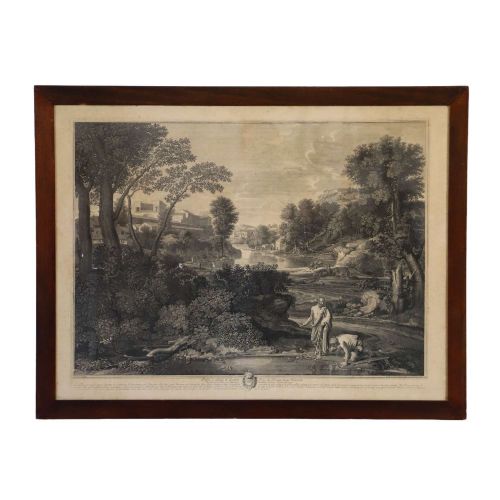
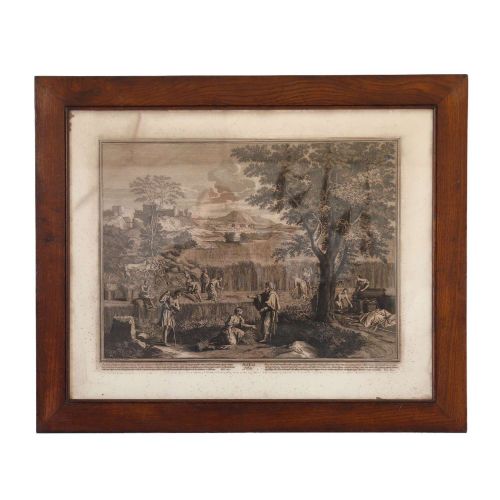
When you search for a French landscape print, you are looking at works that range from classical engravings of the seventeenth and eighteenth centuries to mid-century impressionist and expressionist interpretations. These pieces capture rural vistas, architectural capriccios, and atmospheric scenes from the French countryside and cities.
The versions you are most likely to meet on this page span several distinct periods, including seventeenth-century baroque classical compositions, eighteenth-century pastoral engravings in original frames, and twentieth-century charcoal drawings or oil-painted prints. Subjects vary widely from mythological pastoral narratives to sunlit olive trees in Provence and horse racing scenes at Longchamp.
Makers and artists represented in this selection include established figures such as Étienne Baudet, Nicolas Poussin, C de Falens, Erich Mercker, Gabriel Dauchot, Victor Valery, and Henri Joseph Harpignies. Their works utilise varied media, translating the topography and light of France onto paper, board, and canvas.
Materials and technique
The making of these works relies on traditional graphic and painting techniques, predominantly utilising paper, ink, and charcoal, alongside oil paint and gesso on board. Engravings from the seventeenth and eighteenth centuries are achieved through meticulous plate work on paper, often preserved within period wooden frames.
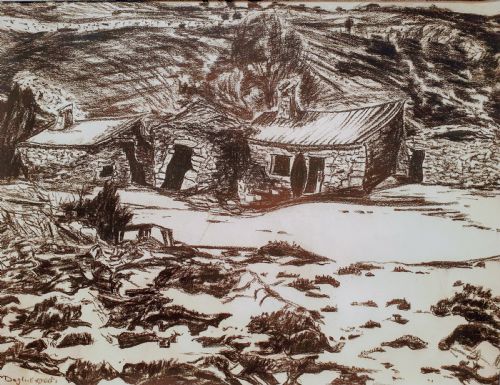
Later twentieth-century examples employ oil embellishments, textured paint applications on board, and expressive charcoal strokes to capture dynamic atmospheric conditions like the mistral wind in Provence. Gesso is frequently utilised in the preparation of historical frames that house these works, providing a solid foundation for decorative moulding.
Expect windy days in Provence rendered in charcoal and dramatic horse racing at Longchamp captured in oil.
What varies in quality
The distinction at the upper end of the range lies in the fidelity of the print impression, the crispness of the engraved line, and the historical integrity of the framing. Early eighteenth-century engravings retain greater clarity when the copper plate is fresh and the paper has been handled with care over generations.
In painted prints and original drawings, quality is determined by the sureness of the hand, the preservation of the medium against fading, and the authenticity of the association with listed artists and periods. Original frames matching the exact century of the artwork add a layer of integrity that distinguishes finer examples.
Étienne Baudet·Erich Mercker·Gabriel Dauchot·Victor Valery·Henri Joseph Harpignies
The French Landscape Print Glossary
- Engraving
- A printmaking technique where an artist carves an image into a metal plate using a burin. The resulting inked lines are transferred under pressure to paper.
- Gesso
- A plaster-like mixture applied to wood frames or panels as a base for paint or gilding. It provides a smooth surface for decorative finishes.
- Baroque Classicism
- An artistic style balancing classical restraint with baroque drama, prominent in seventeenth-century French landscape compositions. It emphasises monumental architecture and ordered natural scenery.
- French Expressionism
- A twentieth-century movement focusing on emotional experience rather than physical reality through bold brushwork and vibrant colour. It appears in dynamic scenes of French life and racing.
- Architectural Print
- A graphic depiction focusing on buildings, ruins, or formal gardens within a landscape setting. These prints often highlight classical pavilions and structures.
French Landscape Print: Frequently Asked Questions
What subjects are common in these landscape works?
Common subjects include pastoral scenes with classical ruins, mythological narratives set in idealized French countryside, and architectural prints featuring pavilions and lakes. Twentieth-century works expand this repertoire to include regional views such as farmhouses and olive trees in Provence.
Other scenes capture dynamic moments of French culture, including horse racing at Longchamp and coastal views of Monaco.
How should I care for antique paper prints?
Antique paper prints require careful placement away from direct sunlight to prevent the ink and paper from fading over time. Maintaining stable indoor humidity levels protects the paper structure and prevents foxing or mould growth.
When framing or reframing, use acid-free materials and UV-protective glass to ensure the delicate paper and charcoal mediums remain stable.
What is the difference between an engraving and a painted print?
An engraving is created by pressing inked metal plates onto paper to produce sharp, linear details characteristic of seventeenth and eighteenth-century printmaking. A painted print involves applied pigments, such as oil paint, directly onto a printed base or board to add texture and colour.
While engravings rely on precision and tonal hatching, painted prints offer a richer surface texture similar to an original painting.