

French Lady Desk Table
When you search for a french lady desk table, you find refined writing furniture designed for private correspondence and ladies' studies.
French Lady Desk Table
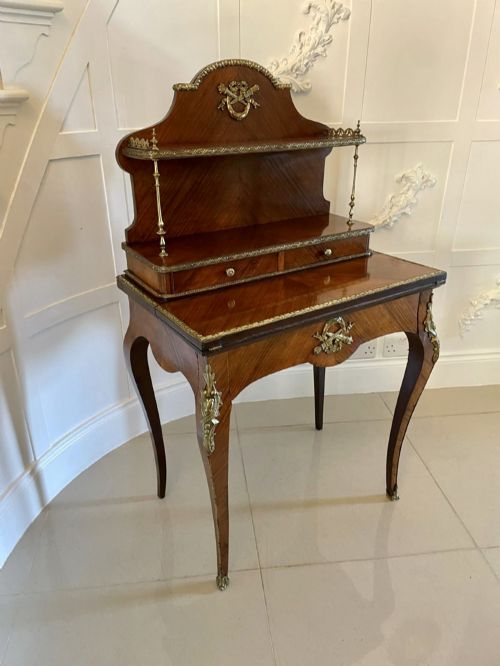
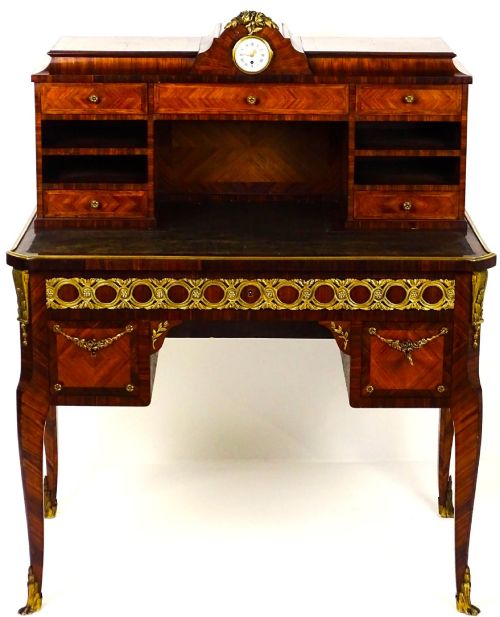
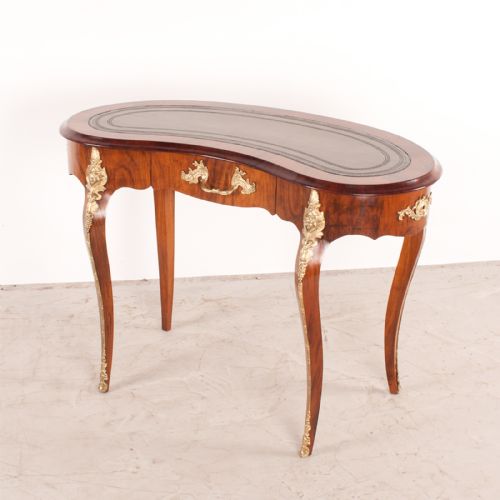
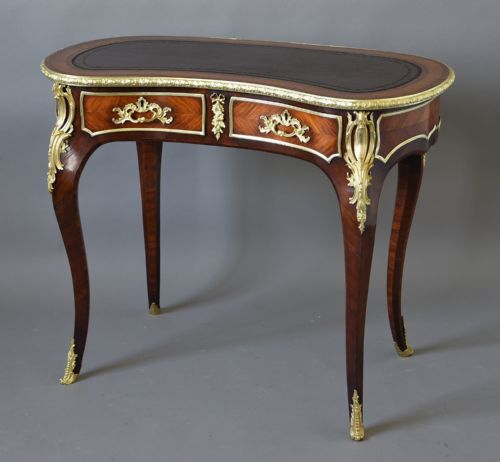
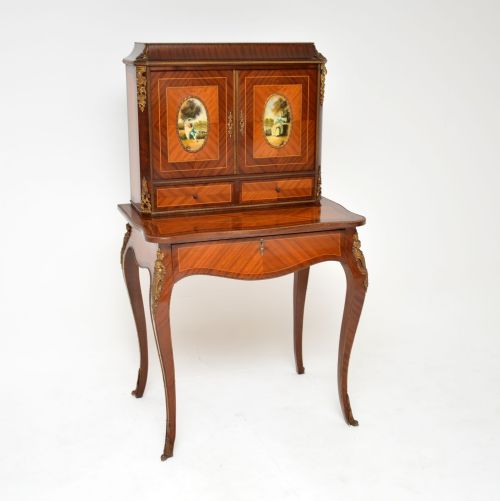
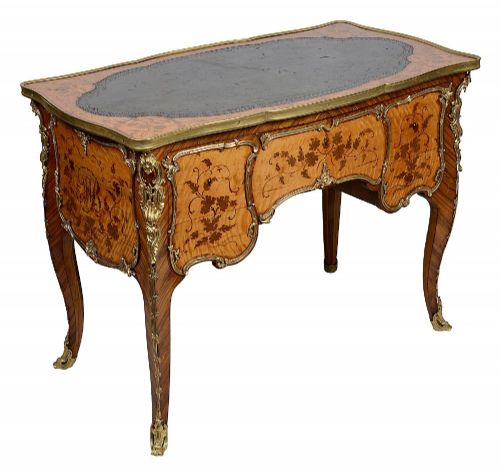
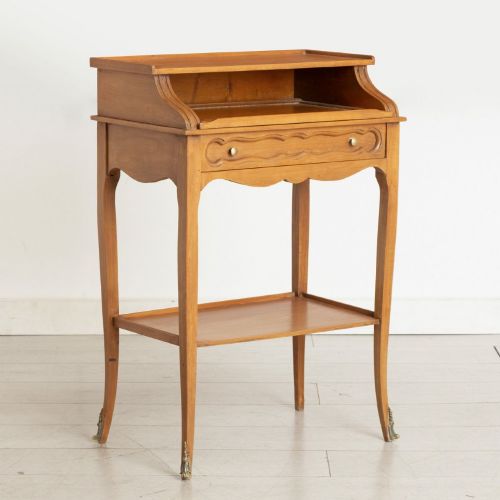
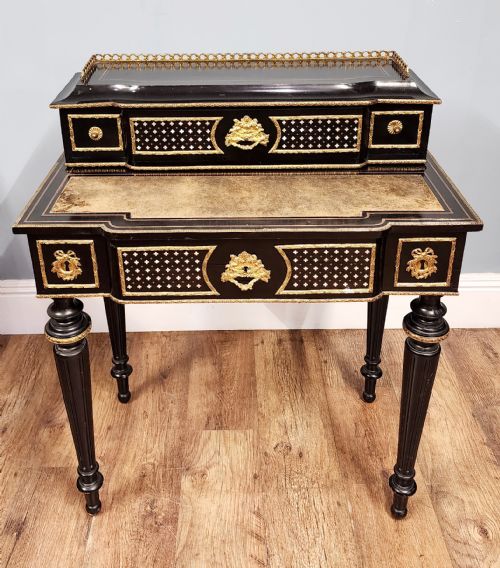
A french lady desk table generally encompasses compact writing surfaces and small cabinets, most frequently encountered here as the bonheur du jour or bureau de dame. These pieces span the nineteenth century, with strong representation from the Victorian era and the Louis XV revival style. Makers adopted serpentine outlines, kidney shapes, and tiered superstructures fitted with small drawers and shelves.
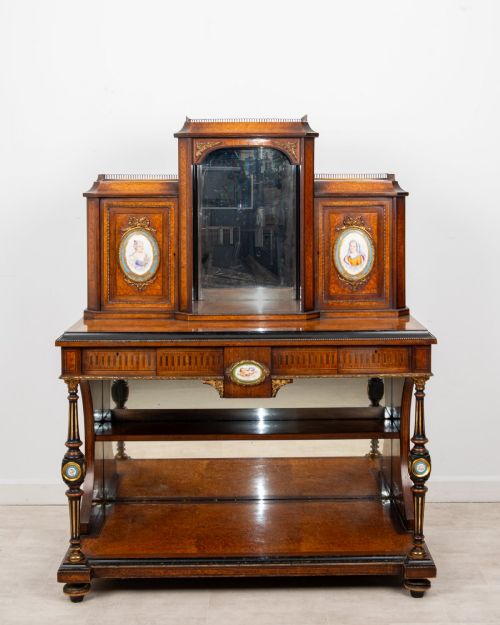
The dominant forms are freestanding writing tables and compact desks designed for domestic rather than institutional use. Pieces frequently incorporate decorative writing surfaces lined in leather, alongside mirrored backs or tiered letter racks. Their scale remains modest, intended for boudoirs and drawing rooms rather than grand libraries.
How they were made
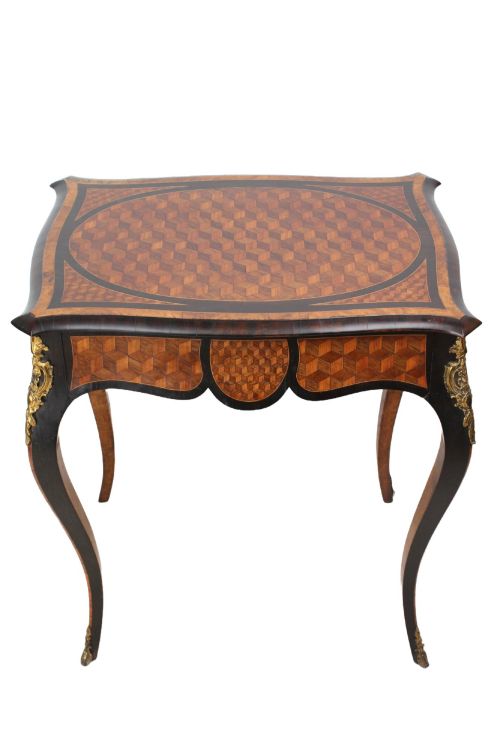
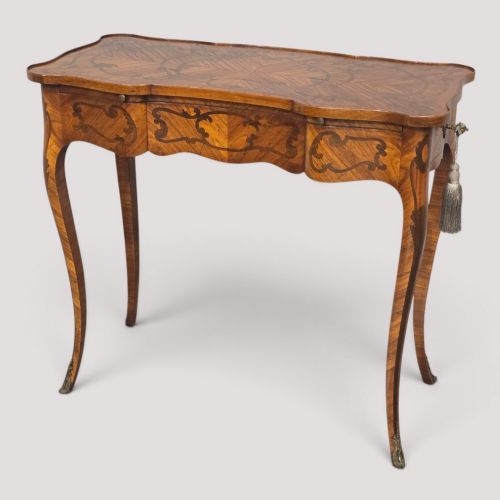
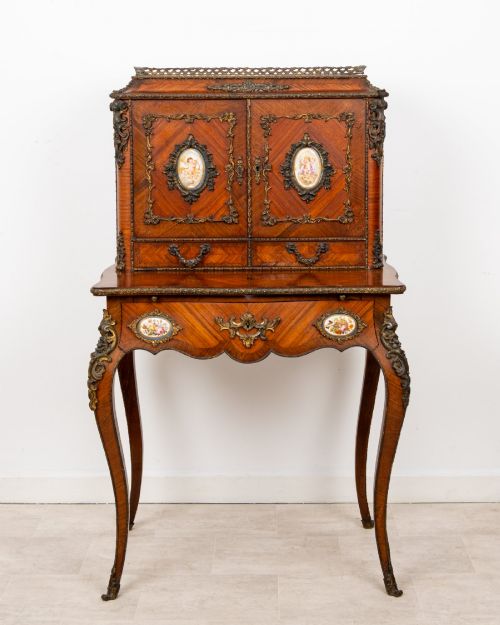
Craftsmen built these pieces using dense hardwoods including kingwood, rosewood, walnut, and amboyna, often laid out in geometric parquetry or floral marquetry veneers. Carcases received extensive decorative embellishment through cast ormolu mounts and gilt bronze accents applied to corners and legs. Surfaces also integrated painted panels and inset porcelain plaques.
Makers utilised specialised techniques to achieve curved fronts and shaped writing slopes, bending timbers over internal frames. Drawer linings typically employed secondary woods like oak or mahogany, joined with hand-cut dovetails. Tops frequently featured tooled leather writing inserts bordered by gilt tooling.
Some desks hide tiny compartments behind miniature doors, originally designed for secret love letters.
What varies in quality
The refinement of the ormolu mounts sets apart standard production from exceptional examples, with finer casts displaying crisp chiseling and deep gilding. Cabinetmakers who employed choice veneers like amboyna or kingwood achieved superior visual depth through careful grain matching across the entire carcase.
Structural integrity depends on the precision of the marquetry work and the stability of the shaped timber components. Pieces bearing recorded signatures or attributions to established makers generally reflect superior joinery standards and more sophisticated internal arrangements.
JAS Shoolbred·Paul Sormani·Edwards & Roberts
The French Lady Desk Table Glossary
- Bonheur du jour
- A small ladies writing desk featuring a tiered superstructure with shelves, drawers, or a small cupboard above the main writing surface. This form appeared during the mid-eighteenth century and remained popular through the nineteenth-century revival periods.
- Ormolu
- Gilded bronze mounts applied to the corners, legs, and aprons of fine furniture. This decorative technique added rich metallic contrast to dark exotic wood veneers.
- Marquetry
- Inlaid wood veneers arranged to form pictorial or geometric patterns across furniture surfaces. Craftsmen utilised contrasting timbers like tulipwood, mahogany, and satinwood to create shaded designs.
- Bureau de dame
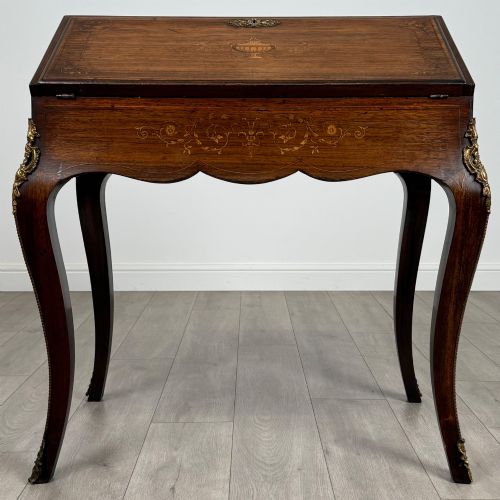
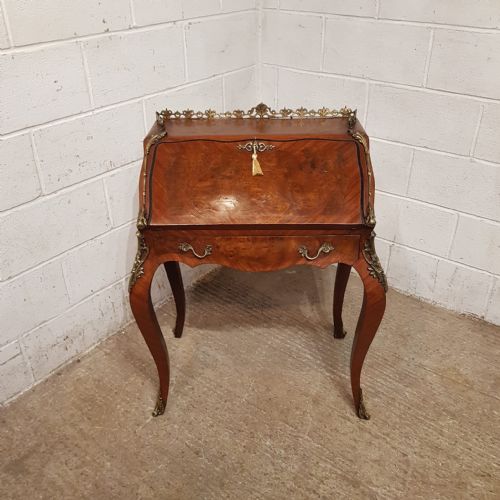
- A small lady's writing desk, often fitted with a sloping fall-front or an enclosed writing compartment. These pieces are typically supported by slender cabriole legs characteristic of French revival styles.
French Lady Desk Table: Frequently Asked Questions
What is a bonheur du jour?
A bonheur du jour is a small ladies desk featuring a raised cabinet or tier of small drawers above the writing surface. The name translates from French as day's good fortune.
These pieces were designed for light correspondence and display in private sitting rooms rather than formal office work.
How do I identify French revival styles?
French revival furniture often displays curved cabriole legs, serpentine woodwork, and elaborate ormolu mounts inspired by earlier court furniture. Makers incorporated marquetry patterns and porcelain plaques to mimic eighteenth-century aesthetics.
These characteristics appear frequently across nineteenth-century pieces produced in both France and Britain.
Where were these desks used?
These compact desks were placed in bedrooms, boudoirs, and private drawing rooms for writing letters and managing personal accounts. Their smaller scale allowed them to fit easily against walls or float in the centre of smaller rooms.
They served as both functional writing spaces and decorative display furniture.
What woods are commonly used?
Makers relied on exotic and domestic hardwoods including kingwood, rosewood, walnut, and amboyna. These timbers provided rich grain patterns suitable for decorative veneering.
Softer woods like oak and mahogany were typically reserved for interior drawer construction and structural framing.